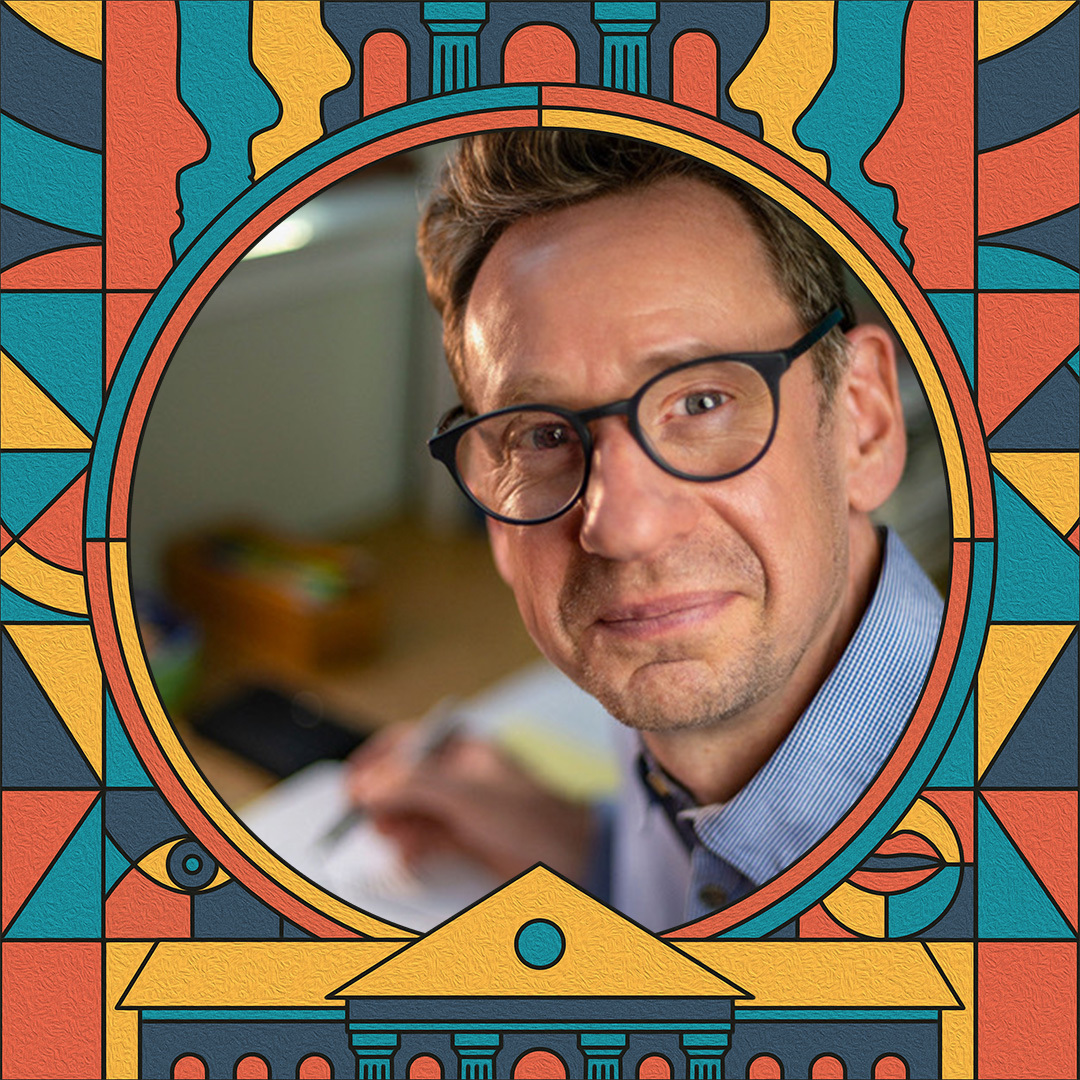
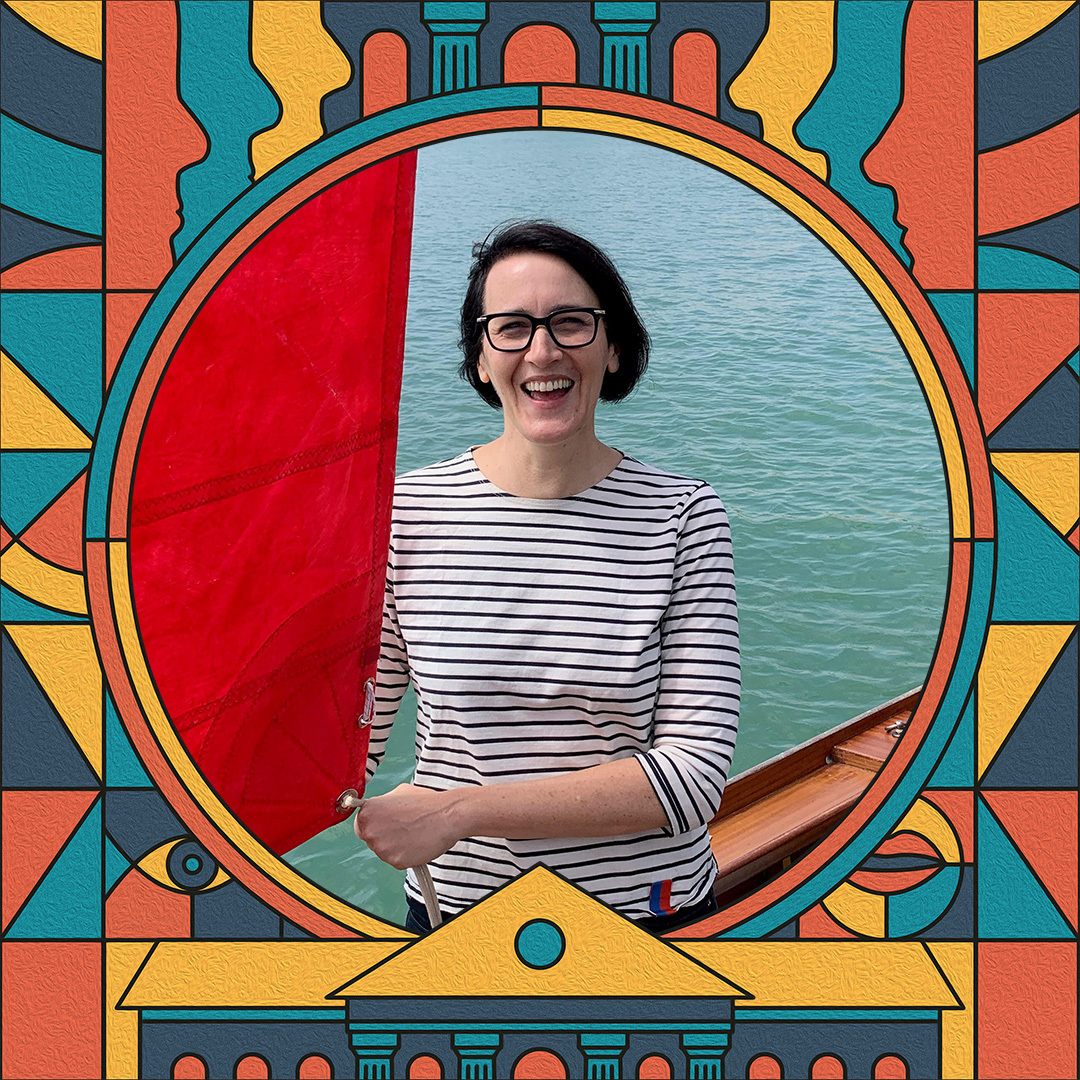
[Music]
Abby: Welcome to Matters of Experience. My name is Abigail Honor.
Brenda: Hello, this is Brenda Cowan.
Abby: This is produced by Lorem Ipsum, an experience design company headquartered in New York, and our podcast explores the creativity, innovation and psychology driving designed experiences and encounters. Hello to anybody listening for the first time, and welcome back to our regular listeners. So, Brenda, today we’re talking with a guest Blooloop named among the top 50 Museum Influencers for 2023, who recently published the Exhibition and Experience Design Handbook, which really is a must read and reference book for all designers. I cannot encourage you enough to go online and buy it. It’s an amazing guide for our practice. And if you haven’t guessed yet, we’d like to welcome to today’s show, Tim McNeil. Tim, welcome.
Tim: Thanks for that great introduction, Abby. Hi, Brenda. It’s so, so great to be here. So, admire what you’re doing and how your show has contributed to the field. So, thanks for having me.
Brenda: Well, Tim, I love your book. And, you know, it’s funny, I remember hanging out with you weeks before Covid changed the world, and you were sharing with me your journey of writing this book, and I was so excited in those early days for what was to come and, Tim, you so delivered.
Tim: Thank you.
Brenda: So, like me, you’re an educator. You are a professor of design. You are the director of the Design Museum at the University of California, Davis. And before that, you spent 30 years as a practicing exhibition designer working for major museums like the J. Paul Getty. Tim, what are the most vital elements from your years of practice that you make sure to pass on to your students in the classroom?
Tim: Yeah, no, I think, I mean, the key one is collaboration. In the classroom, I always encourage students to work together, because, you know, that’s how, you know, exhibition teams work, right? We don’t do anything in isolation. A level of, I suppose, installing in my in students that ambiguity is okay, because often when we’re working on any project, right, we don’t know where things are going to go sometimes.
We’re going to pitch ideas. We’re going to try and, you know, conceive of things to get buy-in from various people. And sometimes that works and sometimes that doesn’t. Sometimes we come up with an amazing design for something and it gets critiqued, it gets changed, it has to move on. And I think for, in the classroom space, that’s sometimes quite difficult for students to grapple with, that they could spend a long time on something and then it may not actually get, you know, realized in the same way that they envisioned it.
And the other is just creativity. I’m a huge believer in creativity, that that is the one key thing that makes designers, designers, right, that we can have all the amazing tools we want in the world, but if we don’t have a creative response or something unique to present that information or those ideas, and we can’t think of things in a highly creative way, then that doesn’t do much.
So, to me, the designer brings this level of creativity to any project and thinks about things in a way that maybe has never been thought of before.
Brenda: So, this is something that is, it’s actually it’s been a little bit of a debate. Now, I’m a firm believer that you can teach creativity, or I should say that you can foster its growth and foster its presence within an individual. What do you think—
Abby: Oh, hang on, this is going to be interesting.
Brenda: Tim, can you teach creativity?
Tim: I think you can teach tools to be more creative, whether those will all get to the end result you want, not for everybody. I mean I make a point in the classes I teach, we do warm-up exercises that are about just thinking freely and about making what I call, by associations. So, taking one thing and taking another and trying to put them together and seeing what you get.
So, there are tools you can use, you know, and there are lots of, you know, resources for this about how to be creative. But I think it’s practicing that so that you have a set of tools to rely on that help you. And also, part of that creative process is multiplicity of ideas, right? Not settling on one but exploring the full gamut of options. So yeah, I think you can offer the tools and ways of becoming more creative.
Brenda: Build the muscle.
Abby: Yeah, I totally agree with that, and just touching on one other thing that you mentioned, which is really important to me, is this idea of the multiplicity of ideas and that generating new versions and different versions, because settling on the first idea, I think, doesn’t mean that that idea has had that robust testing that needs to happen in the ideation process.
That’s the point of evolving ideas and exploring everything. And I think a lot of designers pause, potentially, when they feel like they’ve found it immediately, instead of really continuing to iterate, Tim, so it’s nice to hear that you’re teaching your students that that’s really invaluable, because I think collaboration and iteration are the two things that designers really need to get used to and understand that their idea is to be contributed to a pool of other collaborators, to grow and build something that’s made collectively.
Tim: Completely agree, and I suppose another part of it is originality. And I don’t believe—it’s hard to find anything that’s truly original. So, I wouldn’t go out and say that you can always come with original ideas, but I do think you’re always striving to think about how can you at least improve what’s already there?
Brenda: Innovate.
Abby: Move it forward. Yeah. So, changing our focus for a second, experiences, whatever they are, so from entertainment to cultural events sort of reflect our society which is ever changing. What do you think have been some of the most significant social changes, let’s say in the last decade, and how is our industry addressing them?
Tim: Well, we always talk about technology. Okay. It’s been a big part of this which has really impacted our culture, or at least the way we do things within exhibitions. Also, a big change, right, is, is a focus on, much more on audience, and understanding everyone’s needs. And we’re not there yet with that, but we’re certainly a lot further along than we were.
And I certainly, when I’m teaching and, in my work, always put audience at the forefront, audience and story, actually narrative at the forefront. So, I think that’s the key thing. And also, just an awareness of a complex world that we’re living in and that awareness, and I see it, you know, certainly in my students, in terms of how there’s so much more sort of understanding of the complexity of the world in terms of, you know, the climate crisis, in terms of inclusion and equity, in terms of understanding what everyone around them needs. And then, so I think that’s a, definitely a huge, sort of shift or advancement as well in that area.
Brenda: One of the great things about having students is, is that they are always bringing society to you.
Tim: I always say that I’m learning more from them than I can ever really teach. You know, right? I mean you’re there as a facilitator to get the conversation going and the dialog going, but really they’re learning from each other more than they’re necessary learning from the instructor, and I think that’s key. But I, yeah, I absolutely agree with that.
Brenda: Well, it’s the mark of a really great educator. So, let’s talk about the book again. Just like my graduate program it’s titled Exhibition and Experience Design. What’s the difference between the two in your take, like why is there an and?
Tim: One of the main goals of the book for me was to combine somewhat equally, the sort of history of exhibition and experience making, the theoretical sort of underpinnings of the discipline, and then the more practice based of how do we do it? You know, the, the words we use to describe the field, the way we do things have evolved.
Certainly, the word exhibition is one that, you know, has evolved over time to include so many more things. To me, exhibition, or exhibition as a medium because exhibitions are everywhere and anywhere, right? You can find an exhibition, you know, in, in a street, in a museum, in your home, if you choose to create one. I think whenever we’re staging any kind of environment, we’re creating an exhibition. Experience, of course, is one that’s being used now very loosely within multiple sort of sectors to describe experience making, whether that’s not just within exhibitions but also within, you know, digital media or UI/UX, sort of human centered design, all those other areas too. So, the books attempting to try and, you know, clarify some of that or link these two together, that experiences can happen in many, many places. But the, it’s the, you know, exhibition making is certainly one of the main drivers to how you get there.
Brenda: I’m listening to you, and I’m really appreciating the way, the sort of, the broad way in which you’re really describing experience and the scope that you’re including and in addition to the physical space as well, listening to you, it’s so clear that also when we’re talking about experience, we’re talking about the heart space, we’re talking about emotional experience, we’re talking about intellectual experience in addition to that physical experience, which, right, has been the convention for so long. But now we’re really, really giving, I think, you know, sizable, necessary merit to the, the, the emotional and the intellectual.
Tim: Yeah, very much so. And the book touches on that and goes into sort of the more sort of philosophical sense of what an experience is, as much as you’re saying about the emotional and the more psychological, right, of, of how we, how we have an experience, what does an experience mean. You know, it also touches a lot, right, on memory. Right? What are, what are those moments that we’re creating that we remember? Are those, what’s the, what’s the value in memory to an experience too is of real interest to me because I think when we walk away from experiencing, what do we walk away with? What do we hold on to and what do we let go?
And so, as I think about designing an exhibition, I’m always thinking about this pacing through a space and how these moments, these experiences can be revealed. So, you know, I like to think of it in terms of, you offer an attract to somebody, which then you reveal something, and then you offer a reward. And I think about that a lot in terms of creating experiences. Upfront, you’re pulling people in. You’re then maybe revealing something they’ve not known before or are seeing something for the first time and then rewarding them something at the end.
So, there’s this experience to dissecting it, what are the components of an experience and how do they map onto designing an exhibition?
Abby: That’s really interesting because we think about it in a very similar way in terms of attracting someone, gaining their interest, revealing something new about something they thought they already knew, or a new topic they haven’t seen, and then connecting with them on an emotional and an educational level and an entertaining level, and then providing, I guess, it’s interesting you call it a reward, we always think about it as, and maybe this is because we do a lot of history museums and a lot of heavy subject matter. So, it’s always that space for repose, a place for quiet thought and a place to think. One of the chapters is Once Upon a Timeline. I have mixed relationship with timelines because they are so wonderful in their organization of things for people, but at the same time can be extremely limiting. So can you sort of chat through from a design perspective—
Brenda: Sell Abby on the timeline.
Tim: Okay. And I think that, you know, as you picked up there, the chapters in the book, I try to come up with kind of enticing, should we say more provocative chapters to kind of pull you in, just like you just did then, Abby, with the timeline. Because in some ways, I then refute that the timeline is only one way, of course, of telling a story.
And even the timeline as a concept, right, means different things to different people in different parts of the world. You know, some timelines are linear, many are cyclical, others don’t exist at all. Like the idea that we have a beginning and an end. So, I think that it’s there a bit as a provocation, but also to kind of say it’s a trope, okay, that we’ve used to tell stories for millennia, one that we rely on heavily because it’s kind of easy to do it that way.
You’ve got a beginning, a middle, and an end, or at least you’ve got a linear path to follow. So, the chapter does kind of take that on and looks at well, what does that mean to tell a story? Like if we think about it as being, as linear, how do we think about an experience playing out in different ways as well?
Certainly, I’m interested in, and the chapter picks up on it, in how we move people through a space, and that the movement through the space becomes a storytelling device. It’s not necessarily constructed on time, but more on movement or the journey. So yes, timelines are great, but they offer limitations. And, you know, the sort of chrono thematic approach to an exhibition, right, where you have a timeline as the main construct that ties it all together, but there are these deviations to different themes from it, can be a very powerful way of doing it, so that the thematic approach becomes equally prevalent. And certainly, a thematic division of an exhibition or telling a story allows for a more inclusive story to be told, frankly, you know, the timeline locks you into something that, you know, that is easier, difficult to move or, or to introduce other things to it.
Brenda: Well, the great thing about that kind of approach is that it, I think, enables the visitor to sort of be in, if you will, or consider a particular moment in time, and then draw it in relationship to their present day. Anyway, I’m very pleased with the Once Upon a Timeline chapter. I’m with you, Tim.
Abby: There was, well I do also—
Tim: We’ll convince you. Abby.
Abby: Yeah, yeah. I do agree that, that the challenge maybe with the timeline is, is how do you make it relevant to the audience at the time? And Tim, you talk a lot about it. I think it’s through the stories you tell, because at the end of the day, we’re all humans, and these stories often have relatable themes within them, whether it’s relating to a monster or relating to somebody who’s wonderfully triumphant. I think it’s important to make sure that the way that we then tell those stories resonate with the audience.
Tim: I think the timeline is a good starting point often, but then it’s good to challenge that, and then it gets you to then think about things in a different way. But it’s somewhere that, it’s an easy place to maybe begin.
Abby: Yeah, I completely agree. So, you know, there is a call to action in the book. What do you mean by that?
Tim: The process of designing an experience or an exhibition is very much rooted in a design process that borrows from architecture to some degree, right? We go through a phased approach of concept development, detailing, implementation, and it’s very fixed. So, the call to action is, hey, do we have to always design an exhibition this way? Could we come at it from a different approach?
Could we think about an exhibition more from, I suppose it is the more emotional but more, again, the creative side of it. But also, can this methodology be mapped onto other disciplines in other areas? Because I feel that within the digital realm, within developing UI/UX, types of experiences, it’s the same thing we’re doing. We’re creating a digital space rather than the physical one, but we’re still thinking about some of the same criteria, such as staging, such as creating wow moments such as thinking about, you know, our audience is key to that too.
So, I was really wanting to use exhibition design and that process as a way of tackling other things. And the other part of the call to action is that I feel that exhibition design is the most transdisciplinary of the design fields, more so than architecture, more so than theater design or other areas, because it simply brings together so many different design areas and people from other disciplines to create these kind of experiences.
So, the call to action is, hey, we need to acknowledge this field. The profile of the field needs elevating. I feel it, it’s playing a role within society and within culture that it often doesn’t get credit for and has been doing for a long, long time. And that’s why I was very focused on the history in the book of when did we begin to sort of professionally design exhibitions, experiences and look what we’ve managed to do and look where we’ve got to. So, the call to action really is also about, hey, look, this field means business. Pay attention and look at the great work that exhibition makers are doing and the influence they’re having within the field.
Abby: Well, no, I think it’s super important. And that’s why Brenda and I started this podcast. We felt exactly the same way, that we need people to start acknowledging this field and stop calling architects to do our work or thinking that they’re the ones that they should be hiring to design exhibitions. I can’t tell you, Tim, how many times I’m handed an exhibition design done by the architect of the building. And it’s, you know, it’s frustrating.
Brenda: Thinking much more expansively about the role of the curator, or perhaps less expansively about the role of the curator. You know, I just keep thinking, as I’m listening to you about things such as film and the process of filmmaking, the, you know, hordes of people and disciplines that are involved in crafting a film, and also the fact that what a delight when you are able to work with filmmakers within the exhibition team, when you’re able to work with journalists in the exhibition team, authors in the exhibition team, in addition to all of the, you know, the myriad of design disciplines.
Let’s expand upon this a little bit and let’s talk about other members of the creative team. And I’m thinking about engaging audiences, and I’m thinking about engaging local communities. What do you think about how it is that engaging with local people, local communities can make a difference in exhibition creation?
Tim: There’s a class that I teach called Narrative Environments, and it’s completely focused on working with local community. So, we spend ten weeks working with the local organization, you know, within the region where I’m based, and I let it evolve through the project. I don’t have a, necessarily a idea of what it’s going to end up being in the end.
And I tell the students upfront about this, too, that we’re going to do this collaborative project with the community and we’re going to see where it goes and what happens and learn as we go. And I love this class because it’s something that I wish I could have done more in professional practice, where we don’t get so hung up on what the end result should be, but that we work more open-endedly with community to let everyone be part of the process, right.
And it’s also coming on from a research project that I’m involved in at the moment. I’m working with a colleague in London, Tricia Austin, on this, and the two of us are currently hosting forums. We’ve done seven of them so far with designers all over the world to better understand if the exhibition design medium can be an agent of change, can truly be transformative.
But what’s come through from those conversations time and time again? The projects that many of the designers we’ve, you know, had participate have been ones on a very local level that have addressed, projects that are, you know, very much connected to cultural aspects or geographic local region that they’re working in. And these all involve community, about bringing people into the conversation and working with them very, very closely.
And it’s been interesting that many of the participants in these forums, they’re the projects they want to talk about, too, because they feel those are the most, been the most successful, when they have been able to engage community partners in a meaningful way. So, it says a lot about, well, okay, that’s, there’s the satisfaction level there, too, of feeling like the project really worked, and they’re very proud of the result when they were able to have this more reciprocal relationship with the audience.
Abby: Just to chime in, I was lucky, fortunate enough to be part of one of those forums, and I think that was a great opportunity for us. I find that it’s very difficult to come together with peers and discuss our projects and workshop together and move forward as an industry. There’s a couple of great places to do that, but I really felt it was very intimate.
We were sharing specific projects. We all had a set amount of time and then the feedback was just fantastic. It was candid, it was informed, like it was just a really wonderful moment.
Brenda: What I love about what you’re doing with your forums is working towards the idea of transformation, and I think creating illustrative examples of what transformation actually looks like. And I think that, you know, a lot of scholars are familiar with the idea of transformation and its connections with, for example, wellbeing and some of the recent work that I was engaged with really looking at the role of transformation in the flourishing museum and in the flourishing exhibition experience.
And, but there’s, there’s a but which is there isn’t, I think anyway, enough example out there of what it really, really looks like. And doing that on a global level, Tim, is, it’s brilliant and it’s important. So, so thank you for doing that.
Tim: Thanks. Yeah, I mean just to sort of give a little bit of context to these, the title of the forums is really called The Transformational Impact of Exhibition Design. And that’s the reason for having these forums and inviting designers to come and talk about projects they’ve worked on that address, you know, for instance, climate crisis, social justice, looking at social polarization, and issues around technology and ethics are some of the key ones that we’re sort of interested in.
And also, just how many of the, you know, the designers from different parts of the world have things to contribute in all of those areas, but are also very specific to where they are, geographically, you know, and what they’re facing sort of, you know, on a more local level. And that’s been interesting to see too. But the passion and enthusiasm for talking about this is, it’s contagious. It’s been, it’s been really great.
Abby: So, I have a question for Brenda and you, Tim, in terms of, it’s all leading towards, again, our profession and highlighting our profession. Why has it taking us so long, like what are we doing wrong?
Brenda: Why is it that folks call the architect first and then much later on in the process, the exhibition team is brought in to sort of fill in the box? What’s up with that? That convention should be long gone by now.
Tim: Absolutely. I agree, and I’ve also, Brenda, thank you for your contribution, for your books as well because part of this is, right, is building up a body of theory or writing to help substantiate the field, right? That’s a big part of it too. And in my surveys of looking at what’s out there in terms of publications about our field, there’s so few.
But if you look at architecture, you could fill entire library with it. So that says a lot too, about the maybe, there hasn’t been the opportunity to be as critical about our field. And I mean that through, you know, dissecting it and looking at it and writing about it than we could have been. And some of that is because it goes back to, right, the, the, a more curatorial approach to exhibition making. That certainly has a place and is well understood, but again, the role of the designer and working with the curator or with the exhibition team is less understood or less valued. Hence, again, what we’re doing here, right, is to make a mark on that.
Abby: That’s a call to action, then, in a way, Tim. Call to action to our listeners.
Brenda: You know, as I see it, it’s, I mean, it’s like a love affair. It really is. And in every possible way, you know, I think that embracing the idea of sharing your expertise or maybe even more importantly, sharing your questions, through whatever the medium is, if it is, if it is a podcast or if it is a book, or if it is a research project and, you know, any kind of publication whatsoever, I think that sort of building towards this, you know, critical mass, I think, as you’re thinking, Tim, everybody who can contribute the questions that they have about our field and to explore those questions and to enable themselves as best as possible to fall in love with something, no matter how small or quotidian or large and philosophical. I think that the more we are enabled to allow ourselves and give ourselves permission to fall in love with just one aspect, if not many, about what it is that we’re doing, and then to produce something that illustrates that passion and the wonder about it, then I think we’re going to see more and more and more of these kinds of contributions.
Tim: Absolutely.
Abby: Well, thank you so much, Tim. I really hope our listeners enjoyed all the facets of our conversation as much as I did. This was inspiring, thought provoking, provocative. So, a huge thanks, Tim, for joining us today and sharing your experiences.
Tim: Oh, you’re absolutely welcome. It’s been really fun. Thanks for having me on the show.
Abby: And thanks to everyone who tuned in today. If you enjoyed it, subscribe for more episodes of Matters of Experience on Spotify or Apple. Please leave a rating and a review and share with a friend. See you next time!
Brenda: Take care everyone!
[Music]
Producer: Matters of Experience is produced by Lorem Ipsum Corp and recorded at Hangar Studios. Tune in next time for more fun discussions about experience design.