[Music]
Abby: Welcome to Matters of Experience, a podcast that explores the creativity, innovation and psychology driving designed experiences and encounters. If you’re new, a big welcome and to our regular listeners, thank you for tuning in. My name is Abigail Honor.
Brenda: Hello, everyone. This is Brenda Cowan.
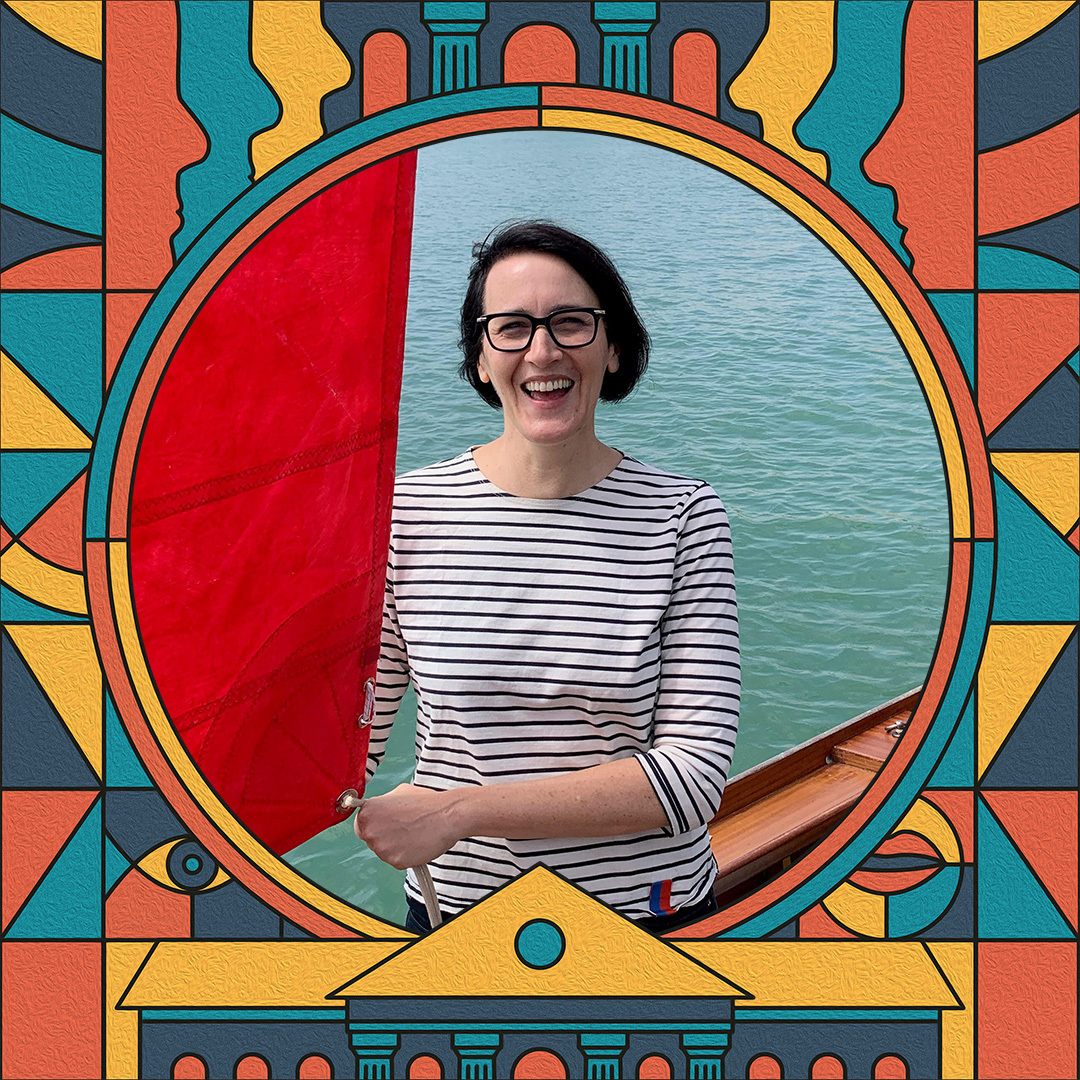
Abby: So today we’re talking with Melissa McGill, who’s an artist, activist, and water storyteller. She’s known for collaborative, ambitious, site-specific public art projects that really explore nuanced conversations between land, water, sustainable traditions, and the interconnectedness of humankind. Spanning a variety of media including performance, photography, painting, sculpture, sound, light, video and immersive installation, Melissa has presented both independent public art projects and solo exhibitions nationally and internationally.
Abby: Melissa, welcome to the show.
Melissa: Thank you so much. I’m so happy to be here with you.
Brenda: Melissa, your work is so amazing. Abby and I are thrilled to be talking with you today.
Melissa: Thank you.
Brenda: Yeah, absolutely. But Abby and I are really curious to know why you feel creative experiences are important to communities. Can you give us an example of a particular creative experience that you think has really made a huge, a huge difference?
Melissa: I think that things that draw us into awe and wonder and a sense of really, you know, the planet we live on, our interconnectedness, those are the things that really move me. And I think there’s incredible potential to creative collaboration.
So, one work that immediately comes to mind, a work that is such an inspiration to me personally, is a work by an artist named Maria Lai. She’s a Sardinian artist. She’s passed now, but she did a project called “Legarsi alla montagna,” where she activated her entire village to be connected through a blue ribbon, basically a blue cloth ribbon that was woven through the town. And everybody got involved. And then this ribbon was brought up the mountains, so they were literally tied to themselves, to the mountain, you know, and since what’s happened in that village and how the people came together around that project was really inspiring to me.
Brenda: And why are these important? Why are these kinds of creative experiences important in the first place?
Melissa: Well, I think we live in a time that’s very deeply, deeply challenging, and we are out of balance and disconnected from each other and the environment, and this robs us of our collective agency. So, if we remember that nature is really our wisest ancestral guide, and that how deeply interconnected we all are, we can come together and celebrate the interconnectedness and find balance and a harmonious path forward. I think there’s incredible potential for that in public space.
Abby: Would you say, Melissa, when I look at your work in general, does it sort of focus on nature and bringing community together through nature, like what’s sort of your focus as you’re creating a piece?
Melissa: It’s all water and stars. Very simple. That’s why I sometimes call myself a water storyteller. I’m really, I’m a water person, and that element is just so engaging to me. We have to care about our waterways, and so exploring nuanced conversations with land, water and sustainable traditions and the interconnectedness of all beings, not just human, but all beings, is at the heart of what I am interested in doing.
But I actually would say that constellation is really a form that all of my works take. Like with a constellation, it’s one star and then a collection of stars that are telling a story or that have, that become something else. And that is what’s happening in my work all the time. We are individuals, but then coming together collectively, we can create something different.
I mean, we can all have an idea that we start with. But when you engage in real conversation with, let’s say it’s a site-specific work with other people from that place, with people who, you know, let’s say if we talk about the Venetian Lagoon, where I’ve, I’ve done a major project called Red Regatta, you know, finding others that were deeply connected to that waterway and drawing on my experience, my own long personal experience with that waterway, brought us to new places.
Abby: So, talk to us, you mentioned Red Regatta first, so I’m going to piggyback on that because it’s a phenomenal project. Can you sort of describe to our listeners the end result of what Regatta could be expressed visually? And then sort of the pathways and the different collaborations with the different groups who helped bring Red Regatta to the water.
Melissa: So Red Regatta was an unprecedented independent public intervention. It took the form of four large scale regattas that activated different areas of the Venetian Lagoon in Italy. The vela al terzo sailboats are a traditional wooden type of boat and we sailed together. Each boat had its own set of hand-painted red sails, so every sailboat was hoisted with hand-painted red sails.
This project took place in 2019. It was presented in collaboration with the Associazione Vela al Terzo Venezia, which is the sailing club of this type of boat that is in Venice, and a team of over 250 Venetian and international collaborating individuals and partners, many who have never worked together before.
And so, why red? Why these red sails that were hand-painted for each boat? Well, my idea was that red is a color that has tremendous emotional range. It represents life force, passion, energy, but also alarm and warning. So just imagine 52 Venetian traditional vela al terzo sailboats sailing through the green blue waters of the Venetian lagoon in unison against the backdrop of the city to draw attention to so many of the issues that this waterway and that Venetians are facing, whether it’s climate change, rising seas, ever increasing motorboat traffic, the problem with the cruise ships, the ever shrinking Venetian population.
One other thing that I want to mention about these boats is these vela al terzo boats, they are so beautifully adapted to the city of Venice. You can raise your sales and sail through the Venetian Lagoon, or you can lower the sails, take the mast down, and then row your way under the bridges through the city. So, what an amazing, adapted perfect tradition that needs to be celebrated and moved, and brought forward. Those are the examples that we need, right, to navigate into the future.
Brenda: How on earth, Melissa, do you coordinate and lead a project on that scale? You mentioned that there were so many different groups and individuals. What did that look like?
Melissa: Well, first of all, I had an amazing team which I’d like to give, thanks and call out to. So, I collaborated, like I said, with the Associazione Vela al Terzo Venezia under the helm of Giorgio Righetti, who was the president of the association at the time. He’s since passed on.
And we had deep partnerships with the Comune di Venezia, all kinds of organizations in Venice, Oceana, the United Nations, Sailors for the Sea. I mean, it went on and on nationally and internationally, the Peggy Guggenheim Collection. We did Ocean Space. I mean, I could list so many, they’re all on the website, but I really celebrate the community.
And, I think that, you know, the, yes, I mean, there are many people when you start a project like this that will tell you that it can’t happen. I got a lot of that, like, no, this is impossible. It’s never going to work. But when you also have people who look at the project and say, wow, this would be amazing if we could do this, let’s, let’s try and then you just keep putting one foot in front of the other in dedication. You have to be incredibly resilient.
There’s an ancient Arab proverb that I always use, which is throw your heart out in front of you and run ahead to catch it. And that is basically what happened. So, there were many stages. There were many moments of like tearing your hair out like, oh my gosh, are we actually going to be able to do this? Actually, it was my project manager, Marcella Ferrari, when we were painting the sails.
She said, you’re going to look back on this and you’re going to just be astounded. And I was like so in it, I was like, okay, yeah, but we have to mix this color to go with it. Like, I was right, I was back in the details, you know? And now I look at it and even talking about it, you can probably hear in my voice like I actually, I’m kind of in awe of the fact that we did it.
I also think that all projects have divine timing. and the project timing of this project was really specific because I raised all the money for this project myself, like I do for a lot of my projects, my big projects, like Constellation and this one, I have had to fundraise and raise the money for these projects independently because I haven’t found another way to do them. And so, that is a huge responsibility. Fundraising is not my favorite part, but it’s part of what goes with, you know, something like this. And, you know, somebody said, oh, you know, we, we don’t have enough money yet, like, we really should, because the sails were expensive, and I gave them all to the sailors. They all kept, I gave them to them to keep.
So, somebody said, oh, you know, we don’t have enough money yet and we should postpone it. And I said, we absolutely cannot postpone it. I was convinced. I was like, no, it has to be now. And it was just like bigger than me, like it was just, has to be now. And then what happened right after was a series of catastrophic events.
A cruise ship, like a month or, a month or so after we sailed the last regatta in September 2019, a cruise ship crashed into the Fondamenta in Venice, something we were talking about. It’s like cruise ships in Venice. And then they had the worst flooding since the 60s, you probably remember the dramatic flooding of Venice that year. Like, you know, it was horrendous. It was like the whole city was destroyed. And then Covid. So, if it hadn’t happened then, we probably wouldn’t have done it.
Brenda: You are definitely in sync with, I’m sure, a lot of different forces, because what an uplifting, positive time of beauty you created in the city. And, you know, thinking about your connectivity with things. Let’s talk a little bit more about how your work incorporates and resonates with nature. So, you’ve mentioned deep listening. It’s, something that you encourage, deep, deep listening to nature as you create.
And this is really, it’s related to a lot of movements that we’re hearing about now, such as, you know, being very mindful, highly present, fostering deep connectivity through mindfulness and active listening. Tell us what deep listening means to you. What can we learn from it?
Melissa: I think that the deep listening is not just to, well, it’s to nature, but it’s also to each other. So how can we come together to address these urgent local and global issues creatively and collaboratively? This is the question that I think about. Like, you know, and I would say that seeking out authentic listening collaboration is so important because there’s a lot of people that talk about collaboration, but, you know, when you’re having a conversation, how much are you listening and how much are you talking? You know, also with the non-human, so that’s, you know, the other, I never know what to call that, it’s like other beings, other forces, because I always think of these projects as being collaborations with other people and communities, but also with the elements.
Abby: Yeah.
Melissa: And with the natural forces. I mean, you can’t sail a regatta without the wind and the water. But I think meaningful shared experiences that are designed to have lasting positive impact, it’s like if we shift the perspective and think about how to have these conversations in ways that are going to bring people together in joy and wonder with lasting positive impact, which I really build the projects around, all of them, then, you know, there’s a lot we can do with that.
Abby: So, some of your, you work in what I’d describe as unconventional places. For our listeners, what do you think, Melissa, some of the pros and cons are, when considering creating these larger public works?
Melissa: I think it’s really important that you really have an authentic relationship to the place. Like I make work where I live or where I have lived, or where I know people. Sometimes I go into new communities, but only with a tremendous amount of time with immersing myself in that, like, I am not going to be the artist who drops into a place and, you know, says, okay, let’s just make this, because it’s not going to have the same relationship to the place.
You know, I need that time to connect. Heart connect. It’s about heart connection. So, you know, a project in the Hudson River. I live on the shores of the Hudson River, a project in Venice, I lived in Venice. I have a deep community there. There’s a lot of places I haven’t been that I’d love to do projects, but it would take time to have a, build a relationship, you know.
One site that I take with me and I probably could do, you know, would be engaged to do a project anywhere there is this condition is, I am a person who is incredibly drawn to estuaries. Estuaries are places where, you know, as we know, there is saltwater and freshwater mixing. There are often marshes. There’s incredible biodiversity in those places. And they’re places that are between places that are very important in the world. And so, I do think I could go to any estuary and find my footing pretty quickly.
But that’s just like I have a very natural draw to that. But I think that if someone is, you know, planning to work site-specifically, I just hope they would do the work to really find out what is that place.
Abby: I do just want to build on a wonderful estuary where I grew up. I grew up on the Wirral, which is north of Wales and south of Liverpool. It’s a little peninsula there, so there’s an estuary which is now getting silted up. About 100 years ago boats would go up and down. So, from Parkgate is the name of the, of the town there, you can see over this beautiful estuary at all the biodiversity, over the River Dee there to Wales, and it would be an amazing place for you to do something.
Brenda: Put it on your list.
Melissa, let’s talk about time. A lot of your work connects the past, the present and the future. Why is this theme so central to your work, and do you ever think about permanence?
Melissa: I don’t think there’s any such thing as permanence. I also think we have to really get into the concept that time is not linear. It is more of a spiral, and we can really learn from the past. We can learn what shouldn’t be repeated, we can learn what is really sustainable and in right relationship to the planet we live on.
Many indigenous communities have the wisdom of that, and we need to remember what our interconnected relationship is there. So, I think that my connection of past, present and future is really like, what can we bring forward, like in the case of Red Regatta, bringing forward this tradition that is in harmony with the environment that it’s based in, is a good idea.
So, you know, we’ll think about that in connecting past, present and future. And also, you know, really, I love involve being the youth in the projects. I love involving, like I do family workshops and I involve people of all ages in the projects because we are all in this together and the youth are the future. And so, we really have to be including them in what’s happening and give agency again, inspire agency.
And that goes back to that theme of like climate fatigue and like, how can we come up with creative ways to navigate forward that are going to be in the interest of everyone eventually, hopefully.
Abby: Do you think we, we as humans ever learn? Because it seems to me that if we could all just look at the past, then we wouldn’t even be making some of the mistakes we’re currently making, let alone all the ones are going to be making in the future. Do you ever feel a little like this is just part of being human, and we’re constantly going to repeat the same mistakes?
Melissa: It goes a little bit to this idea of disconnection. I think that our culture and capitalism relies heavily on distraction, distraction from core values and the connection to the environment. And so, to remember that in any way we can is going to be a positive thing.
Brenda: Melissa, a lot of artists are talking about sustainability. When we say sustainability, what do you translate that to mean in your work?
Melissa: I think that sustainability is finding ways to be and to like, it brings up a lot of verbs for me, like, actually, like action, like how can we be sustainable not just for the humans, but for all of the beings that live on the planet. So, for example, you know, if we make decisions based on what’s best for everyone, that’s sustainability.
I mean, that’s the way I think about it. So, if something is in, as I was saying before, right, relationship to, you know, nature, to all the beings that are human and, and more than human, there’s all different ways of saying it. I mean, we’re never, but we can’t make any gross generalizations about what’s right for everyone. But I think that’s the thing that has to really be part of the conversation. and that’s one of the reasons I really care about beauty. Beauty in the projects is because beauty brings heart connection, and you don’t need language.
Abby: So, if you’re using beauty to move people, to make them rethink nature, why is nature on its own not enough for people? Why does it not connect naturally to us, do you think? Why are we happy living in our cement jungle?
Melissa: I think again, it goes back to distraction and the phones and the smartphones and the whole culture being in that, people aren’t, you know, are really in that. I know it’s been a useful tool. I’m not someone who is against technology, but I think we really need to think about the impacts that it’s had on people and how they’re connecting to the world that they are in.
Like, for example, when I was doing this project called Constellation. Constellation was a large-scale project around the ruins of Bannerman’s Castle on Pollepel Island in the Hudson River. Every evening as the sun went down, these starry lights emerged one by one with the stars in the night sky, and they created a new constellation connecting past and present, light and dark, heaven and earth. And it references a Lenape belief about Opi Temakan which is the “White Road” or the “Milky Way” connecting this world with the next.
So, what this was, was I mounted on this island 40 to 80ft poles, and at the top of each pole was a solar powered LED., so you would see this kind of vertical rhythm of these poles during the day. And then as the sun went down, the light would fade and the poles would disappear and these starry lights would come on one by one in the night sky and mix with the stars, actual stars and the moon and connect you back to this larger sense of this landscape. And out of the, just the narrative of this folly, of this Bannerman’s Castle, which was a, built by an Army surplus dealer, a Scottish immigrant, in the turn of the century who kind of turned it into an advertisement.
It’s like a folly. So started, and a lot of it has fallen down, which is why it’s kind of a ruin. And so, it’s part of the New York State Parks Department, Hudson Highlands State Park. So, going back into that site and bringing that connection to the larger landscape, we did boat tours all the time. I collaborated with the Bannerman Castle Trust to do these boat tours, which would bring people out on to the river in the evening, which hardly anybody does, and go to see the stars come on.
And so, one experience that I had that was so moving and I would, I will never forget it, was every time I did an artist led tour, which was often I would experience the same thing, which was we would have this, the public on the boat. And every evening as the sun went down and these points started to light one by one, over the 15 minutes or so that they lit, people would see one come on, somebody would say, there’s the first one or whatever, and then everybody would get out their phones and start to try to take pictures.
But it was night time on the river, and these were solar powered points of light like stars, so you couldn’t capture it very well with the phone, so you had no choice but to put your phone down, put it back in your pocket or your bag and just be there with each other and the smell of the river and the wind on your face, breeze or whatever it was. Sometimes, you know, and different phases of the moon and everyone would stop talking. Or if they talked, they would just whisper. It was like being in a cathedral or something. It was like being really there and present and connected, and it was incredible. So that was a gift.
Abby: So be in the moment. Put the phone down, be present.
Brenda: And listen.
Abby: Well. Thank you, Melissa, for joining us today. Yeah, thanks for sharing your work, the tenacity needed to create these projects and, the importance of nature for all of us and how at our core, we’re very much still part of the world we live in, dependent on it and need to take care of it. So, thank you so much for sharing today.
Melissa: Thank you.
Abby: And thanks to everyone who tuned in today. If you enjoyed it, subscribe for more episodes of Matters of Experience on Spotify or Apple. Please leave a rating and a review and share with a friend. See you next time!
Brenda: Thank you Melissa. Thank you everyone!
[Music]
Producer: Matters of Experience is produced by Lorem Ipsum Corp and recorded at Hangar Studios. Tune in next time for more fun discussions about experience design.