[Music]
Abby: Welcome to Matters of Experience, a podcast produced by Lorem Ipsum, an experience design company headquartered in New York City. Our podcast explores the creativity, innovation and psychology driving designed experiences. If you’re new, a hearty welcome and to our regular listeners, thanks for tuning in and supporting our conversation. My name is Abigail Honor.
Brenda: And this is Brenda Cowan.
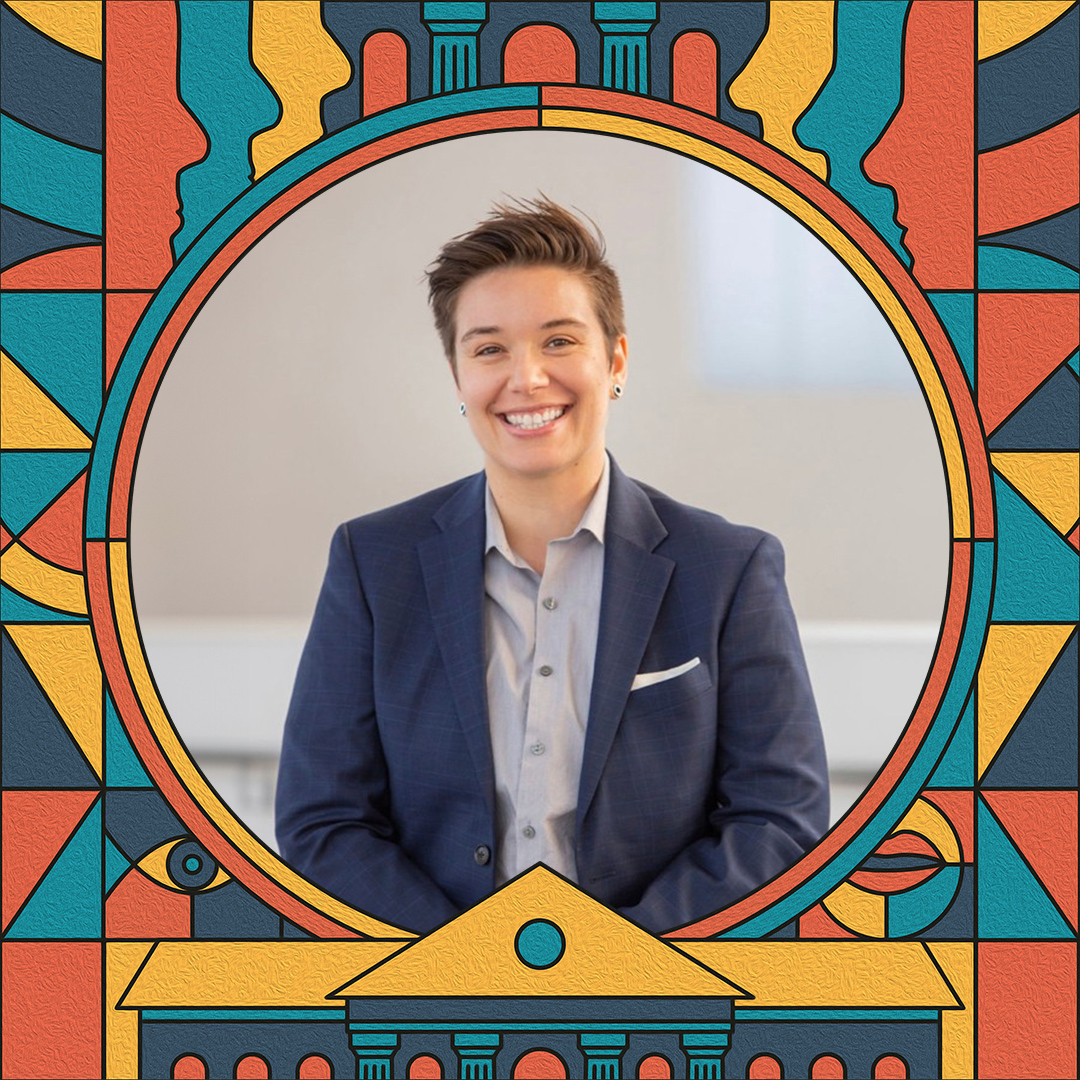
Abby: So today I am very overly excited to welcome Jamie Lawyer to the show. Jamie is the chief—and the world goes crazy—Jamie is the chief experience officer at the Rubin, where she drives the creation of strategic, creative and empowered experiences at the intersection of visitors, art and museum staff. So, Jamie, we’re neighbors. The Rubin was on the same street as our old office for over a decade, and I’ve been fortunate enough to have enjoyed many, many days with my children, colleagues, either visiting the unbelievable collection or one of the temporary exhibitions, or enjoying the best lunch, I would say, in the neighborhood, or buying a gift at the store.
Brenda: Or the DJ Friday nights, don’t forget that.
Abby: DJ Friday night. It has a special place in my New York experience, and I’m really excited to talk about your many hats, from audience-centered work to your commitment to educating museum professionals and your black belt in taekwondo. Jamie, thank you for joining us today.
Jamie: Thank you so much. I’m excited to be here.
Brenda: Let’s just begin with your origin story. What attracted you to the work that you’re doing now?
Jamie: I was 19 years old the first time I stepped foot inside a museum. I grew up in a small town in Pennsylvania, and as someone who was gay in a very small area, the feeling of belonging was something I was very attuned to. And I also did not have a lot of access to arts and culture where I grew up. And I remember the first time I went to a museum down in Washington, D.C., and stepped foot through the door, and I’m in this gallery, and I look around and I see families. I see two, you know, college age students signing, you know, to one another from Gallaudet University.
And I walk closer to a Jackson Pollock painting and security guard comes up to me and I’m worried. Oh, no, I did something wrong. Not again. And instead of correcting me, he invited me to look closer. And at that moment, I realized the power of that invitation, of what it feels like to belong in a space that can feel so intimidating and you’re so scared and, you’re just trying to figure out how to, how this, how does all this relate to me?
So, for me, that moment of invitation, I felt the power of that, and that’s the feeling that I wanted to pursue and say, hey, you know, people like me belong in museums. And if I don’t feel like I belong, I’m sure there’s plenty of other people that also feel that way too.
Brenda: What a really amazing foundational experience for you to have. That feeling that you described, is that something that is still present with you today, and the work that you do when you pop into the museum for your job and it’s, you know, yet another day. Do you still have this feeling of, is this a place where people can belong?
Jamie: That is the number one thing I am fighting for in every room that I’m in, and every time I talk to a team member, when I think about why do we do this work right? It’s to make people feel like this is a place for them, to make people feel like art and culture can matter, and that you have a right to access it. And to me, what happens when we build that muscle for our audiences, they begin to get curious about culture. They begin to fall in love with cultural experiences, and that’s something we need more of. We need museum fans. We need people to be excited, and we need to make sure that we’re creating spaces where we are caring for our audiences in such a deep way that they walk away with saying, you know what? I had a great experience today. I feel confident the next time I go into the next cultural institution that I access.
Abby: As a chief experience officer, what are you doing on a daily basis? Give me a day in the life of Jamie.
Jamie: My role as Chief Experience Officer at the Rubin, I’m really thinking about the 360-degree view of audience experience. Right? So, for me, that means at the point of entry, I’m making sure that our frontline staff feel supported, that they can welcome people with ease, that they have the knowledge that it takes to form those connections. I’m also intersecting with a lot of the activities that are unfolding in our galleries for interpretation. So again, another bridge between our art, our curators and our audiences. Right? So, in my areas, this is also our docent programs.
So now I’ve, I’ve walked you through, we’re coming through the front door. We’ve moved into our gallery spaces. But it’s also all the words that we’re using. So, for us that’s the language, that’s editorial, that’s the things that we’re publishing, all the ways that we’re speaking with people to make sure that we’re creating something that’s consistent throughout and an area that’s expanded for us and will continue to grow.
That’s also digital content, right? So really being able to push out into different ways to reach audiences. So, for me, a day in my life is really thinking about, those are all the major interaction points just within my team structure. But of course, I’m collaborating with colleagues across the museum to really make sure that they’re keeping visitors at the center of all of their work, because that’s what every department is really designed to do.
We’re supporting audiences, we’re supporting staff who support audience, and we’re trying to find ways to work together and making sure that we’re creating a dynamic experience for them, regardless of what area of the museum we serve.
Brenda: You do some of the most sophisticated audience studies I think I’ve ever seen, looking at audiences, looking at people, thinking about experience, thinking about learning, thinking about play, thinking about what is engagement. And tell us a little bit, give our listeners a little quick hit of the predominant types of audiences that you have identified at the Rubin, because they’re fascinating. And if I recall correctly, right, you’ve got like two predominant types of visitors. Right? And then it gets more complex.
Jamie: So, the audiences that come to the Rubin based on research that we have done in the past, we really are focusing on two major elements, and we really embrace psychographic research, right, what’s motivating people to really come in through the doors? And I would say they break down into simple, but powerful ways. People that want to engage with their head, I want to learn, I want to engage with my intellect and people that engage with their heart, right, I want an emotional experience. I want to feel connected to something bigger than myself. So those are our two audiences that are sharing spaces with one another. They have completely different needs, but they both can really learn from each other and in quite valuable ways.
And when we’re able to really build that foundation for those people who love to experience with their heart, they appreciate when their head gets involved. And there’s people that, you know, I want to learn. I crave something new. They’re even open to learning more about their emotions and ways of feeling connected to someone else. So, while they might seem separate on paper, there’s a beautiful space that they do overlap. And some of our projects are really thinking about where is that overlap, how can we satisfy both of those audiences and making sure that they have a meaningful experience with us and can really learn from each other as part of it?
Brenda: So, you do so much in your role as chief experience officer. What don’t you do that you think you should be? What’s missing?
Jamie: So, the thing that I, I wish for and I spend quite a bit of my, my days doing is really thinking about our employee experience, right? Museums are made of people, and the great work that we do comes from them, and when we invest in them, we will have greater and stronger audience experiences on the outset. When we make it so that their work is easier to do when they can find joy in what they do, when they feel empowered, when they know how to show up in their space and feel celebrated for that, we will have better cultural institutions.
So, for me, that big thing that I spend a lot of time doing that is really thinking about how can I really improve what’s happening on the inside of our cultural institutions within our teams that make people reach out, say, hey, let’s work together on this, hey, you have a valuable perspective to offer. I haven’t heard you speak up today. I know you’re thinking something, so really making sure that all the key voices are heard and represented as part of the conversation, and not only it being something that I’m just deeply passionate about, then making sure it gets baked into our culture and the way of working so that it will stay, and suddenly people will wake up and say, this is how we’ve always been.
Abby: What makes a great colleague? How can you tell somebody is not going to fit culturally, and who’s going to be a good fit?
Jamie: When I think about someone coming into a cultural institution, my approach is I look for potential, right? I look for people who are excited, who are curious, who have passion for what they’re doing, and that’s what matters to me. And of course, we can go into expertise and qualifications and, you know, things like that. But to me, as someone who is curious to learn, who is resilient, who has the ability to pivot, and I’m not just speaking for the, the Rubin Museum, this is for cultural institutions today, because to me, it’s, you can have all of those incredible, necessary hard skills, but so many of those soft skills that we talk about, like that’s to me, when things get tough, those are the things that we’re leaning on. Right? When people value that as part of who they are, that helps them propel forward.
So, someone who’s curious and willing to learn more, and that’s what our art really shows us. We’re dealing with Himalayan art. Our art requires that we stay curious and keep our minds open. And I know on the show you’ve talked a lot about like growth mindsets, right? So being able to have a growth mindset is so essential in the museum field. From my perspective, when I’m thinking about people I want to work with, that’s our way forward. People who are willing to see other ways of doing things, willing to sort of roll our sleeves up and have great conversations and, you know, have the uncomfortable conversations as well. To me, that’s how we move the field forward and also how we find joy in our work.
Abby: You know what’s really interesting, so my mom was the principal of a school. She’d been a teacher for a large part of her life, and we would often talk about what makes a good teacher. It was about sort of what you’re describing Jamie, and how you can get others excited, and how you can reach others and help them be curious.
And as you’re talking about your colleagues at the Rubin, and finding a good fit, it seems to me that whatever they’re doing, it’s not also about just them and their curiosity. It’s about how much they want to communicate and share that with the visitors. And it feels like as soon as you got that combo, then you’re golden because it’s about that welcoming and your sort of story, your origin story is just quintessentially that perfect mix of the visitor who’s nervous but open to want to know more and curious, and then the docent or the person who represents the institution holding their hand and shepherding them forwards.
Brenda: Well, being cared for in terms of being listened to and like you’ve been saying, being seen, but also being cared for in terms of compensation and hours of work and is my environment, you know, welcoming to me in a lot of practical ways. These are so imperative and in certain cultural institutions lead to so much stress, burnout, anxiety. We are all familiar with this kind of dynamic.
So, Jamie, your attention to creating a very caring environment, it’s absolutely essential to having a good workplace, a good work environment, and also to build resilience and to have the ability for somebody to feel so cared for and so comfortable that they might take that vulnerable step of saying something that might not like you said, feel very comfortable, perhaps, or they might feel like they can share even if they don’t know the answer, but they want to find out, or they want to reach out to other people with whom they don’t get to interact on a regular basis. All of those things can only happen if you’re in a very caring environment.
Abby: In your day to day or week to week or month by month. What are some of the challenges that happen in your job?
Jamie: So, for me, when I think about any challenges that I might face in the workplace, empathy is a guiding value for me. Being able to see and understand someone else’s point of view, whether it’s the curators, you know, curators that I work with, any members of staff, right, content experts, external partners, everyone has different perspectives, right? We understand this. But also, what happens is everyone has different ideas of who their audiences are. We’re all thinking about audience. But our challenge and my challenge is to make sure that we have a shared language with one another.
One of the things I love to do is collaborate, right? And a lot of the sort of things that come up when you hear collaborate is, oh there’s too many cooks in the kitchen. I understand where people are coming from, but to me, I’ve seen kitchens at work and there’s a lot of people in those kitchens, and it’s about every single person really understanding their role, why they’re here and having someone really guiding them expertly towards a common goal. We’re all so passionate about this work, and I think sometimes we can really misunderstand one another’s passions.
But if we’re willing to really pause and reflect and ask, why is this in the room, let’s take a step back. This is not about ego. This is about our audiences. And the more that we are cultivating and practicing that empathy, that vulnerability, all the things that we want our audiences to bring to us, we need to show that to our staff, to our colleagues, to our partners, to people who say, I don’t quite get it, right, but what does it look like to think about it a little differently, to see their humanity, to see their passion and say, while we don’t agree today, I’m willing to sit down, let’s listen, let’s find a way forward.
Abby: So, let’s focus on martial arts. So, this crops up a lot on our podcast. sports and how it helps with discipline, facing failure and sort of achieving success in the workplace. I was worried when my two girls, I’m very sporty. I’m really into sport, very competitive. And my kids were not that into sports, so I tracked them around to everything. But I was relieved when my eldest finally fell into jujitsu, which is a phenomenal sport, and my youngest now does volleyball, so they are not complete couch potatoes, and they may be successful in the workplace. So, Jamie, tell us about your sport and how you feel it relates to your work and the themes of interpretive experiences that you oversee.
Jamie: So, a fun fact about me, I’ll offer two fun facts; one, the way that my brain processes information, I don’t see any mental images. So, when I think about memories, a lot of people, if you think about a red barn or you can see a red barn and people have different ways that they see that red barn. For me there’s no mental image that comes up, right?
I can feel what that looks like. I can understand what it looks like. As a byproduct of that, right, it means that being embodied, really being in the present moment is the way that I really navigate the world. So, to go back to taekwondo, which I grew up doing, I was a second degree black belt, competed nationally across the country. And one of the things I really learned about from that from a very young age was the importance of embodied experience, right? When you can really feel something in your body, it helps you be present in a different way. It helps with patience; it helps with understanding.
And also, one of the things through a sport that’s very individual in nature, right, it’s you versus yourself, most often. There’s other ways, but a lot of times it’s you versus yourself. You begin to see the power of incremental change, right, so when we think about change happens, you know, when you’re training year after year, it’s not, you know, one thing, suddenly you’re at the next, next level. You wake up a year later and you’re completely different than, than what you were that year before.
So, to me, the subtlety of movement, the change in the way that you are holding your posture, right, you can feel that in your body. And I think for me, the last key takeaway for me from taekwondo, I started teaching when I was ten years old, which I cannot imagine that here in New York City, like you all show up to your workout class and there’s a ten-year-old telling you to drop and give them 20. But you know, for me, I had the opportunity to see that everyone was a beginner, right? Whether you’re a four-year-old or you’re a sixty-year-old, we all have things to learn. We all learn in different ways, and we all deserve respect and we’re all just trying to reach a common goal together and the power of being able to listen to one another.
So, a ten-year-old being able to offer correction based on expertise that they had and receive that in respect, it’s the same thing that should happen in our workplaces, right, leadership should be listening to an entry level person who’s just come in. So, to me, like I see that sort of reciprocity, that mutual respect of letting our titles out of the room and really just seeing like, what’s the expertise that we have here? Let’s listen to all the voices. We’re all beginners in some way. Let’s stay curious and let’s say open, open to learning.
Abby: It looks like you’ve reflected back a lot on your childhood and who you are. And it’s all sort of the pieces of the puzzle that fit together as to who you are now, you can see where you were at ten, how you’ve changed. Do you feel like there’s anything left to learn about yourself?
Jamie: Every day.
Abby: Really?
Jamie: Every day there’s other things to learn, right? Like knowledge locks in in new ways. And what locks in for me today, six months from now, there might be something new. That’s to me, we’re all in this path of ongoing learning. There’s always a beginner’s mind, right, that we need to embrace the world with.
So, for me, it’s like one of the things I really think about and whether I’m talking about taekwondo or the first time I, you know, felt comfortable in a museum. These are my values. These are the ways that I show up in my workplace, my history, my identity. Being a queer individual, that informs who I am, being empathetic, that informs who I am, being collaborative, all these things are values or identities, and I think that’s something that we, we talk a lot about. But so often within our teams, and when we show up to this work, what are our personal values?
Because those are the things that we will say yes to. Those are the things we will say no to, that influences how we fight in the room, how we let things go, where we will compromise, where we will, like, really push in. And it comes down to values and being willing to investigate yourself, become aware of where your weaknesses are, where the things that you don’t know, and you need to bring other people into the conversation.
And being able to learn from the things that you value, the way that you see the world, and understanding how that can drive you, but also where you need collaborators to sort of balance you out as well, and making sure that other people are also attuned to the things that they value. So that’s something to me that’s so important for the way that I think about, you know, biography and how we show up in the workplace.
We’re showing up as whole people. Right? And it’s important in our experiences. We are designing as whole people. We’re designing for the things we love, the things that we privilege. And it’s why it’s so important to have that empathy for others and other perspectives and other points of view. Because if we are only leading from our own sensations, the things that we care about, we are leaving so many people out of the conversation.
Brenda: Let’s talk about the Rubin Museum of Art. It’s about to launch itself into a whole new form. It’s envisioning itself as a global museum, and that means traveling museum, a digital experience, a loaning institution. And I think that what the institution is embarking upon is incredibly courageous. And I think about other institutions that have taken similar forms, such as the Museum of Homelessness, the Museum of Empathy, and how it is that these institutions operated without walls for many years, and they reached so many people through installation, through programs, and through being a part of other museum and heritage sites.
So, I’m excited about the new form that the Rubin is taking, and appreciate how bold it is for challenging conventions and challenging, you know, even the new definition of museum that ICOM has put forth. Jamie, what feedback have you been receiving from others? Are there naysayers?
Jamie: You know, for us, it’s really important to be able to meet audiences where they are, and there has been a lot of excitement towards this. We’ve received a lot of positive feedback of, yes, like, you’re going to come near me now. You’ll be able to do more work within the regions that you serve. You will still be there to serve us. You’ll be able to create more understanding, awareness of Himalayan art. Fabulous. So, there has been a lot of support for evolution.
There has also been, you know, people who feel a sense of attachment to who we are and want us to continue to be who we are. And it’s been really interesting, you know, to see grief in action. Right? The really, the response from the museum community, from the visitors, the only way I can describe it is just to compare it with grief. There’s people who are experiencing loss, profound memories that they’ve had in the space, who come to it during moments of I want to sort of make sense of what’s happening in my life, in the world. They come to the Rubin. People who want to feel a connection to their own culture, come to the Rubin. So, I recognize that our transition to our new form does come with that loss that people really know us, know us as, and love us as.
And also, we’re still going to be here, right? We’re still serving our audiences. It’s just going to look different than what people really know us as right now. And one of the things that’s so exciting, we just opened the Mandala Lab in Italy, which is currently in our current physical building. We’re still able to bring Rubin experiences to people all over the States and all over the world. So, there’s still so many ways to interact with us.
We’re looking to support other cultural institutions who want to tell the story of Himalayan art, right? To be able to share our collection more broadly, something that the museum field we need to do, we need to share our assets. We need to share expertise and lift one another up. We will be able to do that work hand in hand with other cultural partners, and we will also be able to serve and support other artists and researchers through grant projects and opportunities.
So, while we are losing a very centralized way to experience us, we are actually going to be supplementing and supporting Himalayan art and this very important field of study in completely different ways, and to still be of service to the art, to the collection and to our audiences.
Abby: What motivated this?
Jamie: One of the big motivating factors was really following where can we most impact audiences? So, seeing a lot of the success of our traveling projects, of seeing attendance and support, support being there in both financial and audience excitement around it, those were really powerful proof points for us. And also, museums in their physical spaces, they’re expensive as well, right? So, for us, while financially the Rubin’s at a good point, this transition allows us to continue to serve our audiences for even longer. The museum field has to change.
I think when we look at our textbooks five years down the line, we’re going to see this moment that we’re currently living through right now. And I think what’s happening for us at the Rubin, I like to think about it as museum studies in action, right? You know, so this is to me, it’s a bold step that we are doing, but it’s one that’s in our heart of hearts, trying to serve audiences in our collection in the best way possible.
Brenda: So, you’ve been working in Bulgaria for the past few years on this really exciting initiative called Muse Academy. To me, it seems like there’s a surge of activity happening in Bulgaria, or at least I seem to keep hearing about how amazing Bulgaria is from a heritage institution and, cultural museum perspective. And I’m even thinking of, like, the new children’s museum, that’s there, Muzeiko, which is so beautiful and so profound and I hope to get there in person someday.
But let’s talk about you. What is the work that you’ve been doing in Bulgaria and what is it like bringing museum studies, audience studies, experience? What is it like bringing that to a very different place in a very different culture?
Jamie: So, the work I’ve been doing in Bulgaria, the, the past year and a half now has been so rewarding and so powerful. And it’s alongside great collaborators Paul Orselli and Christina Ferwerda and, we’ve been invited to create a professional development program where we’re inviting cultural professionals from all over Bulgaria, from entry level positions to museum directors, outgoing directors who are getting ready to pass the baton, also partnering with NGOs who partner with museums and tourism, hospitality and helping them think about how can I create an audience centered experience.
So, we’re bringing together a curriculum that is helping them change the way that they’re thinking about audience, to think about how can I tell dynamic stories in my cultural institutions? How can I create interactive exhibitions and really keep audience satisfaction at the center, and to not only give them tools that they can bring back, but also give them a mindset that they can push forward and one of the guiding phrases for the program is Mozhelo, which means it is possible.
So, this program is not only giving them real things, but real things that they can, they can do today, small and big changes. But it’s also giving them an energy inside them that says, you know what? We can do this right, I can do this, that this change is possible. So, to me, that’s that, you know, that’s something I believe so powerfully in our field, is that each one of us can make a difference in our, in our small ways.
We can push boulders up hills. We can do it together. If other people don’t want to join us, it’s okay. There’s still things that we can do and try, and it’s important that we, we stay focused. We stay focused on what’s ahead of us and that audience that we are fighting for to bring into our cultural institutions. So, when we’re there and doing that work, we’re helping remind people of the power of audience, of what it means to visit a cultural institution, of why it matters, and to give people professional development opportunities to network and find their collaborators, and to say, hey, like this, this is possible. We can, we can do something here.
Abby: Jamie, this was incredible. I feel like we could definitely go on for another hour. I would love to have you back after we see the transition, the Rubin to without walls. It would be really interesting to talk through all the pros and cons and what you’re experiencing and learning and growing. Very excited to see your next chapter. Thank you so much for coming on the show and sharing your experiences.
Jamie: Thank you so much.
Abby: And thanks to everyone who tuned in today. If you like what you heard, subscribe for more episodes of Matters of Experience. Make sure to leave a rating and a review and share with a friend. We’ll see you next time!
Brenda: Thank you everyone!
[Music]
Producer: Matters of Experience is produced by Lorem Ipsum Corp and recorded at Hangar Studios. Tune in next time for more fun discussions about experience design.