[Music]
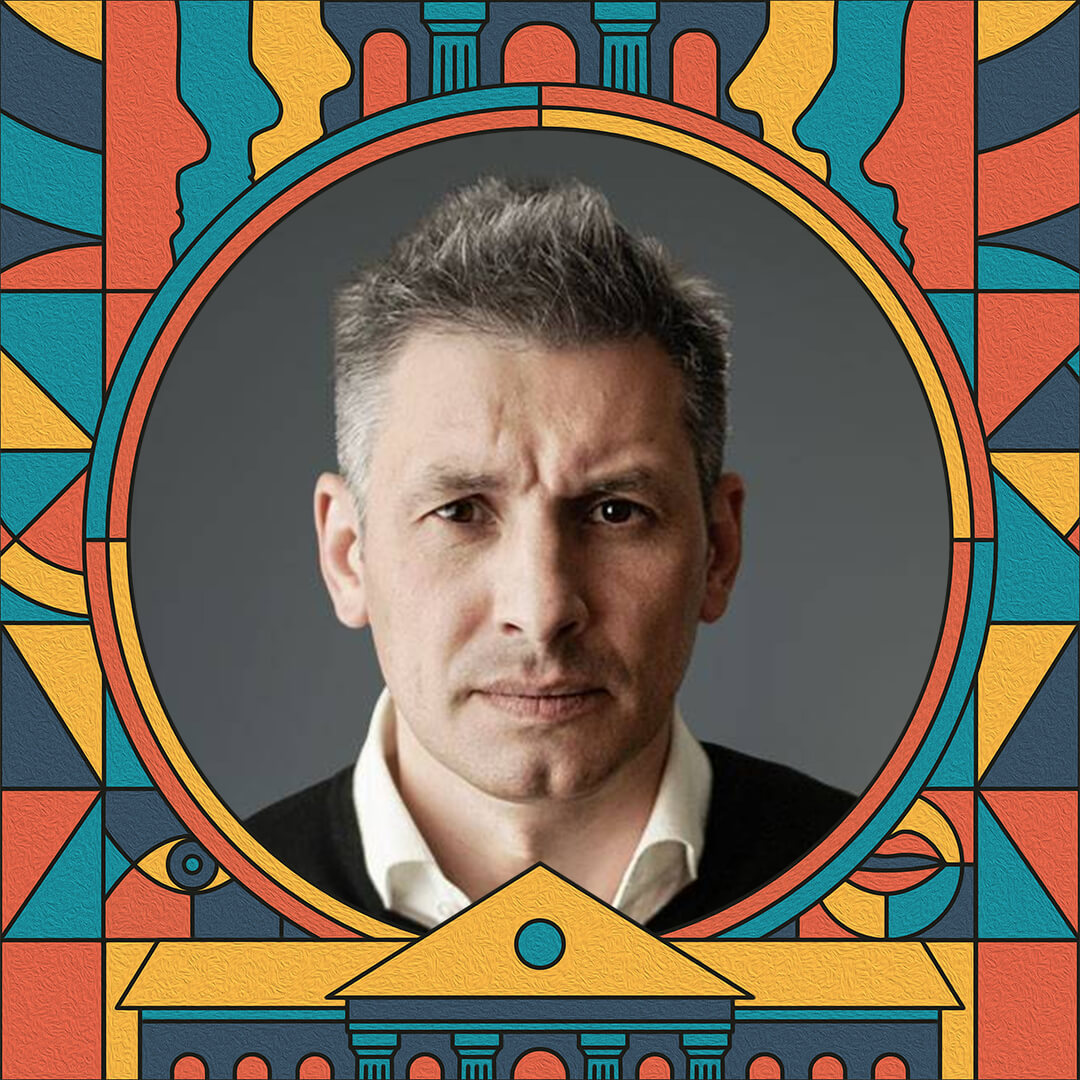
Abby: Hello and welcome to Matters of Experience. My name is Abigail Honor.
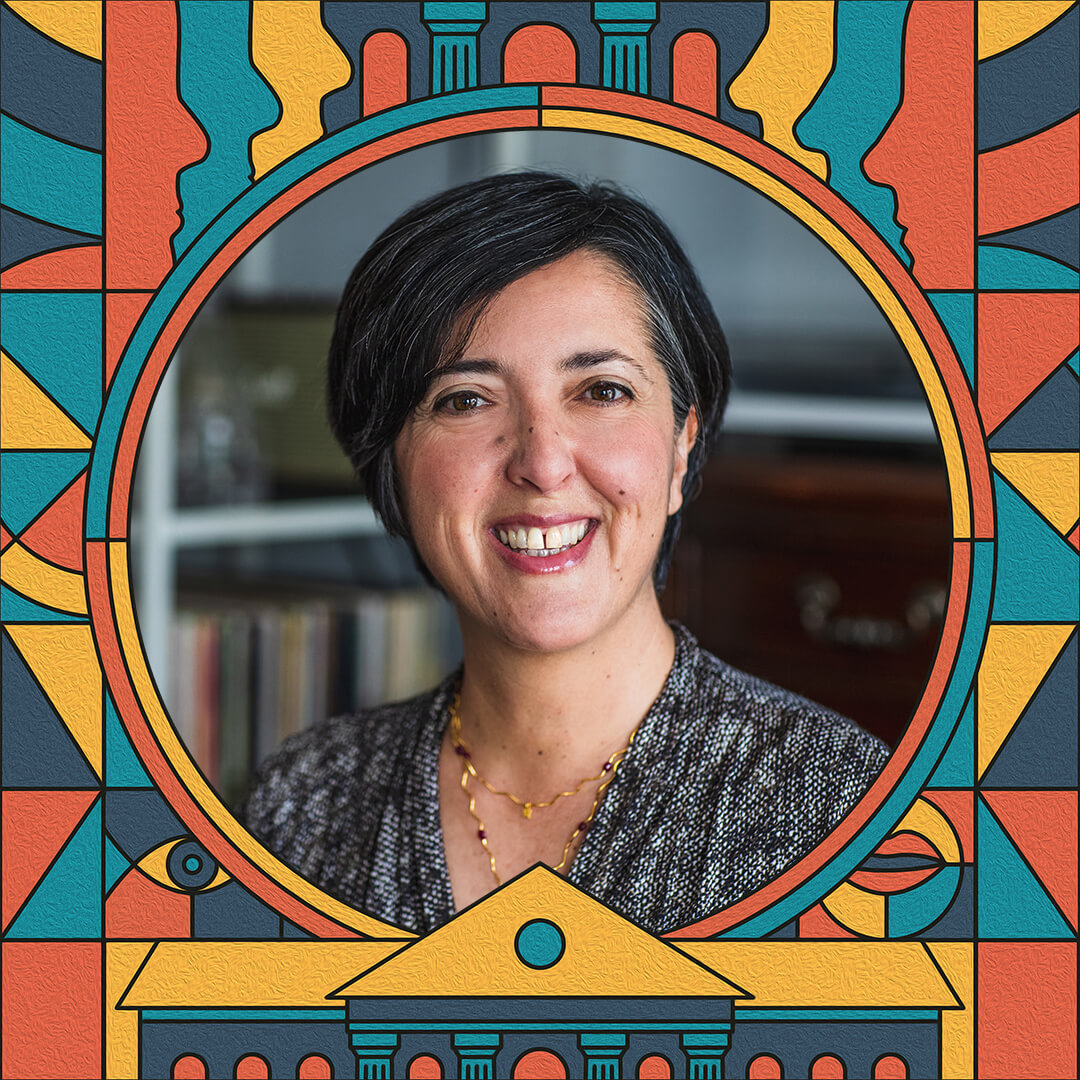
Brenda: And I’m Brenda Cowan.
Abby: Welcome to this week’s podcast, The Object of it All, where we talk all about objects, those in our everyday lives, and especially those in museums and institutions.
Brenda: Let’s play that game where you tell me what you would grab if your house was on fire, God forbid, and you could only save one thing. What would it be and why?
Abby: Okay. Well, first, Brenda, little known fact and small segue, and not to be too macabre, but I actually was in a house fire.
Brenda: Oh, no!
Abby: Can you believe it? Yes. Well, obviously, I got out alive.
Brenda: Oh my God! This is the trauma podcast. I’m so sorry.
Abby: Well, we had a chip pan fire, and that’s where you sort of like – in England, it’s called a chip pan, sort of like this place where you put a lot of fat, and you chop up your potatoes, and you put them in, and you make you make chips a.k.a French fries here.
And my mum had run out of potatoes, but she already had the chip pan on because you need to sort of heat it up, and she comes in, and she says, “we’ve got no — can’t make you any chips, girls. I’ll go out and buy, go to the chippy, and get some French fries there.” So off she went, and we were in the back playing on our computer, and then my sister rushes in, and she goes, “there’s a fire!”
And you know, that moment, you know, we have jokes backwards and forwards with my sister, you know, always pulling each other’s leg. But, you know, there’s a moment where somebody is really telling the truth. So I stood up, rushed out, and there, sure enough, coming out of our former chip pan, all the way up to the ceiling, licking across the ceiling, is this fire.
So I’m like… “run!” Worried about the cat because I’m like, oh my gosh, we had a cat. “I hope the cat’s okay,” puddled over, and it was all like little tiny pebbles. And we had little socks on. It’s wet and rainy in England. So, “ow, ow, ow, ow, ow!” as you’re running on the stones, get to the neighbor, and then obviously they called the fire brigade.
My mum drives home, suddenly realizes, “Oh my goodness, I’ve left the chip pan on. Oh my goodness,” you know, “what’s happened to my girls?” Gets there. We’re all fine. It was no problem. Everything had been put out. But yeah, ironic, ironic story, just to let you know.
Brenda: Oh, my God. And the cat was okay.
Abby: Everybody was okay. It just needed a repaint. But suffice to say, I didn’t pick anything up when I left. That was the last thing on my mind. So I always actually, fondly love this, this game, because I’m like, if I was going to hang around, what would I grab? So I would grab a small card that my mum was given when I was born.
It has on it, B and F, which stands for baby female, and my date of birth. It’s got my time of birth, the length of my body, my head circumference, which obviously seems incredibly important as you grow, and weight, all on it. And so it’s sort of like, I think why I keep it, and it reminds me of me so much is because it’s the first record of my existence, even before my birth certificate, I had this little card. So yeah, it means a lot to me. And it’s, it’s not very nice to look at. It’s just like a little piece of card with words on it. But yeah, it’s kind of very poignant.
Brenda: This is really, really interesting because you are the third person who I’ve asked about a meaningful object and who has mentioned one of these types of identification cards. When you really think about that card and how it makes you feel, what is that feeling that you have?
Abby: It’s definitely a feeling of comfort. That’s what I would say first. It’s like nobody can take that away from you. And it also makes me feel very attached to my mother, for some reason, because it was, it was given to her, and it has her last name on it. And also that she kept it because it could so easily have been thrown out. It’s not a certificate. And, you know, I was her first born, and she tells me how harrowing and awful it was trying to push me out for those hours and days, and then finally I came out.
Brenda: Listeners, you needed to know.
Abby: And so for me, this is maybe the, the nicest moment, and the fact she kept it and thought it was important and gave it to me makes it even more poignant and important.
Brenda: We’re talking about objects that are evocative and the evocative nature of things. So when I’m talking about an object being evocative, such as your identification card, objects that are evocative are repositories of memories. They bear witness to important life events. They are companions, they are silent life partners, and it sounds like that little card is a lot of those things for you.
They’re also numinous and numinous, evocative objects – now, this is where things get really interesting – numinous objects, and I have to give a shout out to Kiersten F. Latham, who’s really this expert in numinous objects, but a numinous object is transformative. It can be even spiritual. Sometimes people have objects in their lives that prompt really transcendent feelings, and it’s an amazing characteristic of some objects.
But when I’m talking about evocative objects, what I’m talking about is what you expressed in just this tiny, you know, quick little back and forth. What you expressed is the meaningfulness of this little piece of paper that is very evocative to you, and the fact that it’s kind of like a legacy that it was passed down to you is another aspect of what makes it evocative for you.
Abby: It sounds almost romantically magical and almost like it stepped out of a Harry Potter novel when you talk about numinous objects, right?
Brenda: Yeah, When we’re talking about numinous objects, we’re definitely talking about how some people would use the word magic. And it’s all associative. It’s all subjective. This is all personal. This is what a person sees in an object, and it truly can be described as magical, this sort of like heightened characteristic that we’re talking about in particular.
But there’s also, you know, it doesn’t have to be such a heightened experience either. And I want to go back to some of your other object experiences, because I know that you have some other objects that are meaningful to you. Tell me about those.
Abby: So, in England we have cases for your pajamas, Brenda, and mine is a teddy bear. So you imagine it has a head of a teddy bear, body of a teddy bear, arms of a teddy bear, and where teddy bear has legs, has a huge voluminous skirt. So I was given it when I was born. It’s gone everywhere with me, even to university, even when I moved to America, not for my pajamas anymore, because obviously it became one of those little keepsakes. It’s my little teddy bear, and still have it. But, you know, it’s tucked away again in a box.
Brenda: I love this, so much, and I love the fact that you keep it in a box, and clearly, this isn’t something that you look at every day.
Abby: No.
Brenda: But it’s important to you, right?
Abby: Yes.
Brenda: That it’s in the box, that you know where it is. And it makes no sense.
Abby: No sense.
Brenda: This makes no sense at all, does it?
Abby: No, because I actually don’t – I get rid of a lot of things. I think I’m quite streamlined at home. We don’t like a lot of clutter, and I don’t think we’re overly sentimental either.
Brenda: Yeah, and again, the thing that I love about talking about the objects that are meaningful to people is how little it makes sense, and yet when you think about it and when you think about what it is that objects actually do, all of the sudden they become absolutely and utterly essential. One of the things that I love is a quote, this is Sherry Turkle, who’s another object expert, and she talks about how objects that are evocative are things that we feel at one with. They resonate with us. They’re a part of our lives, and very much so, like these objects that are very difficult for you to get rid of.
Abby: Can I ask you a question, Brenda? So do you have any objects, have you got any that you feel particularly close to?
Brenda: So I’ve been doing this really, really, really in-depth object research for I think it’s going on six or seven years now. And I have, I have a lot of beautiful things that are, you know, special in one way or another. I have one object that is utterly, utterly important to me in this way. Do you want to know what it is?
Abby: I am desperate. I think our listeners are desperate.
Brenda: Yes, everybody is just, yes, with white knuckles waiting to hear – it’s a horse skull.
Abby: Oh, wow.
Brenda: Yeah, and it’s a fascinating – it’s got a story. I was a teenager, I, the horse had died. I came upon it in the mountains. It’s a very unusual story. I spent two months while her, this is so disgusting. Her carcass decomposed, and I saved her bones.
I was going through a major, major Georgia O’Keeffe period in my life, and I saved her bones, and I saved her skull and used it for, you know, making art. And once I started becoming a teacher, I started using her as a teaching tool and about how to look at objects. And so this whole sort of way of thinking for me began actually when I was in my early twenties and first training to become a teacher.
And the thing about the horse skull at this point is that it’s getting, she, I should say, is getting very, very fragile, and she’s broken a number of times. There was at one point, you know, many years ago, she fell, and her jaw broke, and I can’t even begin to tell you the devastation that I felt. And I had, you know, good friends at the Museum of Natural History, and I rushed her as if I was taking her to a hospital, to the dinosaur experts at the Museum of Natural History, and they repaired her for me. But it’s interesting. The relationship is so evocative, and it’s a caretaking thing for me, and especially as I get older and especially as this object gets older.
Abby: Do you think that this object was the reason why you went towards the study of objects, the relationship you had with her, or do you feel like it was destiny you were going to end up here, and so she came along?
Brenda: I don’t know about that necessarily. All of the work that I do pertaining to objects really explicitly began when I was starting to teach grad school, and I was teaching about objects and evocative objects and the role that objects play in exhibitions and how powerful they are and how important it is that we think about objects when we are thinking about design and when we’re thinking about experience.
And I was endlessly dissatisfied because I could teach about objects being evocative. I could teach about how to use objects to craft experiences and to get people to have these meaningful connections with content and stuff like that. And yet I was so unsatisfied because I could never explain why. Why? And I found myself in an adolescent therapeutic wilderness facility and was able to do some field research and was witnessing how it is that therapists use objects, objects from the woods and from the mountains like sticks and stones, and twigs.
How therapists were using these kinds of objects as a part of healing therapies. And these were adolescents who were experiencing profound trauma, and they were healing by using these little inconsequential things. And I witnessed this and learned a lot about how the therapies work. I learned a lot about the dynamic activity with which these objects were used. And I started thinking, you know, it’s so weird. People do this same kind of stuff with objects in their everyday lives.
Then I started to realize, wait a minute, people do some of these same kinds of things with objects in museums. And I began to really think about and construct the theory really, that I’ve been working with, which is that we make these meaningful connections with objects in our everyday lives and even in museum environments, because it is a way in which we maintain our well-being and they are ways in which people self-heal.
Abby: What’s really interesting is it’s something that I hadn’t considered before, but when I go and visit a museum, I feel nourished, I feel more whole, I feel more centered. And a lot of that I thought, was because my mind had been, something had happened. I’ve been educated and enlightened. But now you bring up the power of the object, and I’m reconsidering what’s nourishing me.
So, I talked about objects that are very special to me. You’ve spoken about your dead horse’s head, the bones of your, of the horse…
Brenda: So lovely.
Abby: …that were very important and still are to you and your journey. How can an object resonate with more than just a single person or more than just the person who found it was given it, etc.?
Brenda: It’s, it’s all subjective. It’s all about where people are coming from, and, you know, there’s a really well-known story about a traveling exhibition that featured Abraham Lincoln’s stovepipe hat, and on display, people would see it, they would gather around it, and they would weep. Whatever those associations were, that hat was doing something for them. They were connecting with it.
I’m thinking of another example as well, Syrian oil lamps that are on display at a museum that I did a study at. So many people I interviewed at this one museum, and this was like volunteers as well as staff as well as visitors, all talked about how these little handmade clay oil lamps transported them back in time or made them feel like they were a part of other people’s homes.
And these oil lamps were like thousands of years old. And part of it as well that was really interesting was that people talked about the fact that they were clearly handmade, hand sculpted, and they could still see impressions of thumbs, and they resonated for a lot of people. And if you dive into this, there are certain cultural connections that people were making. A lot of it, though, was because they were domestic objects. These are very resonant with people.
Abby: Do you think some narratives or some topics are easier from an object perspective to elicit responses? I’m thinking about the National September 11th Memorial Museum. You know, I was here when all of that happened, so when I go into that museum, it seems like a lot easier, low-hanging fruit when you see those huge artifacts, those huge, you know, what once was a fire truck, you see those familiar objects all mangled, that you immediately know what that represents and it elicits a response. Whereas when you’re going somewhere, maybe it’s a clothing exhibition, something else, that it’s harder to get those emotional responses.
Brenda: Oh, on the contrary. There’s another example that I really love. This was a study that I did with the museum at FIT, which is a fashion museum, and you know, we’re looking at, you know, pieces of haute couture, and really just very rarified items of clothing. And the study I did there also featured so many people talking about how looking at these items of clothing brought them back to their childhoods.
When you start interviewing people, and I’ve done work now across four countries, five different, you know, institutions, really looking very in-depth, 1 and 2 hour long interviews, per person, and you will hear the same things over and over, people having these connections and these resonant experiences.
Abby: Do you feel like the more, the merrier? More objects, more artifacts, the better? Or is it in your experience that there’s sometimes too many things to look at, and then you become numb?
Brenda: That’s a great question. I think that, you know, less is more is, this whole conversation is a great design question, and it really depends on the, the particular museum, the nature of the display, and yeah, absolutely there’s too much can be too much, and the way the 911 Memorial Museum does it is there are many exits that you can take if you’ve been triggered or activated or if you just if you’re just done. And they have areas where you can just sit and sort of, you know, collect yourself or recharge or reflect or whatever it is that you need to do, take a pause. That kind of thing is absolutely essential.
Another institution that I worked with that is so remarkable, this is the War Childhood Museum in Sarajevo. These are also personal objects that are childhood things, and they are things that adults who had been children during the war years. So we’re talking over 20 years ago. These are objects that people had saved and in many cases had been waiting to unburden themselves of so that they can move on from the trauma of the war years. The War Childhood Museum displays things with a lot of space around them and does so very intentionally because they’re very aware of the power of their objects and of how evocative they are and how they can really be very, you know, again, emotionally activating.
Abby: Are they using the objects in a therapeutic way? Are there objects there that are therapeutic?
Brenda: Sure. So in any participatory museum where people get to engage in one way or another with objects, if they can touch objects, if they can make objects, if they can donate objects or share personal objects. Right there, those are actually healing therapies. People being able to share a personal object as a part of a larger collection is this act of synergy, and people respond to this.
Here’s how complex this dynamic can get. Two different museums. One, the Stories from Syria exhibition, the other, back to the War Childhood Museum. In each exhibition are childhood toys. So in the Stories from Syria exhibition, there’s a collection of Barbies, and visitors and staff would talk about the Barbies, and the whole Barbie display, which was bright and pink and colorful and so dynamic, and the story behind it is tragic. You know, this is, this is an adult woman who had saved these from her childhood, and they were essential, essential to her. And she went to great lengths to bring them with her when she was forced from her home.
And yet when she talks about her Barbies, she lights up, and she is so filled with happiness. And when visitors see the Barbies, they get so excited, and they automatically go to, you know, which ones they had or which ones, you know, their sibling had or whatever the case might be. And there was a lot of joy. And the same thing at War Childhood Museum, which has a lot of objects on display that are toys or, you know, little Kinder egg, or a bicycle or a little, you know, magic wand, you know, childhood toy.
And people get so excited. People would, when I would interview them, they would say, oh, my God, this was the best object because I had the same one. I had the same one, or, oh, I loved Kinder Egg. Kinder Egg was so special, and, you know, I loved Kinder Egg, and they’re tragic.
Abby: Mm-hmm. Yeah, that’s very interesting. So it’s like. It’s like the assoc – so we always bring ourselves, right?
Brenda: Yeah.
Abby: We spotlight, we’re there, and we’re like, we can associate with this so that it feels like we’re bridging the gap between the donor, what happened to them.
Brenda: Yep.
Abby: And sort of like our lives as a connection. And there’s also, potentially, going back to the, the love that a child feels for an object, right? Because that’s what it also represents, the instance of the lady with the Barbies is she loved these dolls, right?
Brenda: Sure.
Abby: And there’s so much love when there’s so much awfulness going on, but so much love from a single child, in this case towards its object. And I think that we can all relate to that love and care, that transcends the story, time, place and provides hope.
Brenda: Here’s – and hope is one of the big resounding themes to all of this work. Hope comes up again and again and again. And hope, of course, is another essential part of our mental health and our well-being. Hope and a belief in a future. You’re making me think of, back to Stories from Syria, a woman had loaned her house key, and it was a house key for a house that had been blown up. And when I was interviewing her about it, she talked about its irony, and she said that she will never, ever, ever get rid of this key. And she says, But there’s no house for this key. There will never be a house for this key. And then she stopped herself, and she said, there will be a house for this key. And she said, My house is the museum. The museum is my house because my key fits there and it belongs there.
Abby: It sounds almost Brenda, like every museum instead of having whatever their collection was, whoever it was given to, single person or curator needs to have this as part of their offering. There needs to be a moment when the community are invited in to share their thoughts or their feelings on a given exhibition and contribute.
Brenda: No, without question. And I should also say, you know, part of what I love about this work is that sometimes it’s so hidden. Sometimes people don’t even realize how meaningful objects are until you sit down and you just say, “Tell me about your object.” But people form these intense connections with museums, and I just keep thinking, what museum would not want that?
Abby: Completely.
Brenda: Talk about, talk about success. It’s part of why the work I think has been so well received. It basically enables an institution to see itself as a place of well-being.
Abby: What happens if you don’t have an exhibit that actually has artifacts? So, you know, could you tell us some of your experiences with object-less exhibitions?
Brenda: Object-less. I haven’t done research with object-less exhibitions. I think the closest that I can come – and this, this is really fun – is, I have begun to collect data on digital objects. When people are looking at objects in digital form, the exact same dynamics play out.
.
Abby: Interesting.
Brenda: It’s fascinating. At the Derby Museum and Art Gallery, people were asked to contribute a photograph of an object of love, and interviewing dozens of object donors, people were moved to tears about being able to submit an object, and there is this feeling of giving and then being received which is, I mean, that’s an enormous helpful, well-being and healing dynamic. But the digital experience and the digital life, absolutely was the same experience as what people would describe and experience with objects in the flesh, if you will.
Abby: That’s very interesting.
Brenda: Yeah.
Abby: So what do you do then? If you’re a designer? How do we design for objects that move us?
Brenda: Sure. I think that giving people breathing room to be able to connect with objects is one thing. Thinking about certain kinds of objects, like domestic items, like I was mentioning or items of clothing, you can see that there are certain types and categories of objects that are going to be more meaningful. So designing with those kinds of things and taking objects that are stimulating, if you will, this is the work of Stephen Bitgood – can I just like shout out to every awesome scholar in the world because I just endlessly want to talk about you and your work. So Stephen Bitgood talks to us about stimulating objects and how it’s an object that people know is going to be particularly evocative and really using the qualities of light, the qualities of display of accessibility, of inclusivity, so that people can really see the object and engage with it.
But then there’s another thing that, you know, someday I hope to be able to really do this, to design an exhibition with helpful and healing outcomes. And specifically, these seven different dynamic actions, for example, could be thematic areas or thematic experiences that you could design with and design for people to experience in one way or another. And that would be programmatic as well as elements of display and as well as really a whole strategic plan for an exhibition. And that, you know, someday.
Abby: Sounds wonderful.
Brenda: Doesn’t that sound wonderful?
Abby: It sounds like somebody needs to make it.
Brenda: Let’s do it. Somebody does need to make that. Give me a call, folks.
Abby: Oh, my goodness. Well, Brenda, this has been a fascinating conversation about objects. I had no idea where we were going to go. Do just want to ask you, what’s your book called? Because you have a book all about this.
Brenda: Museum Objects, Health, and Healing.
Abby: So if anybody would like to check that book out, I heard it’s a good read.
Brenda: Oh, it’s fabulous.
Abby: So thank you, Brenda. Today, it was phenomenal. Thanks for sharing all your expertise.
Brenda: Totally. Thank you, Abby.
Abby: It was a lot of fun.
Brenda: All right.
Abby: Bye.
[Music]
Producer: Matters of Experience is produced by Lorem Ipsum Corp and recorded at Hangar Studios. Tune in next time for more fun discussions about experience design.