[Music]
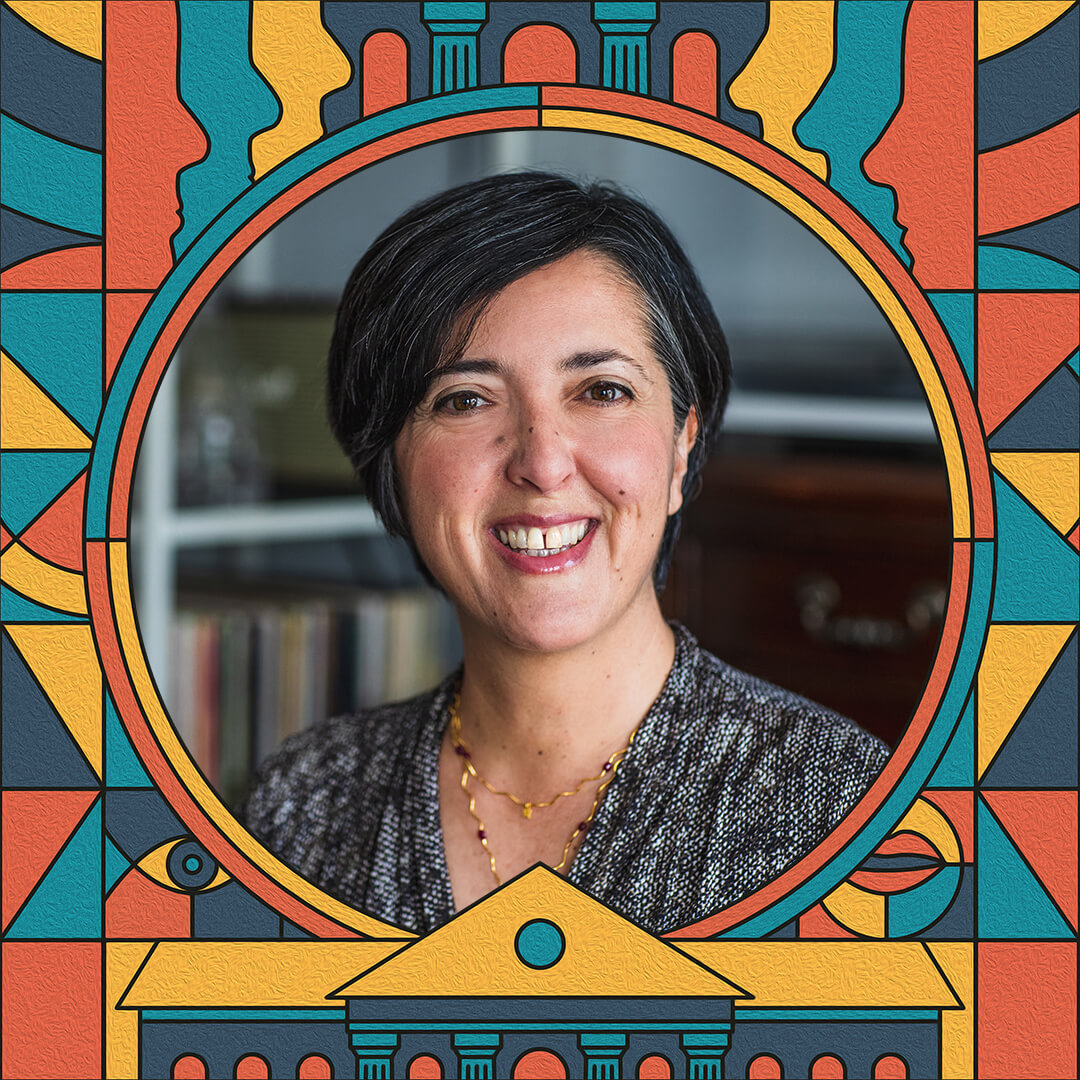
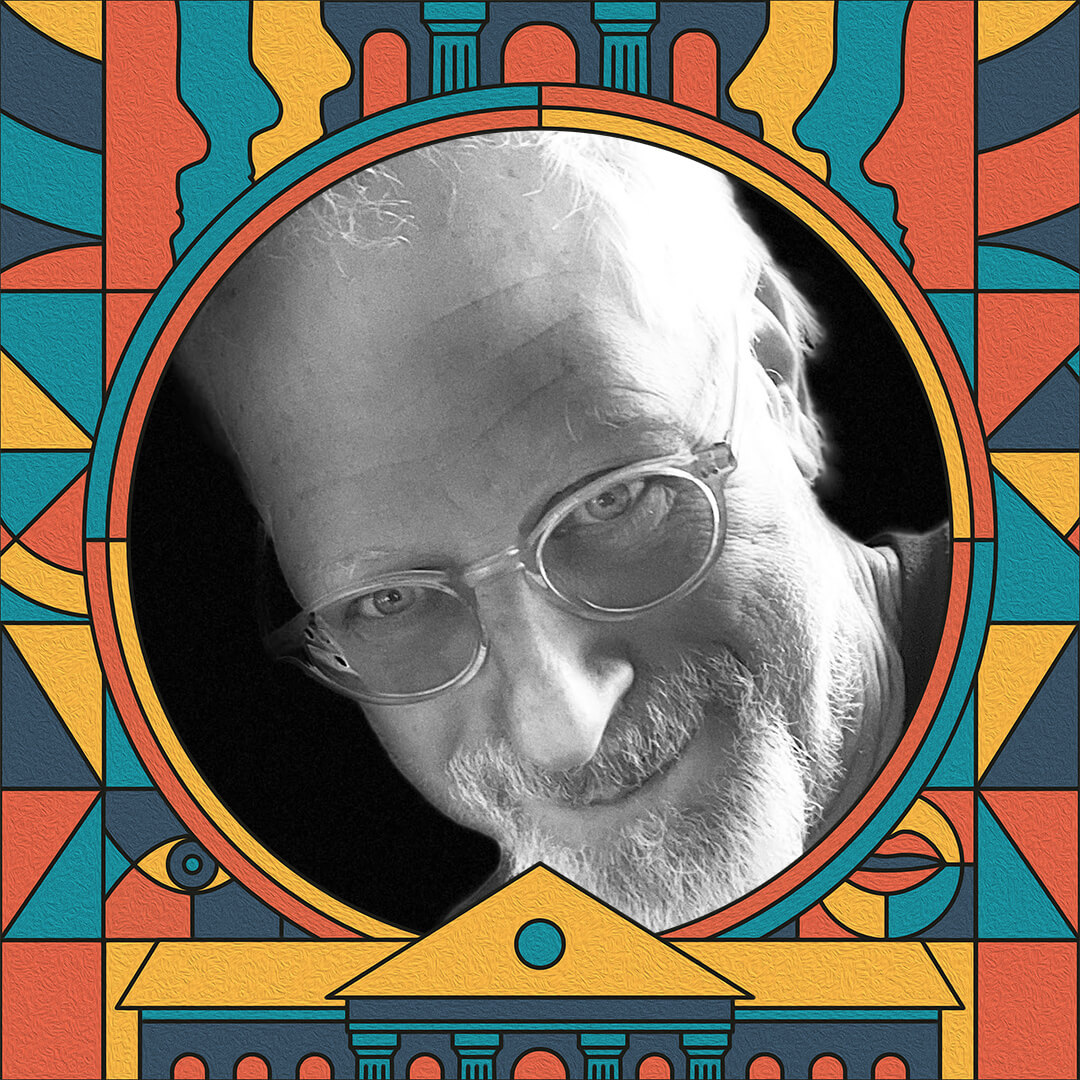
Abby: Welcome to Matters of Experience. My name is Abigail Honor.
Brenda: And I’m Brenda Cowan.
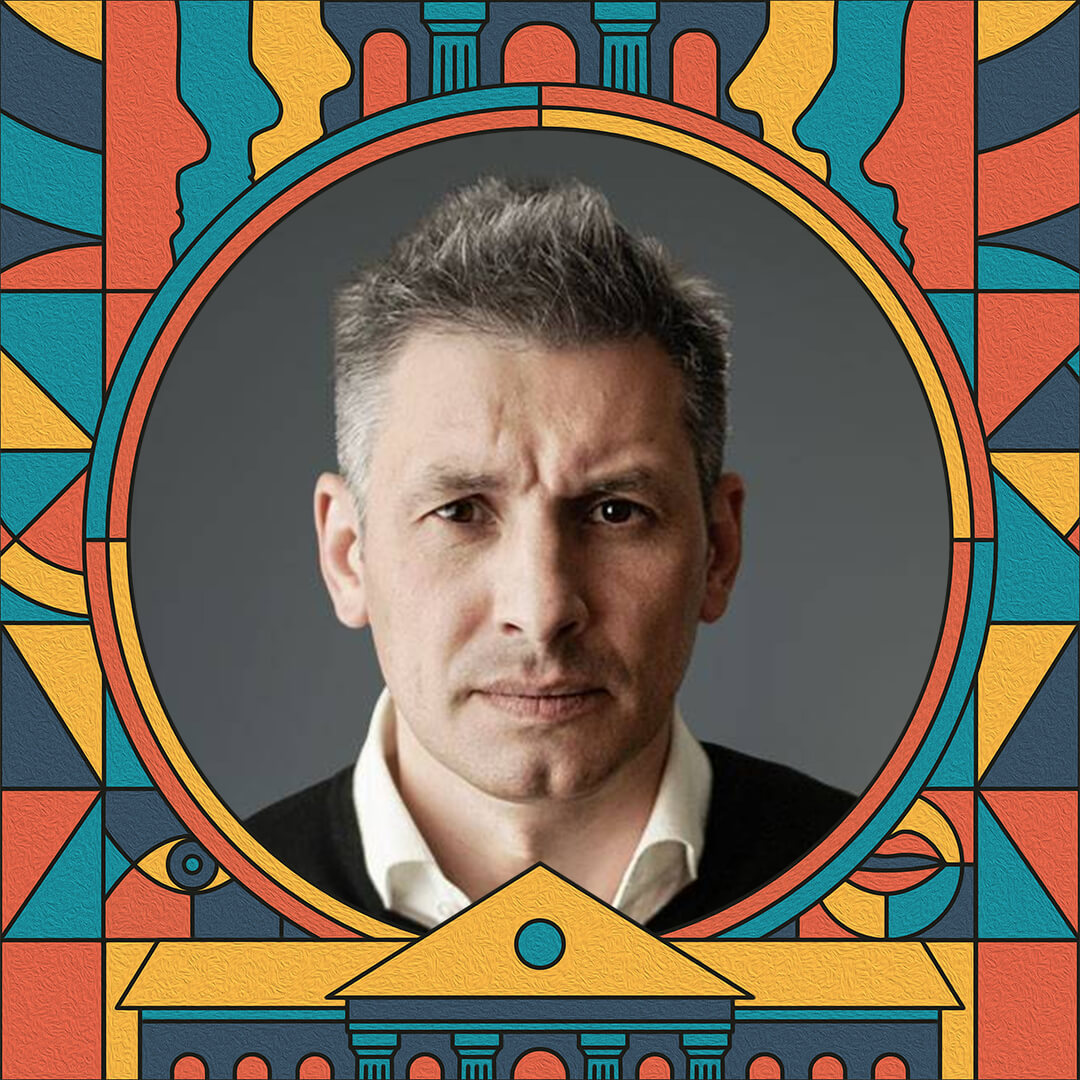
Abby: Today, we’re discussing an often bandied around, and I think misinterpreted word in our industry: story, Brenda. It’s used a lot and can be many things, so on the show today, we’re going to dissect what a story is and isn’t and how to tell a story in a museum. Our guest on this journey is Yan Vizinberg, my co-founder at Lorem Ipsum. He studied story at film school, which is where we met, and he’s produced and directed films as well as curated large-scale museum and experience design projects around the world.
Brenda: Yan, welcome so much to the show.
Yan: Thanks for having me.
Brenda: So tell us a little bit about your background, and within that, give us a sense of how you and story began.
Yan: Well, I went to film school in Boston, and at first, I wasn’t thinking of films as stories, actually. I thought of them as visual mediums. And so when people said, Oh, I’m a storyteller, I always thought, Well, why are you saying this? Because not all films are stories. And then, slowly, the more you watch films, the more you study films, the more you understand that all dramatic mediums sort of gravitate to storytelling.
And, you know, we made films, and we made commercials, we started a production company. And at some point, Ralph Applebaum and Associates approached us to create media for the Boris Yeltsin Presidential Center. And we ended up being the media partner, creating everything that moves, everything that’s on the screen. And this way, we sort of watched them work, and we thought, Well, we can do this too, and maybe we can bring our filmmaking and storytelling backgrounds to experience design. And so this is how we ended up sort of doing that line of work, too.
Abby: We’ve been in business together; you’ve been in business for over 20 years now. Has the business changed from a storytelling perspective in the work that you’ve been doing?
Yan: I think technology has been merging for the past 20 years, right? So it’s all becoming one thing, but I don’t think storytelling has changed and I think we need to talk about what we actually mean when we say story and storytelling. I think we have to define the terms because everything is now called the story. Everything is storytelling. Every PowerPoint presentation, every museum exhibit is now a story.
Abby: So what makes a story, then? Let’s think about, you know, obviously, I completely agree. I think a lot of people are bandying around this word story and potentially are thinking about it in a different way, so from your perspective, what makes a story?
Yan: Well, a story’s very simple. For something to be a story, it has to have a willing protagonist who has a desire to achieve something, and that protagonist has obstacles that he has to or she has to overcome. And then, he learns something about himself or about the world at the end of that story. Now we can talk about how this could be applied to things other than books about people and films about people. Because when we’re talking about a person, it’s very simple. And when we’re talking about other things, it’s maybe not as simple.
Abby: So are you saying then that story isn’t, “Hey, I went to A, and then I did B, I got the groceries, I cooked a meal.”
Yan: So there’s a lot of types of information in the world, right? There’s a lot of structured information. There are essays, and there are recipes, and there are all kinds of narratives, and even a lot of museum exhibits that are not stories. You know, there’s just a lot of information, there’s a sequence of events, and none of this is storytelling. Storytelling implies a built-in mechanism that works a certain way, that makes us want to turn the page and find out what happens next.
Brenda: Yeah, and I have to interject as well. I don’t know if you can have like an expertise in storytelling. I imagine that you quite do. I certainly, from my walk of, you know, life, there’s a lot of folks who have done so much scholarly research in story and in storytelling and people who are, what I would call raconteurs, right, people who really genuinely are not just professional storytellers, but also quite gifted. What do you think about that? Do you think that there really is a learned and a trained and a gifted storyteller that differentiates them from, you know, story being used all over the place, like ubiquitously?
Yan: Well, I think some people are naturally gifted at that without being able to reflect on their skill, and some people can reflect on that but are not gifted at actually the storytelling itself. And some people can do both. Some people are good at storytelling, and they understand the mechanics of it. And I think we’ve been telling stories for many thousands of years, and certainly I think it’s one of the most effective mechanism to engage people, to make people follow and pay attention.
And I think movies are the best example because if you look at the way movies are structured, there is a certain contract between the author and the audience. We enter a dark room, we sit down, and so we’re saying for the next 2 hours, I give all of my attention to the screen and I will not make any decisions.
The author will make all of the decisions, what’s on the screen, who is saying what, what am I looking at? And that’s how you tell a story. Now we’re talking about museums, it’s a whole different beast because museums and spaces, in general, are interactive by their nature. You decide where to go, where to look, to skip a certain text panel, or to read it. And that sort of goes against all the principles of storytelling. And so our goal in museums is to find a way to control the attention of the visitor.
Brenda: I wanted to just for, for a second, pivot back to the idea of what some of the fundamental things are about humans and storytelling and one of the things that I think about so much and that I absolutely love, in part from raising my own child and, but in part from when I teach and teaching about story and in my own courses, I think about how children begin to speak and to socialize at that time in our life when we are quite little, three, four or five years old, stories are a part of how we make meaning of the world around us. And much of this takes the form of asking questions, following impulses of wonder, of curiosity, and about the most mundane things. And I find this endlessly optimistic and filled with hope, and I wish that more was done in exhibitions to inspire this natural tendency of asking questions and of wondering and how that is really fundamental. I’m wondering if you have come across any or if you yourself employ any strategies in sparking curiosity, sparking story by using question strategies.
Yan: Well, so, I think the imagine if, imagine a situation type of question leads directly to identification with characters, right? So you begin, imagine if you were this. Imagine yourself in this situation, right, and identification with the protagonist is sort of the main element of storytelling. Because if you imagine yourself watching a film, you’re identifying with the character to a point where you are not scared for him. You are scared as if he were you, right?
When DiCaprio is drowning, you don’t think, Oh, I’m sad for Kate Winslet because he is drowning. You are drowning with him, right? So you completely, you abandon your reality, and you become them for a second. That is what makes us want to continue flipping the page, right, and finding out what’s what’s happening next, because it’s happening to me.
And I think one of the main questions we need to ask is how do we make visitors identifying with our story, identifying with whatever, whoever, or whatever the protagonist is so that they can be as involved.
Abby: And why we sort of do that because as a film director, for example, or a writer, you’re doing that because you want to connect with your audience, you want to move them. So I think it’s also about that objective for a museum, actually wanting to touch and move emotionally the visitors that come rather than maybe just educate.
Brenda: How does that play out in the design that you do? How do you lead, lead an audience through emotional arc? What was that, what does that look like?
Yan: Well, sometimes, again, when there’s a strong human protagonist, it’s a little easier because it’s very similar. So, for example, in the Boris Yeltsin Presidential Library, Boris Yeltsin was the main protagonist, and we could follow his plight and understand his decisions, and sort of craft the story out of his presidency. So that’s very similar to films and books. And sometimes, you know, people often say that in a good drama, there are three levels of conflict. So there’s a conflict between the main protagonist and a personified enemy. There’s the protagonist against the system, sort of against the empire or whatever.
Abby: Star Wars springs to mind.
Yan: Star Wars, for example. And then there’s also…
Brenda: Okay, I was going to sing, but I’m going to spare everybody.
Abby: You big tease, Brenda.
Brenda: It’s not that kind of a podcast.
Yan: And so the third level is, is your internal conflict, when you’re battling yourself, you are battling your fears, or you’re trying to change, right, and so in a good drama and in the Boris Yeltsin case, it was easy to identify. Now, when you’re talking about a science museum for a second, suddenly there is not one human, and there is no protagonist, and you’re like, okay, well then we can’t tell the story because it’s just basically a bunch of artifacts or little mini stories about different things. But I think what we’re trying to do is to say, no, well, let’s hold on, let’s think. Is there a story? For example, the story of science is the story of humanity’s fight for knowledge against the obstacles that nature is presenting us with.
And so maybe this is one way to go because now we have the protagonist and now we have the obstacles. Now we’re overcoming; we’re trying to learn. Maybe there’s some other path, but basically look for that path before just deciding, Oh, well, let’s just structure chronologically or let’s, you know, divide it, this is mathematical, and this is physics, and this is chemistry.
Abby: Or, thematically, yeah.
Brenda: I’m wondering if we can pivot for a second and talk about a favorite subject of mine, which is objects. So props are essential elements, as I understand it, in film. Yan, how do objects play out in terms of storytelling devices and exhibitions, and is there a similarity?
Yan: I personally love immersive exhibits, and when I say immersive, I really mean immersive in the sense that there are a lot of film-style decorations, and if they’re done well, they do immerse me in a certain atmosphere and help me feel things, help me place myself in a certain place or a certain time, and so I think props can be used very efficient, very effectively.
I think we need to think of this as a new art form, new art discipline, because you can tell a story by listening to a radio play, you can read this in the book, you can watch a theater show, you can watch a movie, or you can go do that, you know - that experience. And I think it’s using all the same elements. But in addition, there is like one more important thing, which is space and your body.
Abby: I like the idea that it’s, it’s a new art form because I do, I think about immersive theater as well, and I think about a lot of these experiences that are popping up now, like, like the Van Gogh, like the National Geographic’s King Tut, and, you know, I think about the fact that I think they’re getting a lot of visitors, a lot of families, because they’re enjoying that style of immersion.
And I think it’s imperative when we look at museums and institutions that they start to make this pivot, so they don’t lose market share. So they don’t just become a historical place that only maybe a few people go, researchers, analysts, historians. They need to be a place of entertainment as well as education. And so Yan, what do you think the problem is with storytelling in museums right now? How are museums dealing with this, with storytelling? Are they or are they not?
Yan: Well, first of all, it’s a, it’s a fight for people who have been working in museums for years and years because they thought of themselves as historians that preserve culture and history and objects. And now we’re coming in with our decorations, and it was like, this is just hokey stuff. Like, this is not a museum. And I think now they’re learning to understand that they’re competing not with other museums, they’re competing with cinema, they’re competing with zoos, and they have to participate.
You have to engage me. I don’t care unless I’m specifically interested in the topic. I don’t care. Now, how do they do that? I think that one of the problems that we just discussed is in the museum everything is distracting me from the story. The coffee shop is right here, so the smells are coming from over there. My kids are running around, people are talking.
So there are a lot of things that are happening. And I can look left. I can look right. I can make my own decisions so suddenly, like I’m interacting with the space rather than following the author. So one sort of tendency that we see as museums build, build paths so that I cannot deviate from the path I have to see this, then I have to see that. And so I go from station to station so that a story could be told, because if I skip stations, the story’s broken.
Brenda: So, can story be told in a non-linear fashion?
Yan: I think a story can be told in a non-linear fashion, but the author has to define the non-linearity of it. And also we have to say that, look, not everything has to be a story. Sometimes there can be beautiful things that work, and they’re not stories. So we have to admit that we’re just trying to say stories are one of the most efficient way to engage people, but we can’t force that structure onto everything.
Abby: I think when we look at museums and institutions right now, one of the problems is, or issues that they need to overcome, is it feels to me like they’ve taken a book and they’ve put it on the wall. So they’ve taken text out of a book, up it goes, they’ve taken images, there’s images, now it’s just a 16 by 9 screen.
It doesn’t feel like it’s using the space. And I think there needs to be a shift, a change, looking through a different lens when we’re now moving forward, creating these stories, these museums, these narratives where you don’t start with the information. When we look at an interpretive plan, we look at the story points first and what we’re going to tell, and then what’s the best way to tell them.
Every space we design from scratch with no limits. Is there going to be any text in here at all, does there need to be any text. Is it going to be an audio piece to tell this part of the story?
Yan: Right. Because if you think about it, a story is an attempt to build some harmony out of this chaos. It’s organizing things for us and out of this organization, out of this harmony, meaning is sort of etched out of that, and meaning that we’re sort of lacking in life because the life is just so chaotic and so random and so unfair or and so just, there is no meaning that we can kind of grab on to without telling ourselves these stories.
Brenda: And ultimately, isn’t the intention of an exhibition, and I’ll be very specific here to exhibitions. Isn’t ultimately the intention, if not the responsibility, to convey content and to see to it that content is conveyed in as meaningful and as in dialogic a way as humanly possible. And I don’t know how you do that without having some kind of a narrative experience.
I still think that at the root of this because human beings are storytelling animals, shout out by the way, if y’all don’t know Jonathan Gottschall, he is somebody to know about who talks about the storytelling animal. But I think that there’s a responsibility for museums anyway and for exhibitions to be story-based environments.
Yan: Right, and I think we see all artforms gravitate to storytelling, to a dramatic storytelling. Most films, most novels, most writing, because that’s how we consume, that’s how we can sort of learn about our world is through dramatic stories. And I think museums will gravitate to it too. And we will see in, you know, 20 years that museums tell stories, spaces, I guess, not museums, spaces tell stories first, and then there’ll be experimental spaces where a story is not at the center of it.
Abby: And I think there’s always, I mean, Yan and I have this back and forth because I have a painting background, and he’s very much the writing background. So I’m always like, yeah, not everything has to have a story Yan, and I can be incredibly moved, as a lot of people know, by the Seagram murals and Mark Rothko’s work. And so I sort of feel like there’s, as Yan’s sort of intimating, room for everything.
I’m excited to do what we do because we get to use all, it’s multidisciplinary. We get to use all these tools creatively to be able to move someone, reach someone, and the idea of telling stories is about almost making you feel like you’re not alone in the world, right? That’s how I feel when I’ve watched the best story. It’s moved me, it’s touched me, and something’s sort of given my heart a warm hug. But Yan, how do you decide whose story to tell?
Yan: Well, so first of all, to continue what you were talking about, about the different tools, I think we’re all still learning to use these tools because some of the, you know, again, talking about film, there’s a very specific way to make films. Everybody who makes films knows how films are made. There are no conversations about what the structure of the team will be, how we’ll do this, how we’ll do that.
You just go and do that because there are 100 years of filmmaking sort of taught the humans how to make films. With what we’re trying to do here, everything is new, so we’re trying to learn the tools, we’re trying to understand how to approach it, and finding a point of view is one of those things that we have to learn how to do because we’re not always telling stories of humans, right?
So you have to sit down, and the very first question is, okay, whose story is it? Who is the protagonist here? And I think it’s very often, most often, it’s not obvious. You have to search for it. You have to attack it from different perspectives and finally say, oh, maybe it’s a story of this. It could be a collective brain, it could be society.
Sometimes you have to invent, maybe, a protagonist. So I think it’s always a fight. But I think this is the most important fight. You have to sit down and you have to figure out who the character is, what the story is, and not move to structuring content before you actually decided what the story is.
Abby: I love Yan’s use of the word fight. Could you imagine us fighting, no, it’s more like a creative discussion. Passionate discussion.
Brenda: Well, but, I mean, I think, and depending on how you, you know, how you’re getting at, but one of the things that I think I’m interpreting or hearing when you use the word fight a lot is that this is, it’s a mission. It is done with intention, and it’s hard to do. You’re dealing with a lot of players who are not even familiar with the idea of narrative experience or the nature of human experience in spaces.
I keep thinking too, and you know, if it’s not necessarily about a fight, or, you know, even a conflict with the other people who are involved in the creative process, I keep thinking that there’s almost sort of like a creative fight that can happen internally about needing to find the thread. You know, this, again, this intention and this desire, this quest and this determination, really, to find the story, to tell the story, to do it well, to connect with other humans, and to open things up for other humans to experience. That is, I think, an innate fight.
Abby: Once you understand what that story is, once you’ve worked it out, it’s like the hanger that you can put all the clothes on. And once you have that lens, it makes curation a lot easier because once you’re clear on what it is, what it says, you then become clear on what it isn’t. And so suddenly, you can really move forward.
And that’s another way that everybody can get on board. Because the other thing is when a few of you understand conceptually what the story is going to be, you still have to make sure that everybody’s on board and all the stakeholders and that it makes sense. And sometimes, when you’re creating things, there isn’t something that’s gone before.
We’re often asked, Oh, could we see other examples of people who’ve done this before? And we’re like, Oh my gosh, we’re going to have to draw it all from scratch. We’re going to have to model it from scratch, because it hasn’t been done before. And so a lot of the work that we do is for the first time, it is in some ways hopeful and optimistic, but still trial and error.
And we have to be able to pivot at failure because if you’re going to aspire to do something well, different, creative, new, there’s going to be failure. And we call it failing forward because you learn, and then you pivot. And obviously we have over 20 years of experience of doing this, but it’s hard. It’s not just; here’s the blueprint at the beginning, and let’s just go to build.
Brenda: From your perspective, is there a specific job with a specific job description where it falls to a person to see to it that the story has been crafted? Do tell us, Yan. Is it you?
Yan: I think, like, within our company, we think of the pyramid as very similar to the film pyramid. So there’s a director at the helm of the film, same as we in this, the storytelling, space storytelling, we call that person the creative director, but is basically a director, but that person is assisted by all the people around, right?
So there’s the cinematographer on the visual side, then there’s the scriptwriter on the content side, and the same happens in in museum exhibit design, except for there may be even more because you have the technologists and you have the architects, and you have the 3D designers, and you have the, the scriptwriters who are writing scripts and copy. But basically, it’s still, there’s, there’s a vision that needs to be realized, and there’s a person at the top of it.
Abby: It’s very interesting because you have to have everybody involved from the beginning. With that spark of the idea and the concept and the story, it’s often made richer by workshopping with this team because they bring ideas and thoughts and perspectives, which is why it’s really important to have a diverse team and one of the things that we’ve always focused on, because it’s not like the creative director goes, “This is it. This is what I’ve decided we’re going to do.”
It’s a group thing. So there’s the stakeholders of the museum, the institution, the curators, the stakeholders within the community, and making sure that we’re listening. As Yan said, this is all a new discipline. You need everybody involved, and you need to have major listening skills.
Brenda: Well, a billion years ago, when I was entering into practice and coming out of the children’s museum world, there, there was the role of developer and who in many ways was the keeper of the flame. And I know that’s still a very distinct role and profession that people go into exhibition development, but I keep thinking about how essential it is to have that person, whatever the title is, that you might be using it in your given firm or your given institution, how essential it is to have that person who’s the keeper of the flame, that person who’s ultimate responsibility it is not just to keep the story, to frame it out and to see to the mechanics, but to love the story, to fall in love with the story, to believe in the story, to keep the dream alive of the story, despite all of the challenges and the frustrations and the obstacles, and despite this struggle of the technical aspects at time, there is something that can be trained, and that is a gift. And it is something that hopefully we instruct well in our program with our grad students, the ability to stay in love from beginning to end and, you know, I think, listeners, as many of you know, a museum project can be four years, five years, six years. That’s a lot of love. And being married to a story and sticking with it and being able to go through all of the pitfalls and the highs and the lows. What a, what a gift it is to be able to do that. And also, I think what a privilege.
Abby: It’s interesting to bring up the longevity of these projects. And you’re right, the curiosity, the passion, because we often joke that we feel like we tell a story three times. There’s three, three moments. The moment at the concept stage, then the moment when you actually realize it and design it, and you’re like, oop, need to change this, need to address this story point in a new manner, or we need to augment here, or this isn’t coming through. And then the fabrication, the build, you know, you try to build as closely as you can to design, but inevitably, again, during prototyping, etc., things get tweaked and changed. So it’s almost like sort of three versions of the same story. And so that can often be frustrating.
Yan: It’s a fight.
Abby: It’s another fight. So it’s like being adaptable also as a creative lead and able to take sort of these, these challenges on and be able to come up with solutions that still adhere to the overall concept and the overall story you’re trying to tell.
Yan: It’s also a fight, going back to the fight, it’s a fight on cliches as well because it’s very easy to fall into things that have been tried before, and they tend to crawl into our brain and sort of create the little worlds inside our brains so that whenever we think of something, they just come out, right and there’s, we need a very strong filter to make sure they’re not falling into sort of repeating the same things because cliches are cliches for a reason. They were very, very effective at some point, and so there were repeated and repeated and repeated to the point where they’ve sort of lost the impact. So I think it’s another aspect of sort of developing stories and trying to make sure that we’re looking for fresh ways to do this.
Brenda: Well, and maybe fresh ways to tell great archetypal stories. The great universal stories. And I really appreciate how even in our brief dialog today, you’ve really given us some cues into how it is that the small worlds inside of our head can actually be opened up to being the large world that we all share and how that plays out in exhibitions. Yan, what a pleasure it is talking with you.
Yan: Thank you for having me.
Abby: Yeah, thanks, Yan.
Yan: It was fun.
[Music]
Producer: Matters of Experience is produced by Lorem Ipsum Corp and recorded at Hangar Studios. Tune in next time for more fun discussions about experience design.