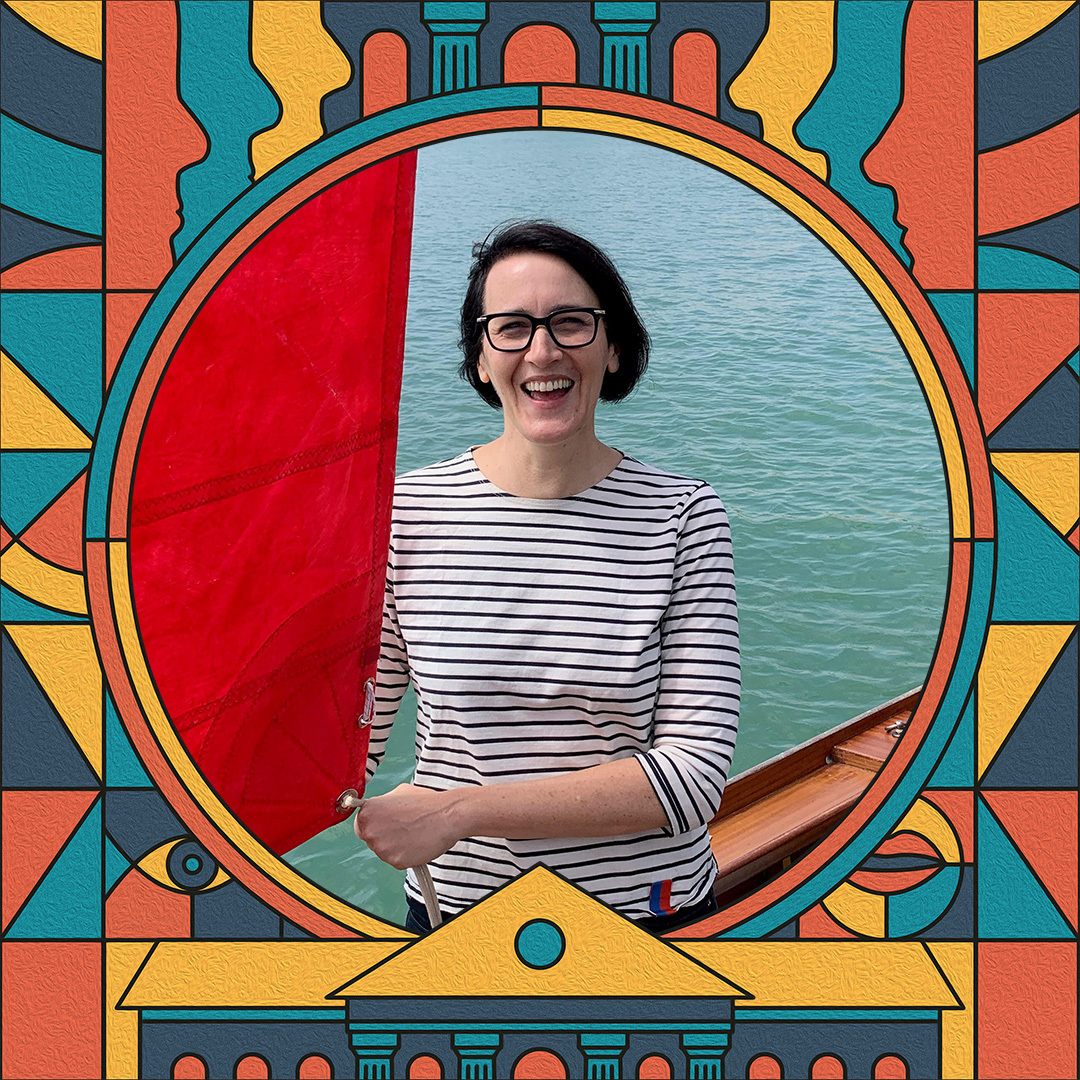
Take a bite out of the world of multi-sensory design with Emilie Baltz, an immersive experience director known for her innovative approach to combining the senses, art, and technology. Discover how Emilie’s work, such as the acclaimed Dream Machine at Liberty Science Center, fosters curiosity and wonder by engaging all the senses. Learn about her passion for community building and how she uses technology as an integral ingredient in her creative process.<br><br> Whether you’re a designer, a creative professional, or simply curious about the world of sensory design, this episode offers a wealth of insights and inspiration. Join us for an engaging conversation that celebrates the power of multi-sensory experiences and the importance of human connection in design.
The Muse in Museum
Celebrating our 50th episode!<br><br> Join us for a special milestone as we celebrate 50 episodes of Matters of Experience! Abby and Brenda dive into the heart of what makes our profession so unique – and celebrate the incredible guests and topics we’ve explored. <br><br> In this episode, “The Muse in Museum,” we reflect on the muses that shape our show. From the creative minds at the San Francisco Museum of Modern Art to innovative voices at the Museum of the Future, we uncover the magic behind designed experiences. <br><br> A heartfelt thank you to all our guests and supportive listeners. Your insights and stories have made this journey extraordinary. Don’t miss this special episode – listen now and celebrate with us!
Show notes
Cooper Hewitt, Smithsonian Design Museum - Lorem Ipsum Corp
The Senses: Design Beyond Vision
Objects of Love, Hope and Fear
Listen to some of the episodes discussed:
Transcript
[Music]
Abby: Welcome to Matters of Experience. My name is Abigail Honor.
Brenda: Hello, I’m Brenda Cowan.
Abby: This podcast is produced by Lorem Ipsum, an Experience Design company, headquartered in New York, and our podcast explores the creativity, innovation and psychology driving designed experiences and encounters. Hello to anybody listening for the first time, and a welcome back to our regular listeners. So, Brenda, today is a very special episode for us both.
Brenda: It is. A very special episode.
Abby: It is, right? It’s our 50th episode. And when I look back at the array of guests from Bosco, who works at the San Francisco Museum of Modern Art, or Sundar, from the Museum of the Future, and Victor from Intel, who talked to us about the business of connecting people to stories, and that’s just to name a few. We’ve covered multiple aspects of experiential design, from initial concept, data gathering, inclusive design, multimedia, fabrication, and AI and I feel like we’re just getting started.
Brenda: It really does, doesn’t it, feel like we’re really just starting to sort of dig into this, which is so wild, and—so what’s 50? Silver? Gold? What are we, paper? What gift am I giving?
Abby: Yeah, what gift are we getting.
Brenda: You know, listening to the sort of the range of topics and some of the folks who, who we’ve been able to speak with, I’m also thinking of some of the amazing guests that we spoke with about subjects in design, such as empathy, emotion, satisfaction, community, and storytelling. You know, so much of what we’ve talked about over these episodes is the element of the person and the personal in designed experiences, and how important it is to stay true to the people with whom we work with and for, to always seek to enable individuals to have experiences on their own terms. That’s something that I just find myself coming back to time and time again. Good design fosters and encourages this dynamic. That’s my takeaway from so many of the folks and so many of the conversations that we’ve had.
Abby: So, Brenda, you had this brilliant idea for this 50th show, our little anniversary, which is gold, by the way. I googled it very quickly.
Brenda: Oh, it’s gold, okay.
Abby: I should have known that, not that that big day isn’t coming up for me in a few years.
Brenda: Put that ring on my finger, Abby.
Abby: But we’re going to focus on the subject of inspiration, what muses do and how they form the basis of a museum. So, settle in everyone, and we’re hoping, hoping to really inspire you with the conversation today.
Brenda: Well, inspiration Abby, it’s something that I’ve been thinking about quite a lot these days, in no small part due to the fact that I just got a mini break, a vacation. I just got back from back-to-back trips to Baltimore, Santa Fe, and Paris and in each place, no matter how humble the place was or how epic, I found myself caught up in these moments that inspired me to think, act, contemplate, and just sink into moments of quietude. And sometimes it was experiences where, let’s say I saw someone or something that surprised me and that made me want to engage. Or perhaps I was touching and smelling something in nature that was sending me flying back into early memories. I was in a designed light, sound and architecture extravaganza that blew my mind—side note, stay tuned for a future episode on that one. And all along throughout these experiences, I would catch myself having this like inner dialogue, questioning what I was responding to and wanting to know more, wondering about my own reactions and in what ways I was finding things so meaningful.
Abby: I just want to jump in right now. That’s so interesting, the idea of when you have the thoughts and feelings that you don’t know necessarily why or where they’ve come from, and it can be a bit sort of befuddling and exciting as well, as you start to learn more about yourself from these experiences and then try to draw conclusions from them about who you are, where you’re going, why you had them, where you’ve been. And I totally agree, I had a similar—I was at Cannes Film Festival walking down the street and I smelled something. It must have been some succulents or passing some flowers or something, and it immediately shot me back to my village days in, in England with horses in a field, which is so bizarre from being in sort of like a cement small town to get moved there, and then all of those emotions from being about that age came flooding back.
Brenda: As I was having my moments, I started to think about muses of inspirations that prompt us to wonder and question and learn and grow. You know, the nine goddesses of Zeus.
Abby: He had nine? Wait a minute, he had nine goddesses? Oh my goodness me, lucky man.
Brenda: But I was thinking of the nine goddesses of Zeus who preside over the arts and sciences and of the museum. So, Abby, when we’re talking about the museum, we’re talking about the seat of the muses. So if you’re following me, inspiration is key to all of this. And I think that being open to it and cognizant of it is crucial for creatives and leaders and, well, everyone that’s been on the show has been speaking to inspiration in one way or another. And in a way, our show is like a museum. Our show is a seat for the muses. So taking this moment to reflect on that and to see our guests as the muses that they are to us is important to do, and an awful lot of fun for our 50th. I’ll give you all a little heads up that we’re going to give you a little exercise in just a little bit, so stick with us and prepare to play a little bit with your own inspirations.
Abby: That sounds very exciting. So, when you talk about switching off, you just mentioned switching off, and I was thinking about daydreaming and, you know, looking for inspiration by switching off, and I know that I read a lot of studies about how it actually, this idea of daydreaming will reduce stress and anxiety. So it really can help there and bring back clarity and even efficiency and problem solving. You know, it can help you through big decisions or deadlines that you know you may not have the answers to all be able to do until you sort of like, switch off. I know it sounds like an oxymoron, like, how do you get something done when you actually disengage from it? But that’s at least for me as well, the way that it works.
And the same with creativity. I’m looking forward to going on a vacation because I’m looking forward to being able to switch off. But at the same time, I’m always absorbing content, information. But when you’re in the sort of more relaxed mode, you have time to contemplate and play in your head. And I think that playing, that creativity really is, for me at least, where my inspiration comes from.
And another thing that I think about all of our peers is they all seem to be multi-talented or interested in lots of different things. They’re not one trick ponies. So you could have somebody who’s an engineer who works in AR, who’s also a musician, and you could have someone else who’s got an amazing sense of fashion or likes to paint and design.
Brenda: Well, we just had Eli Kuslansky on, who is a brilliant multimedia technical designer and also a writer, an artist and a chef.
Abby: Yup, exactly. So, I really believe that you can find inspiration in very, very different places.
Brenda: It’s interesting that it’s the advice that I give my students when they get a mini break of their own, and so many of them will come and ask me, okay, what should I work on during my break and what should I and should I be doing this? And should I be doing that? And I can, you know, bone up on these particular skills and I can be reading this and la la la la la. And the advice that I give time and time again is do nothing, do something that brings you a lot of joy, that brings you pleasure, whatever it might be, and just sink yourself into that and it will reap rewards.
Abby: I also wanted to tie the subject of this podcast, which is muses and inspiration, with how I had the inspiration to do this. Brenda, it was your work actually at FIT, from coming in and having the privilege to speak to the students, and then seeing my peers coming in, also talking from the different facets of what we do. And I felt that we were missing a podcast about everything we do. And I realized that the group you were bringing in were all from very different walks of life, and the idea of this Matters of Experience sort of popped in my head, and you as the natural partner, so I just hoped you’d say yes.
Brenda: Of course I said yes.
Abby: And you jumped straight in.
Brenda: Seriously? How could I say no? And you and I definitely have a shared mission in terms of thinking about the profession and the need for this work that we all listening are engaged in, in our own individual and joint ways. The need for this profession to be viewed and understood more and more as a profession, as a thing unto itself. And the more that we can speak, the more that we can publish, the more that we can promote what exhibition and experience design is, the more it’s going to gain, I think, in terms of awareness.
Abby: No, it’s awareness and actually role in the creation of an experience. So that our clients can understand when they need us and why they need us. And it’s a shout out to SEGD and Cybelle Jones and that incredible organization and how they support us and get the word out to the community about what we do.
Brenda: I know that the times that we’ve spoken about the need for exhibition and experience design to really have more weight as a profession unto itself comes when we talk about architecture and the role of architecture and architects, and how architecture is viewed and how very differently so—
Abby: Yes, yes it is.
Brenda: —than where we’re coming from.
Abby: Yeah, and when—it’s really interesting, one of the episodes that resonated with me was early on with the architect, Alex Bitus. He brought us sort of three key drivers for his work, which were environment, materials, and the site history, which really makes perfect sense when you think about the exterior, and I guess sort of from his perspective, interior of a new building, but how it will fit or complement the world around it and be inspired by the local landscape through the materials, you know, he’s designed, he’s built it with.
But what’s interesting from our experience design perspective is that we create these environments that often juxtapose, to be honest, against the building design from maybe a form and a function perspective, and I think it’s okay that it does that. We design and service the story. What are we trying to say? What’s the right environment for that story? So we think about guiding the visitor through the journey and often design being inspired by the setting of the story, I guess more like scenic design or film set design.
Brenda: Well, when you’re talking about immersion in the moment and in the story, let’s also include emotional involvement, engagement with other people, engagement with objects as well. And these are things that we learned a lot about from so many of the folks that we’ve spoken with: community and connection and belonging. I’m remembering one of our early episodes with the wonderful Joy Bailey-Bryant, and I’m also thinking about Annie Polland from the Tenement Museum.
These individuals brought to light such important elements of the nature of being a creative and also storytelling and the nature of experiences being about people belonging, being welcomed, being a part of the story and feeling like and knowing that they are a part of the institution in myriad ways. And I’m also thinking about emotion and empathy-rich experiences, and our conversation with Jasminko Halilovic and Elif Gokcigdem, and Terry Snowball.
These are individuals who, for me, were so inspiring because they were really sharing with us how it is that emotions and evocative objects and difficult subjects and challenging subjects are a very rich part of the fabric of what we do and our ability to be able to share these stories in very sensory-rich ways is absolutely critical, and that emotion is a key part of this immersed experience that we keep hearing about and talking about throughout all of our episodes.
Abby: Well, it’s empathetic design, and I think it’s something that, I mean, you tell me, Brenda, it seems like something that’s really coming to the forefront, like right now, over the last few years, something that we all need to bear in mind. What caused this? Where did it come from? Has it been around and I’ve just been not looking in the right places, because I feel that in all of those examples, all of those museums, they really are powerful.
Brenda: I think that thinking in empathy has to do with and we, when we talked with Elif Gokcigdem, she spoke a lot about designing for empathy, which is really the focus of her life’s work, really. And she was talking about how understanding that empathy is a way of understanding that there is a oneness in the world and of which we are all a part, and that we can use this understanding and this awareness as a tool of thinking about a lot of what I was just talking about, the idea that there is connectivity, that we can foster, that we can enable, that we can reinforce through designed experiences where people can realize, oh, I’m actually a part of this story.It’s important to me because it’s relevant to me, even if it’s about people I don’t know or places I’m not familiar with.
Empathy as a tool can be seen as being a matter of showcasing different perspectives, hearing narratives from many different people and many different places, perspectives from many different periods in time, and to be able to not present necessarily just a singular idea or a singular perspective, but indeed to be able to explore subjects in a myriad of ways and through myriad even of interpretations.
Abby: Yup, now what comes to mind is our recent conversation with Jamie Lawyer from the Rubin Museum, when she explained that her first encounter at a museum, this young girl goes in, she’s standing there absolutely thrilled by what she’s looking at, and the docent comes over and her first thought is, oh my gosh, have I done something wrong? And he was like, no, I’d like to tell you more about this piece.And she felt that oneness, I think. I think she felt that emotional connection with what she was looking at, and it was so profound that now that’s what her life’s work is, to bring that feeling of oneness to all of the visitors who come into her museum. So, you know, from this one moment and this one kind gesture from the docent, but also the amazing curatorial work of the museum staff, connected with Jamie and her story.
Brenda: So when we were talking with Kiersten F. Latham, she was sharing with us how critical it was to think about the front of house staff and how important it is to really elevate an awareness of their role and that so much jibed with what we were talking about when we were having our conversation with Monica Montgomery and we were talking about how it is that people need to feel like they are welcomed in and not, you know, in some kind of a rarefied moment or a rarefied place such that it has nothing to do with them.
Abby: And what’s actually really interesting is when we did our project with the Smithsonian, one of the problems is their actual physical building, and that what it represents really excludes a huge proportion of the community. And so how do you break down those physical barriers and the mental barriers to make sure that you’re welcoming through your doors, as well as digitally, online and all the other ways we can do it, but in person into your establishment, and that they will feel that they have been heard and are a valued part of that community.
Brenda: Well, this loops even back around a little bit to talking about how it is that people need to be a part of the creation, that people are not the afterthought. This is something that when we were talking with Joy Bailey-Bryant from Lord Cultural, and she was sharing with us the idea of belonging and that we need to engage communities, individuals, as well as our experts, as well as our own staff in the creation of our institutions, in the creation of our exhibitions, of our programs, and that belonging very much so begins there.
Abby: And also our teams, our internal teams need to be diverse. Everybody’s sick of hearing it, but if they don’t represent the community at least as far as you can, then it’s just like a one trick pony. You have to have the different voices at the table, at the creative table.
Brenda: Abby, when I’m thinking about what you’re talking about, I’m thinking about Ellen Lupton and The Senses.
Abby: Oh, yes. Ellen was absolutely fantastic. Yeah. It was so interesting how Ellen came up with this wonderful show, The Senses like, which was at Cooper Hewitt a while ago, and it really relied heavily on scent and touch to tell the story. And what was inspiring about her story was how she came up with the idea for the show. Talking about musing, she was musing and thinking about her previous show, about beauty and questioning it, and what she kept coming back to is the sensory experience that had worked so well in that show.
And I think it’s fascinating that she allowed her mind and thoughts to wander and dream about what that could look like as an exhibition. She didn’t have an RFP. She had nothing. She just sort of went on this journey of interest for her. And so, through these musings, a large, more conceptual topic about the senses was born. And I really was thinking that asking what if, as a designer, is key at certain stages and giving yourself this air.
Brenda: Well you’re talking about something actually very sophisticated. You’re talking about operating in the subjunctive mood, which is specifically when you begin a sentence, let’s say, with imagine if or what if? And it automatically puts you in a hypothetical mindset. And in a space of questioning that absolutely does open up possibilities. And what’s really cool is not only is it useful, a useful way to think as a creative person or even as a business leader or whomever it is that you are, it’s a very important way to frame out an exhibition. Imagine if…
Abby: Yeah, we like that a lot, a lot of the successful exhibitions that we’ve made, or we’ve reviewed of our peers have the visitor answer those questions and really get drawn in and really try to think and play and engage with the content in that manner.
Brenda: You know, thinking about trying things and doing things and investing yourself in possibilities makes me think of Tom Bowman. Tom, right, our sustainability expert, who was so unbelievably inspiring to me, and interestingly, when talking about one of the biggest crises of our lifetimes, Tom left me with this feeling of hope and this belief that even the smallest of things can indeed be consequential and can make a difference, and that even if there are situations where you’re doing something and it might have a, you know, ill impact on the environment, it can nevertheless be better than the alternative which could be insurmountable, in terms of, you know, the damage that can be done.
And I think that what was really inspiring thinking about Tom was that he gave you a means of just grounding yourself in the midst of something that is just so huge, and that folks in the exhibit industry who are taking initiatives towards green design, towards thinking in terms of sustainable materials, sustainable practices, that it actually really, really does make a difference.
Abby: Yeah.
Brenda: Let’s talk about Andrea Hadley-Johnson.
Abby: Oh, perfect segue. Oh, Andrea, fellow Brit, she’s absolutely incredible. And she really made me stop and think about the way we curate for the local community and also collaborate with them. Like her story is amazing, when she told us about the exhibition at Derby Museum and the Objects of Love, Hope and Fear gallery, where she took artifacts in the museum out into the community who helped her understand what they were, and the story of going into the barbers with the comb. And they were telling her where they thought it came from, and then sharing their combs. So that idea of looking back at history and then looking back at the present and how we’ve evolved and just really working in that way with artifacts in the community, it sort of completely blew my mind.
Brenda: Again, connection, belonging and it’s just another nice reinforcing example of how our guests are talking about connectivity, how they’re talking about people belonging, and how we’re talking about multiple perspectives.
Abby: Yes, very key, multiple perspectives, and that also reminds me, at the National Justice Museum in Nottingham, Andrea had locals choose an object. She would sort a group of objects and they were doing a photographic exhibition, and the locals would come in and have to choose an object they wanted to pose with. One of the objects in the collection was a pistol, a little bit of an older pistol. So not something in the last decade or so, a bit older.
The lady had chosen the pistol and posed with this pistol, and a colleague of Andrea’s said, you know, we can’t show the pistol because gun crime is on the rise in the UK. And, you know, there’s also been a lot of knife crime. It’s really a serious issue for the government, and we’re a national justice museum, and it isn’t something that we should be messing around with. It was a very serious conversation about what she was trying to do. And for Andrea, it was censorship, and she discussed how it really matters to have these kinds of conversations.
So, I just found this absolutely fantastic. And it’s so interesting how an artifact can sit there in front of us all, very quietly and go unnoticed. And when it’s selected out and put into a different environment, let’s say, in terms of the lady holding the pistol for a photograph, it takes on a whole new meaning.
Brenda: Well, I’m thinking as well about going back to Jasminko Halilovic and talking about the War Childhood Museum, where we are seeing objects that have bullet holes in them and that show the violent end, right, of guns. And what that means, like in terms of this conversation about what we choose to show in our institutions and what the meaning of these things is and how it is that Andrea had to really fight and advocate for allowing people to respond to objects in a way that was natural to them, and to have it be like you were saying, a conversation.
Abby: I think she embodied, as a curator, she has courage. It’s these difficult questions that bring us together. It’s these difficult questions that we have to be having in our museums. And there’s not always an answer. It’s not, again, it’s not about right or wrong.
Brenda: Abby, I think that a lot of our muses in their beautiful, flowing togas are kind of badass.
Abby: I do too. They are.
Brenda: I think what I’d like to do is get us chewing on something and give something for all of you listeners to play around with just a little bit. Give yourself a treat and take a couple of minutes out of your day and meditate on the meaning of something that is inspiring to you. And you know this is more than a treat. Okay, this is a meal. Give yourself a good hearty inspiration meal.
Think of something or someone that has inspired you, and it doesn’t matter how small the moment might have seemed or how inconsequential. Give yourself a tremendous amount of freedom to just remember and reflect upon something that you found inspiring. And then what you’re going to do is you’re going to imagine that you are conducting an interview with that person or thing, and you’re going to ask it or them about how they see themselves as important. Ask that person or that object what impact they make on people or on the world, and then ask them what their own hopes are, and then think about why it is that you are inspired by this person or thing, what connections you are making as a result of this inspiration, and then think about what feelings and hopes of your own are ignited. In doing this exercise, and thinking through those steps and imagining, back to the imagine if and what if brilliant way of questioning, you yourself are now a museum. Your mind is a museum, and you have the basis for designing an experience about your own inspiration. You are becoming your own muse.
Abby: Wow.
Brenda: I guarantee you, even if you mutter to yourself in the process of doing this.
Abby: Am I allowed to ask you who you thought, who inspired you.
Brenda: Oh my gosh, where to begin? I get inspired.
Abby: It’s me, isn’t it.
Brenda: It is you.
Abby: What do you mean Brenda, where to begin? I’m sitting right opposite you!
Brenda: Oh my God, I just, I didn’t want to make you blush, Abby. Okay, there you have it.
Abby: I’m blushing right now. Well, thank you, Brenda, for this incredible journey we’re on.
Brenda: Thank you, Abby.
Abby: Thank you for being my partner. I feel incredibly fortunate to be able to share the stories of our peers, to be honest with the wider audience and continue hopefully to support our community and in our small way, with one podcast at a time. So, it’s been a heck of a journey so far.
Brenda: So far, so good. Abby. Have a wonderful gold anniversary.
Abby: You too. And thanks to everyone who tuned in today and has tuned in before. If you like what you heard, it’s not always quite like this, but subscribe for more episodes of Matters of Experience wherever you listen to podcasts, please leave a rating and a review and share with a friend. We’ll see you next time.
Brenda: Take care everybody.
[Music]
Producer: Matters of Experience is produced by Lorem Ipsum Corp and recorded at Hangar Studios. Tune in next time for more fun discussions about experience design.
More episodes
See all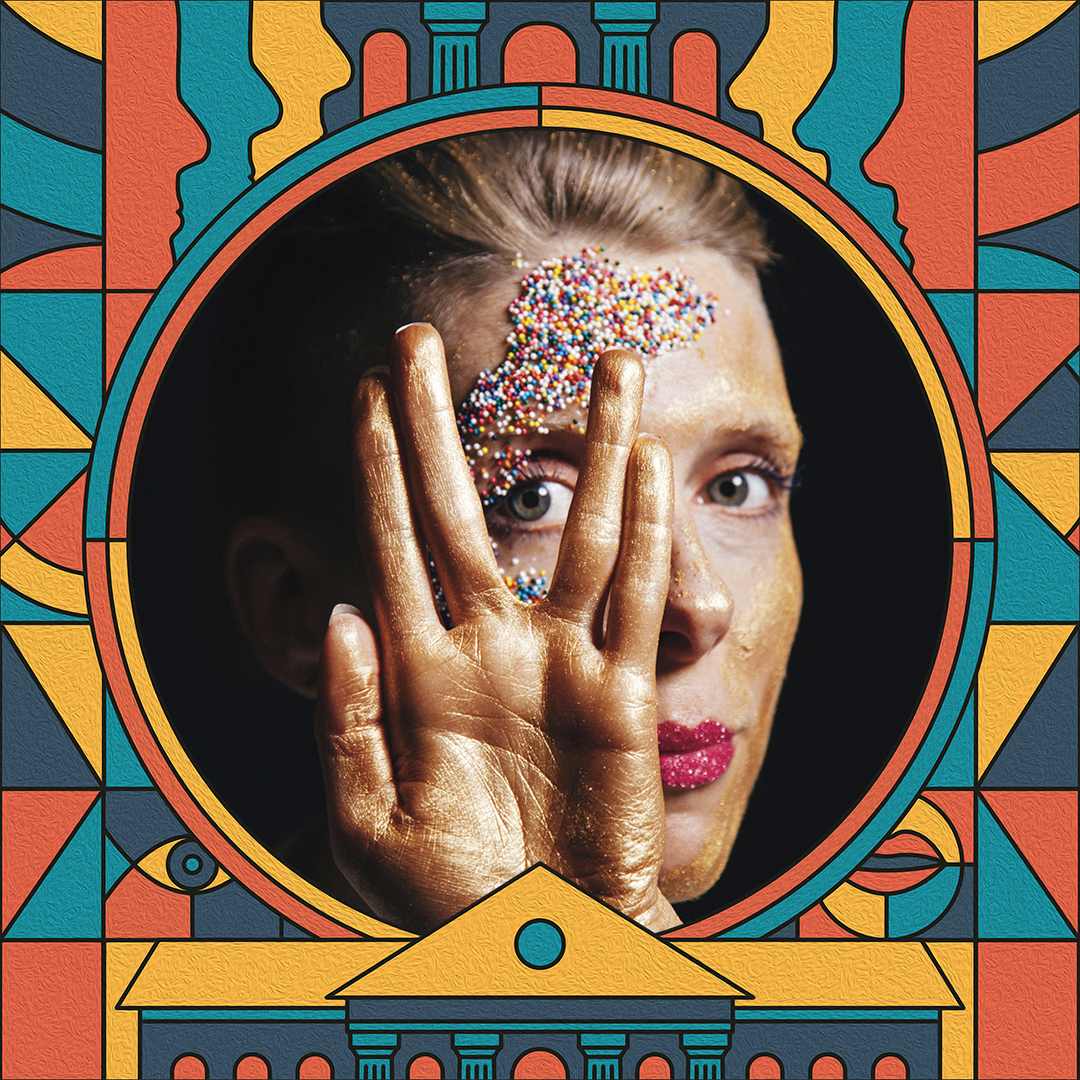
This week’s guest has a theory that you must have a breakdown before getting a breakthrough. Tune into this week’s episode to discover how Eli Kuslansky, Founding Partner and Chief Strategist at Unified Field, applies this theory to revolutionize museum design. Eli shares his journey from nautical antique appraisals to pioneering digital media in museums, creating evocative, emotion-rich exhibits. Learn how empathy, active listening, and cutting-edge technology come together in his projects and get inspired by his insights into the future of museum experiences.
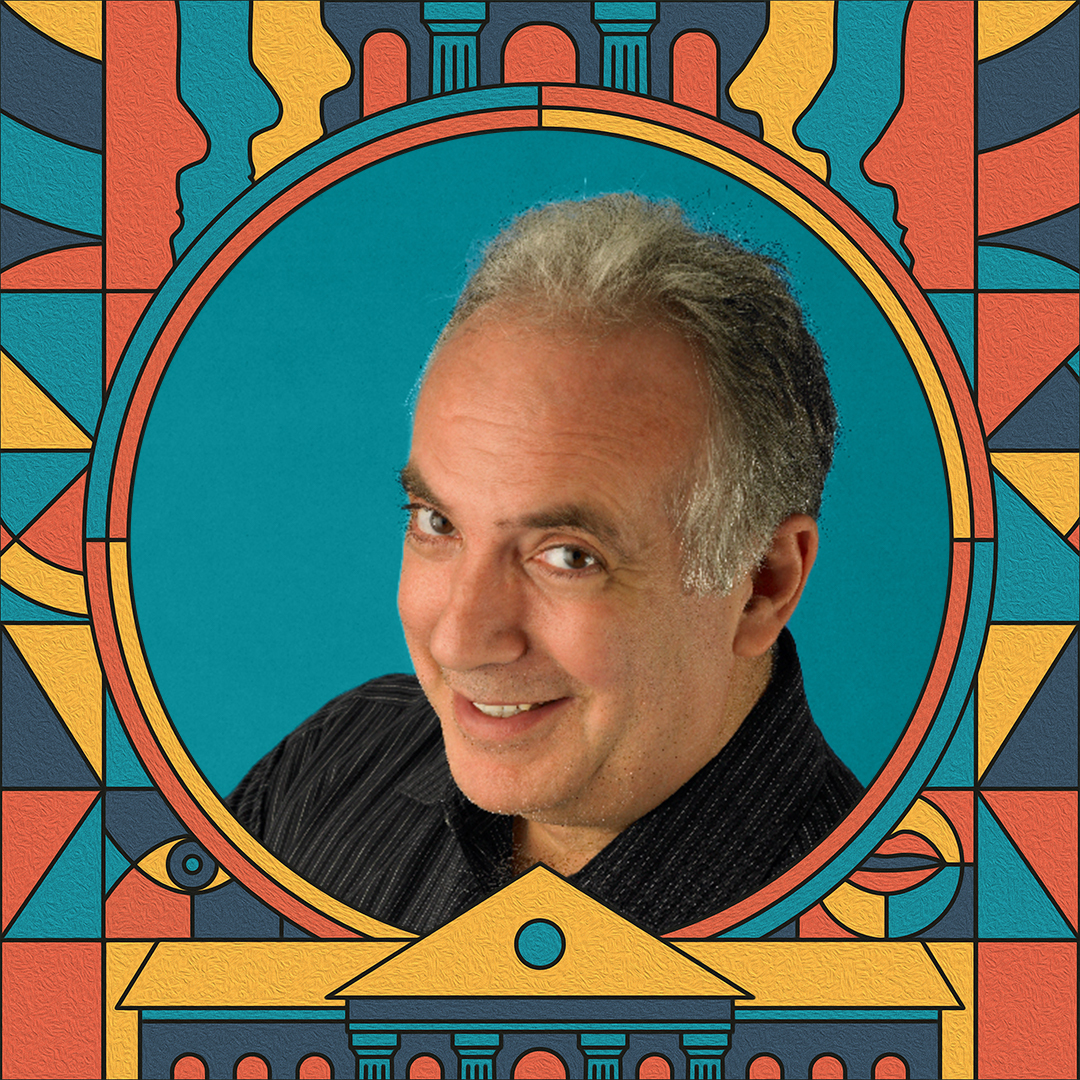
How can art truly connect with a place and its community? Join Abby and Brenda on Matters of Experience as they dive into this question with artist Melissa McGill. Melissa shares her approach to creating art that resonates authentically with its environment, emphasizing the importance of genuine connections and immersion. Through projects like the Red Regatta in Venice, she illustrates how art can forge meaningful relationships with communities and inspire collective action. Tune in to explore the transformative power of art in public spaces and its potential to foster deeper connections.