[Music]
Abby: Welcome to Matters of Experience. My name is Abigail Honor.
Brenda: Hello, this is Brenda Cowan.
Abby: This is produced by Lorem Ipsum, an experience design company headquartered in New York City. And our podcast explores the creativity, innovation and psychology driving designed experiences and encounters. Hello to anybody listening for the first time, and welcome back to our regular listeners.
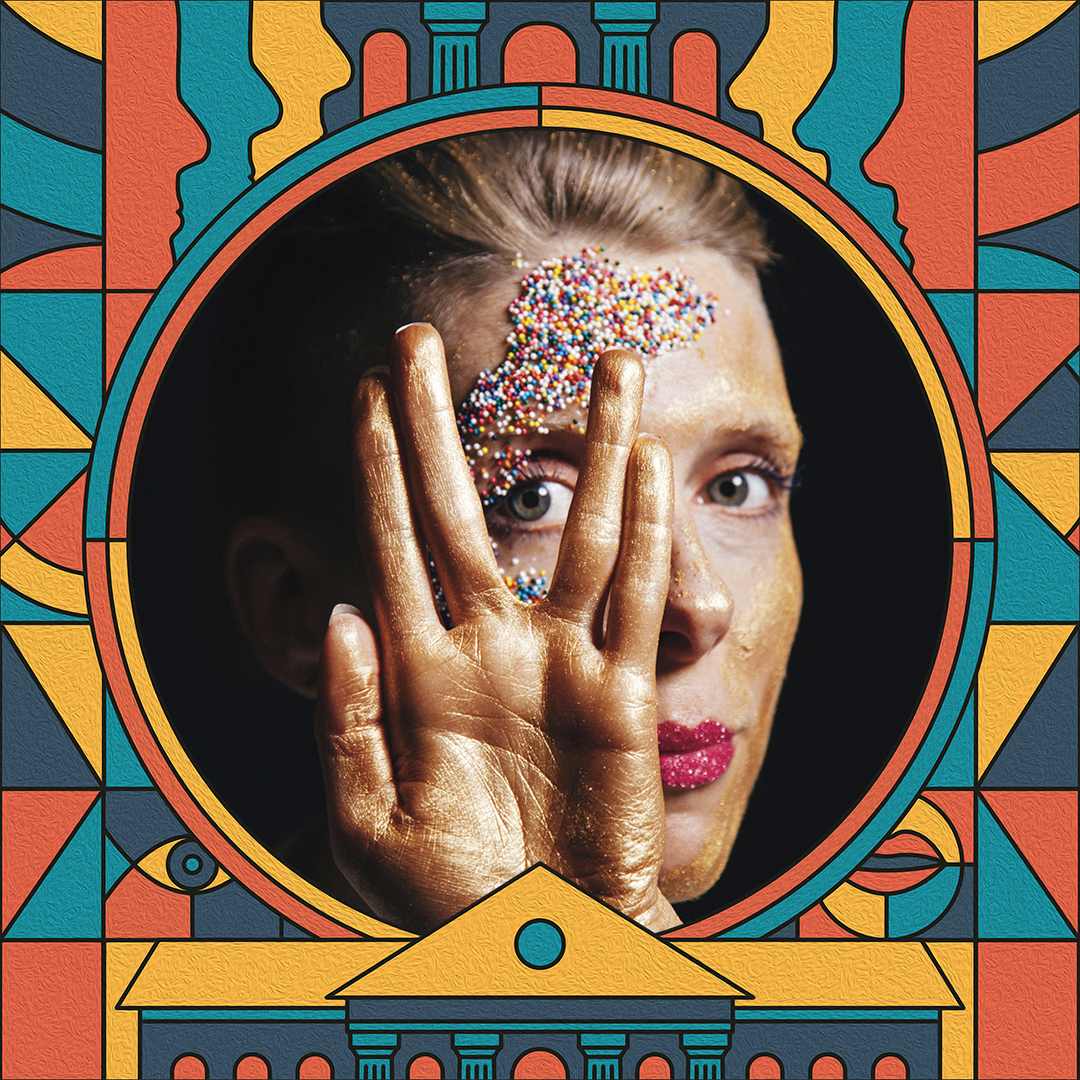
So today we’d like to welcome Emilie Baltz, an immersive experience director whose work adds a sensory dimension to design, which is one of the many reasons she’s unique. But also, she’s the inventor of the word “eatstallation,” which I absolutely love. Emilie, a big welcome to the show.
Emilie: Thank you.
Brenda: Emilie, we’re going to kick things off by talking about the multi-sensory work that you create that truly fosters curiosity and wonder. And you like to say that your work fosters curiosity and wonder one lick, suck, bite and sniff at a time.
Emilie: That’s right.
Brenda: And as I’m thinking about the lick, suck, bite and sniff at a time, I get so many flickers of memories. So, I think about eating ice cream on the beach in the summertime. I’m thinking about my lilac bush in the spring. Is this the kind of response that you hope for, Emilie, in others when you create the work that you do and sort of trigger memory and affiliations? Or am I, have I just gone off the deep end here?
Emilie: I would say yes. So, I’m really interested in how our bodies experience the world and how they’re also portals for experience. And so, everything that you just described to me are examples of embodied experience. We have these nostalgic, you know, moments in our childhood of licking ice cream or being at the beach, you know, swimming in waves. And we remember all of that because of all the sensory stimulation as well as the physical engagement.
You know, I think of multi-sensory experience design also choreographically. So, nothing exists on its own. We never just see. Right? It’s always a choreography of all of our senses that comes into our body as sensation. And then through our cultural experiences, our language, we start to make meaning out of them. And emotion then introduces, you know, emotion is the meaning making state of feeling. So that’s kind of the choreographic principle, I would say, thinking about all of those senses and their relationship to each other because they’re constantly in motion, you know.
Abby: That’s incredible. So, your work is a combination of the senses, art and technology, if I was going to try and bucket it in some, some verticals, but can you let us know about your journey, sort of to what we see today? Tell us about your path.
Emilie: Sure. It is a non-linear path. I originally studied screenwriting and contemporary dance, and then I went on five years later, and I have a master’s degree in industrial design, with actually a focus on food as a material for design, because I was interested in industrial design and its relationship to human behavior. Industrial design is so heavily influenced by human psychology, you know, behavioral habits, and it really is, I think, one of the earlier foundations that lead us now into what we would call experience design as a discipline.
Brenda: I love that you’re talking about food. I love the idea that food can foster community, communication and sharing in our everyday lives. I know that’s a big part of how you approach thinking about food in your work. What does this look like in design? Like what are some of the behaviors that you see your design with food cultivating?
Emilie: I think for me, food is both medium and metaphor for experience design. I can use food as an ingredient, as a material in creating a dish, for example, or a consumer packaged good, right, so you can very easily go into product, ingredient, nutrition, all of kind of the functional benefits that we expect with our materiality of food. But you also can lean into its multi-sensory properties because food is our only multi-sensory material on earth, because when we eat, we don’t just taste. Flavor is a construct of all of our senses, and if you’ve ever plugged your nose while eating and then you release it, you realize just how dependent our sense of taste is on our sense of flavor.
And then my work also looks at all of the different kinds of rituals and behaviors that go around the experience of eating, that foster things like community, the development of mythology. Family dinners are usually the forums for sharing our history, talking about our days, inventing the future as well as, you know, even celebratory experiences, you know, state dinners, for example, are actually mediums for diplomacy, for power. Food is this universal medium that allows for all kinds of different intersections and relationships of the human experience and that feels, you know, timeless, as I said, universal. I can’t think of another material that does this.
Brenda: How do you manage the mess? That’s what I keep, I keep thinking about it—no, but seriously, how do you manage the mess of food? What comes to mind?
Emilie: You know, I worked in fine dining between undergraduate. The reason I got into industrial—
Abby: I was going to say, how did you get into the food part?
Emilie: Yeah, I worked in bars and restaurants, and I had the great luck of falling into the wave of molecular gastronomy in the early 2000s in New York City, which was led by chefs like Wylie Dufresne, Will Goldfarb, you know, these were my heroes and my mentors. And so, what I discovered within that world was the attention to detail, the kind of service design that goes into fine dining. And so, when we talk about mess, like in those places, there were no mess because we designed for no mess. We designed for the best guest experience possible.
So that kind of ballet of people in space, and also the kind of storytelling that was happening within that time, because suddenly with the introduction of chemistry into food, right—chemistry into gastronomy is what molecular gastronomy was known for—you could transform a carrot into a cloud, right? You could dive into a day at the beach at Saint Barts that my mentor Will Goldfarb famously made, right. So suddenly you had multi-sensory stories that you weren’t just looking at, someone wasn’t telling it to you, but you were feeling them. And for me, that’s a precursor also to this kind of experiential and immersive present that we have, because we don’t just tell stories anymore. We live stories now.
Abby: Yeah. What were some of the challenges? Because you’re sort of an outlier doing this. There’s other people that try to do similar stuff to you, but you for me, you’re very much singularly doing what you do at this level and with this success. So how did you get to that?
Emilie: I was, I believe in a couple of things. Number one is that I always said yes. I said yes to everything. And I also say, what if a lot. So, I like the experience of risk. I like the emotional experience of risk. I also hate it, because I’m human. But during graduate school, I had this time and place that offered, you know, a semblance of stability where I could take risks. And so, I called, I literally would call the kitchens of the chefs that I admired. And strangely, they got on the phone, and it was such a landscape of generosity. You know, I owe my career and creativity to many of these people because they were so open and they were so genuinely excited about the newness that was in the field at that time, and also so genuinely connected to human beings. Food is an empathetic and generous activity—feeding someone, right? And that inspired me.
And by saying yes, again, it opened the door into a whole network of people who had, not even a shared industry, but I would say a shared spirit. Everyone was in pursuit of invention. Everyone was in pursuit of care, you know, and wonder and imagination. And so, finding that, more even then like a discipline, finding emotional qualities that are shared for me has always been one of the great ways forward. And, you know, that continued in that spirit.
Abby: And it’s in all your work. I mean it completely shows everything you create.
Brenda: Well, I’m thinking about the sound machine at Liberty Science Center, which is honestly, it’s one of my favorite installations that I’ve encountered, truly. And, you know, I bring my graduate students to it every year as a part of our curriculum, actually. And folks, if you don’t know it, it incorporates sound, smell, memory. It is accessible and it’s social, but it’s also individual. It’s funny, it’s poignant, and it is very playful and fun. And we consider its power to engage and stimulate trans sensory relationships in so many different ways. Emilie, can I ask you to share with the listeners a little bit about this particular piece?
Emilie: Sure. The Dream Machine was originally actually created for the Panorama Music Festival, which used to happen on Randall’s Island in New York, and it was commissioned by a wonderful curator and thinker, Justin Bolognino, who ran the media agency at the time, who was really interested in bringing interactive media to festival formats, specifically how we could create experiences that would allow visitors to play music together.
And as I was thinking through it, you know, I was also reading Aldous Huxley’s Brave New World at the time. And that book, if you’re not familiar with it, looks at the future, right, it’s a piece of speculative fiction, and Huxley uniquely looks at America. And he says, oh, in America you will not be controlled by like, dictatorship, not an overt sense of power. You will be controlled by pleasure. And so, in the Brave New World, everyone is on the Soma drug, which makes them not feel anything. And so, he invents these machines for re-feeling. And one of them is the smell organ. And it plays arpeggios of thyme, lavender and pig dung. You know, insomuch as like scent is directly linked to our limbic system, which is our center of memory and emotion.
So, I brought those two ideas and came up with this notion of what would a dream of humanity be? What if we could play all of our feelings in concert, in harmony together? This organ, quote unquote, is a wheel of feeling, basic human feelings from happiness to disgust. It’s ten different stations, and you play it by pumping bicycle pumps that are connected to this like strange collage of a trombone and a French horn. And by pumping the bicycle pump, you actually pump a scent that is designed to elicit that specific emotion. So, there’s a scent of respect, for example, which is kind of like a woody scent. And it also simultaneously triggers a sound that was also algorithmically designed to elicit that emotion. And a color of light. So, it’s a multi-sensory organ.
And insomuch as that creates also natural accessibility because it’s multimodal. So, lots of different people can engage with it in lots of different kinds of learning styles. And there’s a little secret in it that I don’t know if you ever got, but if everybody actually plays all of the stations in unison, like in harmony, the sound is harmonious. But also you release an Easter egg in the middle, so this giant puff of fog comes up from the middle.
Brenda: Oh my goodness.
Abby: You heard it here.
Emilie: It’s a celebration of human—
Abby: Get to the Liberty Science Center, get that puff created. Let’s go people.
Brenda: I love it. I have not seen the puff.
Emilie: The puff can come. Hopefully if the puff is still intact, we got to go check.
Abby: Of course it is, of course it is.
Brenda: Well this exhibit is, to put it in a way that all of you listeners I know understand, it is loved. I have seen like this particular exhibit element withstand so much enthusiastic use—
Emilie: It’s enthusiastic. This is true.
Brenda: —not just from kids but from adults as well.
Abby: So, I have a question about how you come up with your ideas. Is it usually an RFP that gets sent to you? Is it something that you’ve just willed out of thin air and you’re like, oh my gosh, who’s going to pay for this? Where can I go to sell it? I’d love to sort of understand more of what this looks like, sort of how you brainstorm, how you get work.
Emilie: It’s both, you know, over the course of the last 25 years, I’ve been able to come up with my own ideas, often very late at night.
Abby: So, you don’t get up early in the morning then, you’re a night owl.
Emilie: Well, I have a six-year-old, I get up at all times.
Brenda: You are ever present, ever ready.
Emilie: I’m ever present, ever ready. But he is a great source of inspiration for these things too, you know. Yeah. There are times where just like, I think, any artist, there’s an itch that you just have to scratch and an idea, you know, flows. And then due to the fact that I have a unique specialty and that I also really love human beings—I want to also say that in general, as a practitioner to other practitioners is like, the human relationship side of it for me is the real joy of making work.
And so, I get a lot of RFPs. You know, I also, presently I work as the Creative Director for Digital Experience at Gensler. So, I have just an influx of all sorts of different kinds of parts of the industry, of parts of the world that are fascinating, you know, so there’s some strategy that I will say that I’m interested in, like I’m interested in certain sectors, and I actively will go and, you know, meet people there as well. But a lot of it is also because of my own natural belief in this kind of experience design. I think that that becomes something that feels for me, it’s authentic, you know.
Abby: Yeah.
Emilie: And I think for anybody who has landed on that, you usually start to attract also other people who are interested in that.
Abby: Yeah. It feels very like you are your work.
Brenda: Well and generosity, to use the word that you’ve brought up a couple of times now, I think is really, really key. What’s really exciting to hear is that you’re generous as a person and generous as a thinker, and the work that you create is likewise very generous. Your ability to craft experiences where other people get to share with others, it’s inspiring, and it just makes a tremendous amount of sense, because, and quite literally, when you’re engaging with the senses, you are in so many ways automatically able, I think, to connect with other people. Right? Our senses can transcend language.
Emilie: Yeah, exactly. So, you know, I grew up in a bi cultural household, so we spoke two languages.
Abby: Oh, which ones?
Emilie: French and English. My mom is French. My father was American. That’s a primary experience for me is that the times also that we were together were language less. And often those were actually around meals as we would go, you know, we’d go to France and see my family there or they would sometimes mix. And nobody spoke each other’s language except for my brother and I.
But—and my mother, too. But those kinds of universal experiences that are fundamentally human, they’re primary rituals and experiences, it starts to stitch the fabric of our world together. I am a reductionist. I need to go to the simplest thing possible too, and I also, in my own way, am constantly looking to make meaning as one of the activities of my life.
I also am really firmly grounded in the absurd. Like many days, I don’t think that the world makes very much sense. So, so it is up to us, especially as creative people, to give meaning to it. Because through that act of meaning making, we start to give purpose to life, you know? And as maybe another general truism, I think that our human relationships, for me, I know they’ve always given me huge amounts of value and meaning and usually spaces that are most meaningful are moments of dancing with someone that you love, or breaking bread with a stranger and getting to know them. You know, maybe that sounds a little cliched and utopian in 2024, but—
Brenda: No.
Abby: No, it sounds like going back to basics, to be honest, which is, I think what we all maybe need to just sort of take a break and remember what makes us human and what makes us connect with each other.
Brenda: Abby and I, we were just discussing the fact that I just came back from a mini vacation, which was so good, and so, so overdue. And you’re making me remember probably the singular most meaningful experience that I had, which was in Paris, where one of my best friends in the whole world has just relocated, and I had dinner with two very dear friends of hers whose English is not so great.
So, there wasn’t a whole lot of verbal communication, and one person was an artist, and his wife is a botanist. And the four of us, my friend and I, we sat together, and we had a meal together, and it was pasta and bread and red wine and very little dialogue, and one of the most special moments I’ve had in, I don’t know how long. I feel like I know these people inside and out, and so very little of it was about verbal communication, and so much of it was about literally the sharing of the food, and the cooking together.
Emilie: Yeah, yeah.
Brenda: How—it’s simplicity.
Emilie: It’s incredibly simple, you know, and I think that, who is it, Mary Oliver would call that the soft animal. And we need those moments, you know, our entire life—we are no longer primitive beings, but there is a balance in our experiences going through our daily life, going through highly mechanized industrial civilizations now, you know, where we have to go back to that, we have to make time for it. And I even think about what are the learnings from that cooking together, being together that could show up in spaces like museums. Also, when we think about the transformation of these kinds of cultural spaces, there’s a real hunger, you know, pun intended there, for that kind of language less engagement with each other.
Abby: One hundred percent.
Emilie: And that buzzword of like it has to be human, quote unquote, you know, everyone is talking about that right now. It has to be immersive. I like to look a little bit more deeply at that and more practically of, well, what does that mean. To go back to that statement before, you know, there’s nothing more immersive, actually, than dancing with someone that you love. Immersion does not need to be a spectacle. It can be about present tense. It can be about connection; it can be about intimacy. But I think it’s a, it’s an active experience. It’s an embodied experience. It’s engagement. We’re doing something with our bodies, with each other in time and space.
Abby: But I think an interesting thing to think about is a lot of the experiences that we’re designing for in museums have a narrative story. There’s a lot of limitations that are put on you when you have to tell some sort of a story that people need to learn and engage with, and then it becomes a little bit more challenging to do something that could be an immersive group activity, because people have to be, I won’t say reading, but they have to be, let’s at least say learning some facts. Right? And so that I think is the challenge for what we’re doing is trying to do that balance and make sure that people are physically engaged in doing things and part of the story, whilst learning about what the story is they’re part of and moving—because we don’t have much time, we have so much to get from you.
Brenda: My goodness.
Abby: I just want to talk about technology.
Emilie: Yeah.
Abby: Technology—
Brenda: AI.
Abby: Yes. AI, so talk a little bit so that people can get and paint a picture of your work in terms of how you work with technology and how you’re thinking about working with AI, if you are, if you’re not.
Emilie: I think of technology as another ingredient, and I would use the word ingredient rather than tool because it’s an integrated part of what I do. What I find extraordinary about technology is its extra sensory property, you know. In its best use, it is magic. It reveals different possibilities, different ways of engaging with the world. I have been known to put sensors in ice cream cones and cotton candy machines to make both of them sing when you either lick or spin them. But that’s what I think of it, you know, I think of it as an ingredient. It never should be for me, the most, the dominant narrative necessarily. And I think artificial intelligence, you know, I’m, I’m curious about it. I use it, you know, I use it as image generation software. I’m most interested in its ability to show us more about ourselves.
And I think the fact that now we have an observational tool on humanity that is based on pattern recognition. That, to me, is the most interesting way that it may change our behaviors, for better and for worse, you know, and incredible cautionary tales that I also see emerging in terms of the kind of biases that are still being brought up, the lack of criticality that we have around that.
You know, there’s a host of ethics questioning privacy, etc., etc., etc. like we could spend the next two hours talking about that. But where I do find hope is more of the artistic uses presently that are really using it kind of as a black mirror and also maybe even as a rainbow mirror, you know, to show us all the different facets of ourselves and that kind of dialogue feels like a dialogic opportunity to be in dialogue with ourselves, see ourselves differently, maybe try to rewrite ourselves in new ways.
Brenda: We need to absolutely find out, what is it that you are currently passionate about? What’s coming next from your world, Emilie?
Emilie: I am so presently passionate about community building and placemaking. Those are two real needs that I personally feel, and that I also see in the world. And so how our experiences can create opportunities for more in-person experiences, for a shared sense of belonging, a feeling of togetherness and also hope.
Abby: Now I’m going to go to a dark place, because—
Emilie: The Anthropocene is nigh!
Abby: I heard you say, and I quote, “joy has little currency in the art market.” And then I just fell in love with you after that statement. So, I was like, my background is painting and art, so, why do you think that is? And what does joy bring to someone in this context or in an installation or exhibition?
Emilie: There is a certain accessibility to joy, to real joy that is about shared experience, that is about delight in everyday life, I think. And that’s just a celebration of humanity. And if there is one critical gaze that I have onto the art world is its at times incredible opacity and the gatekeeping of those feelings and of those celebrations.
And so, when I say joy is not something that is highly valued in the art world, I think it’s more of a point of entry into the kind of engagement and celebration that I think real art creates, because I’ve had totally joyful, transcendent experiences in front of some of the greatest works of art. But that’s not an explicit communication. And I think for a lot of people who come up in the art world, or even in any kind of creative industry, the idea that one can express joy, create joy, sell joy is something that often gets devalued.
Abby: I completely agree, yeah.
Emilie: And instead, it becomes a rather competitive landscape of who’s better than who, who’s cooler than who, you know? And these are statements of like 14-year-old me in high school, probably too. But, but those are, those are conversations that I think are interesting to have because it also is slightly uncomfortable.
Brenda: I keep thinking about the episode that Abby and I just recorded before you showed up, which was our 50th episode anniversary, but where we really focused on inspiration and what is inspiration and the muse. And I just keep thinking about the relationship between joy and inspiration and how they can even perhaps be swapped out and about.
Emilie: Yeah, recently had this conversation with a good friend of mine, David Schwarz, who runs HUSH Studios here in Brooklyn and I was saying, you know, I believe in joy. And he said, oh, I would call that inspiration.
Brenda: Fantastic. Yeah. So, I really, I think that they are interchangeable in many ways. And we do need inspiration. I might also even add the word delight into that and the experience of delight. I teach a studio at the School of Visual Arts called Design Delight in the Products of Design Master’s program there, and the goal of that studio—
Abby: Hold on, wait a minute. When do you have—we have these guests on, I’m like, when do you sleep? Besides being a mother, let’s just put that aside. You work at Gensler, you’re teaching, you’re making all your own—what the, what’s the secret, Emilie, to that?
Emilie: Someone once told me—they’re like, some people have 100% energy in their tank. You have 600% energy.
Abby: There you go, I believe it. I believe it.
Emilie: I have a lot of energy. It’s a gift to be alive. And I’ve always felt that quality. I’ve always really, deeply felt that it’s an honor to be here. It’s short, you know, and when you see people around you not be here anymore, you realize even how shorter it is. And when you see life in front of you like it’s a gift to have my son as a reminder of that.
So, I want to be here. I want to to play with this thing called life, and I want to enjoy it. And I want more than anything for more people to enjoy it, because it is difficult to be alive. And it’s getting more difficult, you know, as we walk around and we start to see the context that we live in, the conditions, we need experiences of life to balance it, you know?
And that’s where I think experiences of joy or delight, delight for me is the gift of paying attention. It’s to be present in this moment more than it is happy bunnies or the color pink, or anything else that we might aesthetically connect with that. For me, this is now becoming a very personal narrative, but for me that is how I try to affect the experience of my life.
How do you cope with this thing that we have to live every day in these bodies, you know, and what privilege to be here, sitting with you in New York City. You know, I don’t take that for granted. So can our work dive a little bit more deeply into that and those themes of care, those themes of generosity, you know, those are important to me, you know, and I hope that I, I try to do as best as I can in my daily life to remind myself of that.
And I’m also incredibly human and fail daily at living that, you know. So, I might sound amazing saying all this out loud, but, you know, I’m also like a person who’s grumpy and tired and, you know, sometimes doesn’t do great and all that stuff, but I feel lucky to be able to do it. And, and that’s something I want to share with the world.
Abby: Yeah. That’s called being a human.
Brenda: Well, you dive headlong right on into it.
Abby: Yeah. And this has been absolutely inspiring. You are our new muse.
Brenda: Yes, absolutely.
Abby: This is wonderful. Thank you for going deep and being really personal. I connected with the way that you’re feeling about why you do what you do. That’s, I think, exactly the same reason why I do it. We just walk this way once and you better make it a good one. So ring the life out of it, as much as you can.
Brenda: Well, it’s a big dance, isn’t it?
Emilie: It sure is.
Brenda: So, get up out of your chair.
Abby: And have a party.
Emilie: Oh my gosh, I still I still have this desire to make the church of party to just celebrate and party.
Abby: Oh, you heard it first here, we’ll invite you when it’s opening.
Emilie: You’re going to run it, okay?
Abby: I’m there. Yeah. Just don’t have me sing. Dancing’s fine, singing, no. Thank you, Emilie, so much. This has been incredible, like, you’re so courageous, and go out and invent and create things, everybody. Thanks for listening, for everybody who tuned in today. And if you like what you heard, subscribe for more episodes of Matters of Experience, wherever you listen to podcasts. Make sure to leave a rating and a review and share with a friend. We’ll see you next time.
Brenda: Be well everyone.
[Music]
Producer: Matters of Experience is produced by Lorem Ipsum Corp and recorded at Hangar Studios. Tune in next time for more fun discussions about experience design.