[Music]
Abby: Welcome to Matters of Experience. My name is Abigail Honor.
Brenda: This is Brenda Cowan.
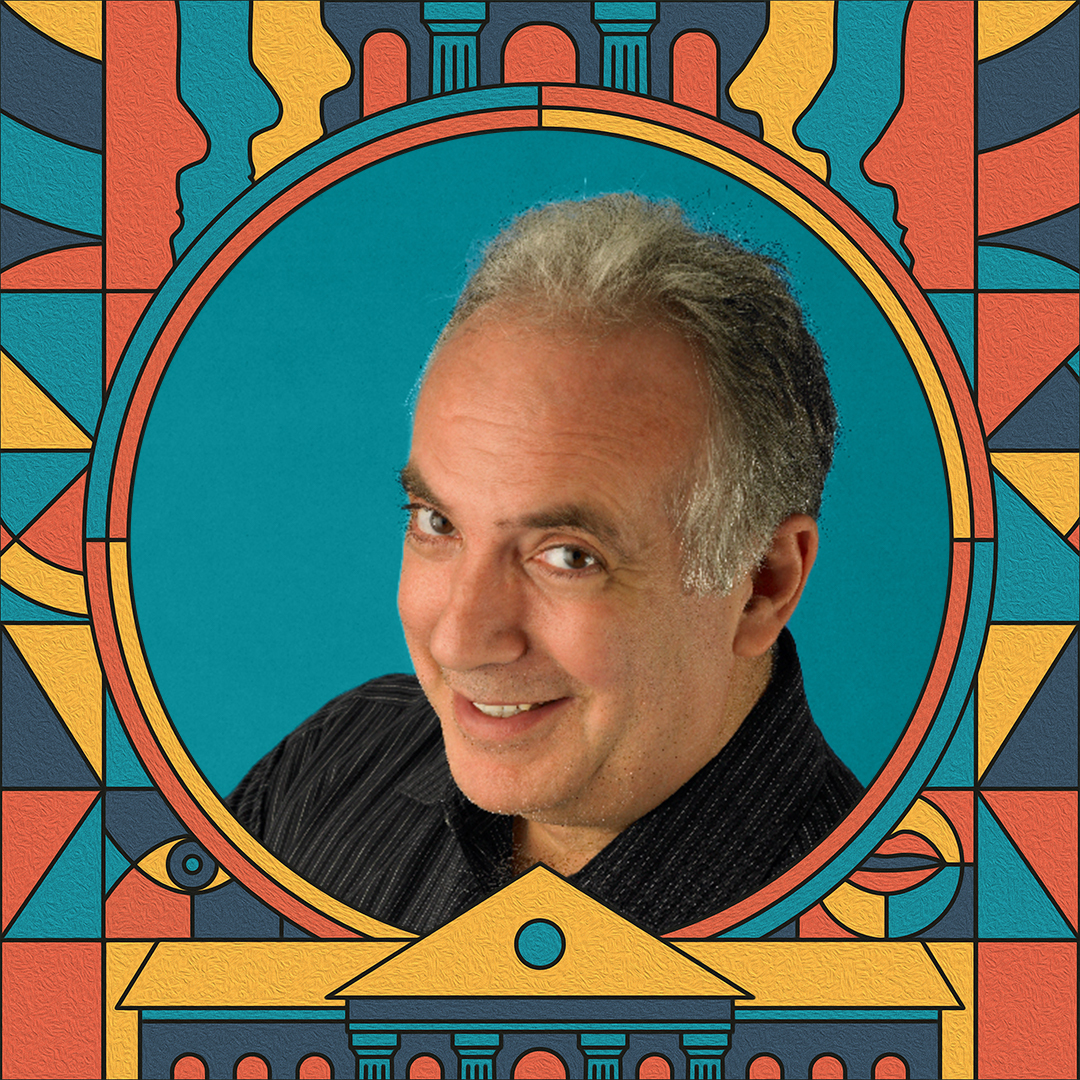
Abby: Our podcast is produced by Lorem Ipsum, an experience design company headquartered in New York, and our podcast explores the creativity, innovation and psychology driving design experiences and encounters. Hello to anybody listening for the first time, and a welcome back to our regular listeners. So, Brenda, today we’re talking with Eli Kuslansky. He is the partner and chief strategist at Unified Field, an innovation and media production firm, which he founded 35 years ago. And that’s really kind of amazing. I just wanted to give you a big shout out for weathering all the storms and steering your ship—
Brenda: A lot of storms in 35 years.
Abby: —through economic waters, and the pun is intentional because you started at the South Street Seaport and did nautical antique appraisals for Sotheby’s and Christie’s. Let’s start there. Tell us a little bit more about that and where you got your start in this business.
Eli: Yikes, okay. No, no, well South Street was interesting because, when I graduated from Cooper Union, I wasn’t quite sure what the work I was doing, I really liked that much, and I wasn’t sure what to do and found this beautiful photograph of a kind of, like, a really interesting cat who is, like, playing banjo in a mix of, a shop full of ship models, which has been a big interest of mine. So, there was a photograph in a newspaper, newsletter my brother read. I looked over his shoulder and saw it.
Brenda: And that was it, that, you were hooked.
Eli: That was it. That was my first foray into museums.
Brenda: Fantastic.
Eli: Which is, you know, I always believe in this thing called the power of serendipity.
Brenda: Mmhmm.
Abby: Was it an ad in the newspaper? Was it like—
Eli: No, no, it was an article.
Abby: Just an article about South Street Seaport.
Eli: South Street, Seaport newsletter. And that was it. From there we worked for several years. You know, we did exhibits. We also sold stuff in the store, we restored and built ship models, museum ship models, and, from there I went to Ralph Appelbaum Associates, well, actually, there’s an interim between that and Ralph Appelbaum, I was a finish carpentry foreman.
Brenda: So somehow or other, in the midst of all of this, you got really interested in technology, perhaps hooked for life in technology. Where did that start? Where did that begin?
Eli: Yeah. Well, what happened was, you know, I was in construction to make a living. And at that point, I was a finish carpentry foreman, and, you know, I tired of doing that, and I wanted something cleaner, that paid better. So, I started taking CAD lessons, AutoCAD lessons, and I zoomed right through it. And then I had to get a job though I had no experience.
So, I lied. I figured the first five jobs I’d get fired from, but then at that point I’d have like five jobs on my resume. And then it was great, and then I could work through the night, you know, did my artwork during the day and I had like machines, four machine running macros. So, they let me do it.
Abby: Wow. Because you must have adopted CAD pretty early on then. What year was that?
Eli: Oh, God. I’m not saying. No, but to give you an idea of when we started the company, because we were one of the pioneers of it, that was the point when DOS was shifting over to Window, right, so it was text based. And one of our first jobs we did was to do an interface, graphic interface for the Bank of New York for their, you know, their institutional banking.
Abby: That’s crazy.
Eli: We, actually in the Window’s ward, I got to meet Bill Gates.
Abby: That was cool.
Eli: So, we realized at that point that this was going to be big.
Brenda: Let’s flow from that. Let’s talk more about media and museums, and Unified Field has been an innovator in museum-based media and technologies for a long time and absolutely still to present day. And I believe that your work is really particularly known for being very evocative, very emotion rich, and very much so centered around powerful human stories, and I’m thinking about a relatively recent project that you did, the Museum of Tolerance in LA.
I’m wondering if you can tell us about the work that you did there, because I know the project in particular, from you and am just enamored of it. Share with our listeners that particular project.
Eli: Well, the Museum of Tolerance Social Lab was a way to, you know, look at some of the pertinent and important topics surrounding things like, you know, anti-Semitism and intolerance, you know, things like that. So, we, somebody else I won’t mention who did some previous work on that for the conceptual part of it. And then we came in and this is typical in our case where we can, where we’re allowed to, we try to push the envelope.
So, to give you one example. There was a thing about points of view. So, we did this cube that was 9 feet high, 14 feet on a side, four sided, back projected. It was called Point of View, and it had directional sound, and it was kind of like a Rashomon movie in a way.
So, for example, you had, you know, let’s say a young woman is coming out to her parents that she’s gay, right, and there’s four participants. So, one side would be her point of view. It’s the same film shot four times. The other one would be the mom, the other one, the father. Another would be, I don’t know, the gardener, I forgot who it was, you know, it was something like that. So that was kind of cool.
You know, it’s tricky because museums are, you know, when they’re curatorially driven, they want to try and get as much content as they can, and it sometimes blends into being didactic. But that’s not, you know, we’re in a participatory culture in a digital society. So, it was like it has to be experiential and somewhat poetic, somewhat theatrical, even though the content has a lot of gravitas to it. So anyway, I don’t know, there was also something that they took out which was a tolerance test when they came in.
Brenda: Woah, that sounds provocative.
Eli: It was very provocative, but they wanted to take it out because one of the donors came in and found out that they’re intolerant.
Abby: So, it works then, it was working.
Eli: Yeah, sure it works.
Brenda: One would assume. I mean, the thing that I love that we’re hearing from you so much about this particular work is empathy, which is something that Abby and I’ve been hearing a lot about, and I know that in the profession, it’s a trend. It’s a real growing trend and I think that in many ways, if one can be an early adopter of empathy in exhibits, then I think that, and in this particular example as well, being very decisive and very sort of programmatic about what empathy can actually look like, how it can feel, how it can be poetic in an exhibit environment. That’s something that I really think about quite a lot when I think about your work.
Eli: Yeah, that’s interesting, well thank you. That’s a high compliment indeed. Yeah. I mean you have to make it empathetic because it has to resonate, not only just one type of audience, multi type of audiences, and otherwise it’s just technology for technology’s sake. So, you can still do the best technology and coolest technology, but if it’s not connecting with people and visitors, it’s not effective.
Abby: We also at Lorem Ipsum do a lot of work like this, and we find it challenging sometimes when potentially a client or an institution feels like it’s trying to tell a specific message or being, as you said, more didactic. And we try to often focus them more on the experience and the fact that people are coming in with different experiences themselves when they are standing in front and absorbing the messages and the emotions that are getting conveyed.
So, I’d love to hear your perspective on how you work with clients to allow them to have the courage to push the visitors into places that are uncomfortable. I mean, you mentioned the tolerance test, for example, and I think that’s exactly where we all need to be, by the way, I think if we’re just putting out things that people want and accept and have already chewed on, then, you’re not ever getting through. You need to put people in a subtly or uncomfortable sort of a place, otherwise you’re not challenging their preconceived notions of who they are and how they perceive others. So, I’d love to talk about the sort of like delicacy that’s needed when working with a client to really make something that’s worthwhile.
Eli: Well, the first part is you have to listen to them. You really have to actively listen to them and to let them know that you got what they’re saying. So, you’re not just pushing something on them. The other part of it, I think, is that you also have to present it in the format that they would get it, right, and then part of that is also making it their idea, so they own it.
You know, we also have this expression to look for the gold in the conversation because oftentimes, you know, you don’t like what they’re saying and they’re saying crazy stuff and like, you know, what are you talking about? You’re an amateur. But invariably there’s something in it that’s really valuable and that, that they’re trying to tell you and either frustrated about or they’re inspired by, and that’s the stuff you have to look for.
The other thing, too, is that it’s important to do focus groups. Because that will burst their assumptions about things, sometimes.
Brenda: It’s such a valuable thing and so rarely done, things like front end evaluation with the focus groups, interviews, town halls and sessions such as that and even formative, you know, at midpoint when you’re having to sort of really muscle through or negotiate things where the client is convinced it’s not working, you know it’s going to work. And at any rate, that’s a really critical takeaway for every client out there. Please, please consider evaluation, focus groups, testing in every possible way.
Eli: Yeah, it’s great. And we’ve done that in this, and I won’t tell you who the museums are, but there’s a story, right, so one science center, Midwest science center, wanted to do this thing, it was a totally questionable idea is the best way to describe it. But basically, what it is, is you have a screen, you listen to a bunch of scientists in a lab coat, which already boring. And then you vote on what they say. And we tell them, like, that’s not going to work. So, they said, okay, but we want to do it anyways, and they spent over $500,000 on it.
Brenda: Wow. Yeah.
Eli: Fast forward five years later, we have another museum in the east wanted to the same exact thing and we tell them, look, this XYZ science center built it. It didn’t work then, it’s not going to work now, but we want it. It’s like, okay, we’re going to do it for you, just with the caveat that don’t come back to us and say it doesn’t work and sure enough, it didn’t work.
Abby: But that’s interesting. We run into this a lot. We have the museum and the content people, and then I feel our job is to listen and understand what they’re trying to communicate and then we come up with the ways to effectively communicate it. I think part of our job is to understand how to engage the visitor in a fun and meaningful way, and that is not easy. I do not think that’s easy at all.
Brenda: No, it’s definitely not easy. And just like it’s not easy working with these clients who are, you know, might be hellbent on a particular idea that they feel strongly about. I’ll also add in one of the things that is really difficult about our whole industry, and that I also really kind of love is the level of vulnerability that people I think have to be able to embrace to do this kind of work, because when it’s done well, when it’s done with good partners, you have to take a lot of risks and you have to just simply not know.
You have to not know what it’s going to look like. And also you need to be able to really trust that things are going to connect with the visitor and that the, if it’s a collection, if it’s an idea, if it’s a story, whatever it is that the, you know, institutions about, that is so important and so valuable to you that people will be able to fall in love with it in little ways.
Abby: What’s your process? So, the listeners can understand, do you come up with how are you going to use an interactive, you know, are you looking at the story first and the best ways to tell that story? Can you just shed a little bit of light on how you guys think and how you come up with an end product.
Eli: Let’s talk about museums because brands are different. But I think in the case of museums, you really want to get a good snapshot of everybody’s P.O.V., if you will, and not just in formal meetings, you know, I know many years ago, when we first started the bank project, the senior product manager of the software project at the bank would go to their clients, and you’re talking about dealing with people at GM, at the highest level, you know, CFO, stuff like that. And in that, that’s a good case study, because we’d sit around these conference rooms and we ask them questions, blah, blah, blah. And it’s all like, you know, the guy who runs the software is interested in features, and the guy who’s the senior guy is in value, right?
So, it’s, it’s not like we speak to a client’s one language. You’re talking to 2 or 3 different languages. So, you have to be aware of that, across the body and stuff like that, you know. But what’s interesting is that most of the meeting was B.S., like you say an hour meeting, like, you know, the first 50 minutes, 45 minutes, totally useless. Right? It was at the end, the last five minutes that you would get the guy who is like the, who really knew the stuff inside and out would buttonhole you and say, look, it would really be great if we did this.
Brenda: You got the gold.
Eli: That’s the gold. So, once you have that, then you’re, you know, of course you usually work with exhibit designers and architects, stuff like that. And then you know, you got to get in alignment, the conceptual alignment. And the best time for us to come in is, especially in architectural based projects, is after they’ve done the block studies and other stuff, like in the overall arching themes and stuff, is to come in as an, early on in the conceptual phase. That’s the best benefit people get out of it because unlike the museum or the architects, oftentimes we’ll work across multiple industries or multiple cultures. So, we can bring that weight of knowledge and experience to this particular, you know, project.
Abby: People talk about listening all the time. And so when someone says, yeah, you got to listen, I think nobody’s listening to the fact what listening really means, because for me, it’s about going into a room and not having any preconceived ideas of what stories they want to tell and how you think they’re best to tell. And literally going in tabula rasa and sitting there and being completely open and hearing the client.
I’ve seen people think they’re listening, but they’ve sort of almost already know what’s going to happen or what they think it should be. And then they’re in the meeting and they leave, and it’s like they haven’t heard anything.
Brenda: Being highly present is really complicated, and part of me wonders when thinking about the client dynamic with the, I’ll call, I’ll lump us all into the creative, right, and the dynamic of creatives, I think that, man, when we are able to get into flow state, what a tremendous pleasure that is. And it really is right. It’s a state of optimal creativity, optimal experience, and it’s highly, highly present.
And it’s like ultimate uber present. You are just really in the moment, you’re creating and, right, all this great stuff is happening, and I wonder how much a client actually gets to experience that. And I think that maybe more confidence also comes from having been able to have those kinds of experiences and kind of come out on the other side, you know, you can trust yourself a little bit.
And so, I’m just sort of playing the empathy game here, really thinking about these different perspectives, because I think about most clients and you know, man, they’re constantly dealing with past and with future, and I wonder how much they get to really zone in the moment.
Eli: But I think, I think there’s an aspect to it that you really have to create a space of safety. A safe environment to be able to be vulnerable on your side and their side. So, in some ways it’s not just conversation, it’s a state of being.
Brenda: Eli, this is something that you and I have spoken about. I’ve known you for just about 18 years now, and I always love talking with you. I just love hearing where it is that you’re coming from. And I’m thinking of some recent conversations that we had actually through Covid and thereafter, and here’s the deal: you’re an artist; you’re a podcaster of Art Movez, which, listeners, I highly recommend you tune into; you’re also, as I see it, a philosopher and you—
Eli: Kind of like a street philosopher.
Brenda: Okay. But I think of you very much so as a Renaissance man, who has a lot of ideas about how it is that we’re currently operating at a time of profound growth, sort of societally, culturally, but also scientifically and a time of great discovery. And we would love to hear what’s your vision of art, culture and science in the world right now?
Eli: Yeah, that’s a great question. Well, I think the way the universe kind of works, according to my POV, is that it there is breakdowns and breakthroughs. And then you have to have a breakdown before you get a breakthrough, otherwise you have a perfect system. And the other thing that’s interesting about it; the breakthrough is at the same commensurate scale as the breakdown in terms of depth and breadth and stuff. So, the bigger the breakdown, the bigger the breakthrough, right.
So, you’re looking at now, we have an assault on democracy around the world and people’s rights. And you know, other things too. So, and it’s not quite accurate, but I, and the reason I don’t think it’s accurate, because I had this conversation with Chrissie Iles, who is the curator of the Whitney. And, you know, I said, you know, I think that we’re in a new Renaissance because of the old, you know, the plague sort of helped start the other Renaissance.
And she said, which one? You know, because it’s like there’s more than one. And you’re starting to see that, you’re starting to see it in medicine, science, you know, and the arts. You know, you look at a lot of fine art today, there’s really amazing stuff of it going around. Brilliant work. But for the most part, you know, 90% of it or more could have been done in the 1930s.
So, then the question is, what is art of our time, not art made in our time, which is how most museum, art museum describes, or, but how most museums describe it is like what is 21st century as art made in our time? But that’s not accurate. So now we’re starting to see a lot of artists experiment with it in a lot of ways and experiment with technology and, you know, whatever fabrication and other stuff like that.
Again, also, I think the best stuff still is the stuff that combines the old with the new, which is what Renaissance means. It’s a rebirth.
Abby: So, we’re quickly adopting and adapting AI all around the world in all the different industries, but we’re specifically thinking about AI tools in our work. I know as a creator you use AI in your art and exhibition concepts. And in a recent social media post you wrote, and I quote you, dealing with AI is like having an idiot savant muse who feels nothing, knows nothing, and understands nothing, like talking to the wind.
Now, I kind of do agree with this perspective, but an unfeeling idiot savant can be very useful. It’s infinitely patient, will work with me ceaselessly. It doesn’t have an ego, so it takes criticism and creative feedback really well. And since it’s been trained on a massive amounts of data, it can answer most questions and brings a wealth of context to many subjects. So, if you want it to be human, I think you’re going to be disappointed, at least right now, but if you accept it for what it is, I think it can be a really creative companion, unlike any human and, potentially soon, better. Why do you love AI and how are you using it?
Eli: Well, yeah, a lot of ways. I want to back it up a little bit about a couple of things. So ChatGPT is like talking to like a very fussy aunt sometimes like, oh no dear, you shouldn’t be saying this. So, but it’s, it’s great when you’re writing to just be able to get verbiage, right, and you can’t use what it comes out with because like generic crap, you know, so and it’s obvious, like what it does, just like image, a lot of stuff when you do text to image, it comes out this weird science fiction thing. But if you know how to use it, it’s an amazing tool.
The other thing too is that I think some of the most interesting things you can do with AI, especially in Midjourney, is not the text to image. There’s actually a command there, forward slash blend command that allows you to blend up to like five of your own images. And that’s when it gets really interesting.
Abby: And I’m really excited as well because I think it’s soon, it’s becoming with ChatGPT 4.0, multimodal. So, as we can start talking to it and things like that, instead of typing stuff, I think it’s going to start to be a guide. It’ll be a teacher. I don’t want to freak too many people out.
Brenda: Like me.
Abby: It’ll talk to you, and you can ask it questions and it’ll explain things. So, I feel like the future is getting to us quicker. I feel like this is all, AI has sped up so many things.
Eli: Look, AI is a double-edged sword. You know, there’s definitely going to be a shift in the economy in terms of, you know, I mean, you think about it; what happens when AI gets to the point where you can drive trucks around the country, that’s like tens of thousands or millions of people who do that for a living.
But the other thing it’s going to do is it’s really going to lower the cost of production, let’s say, for feature films, right? I think his name is Tyler Perry, very interesting story, and what happened with him is that he was going to spend eight hundred million dollar building 16 stages for film. And then OpenAI came out with Sora and Sora is text to video.
Now, like a lot of things AI, it’s not quite there yet. But he saw that and he canceled all the plans for the eight hundred million development because he figured, what do you need that for? You can just do it. Now, if that’s the case, if you don’t need, like, these super expensive soundstages to build these environments and stuff, you just do it text to, text to video, can you imagine what the cost of like making feature films would be, it’d drop significantly.
Abby: It’s so interesting you mention that actually, because I was just at Cannes Film Festival and I was in the Microsoft Café and they were presenting Copilot, where it can take, text and turn it into storyboards. It was having a little bit of difficulty doing it because it’s still in its infancy, but it is completely just around the corner. It’s incredible how much it’s going to help and streamline filmmaking.
Eli: I don’t think it’s there, by the way. And I’ll just give a quick example. I went many years ago into IBM, had the, you know, Watson thing or something like that. And one of the things they had was they had their AI, they made recipes from things that AI created. Now, I’m a self-trained chef and I know what things are supposed to look like and taste. And I was looking at this and said, yeah, you could combine those ingredients, but why? You know what I mean?
Brenda: I keep thinking and thank you for the segue, because you are a chef and I just think about quality and that’s it. You know, in terms of my analogy regarding AI, it’s like, I think the microwave is a really important tool and it is helpful. It does speed things up. It achieves things that would be pretty rough to do, I think, with other conventional tools. And I don’t think you could ever supplant the chef with the conventional tools. And that’s what I think about AI.
Eli: Well, speaking about AI and the arts, that’s interesting. So many years ago, at South Street, I got this Chinese junk. It was laying, beautiful junk, you know, made in the ‘30s, laying around in pieces. And finally, Covid came and the beginning of Covid I said, alright, I have a perfect opportunity to restore this thing because it takes a lot. So, it ended up being six months, 4 to 6 months.
And during this time, I say, oh crap, I should be doing artwork. Why am I doing this? Then I said, all right, well, I’ll figure out a way to connect this to the stainless-steel complex, you know, tensile structures I was doing. And then when I got finishing it, I look at this thing and said there’s no freaking way you can do this.
Like, until we had to start using Midjourney, and then I used the blend command, and I blended the photograph of this Chinese junk with the stainless-steel things, and it came out these ship designs that are totally crazy. I mean, you know, I have a background in ships and their restoration, and I showed that to my friends and they said, what, are you kidding me?
But then I said, oh, this is interesting. So, I’m turning this into an exhibit of this fictitious character who was an insane, you know, English designer, Naval designer, and he came up with these models. So, it’s interesting in a sense, because it’s a retro futurism exhibit that looks at the archetype of mad genius and the malleability of history, you know, because of the impact of AI. So, that’s one of the things I’m working on.
Brenda: And at the end of the day, it’s a beautiful story that you’ve created and accompanied by, again, really poetic, beautiful images of ships that may or may not ever actually sail—
Eli: No, would never sail.
Brenda: —but they don’t need to. Don’t need to at all. I love how we’ve come full circle—
Abby: Look at that.
Brenda: —to where we began.
Abby: Thank you so much, Eli, for joining us today and sharing all these thoughts. It’s been incredible. I think one of the biggest things for me is vulnerability and failing forward and having the courage to make mistakes in order to grow. So, thank you for sharing your wise words.
Brenda: Thank you, Eli.
Abby: And thanks to everyone who tuned in today. If you enjoyed it, subscribe for more episodes of Matters of Experience on Spotify or Apple. Please leave a rating and a review and share with a friend. See you next time.
Brenda: Thank you everybody, take care.
[Music]
Producer: Matters of Experience is produced by Lorem Ipsum Corp and recorded at Hangar Studios. Tune in next time for more fun discussions about experience design.