[Music]
Abby: Hello and welcome to Matters of Experience. My name is Abigail Honor.
Brenda: I’m Brenda Cowan.
Abby: Today on the show, we’re focusing on retail experiences, how we consume stories at retail, the shift to Web3, and what constitutes a successful brand experience.
It’s not an original thought, but worth restating that the way we consume is changing. It started with technology helping us buy whatever we want, wherever we are, with a simple click of a button. And it’s now affected the idea of the retail store’s purpose. Things have changed and are changing. They now have to be more than a place to transact, but they need to start leveraging experiences to customers rather than products. Retail strategies are also being shaped by a new generation of customers who shop in a very different way to earlier generations, and we appreciate that technology is a differentiator, not a constraint.
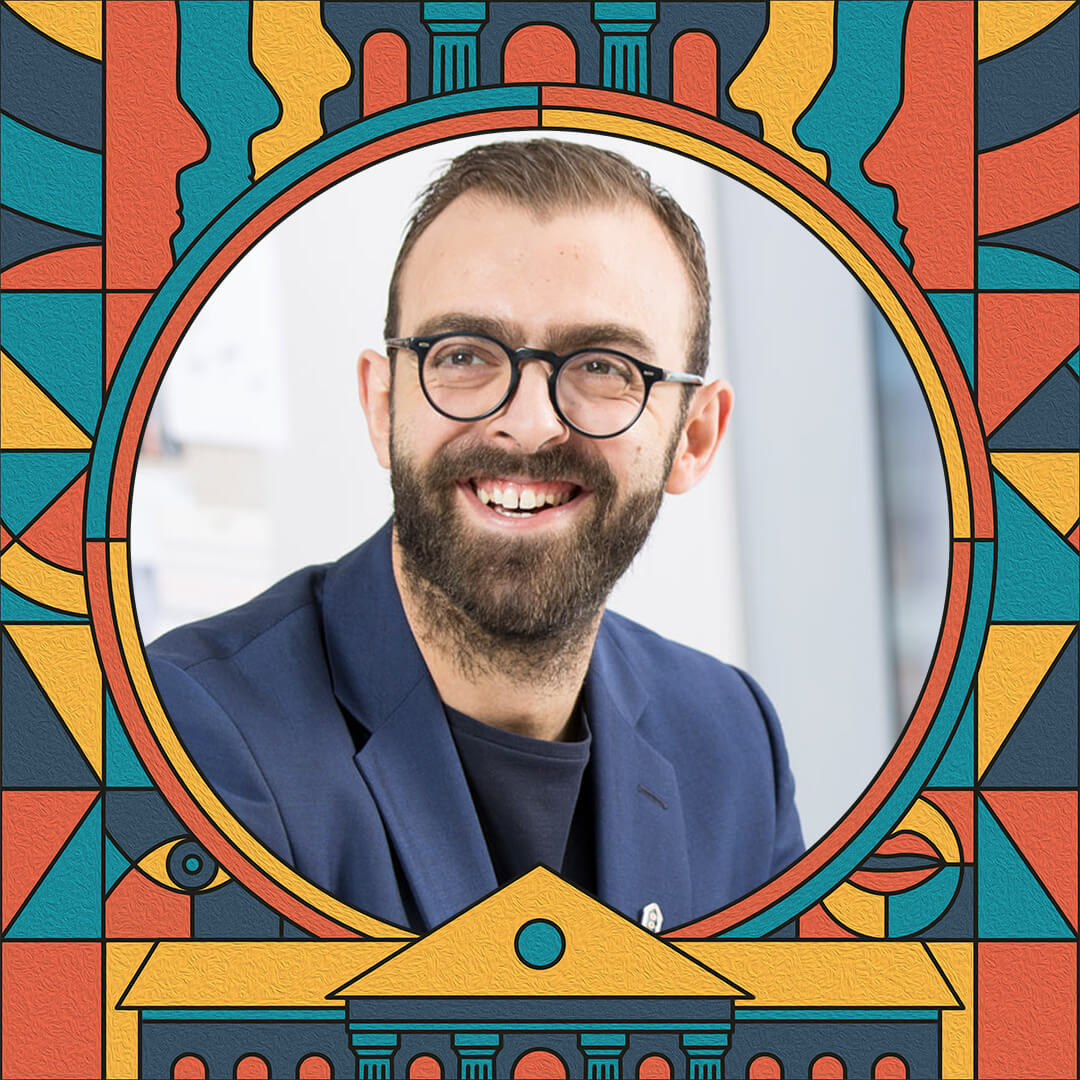
So this group really challenges us to create these unique, immersive moments that include technology as a driver. So, with this in mind, I’m excited to introduce our guest on this journey, Giovanni Zaccariello, who is the senior vice president of Global Visual Experience at Coach. Born in Italy, he’s worked around the globe before landing here in the Big Apple. He currently leads visual merchandising, 3D creative studio, brand events, and, most recently, the Digital Experience Team at Coach. Gio, welcome to the show.
Gio: Thank you for having me. I’m so excited to be here with you today.
Brenda: Well, we’re very excited to have you and Gio; I’m going to kick start by mentioning the very interesting journey that has led you here today. Could you tell us the path that you followed to get here? And what are some of the obstacles that you had to overcome?
Gio: Yeah, so I think, as you mentioned, originally Italian, from my long name and surname, which you did really well pronouncing by the way, and really lived across, first Oxford, where I went to university, then London in the UK, Holland. And then I really took a chance in my career and I joined Coach, which I’m very happy about, and moved to Hong Kong. And now I’ve been in New York for over six years. And what I think all of these experiences have in common is the idea that you know, we do live in one world, and this idea of globalization, it’s part of everyday life, and I think one of the obstacles has always been about, you know, kind of being an immigrant in some of those countries and really trying to understand, you know, the country, the region and really learn and get educated before you really get immersed. The beginning isn’t always easy, right, but then once you get to it, it can unleash so much creativity and so much new bonds and new friendships. So I definitely would do it all over again.
Abby: The future of retail includes embracing ecosystems like offering free classes or workshops, so, you know, we see a number of brands doing this. It’s not purely about selling the products anymore. You know, I think the future of retail will probably all be experiential. I want to put my neck out and say that, it will all be the experience economy, so, what does a consumer want to feel when they walk into a store in general Gio, and how are stores changing to meet consumers needs?
Gio: Yeah, I think this is kind of like a $1,000,000 question and it’s something that I think we’ve all started to think a lot more about, especially because of the pandemic. But, I think at Coach, we kind of started to have those conversations way before and I think today the statement is that stores are not just the place where there’s bags on shelves, right, because the consumers kind of learn how to buy those bags online.
So I think about my job and the creatives jobs around the world is to really create that emotional connection with the consumer. And we’re using some words in my team, you know, one of the words is hyperphysical. The physical, the way it used to be is not enough anymore, so we are calling it hyperphysical in this way that is the nature of creating immersive experiences, thinking about connecting with the consumer across the five senses, creating immersive spaces where people can hang out. They don’t just need to shop the brand, but they can consume the brand, so I don’t think one of the elements is the solution, I think it’s about this diverging of creating the full immersive space because we’ve been at home for such a long time, and now that we’re starting to go out again, we really want more.
Brenda: Because you do so much tailoring of your experiences to different locations and different cultural centers, we’re curious to know, how do you exercise certain sensitivities? I’m wondering if you could give us an example, perhaps, of how you’ve had to really understand a local culture and tailor an experience for it.
Gio: Yeah, so I think one of the way that we do it here at Coach from a creative perspective is this idea of “glocal” experiences. So it’s a mixture of like a global idea, but then with a local touch. For example, in the past three years, we’ve been opening a few digital stores around the world where the customer can be fully immersed into the brand ethos. And what we’ve been doing is, as much as the design of the store is unified across the globe, the content of the screen is actually made in partnership with the local artist. Not even of the actual country, but of the city where the story is in, or the actual town where the story is in, and we are giving the artists a little bit of a free range. We’re just saying, okay, this is some of the Coach codes, this is, those are the value of the brand, and really express yourself through our Coach stores and I think we’ve seen a huge resonance.
We also partner with a lot of local hospitality vendors. If I think about what we did in Singapore, for example, last year with the bagel shop, or even like the way we are bringing to life craft and heritage around the world, we love to partner with artists to create motifs in different artwork on the bag. We have a program called Coach Create in the majority of our stores globally. We invite artists into stores to support customization, and this has been very, very, very, very successful. We also have incredible talent in the region, within my team, and within the larger Coach ecosystem, so, we really work with them closely before we go to execute an idea.
Also, we do some campaigns that are incredibly local, and they are only local, if I think about Ishii, the way we also bring our efforts around Lunar New Year. This is our very first time that we have launched a Diwali campaign in India. We have used our incredible Coach mascot Rexy, the Coach dino, and we partner with a local artist to create and celebrate the Festival of Lights, which is Diwali. And we have had incredible success. We are not going in and kind of trying to take over the brand or the culture, but really partnering with local ambassadors.
Abby: Talking about your Diwali activation, you activated, you know, throughout the store, the windows, the packaging, I know there was a photo moment, and digitally, you have the AR game. Where does that seed of the idea originate from? Tell us some of the ingredients that need to be present to make a successful activation.
Gio: Yeah, so I think, you know, it all starts with the Coach India team coming to us just saying, hey, we think we have a big idea here. We really want to celebrate the Festival of Lights this year. We really wanted to go a little bit bigger to really create an immersive space, an incredible experience. Once that brief was sent over, I think, you know, my team huddled and we kind of knew, kind of like, that we wanted to bring Rexy to life, but what was missing was a little bit of an understanding of the culture and what Diwali really meant.
Of course, we know it from our own perspective, but we did a little bit of a deep dive with the Coach India team, and then from there, the creative team really goes, goes wild usually, right, and creates a lot of different options that we were able to bring to life. And I’m happy that we were able not only to do a physical installation, but through the augmented reality game that we did, everybody around India, but also around the world, was able to celebrate Festival of Lights.
Abby: How do you work with vendors, like who’s creative on your team, and when do you go outside?
Gio: Most of the creative that you see through windows, pop-ups, installations, it’s done internally at Coach. What we do externally is production, so we have really strong production teams around the world across North America, China, and Japan, Korea, Singapore, Malaysia, you name it, Europe, London. So those are the teams that kind of take the idea and then go and do some bidding with some of the vendors from a production standpoint.
Due to the number of activations, we have started to actually go out and pitch to some agencies, and I think that’s kind of like what the future holds for us, to even challenge the brand a little bit and really create a little bit more innovation and creativity at the forefront. But most of the creative is done in-house.
We have a very small but very talented team here in New York, and the team is incredibly diverse. Their background is diverse. They come from all around the world and they’re able to really understand what each region really needs, and I think so far has been incredibly successful.
Brenda: Gio, this question is a bit of a build off of what you were talking about. What is it that you and your team do to always put yourself in an innovative mindset?
Gio: Yeah, there’s one piece that we say when we start a new season, a new idea, we say no idea is a bad idea. And I think when we kind of start brainstorming, you know, no ideas come from the top. You know, we work really closely together, but starting the conversation with we are not going to do something that we have already done. We’re not going to do something that someone else has already done. We really want to come up with something that feels a little bit new and different. And then the other thing that I keep saying a lot to the team is, if you don’t feel uncomfortable about this project, that means you’re doing the same thing again, right? So you really need to feel like you’re taking a risk. You’re really pushing the barriers because that’s when you’re doing something new and that’s when you can really touch the hearts and minds of the consumers. Consumers don’t want to see the same thing twice, right. Also, I think as a leader, I get really bored of doing the same thing twice. And I think that mindset has trickled down to the organization, to the team, not just the creative team, even the production. The way we produce needs to change, the way we embed technology and digital and AI into the conversations and to the projects that we have, the way we embed events, entertainment, hospitality, pop culture.
So we really start with a blank slate every single time. One of the other things, as well, that we talk a lot about at Coach is test and learn mentality, right? Some ideas are big, some ideas are small, but testing is fundamental, and learning from either success or failure before we start the next project is fundamental, so we do a lot of regroups internally around what did we learn, what went well, what can we do better?
Brenda: One of the things that really stuck in my mind was when you talked about a position of discomfort within the creative team. Now, Abby and I work with a lot of creative teams and a lot of creative individuals, and it is something that I think we might agree is really necessary, and I’m just curious what it is that you do that really fosters creativity and innovation while putting creatives in a position where they don’t know what’s going to happen.
Gio: I guess as a leader and a creative thinker, I guess I’m never too specific about the creative. I do share with them a lot of research, a lot of swipes. I’m online all the time, really trying to read a lot, watch seminars, literally a social media fanatic, to really understand what’s happening in the world. And when that happens with your team, you start seeing trends, right? You start understanding, okay, this is where the world is going. This is what the Gen Z are reacting to. And I think having a dialog with like-minded creatives, like me, even in New York, I mean, I made a lot of friends through this business and really sharing that with my team versus just saying I want you to create a Rexy for Diwali.
Right? And I think that sparks imagination because they think they have an opportunity to make great things. And I think when that becomes part of the culture, I think not only you have a great creative as an output, but you also have an inspired team that wants to continue to do greater and better things every day.
Abby: Yeah, I think it’s a lot about the leader and feeling comfortable being uncomfortable and also wanting to constantly challenge yourself creatively. Because I’ve had people join our creative teams and at first they’re like, whoa, we’re doing like, what are we doing? Where are we going? And it’s about really just letting them know that failure is great. We learn from failure. It’s important. True innovation only comes from stumbling and falling time and time and time again. So it sounds like you also imbue that in the team that works with you and that’s their fuel as well. You know, like when you’re with other people who feel the same way, you can’t help but bubble with inspiration and ideas. And I really feel like amazing things, magical things happen that one person didn’t create. I think it’s really key in a team to have everybody contributing to make that experience even better than it could have been.
Gio: I love it. If I can give you an example of this, exactly what you said, so last year was challenging, right? Every region was in a different part of coming out of the pandemic. We had this holiday campaign with animals going through the snow, and we ended up calling it Give a Little Love, and they were literally finding hearts around New York City, and then you share love with friends, family, loved ones. And two weeks before we launched a game, I just said to the team, those animals are so cute. What if we make them into NFTs. Two weeks before the launch.
Abby: I bet they loved you. They were like, oh yeah, Gio, no problem!
Brenda: Thanks Gio! No problem!
Gio: Right? So rallied a lot of individuals that were totally obsessed with this project, and we launched it on time. We crashed the Coach.com website, and we sold out within 2 seconds.
Abby: Wow.
Brenda: It’s amazing.
Gio: So you can make the impossible possible if you have a vision, but also if you have the team to come on that vision with you, right? So I guess what I’m saying is, it keeps going back to its about creating a culture of change and creating a culture of accepting failure, creating a culture of empowering innovation. Just because we’re doing well doesn’t mean we’re going to keep doing well, right, because the customer is changing so rapidly. We need to move as fast as them.
Abby: So let’s talk about community. People want to come together and share in a common experience. If we didn’t know that before COVID, we certainly know it now. Human connection is fundamental to who we are and how we relate to one another in the world around us. So tell us about the importance of human connection for you. Why do people want to go into a store rather than buy online?
Gio: You know I think I know I say this a lot, but we do have the best workforce in the industry. I am always so inspired when I go into our stores, not just in the US, everywhere around the world. And you know, starting with the store managers, they treat the stores as their houses. Especially during the pandemic, we learned that most of the store staff were actually getting to know the customers’ families, their habits, what do they do, what are they going through in their life? And I think you cannot do that online. And I think creating those meaningful connections are fundamental for the physical world. And I think that’s one of the reasons why I’m still here after 12 years. I think that those connections, not even in stores, but even in the corporate office, like it feels like it’s a big family, and that is very hard to find.
Brenda: I love what you’re saying about the personal relationships and the feeling and the sense of family that’s being generated. And it’s making me think of a recent quote from Paco Underhill, the retail researcher. He recently said that the hardest thing to change is operating culture and suggested that one of the things that many senior executives are asking these days are about what kind of operational changes they should be considering, and it sounds like you at Coach and your team there are already thinking like this. He said that shortening the distance between the executive suite and the front door is essential, and that is, as stores reopen, senior management need to commit to spend at least one weekend a month on the floor being visible to their staff, listening and watching what customers do, and that leadership in times of crisis is about leading from the front. Would you agree with this?
Gio: 100%. I do think that is part of our culture. The corporate team can learn from the field. The field can learn from corporate, so it’s an exchange of education, it’s an exchange of knowledge, but also it’s a big thank you when we travel, right? The store staff are at the forefront of managing all the challenges that we’re facing culturally, politically, also how consumers are changing, and I think once you get there and you really speak to some of the store managers and sales staff, you really understand what’s going on. Actually, as part of training, everybody at corporate spends time in the field as part of their role. It doesn’t matter what team you work in, whether it’s finance, procurement, creative, visual merchandising, HR. So it is a big part of our culture, so I’m glad you asked that question because it’s really true to our values here at Coach.
Abby: When we look at experiential exhibits that we create, we really try to focus on using and stimulating the five senses of visitors. We created an exhibition for the Jewish Museum, which had props that were food that we actually switched out once a week, and the smells that they created, it was a period piece, really took people back to the time.
So the five senses are so powerful in creating a connection. I really think the best shopping in a store isn’t driven by this sort of necessity to purchase the product. It’s driven by a sense of discovery and the excitement of finding something new. So how do you use the five senses in your work?
Gio: The touch comes to mind the most just because we mainly sell leather goods. So in our stores, we have, we call it the heart of the store, is our craftsmanship bar. We have leathers that you can touch. We also have details of the bags. You can actually see how the bags are made, so the touch is an incredible part of that.
Some of the other elements that we have started to look into are things like, for example, sounds, music, and smell. A lot of our activations include entertainment. Most of our brand ambassadors, including Lil Nas, which was just announced, are musicians. So music is a big part of our pop culture heritage. But also food. I mean, we’ve been bringing a lot of activations through hospitality.
And then also things that you can actually see, like we love things like color, but also bold experiential, bold moves, bold installations, so that even from ten meters away, you can actually see and then you can kind of get attracted to the experience, then once you are close to it, then things like smell and music become a little bit more dominant, but I think from far away, you always kind of start with the eye, right, the eye component, so, we talk a lot about ten meters, seven meters and one meter in terms of how we activate the five senses, Not all experiences count for all five, but I think we are trying to emerge, depending on what we are trying to do.
We do the same thing online. We are about to launch our very first virtual store. We have been discussing a lot about music because music can really create that immersive experience, it’s why you shop and actually what we are doing for the first time, we are activating pieces like Shop with Friends, for example, so you can actually, because you cannot do that on a website, you can shop by yourself, of course a friend could be next to you, but we are launching a Shop with Friend facilities as part of our virtual stores. So, you can do it in different ways. And I think this is an area that I think we will continue to evolve, and it’s fast moving incredibly fast moving and it fascinates me.
Abby: I just want to sort of pop in something that our team is working on right now. We’re part of the Ghost program with Snap and so we’re creating a Lens right now that, we feel like a lot of the AR try on, it looks very fake. It doesn’t realistic. The colors aren’t true. So we’ve developed a Lens where it’s completely realistic.
Our clothing matches the swatch in person, matches the swatch online. So you would walk into a real changing room and then you, for example, could be wearing a white or a black or a blue version of a t-shirt, and then using the lens you flick through and you can try on different colors. Thinking about that idea of collaboration and shopping with a friend, our hope for the next generation of it is this collaboration that you will be able to do on the Lens where, you know, I could be trying something on, and I could share it with Brenda, and she can flick through and show me what she thinks I should be wearing.
Because, you know, when you shop with a friend, you come out, do you like it? You’re not like it or boyfriend or girlfriend or whatever you with, and so there’s a lot of fun things that we’re working with AR right now in the retail space that we really think are going to be so useful and so much fun for the consumer in the future.
Gio: I love that. And you know, one thing that resonates with me is this idea of hidden digital, right, like what you are saying. Something that feels very seamless, I think for me, like just adding screens for the sake of adding screens, like it just doesn’t make sense for the brand. You know, we are such a heritage brand, and I think the way we are going to use digital is seamless, right. To your point, AR could be a great way of doing this, but I think some brands are doing it better than others. And I think what you describe for me is genius because it’s invisible, right? It’s an invisible layer.
Abby: Yeah.
Gio: And it’s going to make your experience smoother.
Abby: Yes.
Gio: And I think that for me, is what success looks like.
Brenda: I’m curious to know, sort of as an extension from this, Gio, what’s the role of social media in the work that you’re doing now?
Gio: Wow. I think social media, I would say, is at the heart of everything that we do because everything that we install, everything that we produce, it’s everywhere on social, right? People love to take photos. People love to share their experiences, and that’s why we actually design the spaces with that in mind. The ecosystem is complex, right? Because everybody’s everywhere. There’s so many different platforms, and I think we definitely, that’s at the heart of our creative process, to be honest. We work very closely with our social media team here in New York City so that not only we have their support from the beginning, but also when we launch something it’s widely distributed on our social channels so people know what’s going on.
Abby: Now let’s focus on Web3 and the metaverse, everybody’s favorite subject. How do you think this is going to affect your industry? Is it something you have to jump into because the risk of not getting in is too big?
Gio: So, you know, I think the word metaverse is being used so much and somehow has become a little bit of a buzzword. I think the way I see metaverse is somehow the future of social and just another channel about how people are interactive. I think about, for example, before social media, right?
Abby: When was that? I don’t think I remember life before social media.
Gio: Exactly, so I think that, that’s really for me, what metaverse is, it’s this kind of like new ecosystem that’s kind of taking off, and NFT and gaming are becoming the heart of the metaverse, but what this is going to look like in the next 4 to 5 years, it’s kind of hard to tell. And I think what we are doing in my team is again, testing and learning.
We’re going to try and experiment. That’s actually the word I was looking for. We’re going to try and experiment, and I think what we’re going to experiment in the US is very different to what we’re going to try and do in China because the consumer is in a different place with Web3 adaptation, and we’re going to have fun with it.
We’re not going to be in the Web3 world because everybody else is in the Web3 world. That is not how we’re going to do it. It’s just a trend. We’re not going to do something because, oh, it’s a PR stunt, you know, like we’re going to do it because it’s going to make sense for us and because it’s going to help us reach a new audience and maybe is not consuming Coach today.
Abby: That makes perfect sense. I hope there’s a lot of your peers here listening in because I think that’s good sound advice.
Brenda: I’d love to follow up by asking, how do you personally measure success?
Gio: Wow, big question. I think, I think for me it’s seeing consumers reactions to what we’re doing, not just in sales but also about changing that perception of the brand, which is true. It’s more like qualitative feedback than quantitative feedback. I think seeing consumer happy makes me happy. And you know, there’s a lot of things that we do because our consumers want it, right?
And I think the work that we do, especially in the creative world, is so hard when it becomes so personal, right? You need to make every creative more objective about the customer, not about you. Once you do that and once the customers are happy, I think the possibilities are really endless, and I try to get a lot of feedback from our local teams in region for every project so that we know whether we have reached the consumer in the right way and what they have to say. So for me, that’s a critical part of the process.
Abby: So before we wrap up, talking about personal things you actually enjoy, you know, I know you like coffee, maybe almost as much as I love my coffee. So, my favorite coffee shop right now is Coffee Project on Seventh Avenue. I think they really serve the best espresso. And I wanted to ask you what your favorite coffee shop is here in New York?
Brenda: The question everybody’s waiting to hear.
Gio: Oh, my God. You know what? I live in Hell’s Kitchen in Midtown and I would not survive without a small café that’s on 45th and 9th called Bird & Branch. They were my savior during the pandemic, you know, when we were all stuck inside the house, and I literally used to take my 30-minute break and go and get the coffee through the window, because you couldn’t get in. And there is such a sense of community. Every single neighbor goes there. We chat in the morning very early. It’s about the quality of coffee, but also like a place that’s become like a neighborhood hangout if you know what I mean. It’s one of a kind. They also try and recruit kids that maybe have difficulties and have maybe hard, it’s hard for them to find a job. So I kind of love all about it, to be honest, culturally, and I will give them my business every day. So, but also incredible coffee.
Abby: Yup, key, key.
Gio: Incredible coffee and I love my strong coffee, so, being from an Italian heritage.
Abby: Me too.
Gio: Great question. I wasn’t expecting that.
Abby: Well, it’s such an amazing experience going into a great coffee shop. And, you know, as you said, the smells, the people, the community, you know, and another place to gain inspiration. So, Gio, it has been amazing to have you with us on Matters of Experience today. Thank you so much.
Brenda: Thank you, Gio.
Gio: Thank you for having me, and chat soon.
Abby: Bye.
Brenda: Ciao, ciao.
[Music]
Producer: Matters of Experience is produced by Lorem Ipsum Corp. Please tune in next week for another conversation. Thank you all for listening.