[Music]
Abby: Hello and welcome to Matters of Experience. My name is Abigail Honor.
Brenda: And I’m Brenda Cowan.
Abby: Today on the show, we are focusing on diversity, equity, and inclusion, specifically in museums – what it means, how to do it right, and why it’s still important.
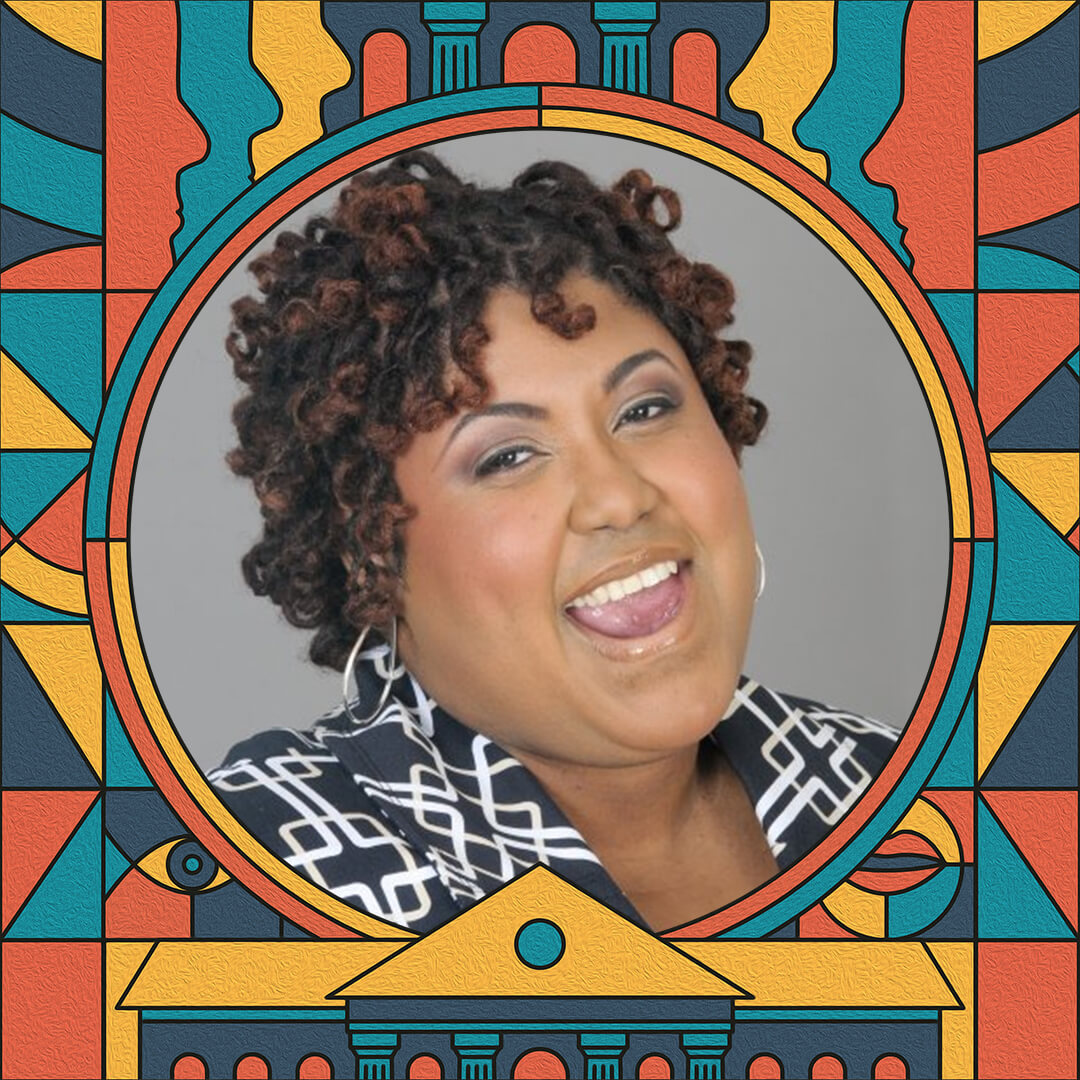
Brenda: Abby, this is a topic that’s near and dear to my heart, which is why I’m so excited to be able to welcome Monica O. Montgomery to the show today. Monica, you are the director of Community Engagement & Programs for Historic Germantown. That’s in northwest Philadelphia. And there, you work at the nexus of culture, community, and creativity, all through a lens of equity.
I’m also excited to add that Monica is contributing a chapter on this subject to a book titled The Flourishing Museum. And this I’m co-editing with museum scholar Kiersten Latham. Monica, hello and thank you for chatting with us today.
Monica: Hi. Thank you so much for having me. It’s good to be here.
Abby: So, we’re glad you can join us, Monica. Can you tell us what was your path to where you are today?
Monica: Well, I originally was working as a teacher, teaching early childhood education, pre-K. And while I was teaching, this year was the year where Trayvon Martin was ruthlessly murdered by George Zimmerman. And that incident really rocked the nation and brought up a lot of angst and anxiety for adults, but also for children, who are sponges, right.
They’re hearing everything that’s going on, things are being whispered and said, but not necessarily to them. And so the kids in my class would ask me questions and say, you know, are we safe? Or can people shoot us if we eat Skittles or if we wear a hoodie? Is that a bad thing? So they were asking these like really heavy questions that no one prepares you for when you go into education.
So I decided to help my children process through their emotions to create a curriculum around community care and Black Lives Matter and help them understand what was happening in the world. We did a lot of service learning. We did activities where we made Mother’s Day cards for Trayvon Martin’s mom, and we talked about prejudice and what’s the root of it.
And at the end of that school year, everyone was feeling much better. We had done all sorts of good things for the community around us and had a better understanding and a better handle on our emotions. But as a result of that, the principal called me in my office on the last day of school and said that she didn’t hire me to be an activist. She hired me to be a teacher and that I was not welcome and my ideas and approaches weren’t welcome, and she fired me.
And it’s from being fired as a preschool teacher that led me into this path of museums and seeking to infuse museum spaces with social justice and equity. So that is how I got my start.
Abby: Did you try to explain to the principal how what you were doing was educating your students and empowering them for the future, and enabling them to understand more of who they are and where they come from? Which, isn’t that what a teacher supposed to do?
Monica: One would think that, yes, I did. I did try to explain that. I had parents that were happy with what we did and wrote testimonials, but ultimately, this is a charter school system, and it is their discretion on whether to invite teachers back. There was no union, so I didn’t have much recourse. But I am happy to say even though I miss the classroom, it was great to be able to realize even if I can’t talk about social justice in a classroom, where can I do that? And that space is a museum where informal learning happens, where socialization and contextualization happens, and I decided to bring that ethos to the museum spaces, so it all worked out in the end.
Brenda: You know, Monica, one of the things that I really appreciated about what you just said was when you were referring to your work as a teacher and referring to the students as your children. It’s reminding me of a project that I just did with my kids who happened to be graduate students, but they are my kids and I think, God help me the day that I don’t think of them like that.
But we were doing a project working with a photographer activist who works with juveniles in the justice system. And I remember day one, he came and he met with my students and we kickstarted, you know, what turned into a museum exhibition project relating to these young people in the justice system.
And he said, here’s what you need to know. These are our kids. And he said, they’re not kids in juvenile, they’re not kids in, you know, the justice system, they’re not, you know, incarcerated. He says they’re our kids, and that’s how you’re going to refer to them. And I just thought, here is a human being who really gets it.
Monica: There’s a term called mother work. You know, what is the work of mother work? How do we bring mother work to our professional spaces? You know, whether that’s to nurture or to convene or to be the cheerleader in the company. And certainly being an educator, especially for little ones, is a form of mother work. And I’m proud to have had that identity, to have done that career, and then to take it forward in a new way.
Abby: You mentioned you were a teacher, and they decided to fire you. They didn’t like what you were doing. They didn’t feel it was education. Tell us a little bit about how you landed on the sector you’re in and the museums.
Monica: So coming from being a teacher and caring a lot about what was happening in society with current events and social issues and wanting to find a place where these discussions can happen, I realized that the place where my students came alive the most was on field trips to museums, and I thought, what if a museum could be a vehicle, not just for art, history, culture, science, media, but what if a social justice message can be carried through a museum experience?
And so in going into the museum field, I had to start from the very bottom, worked my way up from unpaid intern to per diem educator, up the ranks through many gigs and many institutions, and to a point where people wanted to hear what I had to say and I was able to become a keynote speaker, a curator, and executive director, and many of the other titles I’ve held.
And so in that process, I was able to prototype my idea, my belief that a museum has to serve society and can talk about social justice issues. I got to try that out at the institutions I worked with, and curate exhibits and have festivals and events to this and prove, like proof of concept, that this is valid, that this is good, it’s real, and that the audiences want this.
So in that decades-long journey from unpaid intern to museum leader, I’ve been able to show through the course of 50 different exhibits and festivals that social justice has a place in museum spaces.
Brenda: Monica, you talk about how social responsibility in museums is an everyday piece of business. It’s an everyday affair. And I’m curious if you could tell us about any uphill battles or anything that’s challenging in the work that you’re currently doing that would help our listeners understand the complexities of DE&I work.
Monica: Sure. So diversity, equity, and inclusion is the work of people and the work of drawing out common threads and consensus among people. And some people represent institutions. Some people represent neighborhoods. Some people have very particular perspectives. And in my current work with Historic Germantown, we are doing a deep dive into community engagement as the primary lens of our DEI work.
And so the Northwest section of Philadelphia has many different neighborhoods. And within those neighborhoods our historic sites and museums are located. So we have 18 museums and history sites as part of our consortium, and we realize that we can’t use a one size fits all treatment, and for us to understand how we could be a resource as a museum to the community, we need to ask them, and what does that look like?
So we are engaging on a campaign of survey work and outreach by doing good old-fashioned things like a lemonade stand. You know, here’s a lemonade. Will you take the survey? Give us your feedback. We’re going to have digital touchpoints. We’re going to be asking people through focus groups and one on one what it is that they need, what are they seeking? What is their perception of us?
And as we do that survey work, we’re using the results, along with our general interpretive content, to create customized community engagement plans for the 18 different neighborhoods where our 18 museums are located. So that means whether the neighborhood is affluent or low income, whether it’s full of multilingual persons and or native-born English speakers or any variety or facet of diversity, we have to engage meaningfully and fully and create a plan for how the museum can be socially responsive, how the museum can reach out to their neighbors, how they can overcome challenges and legacies in the past where they haven’t been so inclusive to now focus on that. And it’s going to be a fraught process. I am diving in and looking forward to it because I love the work of people and the messiness of humanity, but I know that already there are folks who are kind of doubtful, like, oh, you all are coming to the neighborhood now. What is it you want? We don’t necessarily want to tell you everything we’re thinking, but yet we still have to show up. We still have to ask. We still have to be earnest and forthright and have integrity in our dealings. And we can’t say, oh, this is too hard. We’re going to go back in the office and lock the door and see you again next festival season, but rather we have to be present. And so myself and a fleet of community engagement coordinators, unpaid interns, and other staff and volunteers are about to go out in the community and stand outside and hear what people need and want from us. And that is one example of a way that we are enacting DEI.
Brenda: And in response, I’m wondering how do you identify the communities that you need to reach? What does that look like? How do you do that outreach and identify the people that you need to really be engaging with?
Monica: So we’re looking through a few different parameters. We’re looking geographically, that is all households, businesses, residents and citizens in a ten block radius of each of our museum historic sites. We’re also going to be looking at census data and working with other human outreach organizations, you know, people that do human services work, whether that be social work, or mutual aid, or giving out pantry items, groceries, food boxes. And then we’re also going to be looking at the school systems and the educators and the students and what it is that that audience needs.
And hopefully, through that combination, that multifaceted approach, we can then draw out, here is who is in the community, here is what they say they would like, and not just to take that back and then, again, shut the door and never come back outside, but then to be responsive in how we plan things. So to take that feedback and create a model of shared authority where we’re taking what has been said, revealing this to the museum leadership, and putting everyone in conversation together so that they can start to change, right, plan and pivot based on that feedback.
So maybe that looks like there is a new festival or holiday celebrated. Maybe that looks like local residents want yoga or they want to do something that is a leisure activity or a recreation activity that’s not currently happening. How that can happen. Maybe local residents are upset. Maybe there’s something happening that they don’t like and the museum and its leadership and its board need to know that and be aware of that and be able to pause and pivot and say, oh, we don’t want to offend our neighbors. And ultimately, what can it look like that neighbors again become stewards of the museum, are invited to the board, are invited to committees, are invited to positions of power, even to work in the space so that our neighbors become those who are leading these spaces.
Abby: What happens if we look at a museum like the Met, for example, a large establishment, a huge tourist attraction. It had about 4.5 million visitors in 2007, and ten years later, that was up to 7 million. When you think about these larger museums, do they really need to engage their local community? Do they have that responsibility or even fiscal need, really?
Monica: They definitely should focus on their communities. Everyone should, and everyone can, and it’s not only for smaller spaces, but it is the work of the industry, the work of our sector. Large museums have a lot of hurdles to overcome because oftentimes, they are seen as places that are just for tourists or that are inaccessible. There is a term that’s coined by a museum scholar named Nina Simon out of California. She’s written some great books, one of those being The Art of Relevance. And she talks about something called threshold fear, where people are nervous, anxious, scared to come in the door of a museum or to go in a museum because they think it’s not for them or they think that it’s too expensive or they won’t have accessibility considerations.
Whatever it is, there’s a perception that is stopping them from a visit. Oftentimes those people are locals, so we have to go above and beyond, especially as leaders of larger spaces, to make sure that our audiences feel welcome, that they know that they belong, they know they can get their needs met, and that all of what is happening is being considered for the everyday local as well as the tourists.
And the Met is also in a process of remedy, right, as most large museums are, reconsidering their internal structures, the diversity initiatives, as well as what they put out to the world. I’m happy to share that recently they had a project where they created an Afrofuturist period room called Before Yesterday We Could Fly that featured textiles and furniture and artwork of different contemporary Afrofuturist artists. And this is interpreting the history and the legacy of Seneca Village, which was a black colony in what is current day Central Park, where many black persons who were escaping enslavement went to live and ultimately, the city decided it needed to be torn down to make way for the park. And so they got rid of it and there was a lot of other human rights abuses there.
But it’s great to see that they are embracing that story, imagining new narratives, and meeting the needs of those who are interested in Africa, African-Americans, and this type of art and history. So I’m excited to see how the Met and other large institutions can challenge themselves to be better stewards and socially responsive.
Abby: And Monica, it’s interesting you bring up that whole notion that there is a large group of people that don’t identify with the actual architecture and museum buildings. Because we recently worked on a project for the Smithsonian, where our goal was to reach a broader audience than usually enter the doors of a museum. Because these older institutions are often in these very formidable buildings that are not very inviting to many communities.
And we really wanted to bring the museum on the streets where the people were. And so we created an app called Doorways Into Open Access, where you load a portal on your cell phone, so it’s accessible, free to everybody. Anybody with a cell phone could use this app and walk around and experience artifacts from the Smithsonian’s collection.
So it’s interesting you mention that. I completely agree that a lot of the buildings really are exclusionary, and trying to find lots of different ways using different technology to break down these physical boundaries, to bring more people into museums and more people to experience these amazing stories is really important.
Brenda: Monica, I’d like to ask you about the term community care that you use in your work and community care with specific actions related to engagement and advocacy. Can you tell us what community care looks like for you practically?
Monica: So community care is a term that has existed probably since time began, and I’m using it in a way that applies to museum spaces, and I define it as a museum practice that honors our humanity, centering advocacy, empathy, and social responsibility. Community care embraces partnerships, programs, visitors, our community, and ourselves. I first began speaking about this in 2017 at the MuseumNext Conference and have since tried to canonize this term.
And to me, it looks like many of the things we’re seeing museums do now. So, for instance, beyond the exhibits, museums are really turning into a hub of humanitarian activity. There are museums like the Queens Museum that have what’s called a cultural food pantry. They give out food and free access to the arts, to anyone who needs it, anyone who wants it, starting during the pandemic, continuing today.
There are museums that have really pivoted towards making much of their offerings digital. Museums that are taking a stand on social issues, standing in solidarity against wars, right, or in solidarity with persons who are marginalized and affected. There are some museums that are employing docents, particularly there’s a museum that used to be a penitentiary that are creating a docent track of people who were court involved and formerly incarcerated. So taking those who have been in jail, who have suffered through that criminal justice system and training them to be docents, to tell a story about law enforcement, historic penitentiaries and ways that we can evolve today.
And so many other spaces. When I think of Bryan Stevenson’s museum, the National Memorial for Peace and Justice in Montgomery, Alabama, how they interpret the legacy of lynching. That is a somber space but a necessary space. So when we think of social justice in museums and community care in museums, it’s not so far-fetched to believe that a museum can be a space that helps, a space that heals, and a space that offers people a platform for whatever they are trying to champion. And that’s what I’m excited to see happening more and more. There’s a groundswell of that happening today.
Brenda: Monica, I really appreciated you referring to museums as increasingly hubs of humanitarian activity. You know, when I think about your work, I, you know, I’m going back to 1909. I think about John Cotton Dana, him saying that good museums fit the museum to what the community needs. And I just think, thank goodness you and other folks are doing the great work of keeping that essential idea alive and thriving, and I’m curious about content. When you work with communities and museums, are you listening for content or themes that the museum needs to put on their agenda or particular ways in which a story should be told to meet the community needs?
Monica: So any time you’re doing the work of outreach, it’s good to try to record everything because you never know what could come up later and how it can be shaped and molded for a variety of uses. So, the curator in me, when I hear people talking about their neighborhood histories, public histories, personal stories, I think of exhibits that can go on the wall. The DEI consultant and practitioner in me is thinking about, okay, we might need to release a statement or have a special task force or a truth and reconciliation commission around themes that are coming up. The community engager in me just wants to talk and wants people to feel comfortable talking and sharing and not feeling surveilled. So I’m just encouraging a spirit of open discussion and exchange.
And then, you know, the other hats I wear have other agendas, certainly, but I am always excited when someone shares something, right? Like right now, I’m creating an exhibit about Juneteenth in Philadelphia and the area that we’re in, Germantown, Philadelphia is one of the first parts of the city to celebrate Juneteenth before it was ever made a federal holiday, before it was even popular. I’m excited to tell that story, but not just to tell it institutionally, but to tell it through the eyes and the accounting and the oral histories of people. Right? So there’s always different ways we can take themes and content and put it on these different tracks.
Abby: When we’re thinking about content, Monica, some of the museums that we design for have already sort of a very specific mission. They have artifacts in their permanent collection that they want to have on display to support that story. What we try to do is, as we’ve been talking about today, bring in the local community. My question is, when you know the story you’re going to tell, and you’re working with a design group that could be from somewhere else, how does the community itself get interpreted into the design? How do they work with the designers, and how do the designers work with the community?
Monica: That’s an interesting question. I feel like there’s probably many different approaches. I’m not sure quite how design firms work with communities. Sometimes it is through, you know, focus groups and open houses and town halls. Sometimes it’s more discreet, one-on-one or small group experiences. But I do think that is an important part of the process that can’t be skipped because when people in the community know that something has been put up and they haven’t been informed or consulted or involved, there is a resentment, there is a lingering mistrust.
And certainly, people feel like, oh, well, this happened, but I didn’t know about it, and no one asked me. And I’m not going to patronize this. I’m not going to support this because this was done without me. Right. And there’s a saying in movement activists circles, nothing about us, without us, so it’s really important to include community voices. However that comes forth in the ways that, you know, a project can.
Abby: So we did a museum up in the Arctic Circle. And it’s interesting you mentioned how important all the details are to the local community and how they will definitely call you out if anything’s wrong. And in that particular project, it was a lot about the local community, their history, their art, their culture, and a lot about their way of life.
And so we consulted with them completely. I would say we shared 50/50 on the content that we were creating, and there was a video that we were making all about their cooking and the unique foods that they use and make. And there’s a fish up there in the Arctic. We couldn’t find this fish because it’s only available during a short season. Our prop master found a fish that looked to the naked eye almost identical to this fish. And it was really Monika, like, almost identical. So we shot this fish. It’s beautifully frozen, and you just sort of slice it, and it curls up, and we put it in the video, and we showed it to the community, and immediately they just said, that’s not the right fish. And we were like, we can’t get it right now. It’s not the season. We have to shoot this video now. So we ultimately had to keep the fish out, but you are 100% right in terms of you can’t fake it.
Monica: Agree, and there is a saying that, you know, who speaks for whom in a museum. Half of the contention in museum spaces is that one person’s art culture or, you know, foodways is being elevated on a pedestal, but oftentimes the people who are curating that experience are not from that culture. And so there is a whole process by which people feel left out, marginalized, silenced, and erased when their culture is being put on display, but they were not consulted.
Similarly to, if you have a house or a place that you live and let’s say 100 years in the future, they want to build a house museum to honor you and they take what they saw in a few pictures and they think about, oh, what did they put on Facebook, let me look at their Facebook memories, let me look at a few different things and they try to recreate what your house looks like in this house museum, but they get it all wrong because they only have shadowy glimpses of what your life was like through very select mediums and never consulted you or your descendants. And so the house museum ends up looking like someone else’s house, and it wasn’t your house. And I reference the movie Interstellar, that’s what happened at the end, the character came back, and they did a house museum, and it was like not like what his house looked like. All of that to say, there just has to be authenticity in the process.
Brenda: The design process is often thought of as being this kind of closed-door kind of thing, where maybe you open the door for a few minutes, have a chat with your target audiences or the community, and then the door is closed again, and all of the big secret work happens where presto, a big exhibition pops out at the end.
And that’s really not how it should work. And there are amazing people and companies out there that are doing work where communities are at the table, really knuckling through the development of concepts and themes and really developing the story to create listening exhibitions. That means that every perspective possible is listened to as well as shared. Thinking about exhibition creators, Monica, what kind of advice can you give to folks in the creative disciplines who are creating exhibitions and striving to embrace diversity, equity, and inclusion in their work?
Monica: I think number one is to always have an interactive element where people can leave their feedback, their views, where they can make their mark on that exhibition. In curating Futures, I realized that we were showing some really great work, speculative technologies, historical artifacts, art commissions, but there was nowhere for the visitor to have an outlet. And so I conceived of a space simply called the Action Center, which is a simple feedback wall, but with one main prompt; how can we create a hopeful future?
And I wanted people to be able to gather and write out and read each other’s sentiments about what we can do to create a hopeful future. And people from all different ages and walks of life were invited to write on these feedback cards, these colorful postcards on the wall. So all of that to say, feedback mechanisms are super important.
Give people that outlet to express and create in whatever ways they can and to really, I guess, assumption test your exhibit, your experience, you know, as oftentimes their exhibit advisors or, you know, evaluators who can go through and give a first, second pass, give feedback, let people experience your space in small doses and small groups and get their feedback and tweak based on that.
Don’t get it all shiny and new and perfect and thinking, okay, we are done. And then people come through and are not having the kind of experience that they could have because you never actually gave them a chance to give that feedback. So assumption test at all points. I think those are some good things to keep in mind.
Abby: And I think one of the things when I listen to you talking about museums and what they need to be is that basically at our heart, humans need to communicate with one another, and we do this through stories which we share. And museums need to be less about a monologue and much more about a dialog with the visitors, and to also be a place where you can leave your mark when you walk away, and you feel like you’ve made a difference as a visitor. Monica, it’s been amazing to have you with us on Matters of Experience today. Thank you so much for joining us.
Monica: All right. Enjoy your weekend, all. Take care.
Brenda: You too, enjoy. Thank you, take care.
Abby: Thank you.
[Music]
Producer: Matters of Experience is produced by Lorem Ipsum Corp. Please tune in next week for another conversation. Thank you all for listening.