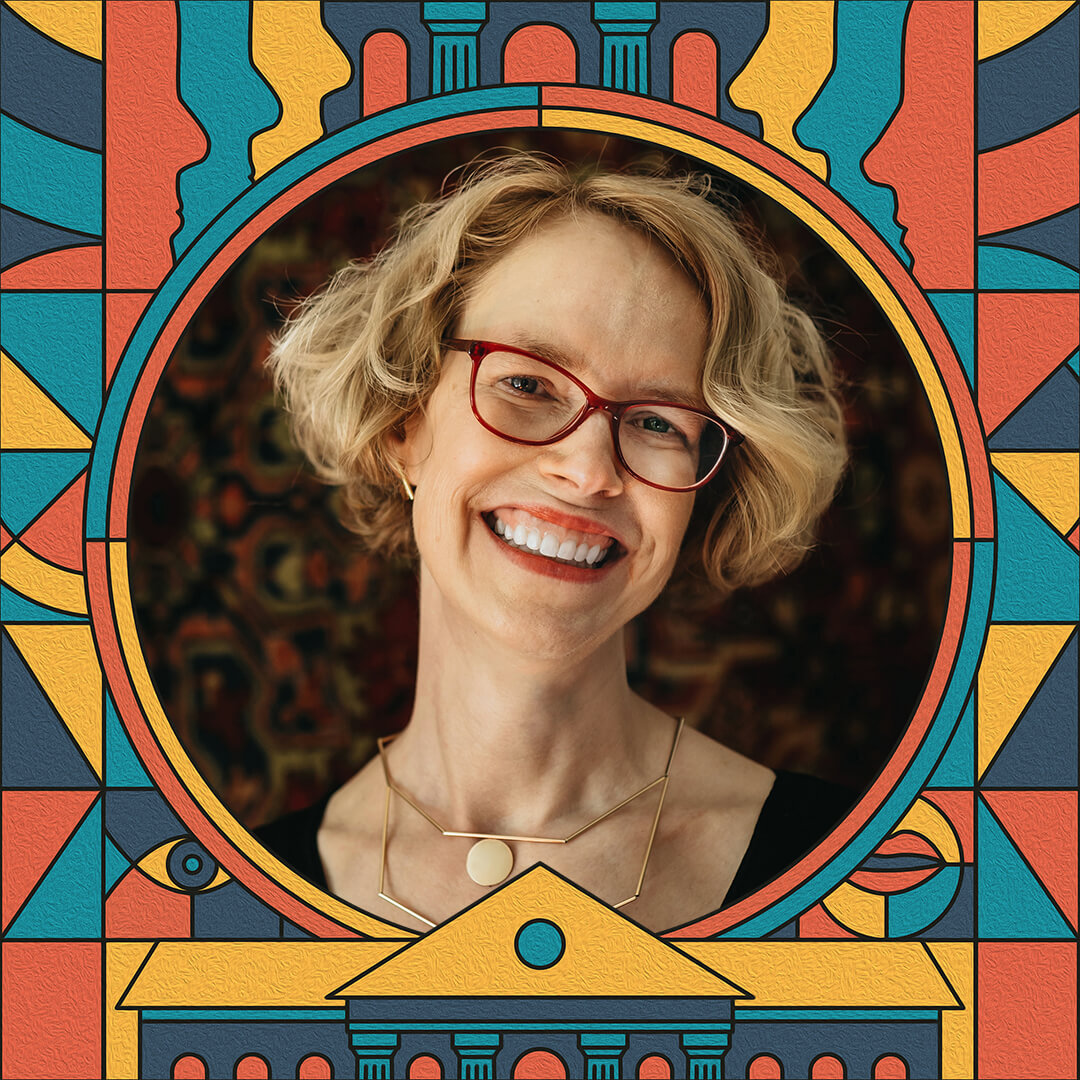
In this inspiring episode, Abby and Brenda sit with the brilliant Cybelle Jones, CEO of the Society for Experiential Graphic Design (SEGD), to explore her incredible journey in the experience design field. Cybelle shares her transformative experiences while working on projects like the International Spy Museum and the Mississippi Arts + Entertainment Museum, highlighting her dedication to making museums welcoming to all. She delves into the evolving landscape of experience design, embracing new technology, sustainability, and the importance of mentorship. Join us and learn how to celebrate SEGD’s 50th anniversary and gain profound insights into the future of experience design from one of its visionary leaders. Don’t miss this enlightening conversation that will motivate you to create unforgettable experiences of your own.
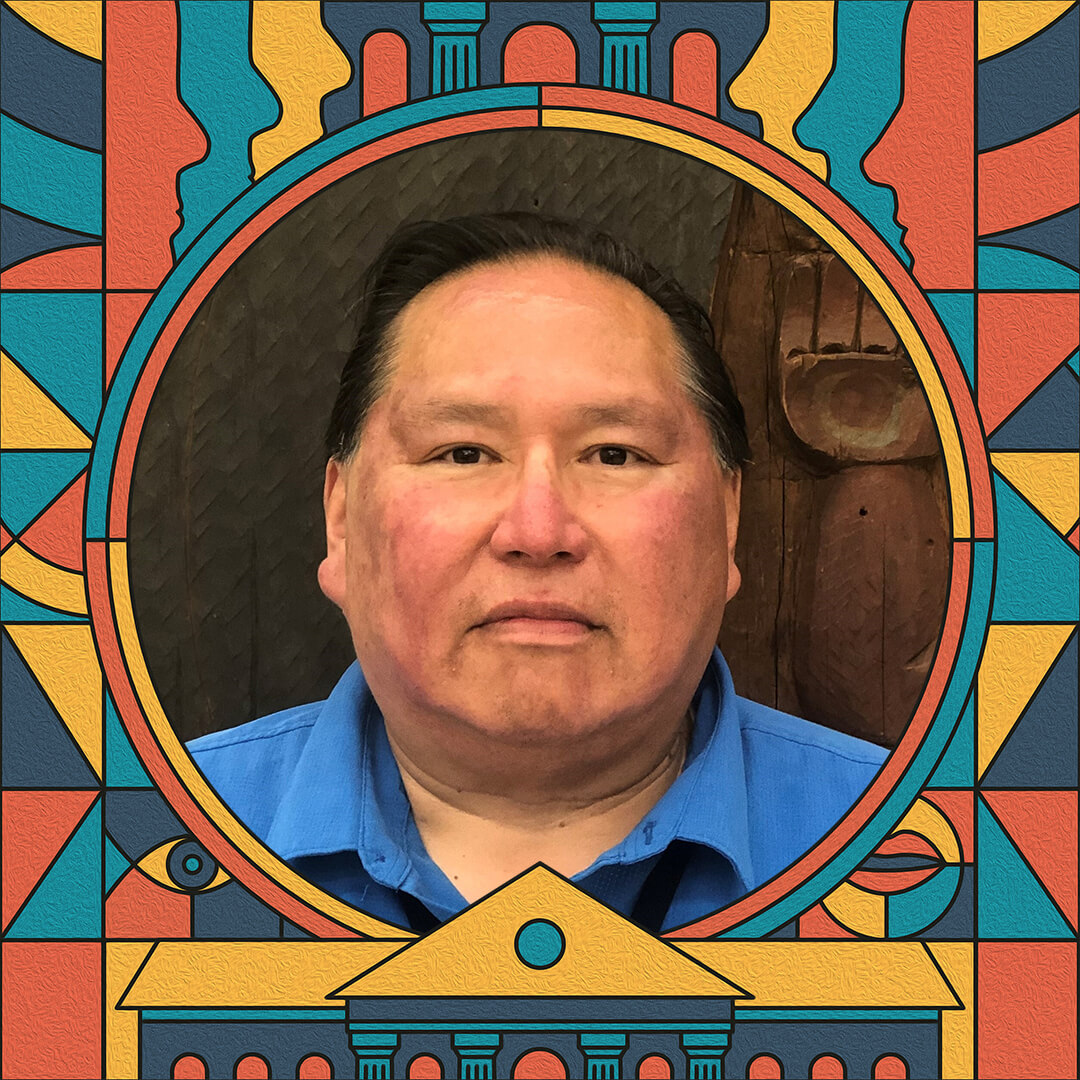
Reclaiming Heritage Through Repatriation with Terry Snowball
Who truly owns historical objects? And what happens when Indigenous cultural artifacts are returned to their rightful communities? Join Abby and Brenda in a thought-provoking conversation with Terry Snowball, Museum Specialist at the Smithsonian Institution. In this episode, Terry shares his experiences and insights into the complicated world of repatriation, exploring the challenges and triumphs of navigating the complexities of returning Indigenous cultural objects. Discover the profound impact on museums and communities as we delve into the transformative journey of reclaiming cultural heritage.
About Terry Snowball
Show notes
Transcript
[Music]
Abby: Welcome to Matters of Experience, a podcast that explores the creativity, innovation and psychology driving designed experiences and encounters. Welcome back, all our regular listeners. Thanks for being here with us today. And if you’re new and enjoy today’s show, please subscribe. My name is Abigail Honor.
Brenda: Hello, I’m Brenda Cowan.
Abby: So today we’re talking with Terry Snowball. Terry is the Museum Specialist in the Collections Management Department at the Smithsonian Institution, where he’s worked for over 26 years, a graduate of the Institute of American Indian Arts. Terry has used his experience to help guide S.I. in their pursuit of Native American historical justice. Terry, welcome to the show.
Terry: Thank you. It’s great to be here. Virtually. And I look forward to sharing my experiences and insights in terms of what I do here at the NMAI.
Abby: To kick off, tell us sort of about the work you do with collections.
Terry: Normally, when you go to a museum, anywhere, a small percentage of the collections are actually on display, the full balance so that it’s going to be in a storage facility and or kept in storage onsite or offsite at the museum. Where I work here in the Cultural Resource Center in Suitland, Maryland, we’re home to over 850,000 plus objects from the entire indigenous people of the Western Hemisphere. And so there’s a lot entailed in terms of both carrying and preserving, also making upgrades in terms of their care.
Brenda: Terry, the repatriation of objects, this is an increasing area of focus in the museum world, I would say very long overdue. And it’s very complex and sensitive work. Terry, You used to work with the repatriation of native objects. Can you share with the listeners what that would entail?
Terry: Sure. One of the things that sort of happened, very important and or significantly in terms of the types of objects and or the importance of the objects, not only to museums and to the public, but also to the communities themselves, the tribes. Their objects and or their ritual practices were both outlawed and or taken away. And so repatriation happened along with the passing of the National Museum of the American Indian Act, to allow for tribes to come to the Smithsonian and primarily work with the National Museum of Natural History, which has Native American collections of human remains and cultural objects, and as well as the National Museum of American Indians.
And so in that there are five main categories that are basically affect the collections and or the means by which tribes can make claim for objects. The first, of course, being human remains that would have been collected and or excavated from different sites, funerary objects and then, of course, objects that were once previously considered communally owned, which are also considered objects of cultural patrimony, which means no one individual in a tribe or community can alienate that object or items from their community.
And then lastly, sacred objects, which are, of course, as the term applies, used and very important and significant ways in the practices of the traditions.
Abby: What sort of conflict then, in your business as you’re trying to do the right thing and repatriate these objects, what are some of the trouble that it causes or the conflicting opinions or perspectives or groups that you encounter and how do you deal with it?
Terry: Well, that’s a good question because it is very complicated in that sense. And one of the things from the outset in terms of the legislation, and I should mention that in while the NMAI Act established the Museum of the American Indian National is the American Indian with the Smithsonian, which now includes 19 museums and a zoo, it also, in that sense, you know, sort of presented the challenge in terms of how you interpret the law, I guess you could say.
So there are basically two forms of interpretation, I guess one could refer to, and that’s, there is a term or a standard which is called preponderance of evidence. And so a preponderance of evidence is a higher standard, say, as opposed to what the NMAI is, is which is a reasonable basis. So the higher the standard, I think in that sense, it’s harder to find agreement in terms of the type of information or record that is that is used or utilized, you know, sort of oral accounts in terms of its histories that maybe not admissible or permissive or even sort of given the same equity and say, an ethnographer or an archeologist or an anthropologist who’s, who’s esteemed or has expertise in that sense or, you know, from the standpoint of institutional standard.
Brenda: I’m going to broaden their focus for a second and share with you that I just got back the other day from a special seminar that was focusing on the work of collections in state and local history museums. And I was in a boardroom with a dozen historians who were really deeply engaged in a really concerning conversation over the nature of collecting in various historical institutions and really this whole idea that there’s a problem with an almost hoarding-like mentality on behalf of historical collections institutions and the efforts to the excess and the efforts to repatriate, where appropriate, are deeply flawed or challenged.
And I’m really curious in terms of the way in which you’re working with collections now kind of across the board at NMAI. What are some of the current efforts that you’re engaged with? You know, are you having to do particularly difficult work or decision-making because of the, you know, incredible size of your collection? Or what are you finding in your daily work?
Terry: Well, I think the challenge to most anything in that sense is sort of the decline of, you know, sort of the cultural stamina, you know, in terms of communities and groups where in that sense, that stamina is based on just how rich their culture is, what is still retained. Languages are constantly sort of in the threat of completely disappearing.
So I think in that sense, the challenge with most collections is to work with the vestiges of those and trying to enrich or replenish that information that’s critical to an object. So that is a challenge from the standpoint of having so much cultural material, but also sort of not really being capable of having that type of expertise available to you.
So we have to work with communities from that standpoint to help us enrich these collections to sort of valorize the meaning or context of these objects.
Brenda: So you’re really collecting towards the mission of the institution, and it sounds like you’re really collecting towards telling the narrative, telling the story.
Terry: Yes, very much so, because that’s part of our mission is to work with community. And one of the things that I think is really important for the NMAI is that, you know, we’re kind of a living museum we consider us a cultural institution. And so our mission is to work with communities. So in that sense, the things that we want to collect or to actively look for is not something from the past, because there’s there’s a lot of that here.
And like I said just before, you know, it’s important to enrich that. But the other part of it is that it’s very important to collect things correctly and appropriately in the sense of that, we’re collecting contemporary things by any number of artists that are about working traditionally and or in modern art.
Abby: Terry, here you are, collecting wonderfully for the future from what’s currently contemporary and you feel needs to be preserved. What you collect now will quickly become the past. If every collection is only at any one moment displaying 2 to 5%. Isn’t it safe to say that a lot of what you’re collecting is sets, collecting dust? And it’s not important if nobody ever sees it.
And if you continue to keep collecting, even if it’s on mission and it goes in a warehouse and nobody’s seeing it, then there’s something, something vain about us all collecting things that we think are important and then putting them away and not showing them. So is there any importance and constantly reviewing the collection you’ve obtained and maybe sifting through and removing from that huge collection some things that have proved to not be of any interest to our communities over the last decade or century or half-century, however long a museum’s there?
Because just sitting there, it’s just like fine for everybody to say we paid a ton of money. It’s really important. Important for what? Sit in a corner, in a box.
Terry: I think the question is, is not always the easiest one to answer in terms of sort of qualitatively or even quantitatively assess, you know, the spectrum of this material culture to say what, you know, what can be best done with this kind of material and or even individuals per se to sort of see how we can interpret them in the future.
And I should say that while we’re also open to and or giving access to native peoples, the collection is also being accessed by researchers who in a particular way or are similarly more at large in terms of developing and or refining information about larger or collections at large that are similar in those ways. And so there are things that kind of come in, and or there are trajectories that do take place in terms of saying that that’s giving resource to things.
But, you know, that’s an important thing from that standpoint, which I think one of the overtures that the Smithsonian is making and or has made is that it is interested in pursuing the route in terms of ethical return of objects and or things that have so great or significant cultural importance to people and communities. And so that similarly, going along those lines in terms of human remains.
So there’s a developing directive in terms of how that becomes a guiding policy for our institutions that are affected in terms of needing to be open to and or receive solicitations from people, individuals, or countries even to request the return of human remains and or significant cultural objects. And as of note, recently, too - our National Museum of African American has returned the Benin Bronzes and its collection.
And those are significant overtures from the standpoint of global impacts to say that we’re doing some of the right things with some of this important material.
Brenda: I’m going to ask a question about the evocative nature of objects, and we know that objects can be very powerful in very numinous ways. They’re sources of inspiration and illumination, and people can have very transformative experiences, sometimes with evocative objects. Now, I know that you have had some transformative moments with collections objects, and Abby and I are hoping that you can maybe share a story with us.
Terry: Sure. We’ve been since the pandemic has sort of eased off on things. We are receiving many more community of people. And so about a month or so ago, we received a delegation of people from communities, and none of it, which is in the Arctic range, is up north through the Arctic Studies program. And so they were housed at our facility in terms of working with those community members to provide access to some of the cultural materials that we had here.
And there was a Nunavut elder that was accompanying them. And one of the things that are standard in terms of how we host and accommodate our community people is we have a ceremonial room that’s built into the facility that gets used by artists in terms of purification or cleansing prior to and after they come in and out of the collections, as well as forms of ceremonial treatment that might take place in that process.
And so this particular elder, well, we were going to escort down to a ceremonial room. And so we asked the question of what type of ceremony was that? Was it going to be entailed? People said that she was wanting to light this oil lamp, which oil lamps for the Nunavut has been used for a millennia where that’s basically lit and heated the homes in the Arctic, as you can imagine, is very cold. So in that moment, it kind of just took a risk in saying that to the objects that were held in a particular workroom could have benefited by having that ceremony or that imparting of the divine to take place right in the room with these objects. And so we all changed course.
And the lady proceeded to light the lamp, there were a couple of moments where we were holding our breath, hoping the sensors wouldn’t go off because of the smoke. But it was very minimal. But I think to transformative thing was in that sense is that we turned off all the lights that we could and in that moment was sort of saying words here, making, maybe making prayer, invoking the divine.
And these objects were sitting there in the dark with this lamp. And I think days of old, they could have been in those moments in those homes with these people feeling that light again. And I thought that was a very powerful thing for this to happen for her. And or for these objects.
Brenda: That is stunning. And I love the visual of this mundane storeroom essentially being lit by something and being involved in such an ancient moment. And it just it just seems so completely appropriate in so many ways.
Abby: Can you talk about what part of your job satisfies you and how you see yourself in your work?
Terry: Well, when I first started as an intern up in New York at the research branch of the National Museum of American Indian, that was an early moment, early time for repatriation. And I should say that upon reflection, I think one of the important things that repatriation legislation and or those mandates did in terms of necessitating that museums and institutions and agencies work with tribes is that there were probably rare or fewer moments in the sense where museums would conduct themselves in that way to sort of customarily work with native peoples.
And so in that sense, that form of engagement that took place because in earlier times too, tribes would literally come to museums. They actually came to the NMAI and in those instances would ask for things that were on display and, you know, of course, be declined and turned away or discouraged from coming back. And so, you know, in that sense, it’s important for me from that standpoint to sort of, you know, help with the civil exchange that takes place from that standpoint.
Abby: We were fortunate enough to create an exhibition. It was supposed to be a temporary exhibition, but was such a hit. It’s still touring up in the northern Arctic with the Nenets up there. And we were very apprehensive because we were making this exhibition for the local community, for the Nenets, and we felt very much ducks out of water.
So we did exactly what you what you’re discussing. We made it with them. So we went right in into the community to talk to them about everything, all walks of life. And they were with us every step of the way because we realized that the subtle nuances, even between the different tribes up there, were sometimes barely perceptible for our eyes.
It was like, Really, this is different. But to them it’s like, you know, left and right. So we needed them to guide us and help us with all of the content we were making. And at the end of it, one of the most amazing moments in my life so far is when it opened and we stood there apprehensively, showing them what we’d created.
And at the end of taking them around, they came over and said to us, Thank you so much for representing our life with integrity. And also we sort of given it a different perspective so that they could then reflect on who they were. It was an incredible moment and one of the highlights of my career to create that and then have it be so successful that they wanted to tour it so everybody could see it up there in the Arctic and the different groups could enjoy it as well. Was was kind of phenomenal.
Terry: You know, one of the things that’s important from that standpoint is trust, and that’s the ultimate benefit in terms of working collaboratively with something and someone is that you actually learn something more about a situation or about a thing in terms of its true context and, you know, I mean, I guess that’s the distrust that we had spoken of earlier in terms of repatriation is that there was a lot of distrust because there’s just a history and or a legacy that is brought from the standpoint of how many times Native people have stood before non-native and had promises made to them. And of course, all those things sort of as expected or anticipated, never made sort of came to fruition for native peoples.
Brenda: You know, I’m listening, and I’m thinking about a colleague of mine who was a curator in Western Australia for many years for a national museum there, and he, you know, was in his twenties and just starting out in the museum world. And his job was to quote, collect indigenous objects. And over many, many years, he collected upwards of 4000 stone tools.
Brenda: Now, 40-plus years later, he has been fighting and fighting and fighting to try to repatriate. And he’s no longer with the institution and he has these profound feelings of guilt and shame and conflict, inner conflict that he’s been struggling with. And during COVID, he actually got special permission to be able to go visit the collections storeroom where all of these 4000 stone tools are.
Brenda: And he went there to have a personal kind of a personal ceremony, a ritual period of time where he took out these thousands of stone tools and apologized and asked their forgiveness.
Terry: Well, you know, I mean, maybe in the course of those collectings, he thought he was doing a good thing. And in some respects, it could have been, but in other respects, it could equally sort of contradicted and or defied, you know, so maybe the order or the ways in which Aboriginal people would have preferred to have things left in state.
And, you know, everything has some form of energy. And sure, I think, you know, I think that that’s sort of maybe a way to sort of acknowledge and or maybe make peace with that and making those apologies. One of the things my mother taught me was, was a prayer that I use on occasion to ask for forgiveness and touching and taking care of these things.
Brenda: Terry, What would you want visitors at NMAI today to walk away with as a result of their encounters with the collections?
Terry: One of the things that I think a lot of people believe or even aren’t aware of, that Native people are still alive or still thriving. So much of the culture that is taught in mainstream is such that it either also has minimized or reduced us to sort of caricature status or the state. So there are things in which we do look at the museum and or wish to share with peoples about who we are and our past.
I think what a lot of people assume a national museum, American Indian is, is is about beads and feathers. And we’re not. We’re so much more. And so I think Hollywood is probably has given a greatest of service to our identities because of what they did and how we were portrayed. They wanted our romanticism, but they didn’t want us.
So, you know, there were these embellishments to these narratives that sort of remain as sort of not a stigma, but just sort of an alter the sort of alter ego or alter identity to who we really are.
Abby: I’m so happy you mentioned Hollywood, Terry, because that’s what was bringing to mind. Which books should our listeners read to get a more realistic account? And also, is there any film where you feel a tribe or tribes are depicted correctly?
Terry: Well, that’s tricky, I think, from that standpoint. But there was a gentleman who was First Nations from Canada who sort of documented his travels and journey to Hollywood to find the Indian, and made these various sort of journeys to places and things where, where those interpretations of native people and or and or even people assuming those identities.
The documentary is called Reel Injuns and Real is spelled R-E-E-L. And Injuns, of course, is somewhat of a derogatory term to, say, Injuns: I-N-J-U-N. Another book is by Dee Brown, which is a book called Bury My Heart at Wounded Knee. And so documents the account of the systematic destruction of American Indians.
But also, there is another gentleman. His name is Vine Deloria Jr, and he was, I think, from Standing Rock Sioux Tribe. And one of the books that he was known for was this book called Custer Died for Your Sins: An Indian Manifesto. And that gave him national attention to Native American issues in the same year as the Alcatraz takeover during the Red Power Movement in the 70s 60s, with the American Indian Movement.
Abby: Thank you so much, Terry, for sharing your experience and perspective with us today. It’s been enlightening chatting with you, and I feel like we can all sleep a little sounder knowing you’re one of the very valued custodians of our shared past, present, and future.
Terry: So it’s been a pleasure, but I think it’s been too short a time because there’s so many stories and so many places we can go.
Abby: And thanks to everyone who tuned in today. If you like what you heard, please subscribe for more entertaining episodes of Matters of Experience. Make sure to leave a rating and a review and share with a friend. See you next time.
Brenda: Bye bye.
[Music]
Producer: Matters of Experience is produced by Lorem Ipsum Corp and recorded at Hangar Studios. Tune in next time for more fun discussions about experience design.
More episodes
See all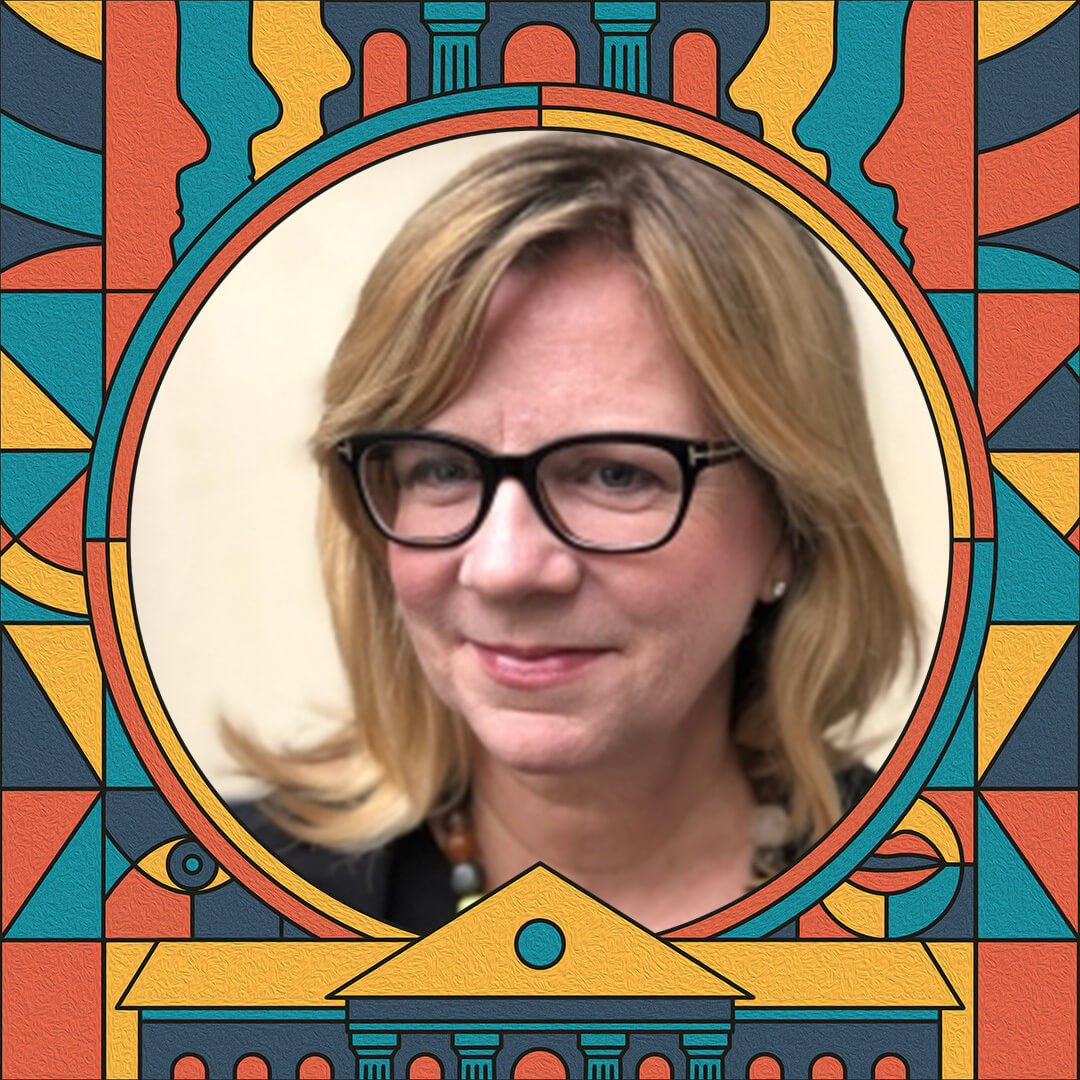
In this episode, Abby and Brenda invite Ed Rodley, an award-winning experience designer and co-founder of Experience Alchemists, to discuss the creativity, psychology, and innovation behind designed experiences. Ed shares his journey from being an 11-year-old museum volunteer to becoming a prominent figure in experience design for cultural organizations. The episode also explores holistic visitor experiences and how they extend beyond the gallery walls. Tune into the episode to join the insightful conversation as they delve into the world of experience design, informal learning, and the transformative power of museums in shaping visitor experiences.
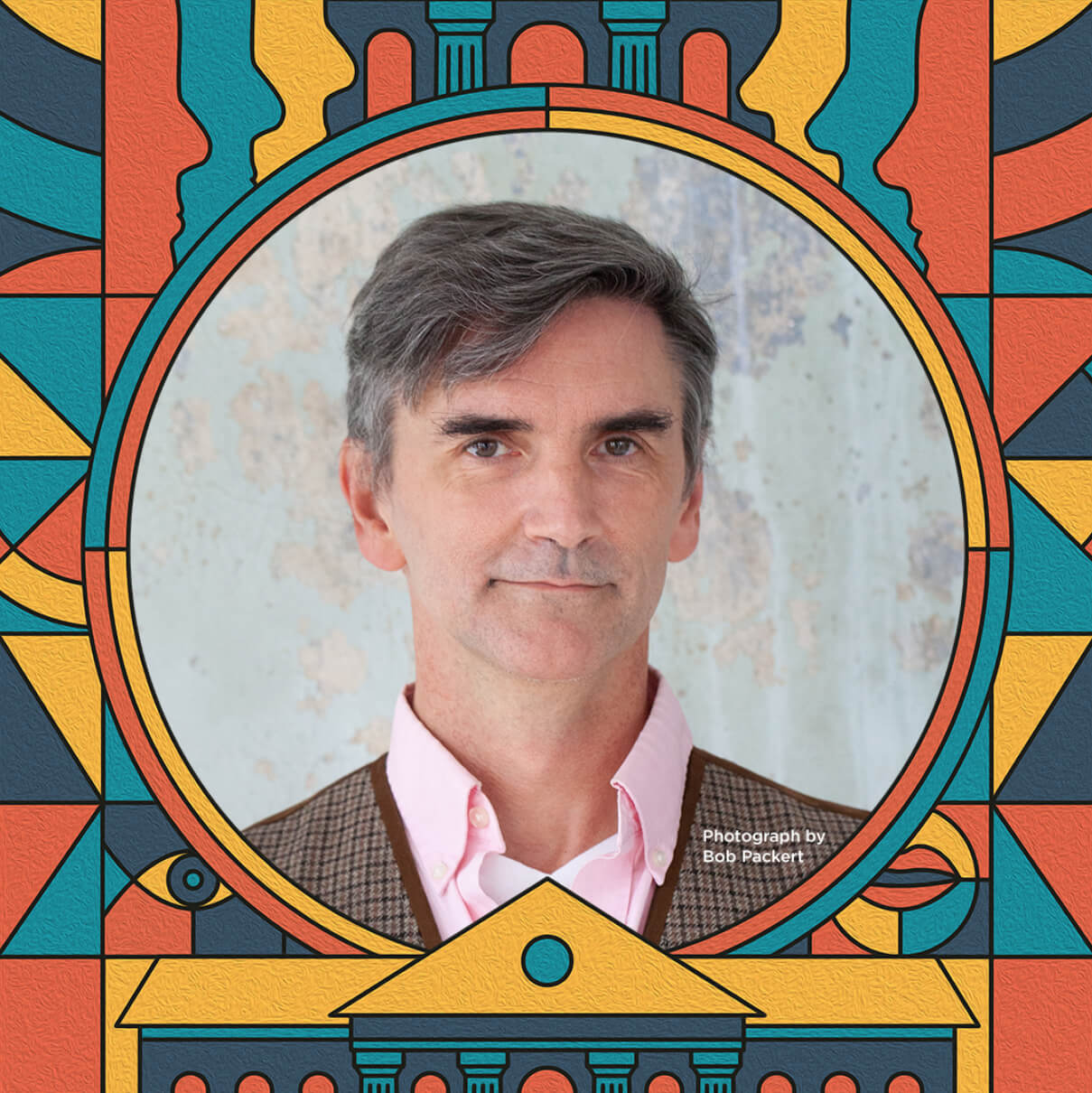
Emotion. Surprise. Beauty. These elements of sensation are what make design compelling in immersive experiences. This week’s guest is Ellen Lupton, a curator, educator, designer, and expert on multi-sensory design. In this episode, Ellen discusses her design approach to influence emotions, behavior, and memory. So whether you’re a designer, a business owner, or simply someone interested in learning more about creating engaging and captivating experiences, this episode is for you.