[Music]
Abby: Welcome to Matters of Experience, a podcast that explores the creativity, innovation and psychology driving designed experiences and encounters. If you’re new, a big hello and to our regular listeners, thank you for tuning in and supporting our conversation. My name is Abigail Honor.
Brenda: Hello, I’m Brenda Cowan.
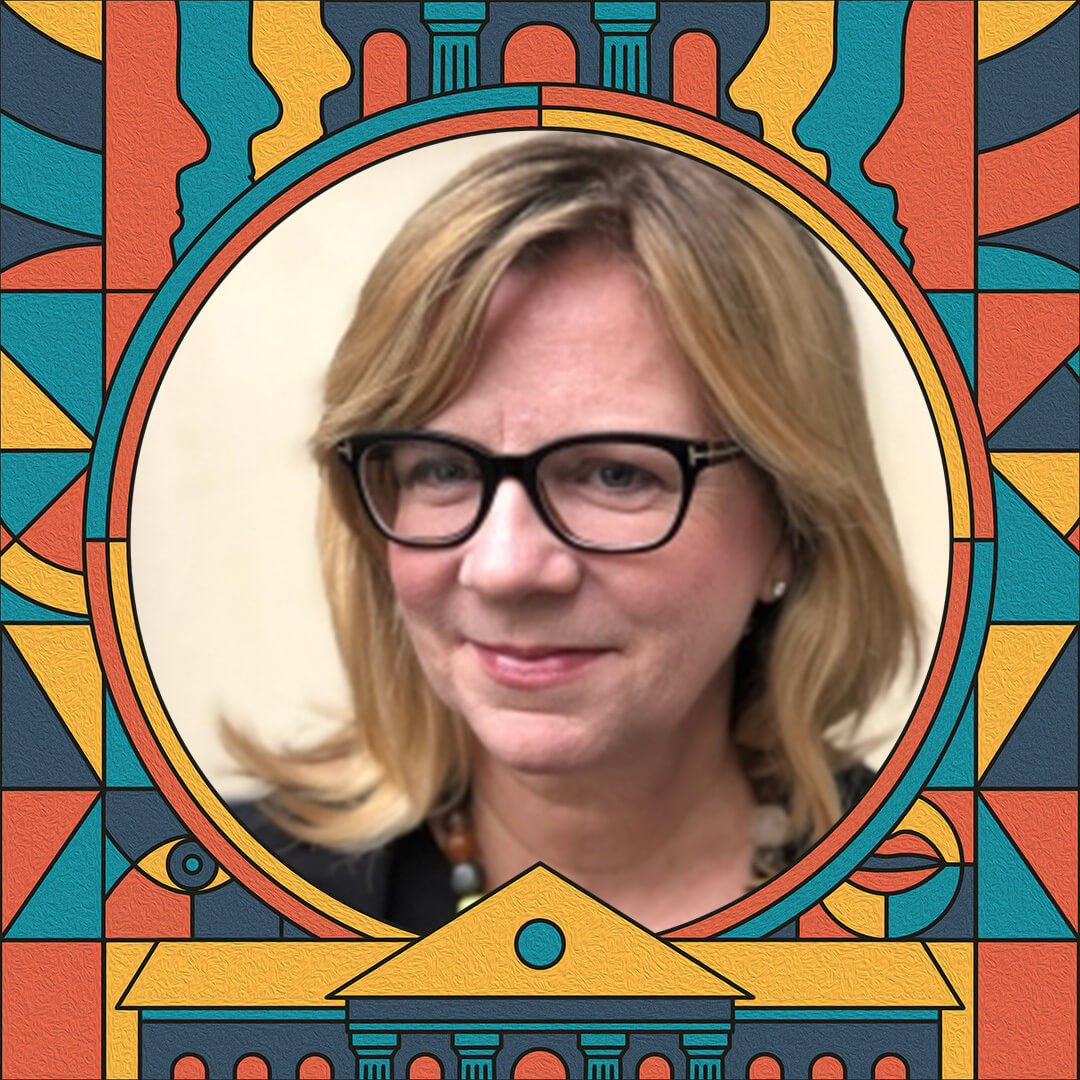
Abby: Today, we’re talking with my good friend, Cybelle Jones. Cybelle is CEO responsible for strategic leadership that fosters excellence in every aspect of SEGD. Before this, she was Principal and Executive Director of Gallagher & Associates. Cybelle studied architecture at the University of Cincinnati and helped establish the Masters of Exhibition Design program at the Corcoran College of Art and Design in Washington, D.C.
Cybelle’s received so many awards and honors that we really don’t have time to list them all here. Cybelle, so sorry, but we just wanted to mention the American Institute of Architects Award of Excellence and that she has been a guest critic and speaker for organizations everywhere, including the V&A, American Alliance of Museums, Building Museums Symposium, International Council of Museums and the Fashion Institute of Technology. Oh my gosh. So, Cybelle, a huge welcome to the show.
Brenda: So, Cybelle, before you joined the Society for Experiential Graphic Design, you spearheaded a lot of the work that was coming out of Gallagher & Associates. Of all the projects, can you name a couple of your favorites and why do they stand out, looking back on them?
Cybelle: That’s an unfair question because I love all of my children. I can’t have a favorite. Being in the field of experience design for as long as I was was just phenomenal. I got to work with former presidents and Olympic athletes and Hollywood stars and civil rights activists, and even mobsters and spies. So, it’s hard to pick a favorite. I’m going to pick a couple that were transformative I think for me personally.
The first one was the first iteration of the International Spy Museum, which opened in Washington, D.C. and at the time that we were working on it, there was not a model of a museum that would be self-sustaining. Most museums at the time relied on philanthropy and government funding to keep their doors open and pay their staff. And we had a client and he said, why can’t we create a museum that is self-sustaining and is fun?
And so, we came up with this concept of building a spy museum in Washington, D.C., and I will tell you the honest truth, people were not excited about that. The museum industry did not want to even call a museum a museum for-profit because it seemed like that was the antithesis of what a museum as an institution should be. And the reputation was building as we were designing this project, that it would fail, that people would not go to it because in the city of Washington, D.C., where every almost every museum is free, why would you pay to go to a museum?
But from my role as the lead designer, I had a client who was not really a museum person, and he really pushed our team to say, if you could just think out of the box and reimagine a model of a museum that people wanted to go to, that were, that was really memorable, it was an experience, what would that look like? And the topic of spying hadn’t been done, like no one had done a museum on spying. So, it was so much fun. It might have been one of the projects where I had the most creative freedom to just think outside of the box.
That museum definitely stood out and there were nerve-wracking moments. We had a Washington Post article that came out before we opened that just was horrible.
Abby: Tell me a little bit about that part, being in the middle of the process and having everybody doubt your success and it sounds like actively work against the success of the Spy Museum. You must have had some self-doubts, knowing you were doing something fun, there must have been something in there, you know. How did the team, how did you deal with those, with those boundaries everyone was putting up for you?
Cybelle: The museum was going to open, there was, the money was invested, the building was leased. Anything great where you’re the underdog and you’re just driven to do the best possible job that you can do. And it was not until probably a month after the opening. I mean, people were like waiting in line even when we were under construction. I mean, I think the sex appeal of the International Spy Museum was very attractive to people. It was so different from anything else they had heard about. And I was doing the punch list, you know, after the project was open and I had a notepad, and some mom came up to me – and we actually, we did audience research, and the target audience for this museum was not families with kids, because we didn’t really think that they would spend the money, we thought it was more like the professional, like 30, 40-year-old professional that would be in Washington, D.C. for work. But there was a mom, and she had her seven-year-old daughter, and the little girl goes this is the best museum ever.
And her mom said, we’ve just spent four days at all the Smithsonians and, and my daughter just loves this. It’s so fun, but she’s learning and – those moments of pride where all of that doubt and anxiety and, you know, we were making a new model. It wasn’t perfect. There were a lot of things that didn’t work perfectly. But I think I’m proud to say people started waking up and saying, hey, maybe this whole thing of a museum actually being an experience, bring some of that energy to the three-dimensional world.
Brenda: Well, the Spy Museum, it’s a tremendous example, and I think a great, one of the great early examples of how to have multi-layer user experience occurring. You can basically visit the exhibition on your own terms, I guess is maybe the best way to put it. And so, it’s really well done. I’m glad that you pointed this out as a favorite, a favorite child of yours.
Cybelle: Yeah. Another project later in my career was similar in the sense that no one was really paying attention to this project. It was the Mississippi Arts + Entertainment Museum in Meridian, Mississippi, which you’re going to say, where is that? Look it up. It’s close to the border of Alabama. And even when I got this project, I wondered how it was going to go. Would these people actually ever raise the money to build a new, world-class museum in this little town of Meridian? And the architect and I started off not on the best foot. We’re very different backgrounds and political beliefs and, but we both believed that providing Mississippi with a world class institution that would celebrate those artists that were homegrown, like Oprah Winfrey and Leontyne Price, who was the first African-American opera singer to perform at the Met.
So, there are all these amazing individuals that came out of Mississippi who didn’t – they weren’t exposed to the arts growing up, and you kind of had to say to yourself, what is it? Is it something in the water here that, you know, you can grow up never going to an opera or a museum or not even being able to see Hollywood films, but then you have a James Earl Jones. So, it became a real passion of mine because I feel like museums oftentimes are only for the elite, and they should be for everyone.
And so, this was a bit of an experiment of how do you make art accessible to people that might not understand what art is, and particularly abstract art. And so, we, we took a really unique approach, but we also, building on the theatrics and immersion that I had been developing as a designer, we just wanted to take people to a place where they could kind of imagine seeing the world through the experiences of these artists before they were famous and what defined them.
I think one of the most memorable takeaways I had was when a high school group visited, and that high school group was from a very rural part of Mississippi, and they had never been to a museum before. They had never eaten out at a restaurant, and they said that they saw people in that museum that looked like them and that they could imagine themselves being. And it was transformative.
Brenda: I know the project in Mississippi. And one of the things that I think is really exciting is how much you and the team engaged the audience in determining how the exhibition could work best and welcome them best, and also really foster that sense of belonging that you were discussing.
Abby: Well, just building on that, actually, it’s really interesting in the two stories, the Spy Museum, and then down in Mississippi, you are acting as a mere filter in a way. You are deciding, it sounds Cybelle, as you are being immersed in these stories, for want of a better word, and you’re giving yourself time to get to the heart of the authenticity before you’re starting to do an interpretive plan, and this is what’s going to look like.
Brenda: I think, too, you operate as an ally, which is a necessary role of everybody who’s in our industry.
Cybelle: That’s interesting, Brenda. I hadn’t really thought about this, but when I was growing up, I moved 16 times by the time I was 13. You won’t believe it, but I was an incredibly shy child and I think that taught me to be a very good observer and to kind of read the room, read the culture, and be adaptable and empathetic. I don’t know why I’m having this aha moment on this podcast, but …
Abby: Well, we’re glad you’re having it with us, with friends.
Brenda: Yes.
Abby: This is a comfortable environment.
Cybelle: With friends, with these two amazing women. I think that’s how I treated, have always tried to treat my clients and my design team is that, that synergy, that collaboration – like for me, if I’m breathing, I’m collaborating. It’s like you’re going on a trip, and you don’t know where you’re going, you don’t know where you’re staying that night, you don’t know what you’re going to eat, but you’re together, and you’re on a mission. And that’s where the magic happens.
Brenda: In a way, this is setting up a nice flow into the next question, which is – Abby, and I are really curious to hear about the idea of legacy, and as you were developing these projects in your years at Gallagher & Associates, how aware were you of the legacy that you were leaving behind?
Cybelle: I never thought about a legacy. I think I thought about a couple of things. One, I always wanted to make – I have three, three daughters – I always wanted to be a role model for my daughters in a sense of that you could do what you loved, and you could be good at it, but that meant you were going to have to work really hard and having had a pretty chaotic life and at times we had to be pretty scrappy, when I look at a project and the fees that they’re paying us and what that cost to build a museum, you really have to honor that this is a tremendous responsibility.
Museums might renovate once in someone, some curator’s, some director’s career. They’re going to put everything into that all their hours. They already have a job. Now they have to have the second job of working with us. That’s not really the job they’re used to doing and then, say if you work at the Smithsonian on a project that sees like 9, 10 million visitors a year.
So, to me, I don’t know that I ever thought about me personally. I don’t think I ever thought anybody would know my name or that I did anything because nobody knows who an exhibit designer is or even what they do. Hopefully that’s changing now, but I think what I was about was giving people an experience that’s going to spark something. The Maya Angelou quote, like, people will forget what you say and what you did, but they’ll never forget how you made them feel. And I felt that way about all my clients. You know, I had to give them the best.
And then also for my design team because you guys know, you work really hard as a designer. I mean, you put so many hours in and you live and breathe these. Like, even if you’re not working, you’re thinking about it in the shower or when you get up or over the weekend, and I needed to make it worth it to them. So, being genuine, a lot of laughter. I know you guys both do that. Like, just be sincere, you know, no B.S. Just try to do your best.
Abby: So when you look at sort of the business and the way that it evolved when you were designing, what were some of those major shifts you saw?
Cybelle: I started my career at George Sexton Associates, and we – I don’t know if you know George, he’s still designing – but we would do art exhibitions, and we were hand drawing, and we were building models. And my youngest daughter just graduated in design school from the University of Oregon. The things that she has to know now, the technical skills she has to have to be able to create photorealistic renderings, but not just the technical side. She has to have an understanding of accessibility, sensory education level, language. It’s a lot. You have to be a jack of all trades. So, I think from the designer side, that’s evolved a lot.
On the business side, that’s a good thing. We have to change. Things have to change. The way we tell stories, who we bring to the table, who we include in the process of designing, and what is the return on the experience. What is the return on the commitment, time, money on behalf of whoever that audience is.
Brenda: Let’s turn our focus to your latest challenge as CEO of SEGD. In some ways, this must be very different from your previous job. Is your work leading SEGD a really huge shift for you, and you know what’s similar and what’s different?
Cybelle: I think what’s the same is that it’s all about the people. It’s finding the best talent. It’s finding the best minds. You know, I have a very small team. I went from 150 people at Gallagher, and I have four people at SEGD, but I have all of you wonderful people that I collaborate with, right? The members, the speakers, the people that work on the education side. So, I think that that connectivity of bringing great minds together, that’s the same to me.
Abby: You are at the heart of this community. I mean, your ideas, from working with you, are innovative. You know how to engage with us, and really, you’ve grown our community incredibly, and it’s such a diverse community. You’re open to bringing in people from all different facets.
So, what was your initial mission when you first started, Cybelle, and how do you feel it’s changed over the years?
Cybelle: I believe that experience design is the field of practice to solve the problems of the future. Why, during COVID, would I go out of my house to go to an office, to, to eat out? It’s because of the experience that I can’t have at home by myself. And we, our community at SEGD, are curators of that. And we know how to do it so well, very differently from any other area of practice, right?
We understand how to bring people in. We know how to get them excited, or to calm them down or how to make a story come to life. And I always felt like when I sit on the plane and somebody would say, what do you do? I design museums. What? I didn’t know people did that. Yes. How are museums born? People have to design museums. So, it’s been a life passion of mine to get the word out.
The members of SEGD, the Global Design Award winners, the fellows are the best in the business. They are outstanding. They stand for design excellence. They stand for doing things the right way with the right process, with the right messages. And I just want to make our organization a model.
Brenda: Thinking about all of the different talent and the cross-disciplinary experts, the students, and the seasoned professionals that comprise SEGD, I’m curious, how do you capture such a breadth of individuals? Like is there a unifying approach that you know speaks to everyone, that pulls everybody together to form this unified community?
Cybelle: You have to celebrate the differences. It’s negotiating. It’s bringing everybody to the table at the same time. And guess what? Not everybody’s going to want the same thing. And that’s okay, right? What do we agree on? We agree on design excellence. We agree that we have to build a path for that next generation.
So, it’s really how I operate. I’ve always operated with a lot of caring, a lot of loving. We don’t use that word enough, a lot of joy. Hey, the world is not great, but we can really make a difference in the work that we do, and that’s unique about our field. I think I look for that. I have great resources of all these rock stars in the field, and they’re supportive, and they give their time, and – like the two of you, you both give a lot of your time, not just to do your jobs, but to help our field of practice and to bring other people up. Right? That’s also my job is, I want all of our members to be employed and I want them to have good projects, and I want them to feel proud about the work.
Brenda: So, in my role in exhibition and experience design at FIT, I know firsthand the level of dedication of SEGD to cultivating future design and industry leaders, and the organization plays this massive role in the mentorship, the nurturance, the support of the younger generation, and also individuals who are entering into the experience design profession from other professional backgrounds. And, but they’re new in many ways. Why is this critical? Why is it critical for SEGD to be providing its vital resources to cultivating this new talent, this future of design?
Cybelle: Well, we wouldn’t survive without it. We don’t understand the world in which this next generation is coming into. And so, there’s no way that we have the ability to do the right thing on behalf of some of our projects and clients. We need that next generation voice. They see the world differently than us. First of all, I don’t think they want to spend all their life just working. They understand about this concept of work-life balance, which the design industry has been really bad about.
But the other thing is that we have so much to give to them, and we have so much to opportunity to share what we’ve learned. I’ve talked to a lot of young women that have started their own business and they need someone to kind of bounce ideas off of and sometimes ask some really tactical questions, right.
And the other thing is not just the students. I mean, we all go through career transitions. When I went through this career transition, that was very hard for me. We’re all going to face some moments in our life, and we need support to get through that.
Abby: So, the big 5-0. it’s a mighty age, the semicentennial. A lot happens over that time period. Fashions change, technology changes. You have this incredible year with I know one of your big flagship events is going to be the annual conference in Washington, D.C. in late August. It’s coming up. I encourage everybody listening to go to the SEGD website – there will be a link on our page – and come, buy a ticket. It’s unbelievable. It will be phenomenal.
The theme is look both ways. So, Cybelle, tell us what it feels like for an organization to turn 50 and the idea of look both ways.
Cybelle: We are going to take our attendees on a journey we’re going to start with the founders and where we came from. We’re going to have amazing speakers like Llisa Demetrios, who is the granddaughter of Ray and Charles Eames. She runs the Eames Institute for Infinite Curiosity. And there’s so many trajectories that we can trace back to the Eames because they were one of the first truly interdisciplinary design firms.
So, we’re going to look at our heritage. We have Lance Wyman will be talking about his work in D.C., this kind of turning point of the government getting good design. But then we’re also going to ask people to reframe the conversation of how we go about doing what we do and who’s telling the stories and how are they telling them. And so, we have speakers talking about that. We’re going to be looking at can you do high-tech, high touch experiences and still have them be sustainable and green? So, we’re going to talk about that. And then our last day, we’re going to reignite. We’re going to celebrate our upcoming fellows, and we are going to ask our community; how do we take this call to action back? Super exciting. And guess what? Brenda and Abigail will be there.
Brenda: Wow.
Abby: They don’t need any other excuse.
Brenda: Hold onto your hats, everybody. So, you made mention of some trends. And what I think of is some of the critical conversations that are being addressed in our industry today. So, sustainability, there’s the nature of technology and user experience, new trends in innovative brand activations, audience research, and so on. What are you seeing out there?
Cybelle: First of all, I’m seeing our community as influencers and we go to a project, and we’re hired by a client and the client may have blindspots. They may not necessarily think that their project has to even touch on or talk about sustainability or neurodiversity or some of the not-so-good history points.
Our members, our leaders, our design leaders, they’re challenging that, and they’re saying, if you’re going to hire us, we’re going to change the process. We’re going to do the process in a way in which is going to get the outcome that should be for this institution or this brand. That is life-altering.
Our members understand how to do the process right. You’re teaching that Brenda, right? You’re not teaching your students just to have a beautiful end product. You ask them to explain what was their thesis and how did they follow through on that, and that in some ways I see is the biggest shift is the why. You as an experienced designer, whatever your area of expertise is, is it fabrication, is it graphic, have an ability to really inform rather than being just a passive doer.
Abby: I want to put you a bit on the spot because nobody really has a definitive correct answer to this. So, I’m thinking about the role –
Cybelle: Oh, great.
Brenda: It’s all on you, Cybelle.
Abby: You like those easy questions. I’m thinking about the role of AI. So, how do you think the role of AI is going to affect our profession? That’s what I meant by a big question, like, oh my gosh, that’s the drop-the-mic question.
Cybelle: Well, I mean, you’ve already been talking to me, and you know that I’m, I mostly tend to be an optimist, so I’m going to talk about the positive of AI. When we did the first Spy Museum, we wanted to put you in the role of being a spy, and RFID was just coming out as a technology, but we couldn’t afford it, and when we did the new Spy, we utilized RFID to track what you did, and it gamifies it, right, but it also could be related to your interest.
Then, one of my last projects I worked on was the U.S. Olympic and Paralympic Museum. And that museum, we used it because if you’re in a wheelchair, we could customize the exhibits, the interactive exhibits for you because we know that you’re in a wheelchair. So, that information that we can know about a guest in any circumstance, whether that’s a museum, whether that’s environmental graphics, the intelligence to inform both the museum or the place to help take care of that person in a way, but also for them to get more curated content to their education level if their kid or their interest level is amazing.
So those are the pros, is that we’ll be able to make designed 3D environments more agile. That’s the problem with our industry. We are not agile. You build a branded environment, and the next year it’s obsolete because there’s a new technology, and that new technology the client can’t afford to update. So, I think AI will provide a lot of opportunities to create multiplicity of storytelling, learning, learning from audiences, how people move through airports, what are they seeing and what are they not seeing.
And then obvious things where we can automate. I find that a lot of our process in designing takes a lot of time. If we could automate more for prototyping and spend more time on the creativity. I don’t think it’s going to replace jobs. I think we’ll have new and different jobs. I would like to see us be more creative about problem-solving. We have big problems in the world to figure out and hopefully AI will maybe give us a leg up to be able to do that in a more expeditious way.
Abby: Well, Cybelle, we can’t thank you enough for sharing your experience, your positivity, and all these stories today, but most importantly, for inspiring us all every day to create these engaging, fun, sustainable work that can really make a difference in the world.
Brenda: Thank you, Cybelle.
Cybelle: My goodness. Can I just – I’d like to reverse this because the two of you model phenomenal qualities about sharing your knowledge. So, thank you, and maybe we’ll just have to continue the conversation at the conference, which everyone listening needs to attend.
Abby: Yes, they do.
Cybelle: Washington, D.C., August 23rd through 26 and this month, only, July of 2023, you can re-up your membership at SEGD. We’re giving a gift back to you for $50 off. So, what’s not to like about that?
Abby: That sounds like a win-win. Thank you, everyone who tuned in today. If you like what you heard, subscribe to more episodes of Matters of Experience, wherever you listen to podcasts, make sure to leave a rating, a top, top review, and share with a friend. We’ll see you next time.
[Music]
Producer: Matters of Experience is produced by Lorem Ipsum Corp and recorded at Hangar Studios. Tune in next time for more fun discussions about experience design.