[Music]
Abby: Welcome to Matters of Experience. This podcast is produced by Lorem Ipsum, an experience design company headquartered in New York City. Our show explores the creativity, innovation and psychology driving designed experiences. If you’re new, a big and a hearty welcome, and to our regular listeners, thank you for tuning in and supporting our conversation. My name is Abigail Honor.
Brenda: And this is Brenda Cowan.
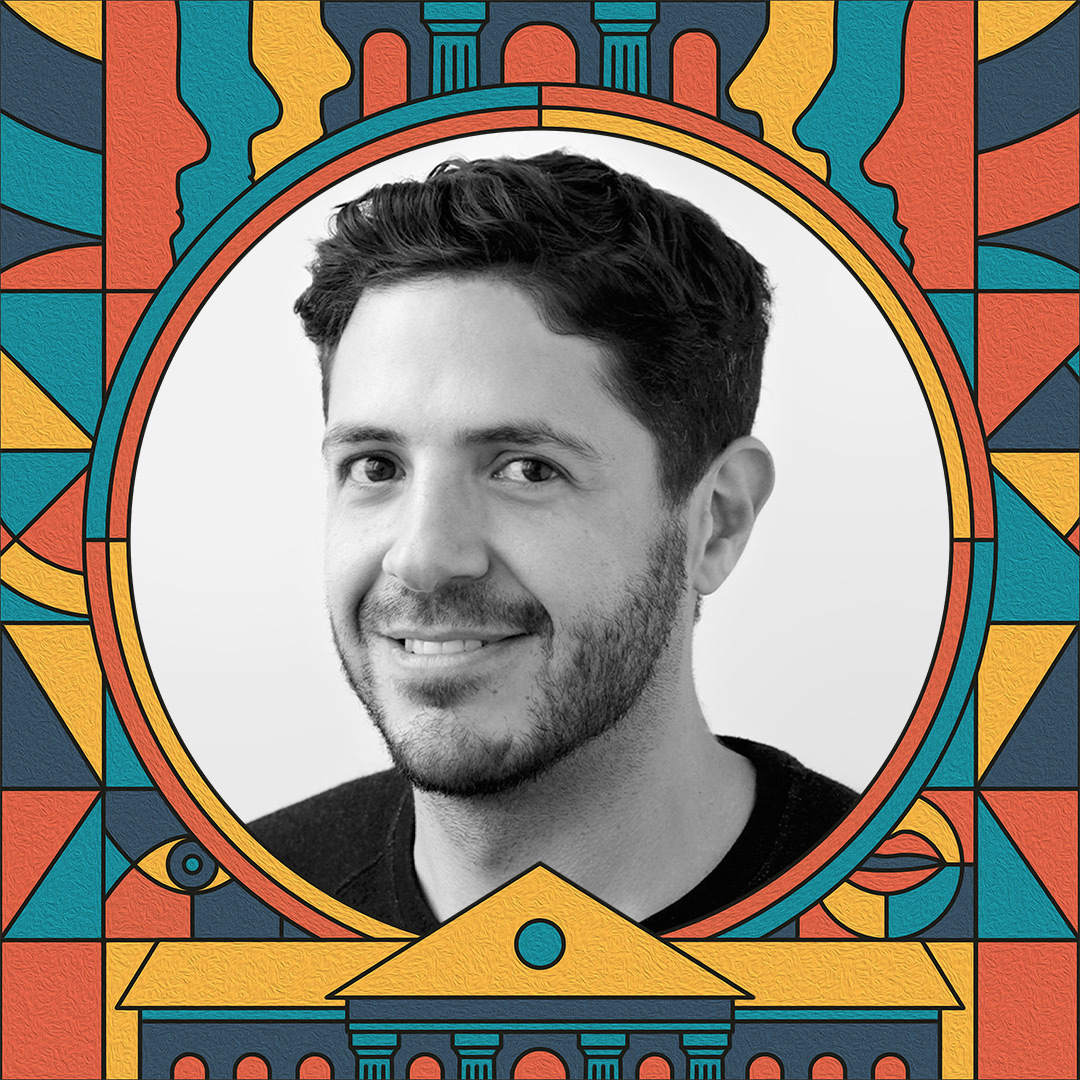
Abby: Today on our show, we’re going to look at humor and absurdity. No, it’s not me and you, Brenda. Well, our guest today is Neil Mendoza, one of the world’s biggest names in new media where experimental art meets technology and electronics. He blends sculpture, software and engineering to animate objects and spaces. Neil’s art often repurposes found objects, offering viewers a fresh perspective that challenges their preconceptions.
And Brenda, on previous podcasts, you know, we come back time and time again to the theme of reframing or offering a new, fresh perspective on familiar subjects or history to really challenge all biases that we all have and sometimes don’t even realize, and Neil’s work does this using humor, which I think is sometimes, sort of has the best effect on a visitor. And he’s showcased his work globally, taught art and technology at UCLA and Stanford, and co-founded the art collective, “Is This Good?” It’s a pleasure to welcome you, Neil, to the show.
Neil: I’m super happy to be here. I love your podcast, so really excited to have a chance to have a chat with both of you and see what comes out.
Abby: I want to sort of start by hearing about the sort of kid you were because, you know, you seem to have the right and left sides of the brain very much working. Paint me a picture of young Neil and how you sort of – the early seeds were already sown.
Neil: I think curiosity was a big, very big part of my childhood and something that unites both the left side and the right side of my brain. I was like, curious to learn about how the world worked and also curious to see about how I could shape the world. I remember when I was young, I used to really enjoy taking things apart and putting them back together again, much to the chagrin of my parents.
And I was also super into like, plasticine and Play-Doh and, you know, trying to make impressions of what the world might be like. So, I think there’s always been this kind of technical and creative side to my personality, in some ways, like fighting for supremacy, and in other ways, complementing each other.
I think I’ve always enjoyed, like being inspired by the absurd as well. I remember there were some illustrated books you can get as a kid which have Rube Goldberg-esque machines, and I think maybe one of the first projects that I could see a line between what I was doing as a kid and now is when I had a pet hamster and I made a device that would like attach to my hamster’s wheel and count how many times he ran around his wheel every night to try and work out how far he was actually running. And then, yeah, I don’t know, 20, 30 years later, I made a Hamster Powered Hamster Drawing Machine. So, yeah, there’s definitely a continuum there.
Brenda: That’s absolutely brilliant and an excellent use of a hamster. So, well done that.
Neil: I mean, I should have been generating some power.
Abby: Some power, yeah, electricity.
Brenda: It’s never too late, Neil.
Neil: It’s true.
Brenda: So, you know, I’m thinking about the kind of playful person that you’re describing, and I’m thinking about what a blessing and curse it can be in an educational setting. Because sometimes kids who are so curious and who tinker and who love to play or whatever can also have a challenging time sometimes in a structured classroom. And one of the things that Abby and I are really curious to hear about is your education, your early years. Like how is it that you managed to really fully develop this way of working, this way of thinking, and this way of exploring through your education and some of your early jobs?
Neil: It’s an interesting question, I guess, yeah, obviously, way back when I was in school at the beginning, I think it used to come out as like misbehavior and dissatisfaction with the educational system because, yeah, often it doesn’t cater to curious kids as much, so then they start to act up and misbehave. And I think that might have been, might have been me.
And then, I went on at university to study math and computer science. And again, the emphasis there was very much on the fundamental elements of both of those fields. There was nothing creative at all about it. I didn’t really know about creative applications of computers then. I mean, it seems so obvious now, like the world is full of like creative ways people are using technology.
But back then the most creative things people were doing were probably making computer games and graphics for movies, but it seemed very, very separate from the world of art and creativity to me. They didn’t really form a bridge in my brain until a little bit later when I was working at an advertising agency, and I saw people there using code and computers in a very explicitly creative way.
When I saw that, I got really excited, so I started to explore making my own installations with technology. And after, like, working more and more on projects like that in my spare time, some of them started to get exhibited at galleries and I decided I was going to go and do a master’s at UCLA in Design Media Arts, to really be in an environment where there would be people who I could, you know, who could nurture my artistic aspirations and yeah, push me in the correct direction.
So, I went and did that, and then since studying at UCLA, I’ve more or less been full-time artist. So, I’m still trying to work out the best way to stay as a full-time artist, but it’s definitely one of the most rewarding parts of my career up until now.
Abby: So, I’m sort of fascinated, just doing a bit of a segue, Neil, and addressing what you’re talking about in terms of being inspired outside your job because there’s something in your job that’s just, you know, the mundane or you’re like, I don’t picture myself at this ad agency forever. And you have this thing, this hankering or this inspiration or this drive that leads you on.
I’m talking about the idea of a lot of people who’ve been successful at things that are unconventional, have often had to do it after hours, you know, nights and weekends. I did that when I was editing full time, and at night – I wanted to be a filmmaker – and so at nighttime, I had to, and weekends, I had to work on my film Saints and Sinners on same-sex marriage in the Catholic Church.
And so, I’d go to work all day sitting down, editing with clients, and then in the evening, edit all night till about 2 a.m. and just do it constantly, for months. Nobody tells you to do it. There’s no guarantees of success at all. You know, can you talk a little bit about that sort of need to do that nights and weekends and how you feel like doing that and going above and beyond contributed to you being successful and being able to earn a living at what you do?
Neil: I think when I started doing it, I didn’t really think that I was on a path to be doing it full-time. I was doing it more because of a need to express myself. It was more like a, maybe a quest for meaning, like if you’re spending all day, every day using these skills you’ve attained to do something which you don’t find is rewarding, is improving the world in some way you find refreshing, then I think that then you suddenly get this drive to express yourself in other ways.
And then when you’ve done it enough, you suddenly start to realize, yes, maybe this is something that I could actually do full-time. And I think obviously a lot of kids are discouraged from chasing creative careers, and that makes perfect sense because creative careers are obviously going to be a lot more competitive, so parents obviously just want their kids to be doing something that’s safe and guaranteed. But creative careers obviously are a lot more rewarding as well because you get to guide your own destiny, so to speak.
Brenda: You know, I was talking with a colleague just recently about how in his company, he says, pretty much so, everybody has some kind of deep passionate interest or form of expression outside of work. And I think that, you know, when I listen to you talk about how it is that creativity and personal passions and personal exploration can really help you in the work that you do, you know, I’m thinking about my own work I do.
I’m a very passionate gardener, and I’m convinced that it translates into helping me be a better teacher because there’s so much patience and nurturing involved and a lot of belief that things are going to work out really well in the end. So, at any rate, let me ask you about your background in science and how has that informed and influenced your artistic work? Like, do you feel that your scientific approach, your analytical thinking is reflected in the artwork that you’re creating?
Neil: So, I’m a self-taught engineer, and I think it’s always a battle in my head between the left and the right brain. And it’s very tempting when you’re doing artwork that involves technical elements to over-engineer and overanalyze the technical side at the expense of the artistic side. Like the technical side and the engineering side almost has a beauty in itself that you can see when you’re doing it, but that’s probably lost on most people who just come to a museum and see the final piece.
They don’t appreciate, for instance, the beauty of the code that underlies it because they never get to see that. So, it’s an interesting push and pull trying to balance those things when you’re integrating science and technology into artwork and not let one suffer for the expense of the other.
Abby: Can you tell us then or try to explain your process, sort of the stages that you go through as you’re creating a piece or an exhibition and what part is the most difficult to you?
Neil: I mean, I think the most difficult is the very initial phase when you’re trying to work out exactly what you want to make or the first steps you want to take along the path because you have infinite possibility ahead of you. I think it’s even more challenging in artwork which involves technology like media art, than it would be in some more traditional forms of art, such as painting or ceramics, because, you know, just making the art, you’re also defining the media as you go along.
Like especially with my work, I really enjoy trying to make machines and technologies that haven’t been seen before, but obviously that means that the field of possibility is scarily large. So yeah, stage one will be kind of starting out, trying to decide where to plant the seed, where I want to start. And normally I have a vague kind of conceptual idea I want to chase and a vague kind of technological idea I want to chase, and I want to see how those two can intermingle.
So, I’ll start off by like making some simple prototypes, which maybe would represent half an idea, and then see where it takes me. I’m a very hands-on type of person. I think that the act of making, the act of getting outside of your head and actually engaging your hands, also facilitates the generation of new ideas a lot.
For instance, like, one of my pieces, like the Hamster Powered Hamster Drawing Machine, I guess that was a kind of tongue-in-cheek exploration of selfie culture, but also, I had a bit of interest in mechanical drawing machines and automata from the 19th century. So originally, I just started off playing around with drawing machines, and then I’d say it should be a drawing machine that would draw a hamster.
I didn’t know what kind of selfie machine it would be. And then, I integrated an extra video of a hamster, which would appear to drive the machine. So, everything came in little stages, which was kind of like, I would make a little prototype and then it would guide me to the next stage of the project.
Abby: Isn’t that amazing, though? How wonderfully iterative. How scary? Because I assume you have like an end date or like if it’s being commissioned, I guess that’s a question like how often are you commissioned and have the pressure to deliver? Because this is, it very much sounds like it’s based on exploration and learning and understanding stage by stage. So, how sort of scary is it for you?
Neil: It’s pretty scary if you don’t know where you’re going. It really depends on the type of context, you know, whether it’s a residency or a commercial commission. I think I one of the reasons I enjoyed grad school so much was it was like you had pressure to deliver, but it was – failure was kind of allowed. That doesn’t really exist in the real world. There’s just the pressure to deliver, and, you know, it has to be something that you’re proud of because it’s going to be out there in the world whether you like it or not.
Brenda: I couldn’t agree more. And I absolutely love the idea of appreciating failure in a certain regard when failure is safe, and it enables you to push forward. And I want to ask you about inspiration and what the things are or what the thing is that inspires you, that brings forth new ideas that really compels you to create. Are there specific places or sources or as you’re walking about in the course of your everyday life, do things sort of reach out to you? What does inspiration look like to you?
Neil: I think inspiration a lot of times comes from being outside in nature, like being in the real world away from my computer. A lot of my pieces involve environmental elements, and just the complexity of nature really inspires me. Obviously, going to art museums as well really inspires me, like trying to see what other people are doing. And I think, like, we mentioned deadlines before, I think when I do have a deadline that’s coming up and close by, it forces my brain to be contemplating that deadline subconsciously, and connections, which I might have missed when I’m out and about in the world will make themselves known to me.
I think when you’re a creative person working on a creative project, you’re essentially trying to make links between different unexpected elements of reality, and when you’re out in the world, and you have this, like, yeah, thing, gnawing at your subconscious, you’ve got a deadline, I think it can help you make these unconscious links and force them into your consciousness. So, yeah, nature and art galleries are a big source of inspiration for me.
Also, just being in the right context. I love doing residencies because of the cross-pollination of ideas you get from talking to other creatives about what you’re doing. I think that’s a really rich source of inspiration for me. Wandering around thrift stores is also really inspiring for me, trying to contemplate these objects that often we take for granted, like what they actually mean, like how I can take them out of context and, you know, give them a new life and a new meaning.
I also like using old tech. I find that pretty inspiring. I think when you are an artist working with tech, it’s very tempting to just want to use the newest, shiniest toys, but you can also use and abuse older stuff and I think people often have an element of nostalgia attached to it, so you have this kind of side door into their psyche with the attachments they already have to these objects. So, yeah, I think random objects are also a great source of inspiration to me.
Abby: So, we want to sort of focus on some of the more specific work. So, tell us about your umbrellas and how you turned that into a piece of art and also your anti-vanity mirror. So, could you tell us those two stories, Neil?
Neil: The umbrella piece, I was wandering around the rubbish dump, and I saw, I guess it was probably about 200 umbrellas. It looks like someone had decided they were going to collect umbrellas and they had ended up here in the dump. So, I collected up all of these umbrellas and started experimenting with them, trying to work out what I could do with them, and I became quite an expert on umbrella mechanics in the end. And this one idea came to mind about trying to flip reality upside down and make it an umbrella that would rain on the inside. The idea was it was going to be a device that people will use in the future if they’re in a desert environment, and because of climate change, it stopped raining so much. So, they have this, now this climate modification device that they can carry around with them and make it rain. So that took a lot of experimentation to work out.
And the other piece you mentioned, the anti-vanity mirror – yeah, I found this beautiful ornate mirror and got me thinking about vanity mirrors and I thought, what about if I could make an anti-vanity mirror? So, it would be sort of a gift for any influencer in your life to try and train them to stop looking at themselves in the mirror. The idea would be they would go up to this mirror, and it would run away from them, and they would have to chase it around if they wanted to look at themselves. And yeah, seem to be quite successful, like when going up to it after one of the exhibitions in a gallery, I could see there was like nose marks and lip marks, so some people seem to really like this piece.
Brenda: You know, I have to ask you more about using found objects, you know, the experience of finding an object and having a connection with it, sort of this subjective connection with an object is actually linked to experiences of wellbeing in people. And studies talk about how the experience of finding an object can stimulate experiences of wonder and awe. And I’m really curious to know if you would agree with this idea, and you know, when you use found objects in your work, what kind of thoughts or sparks or emotions are conveyed?
Neil: Yeah, I think totally, when I find an object, especially when I find it for my specific purpose of, like, using it for what it was not originally intended for, it definitely kind of makes me happy. It’s like a little key to a puzzle. So, from my perspective, definitely I can relate to that.
And then, from viewers of my artworks that involve found objects, I think it’s a great way to connect to them in a way that you can’t connect to them just by, you know, making abstract pieces. I think one great thing about it is you form this immediate connection with them and then you can use it as a kind of medium with which to communicate other ideas through. It’s kind of like a back door into their psyche.
So, I think it’s particularly effective when you’re trying to talk about like serious issues, like if you’re making a piece, for instance, about environmental issues, if you just straight up, didactically talk at people about those kind of issues, it’s very easy for them to shut down because we have this, you know, wave of information about all that kind of stuff.
But then if you try and talk about those issues by, you know, using these familiar objects, I think you kind of can get around these blockades that people psyche’s put up to new information sometimes because that, you know, that concept is already in their brain. So, I definitely feel like it’s really powerful to be able to use these objects which, you know, already form part of people’s psyches and the way they relate to the world and as a way to communicate with them.
Abby: You mentioned earlier that a lot of the exhibits or pieces of art that you make are hands-on; you encourage people to touch them and interact and it’s very important that they do that. So in lieu of that, I’d love you to tell the listeners about your orchestra of knives, which does sound nuts. What is it and how did people respond?
Neil: So the orchestra of knives, I guess at the time I was pretty into using motors and actuators to explore different ways of making sound, and I was walking around a thrift store and I saw a lot of old knives and yeah, kind of like at that moment I was thinking about musical projects, so it grabbed me as something that would be fun to make a musical project out of. So, I created this kind of like very clean, nicely engineered looking sculptures that consisted of, like, transparent plastic and knives, and when activated, they would play “Staying Alive.”
So yeah, people were super into this, but when the whole orchestra switched off, people’s relationship to it was completely different to when it was switched on. When it was switched off, people would look at it and see all these knives and their inherent relationship to knives would be the one that came out. They would be like, that looks super scary, I don’t want to go anywhere near that.
But as soon as it started playing music, their relationship to the whole thing changed and people started to want to go up to it and stick their fingers inside it, which is definitely not what you want to be doing. That was really interesting how like the decontextualization of those objects was full. You know, like you would think that people’s brains would be like, no, this is a sharp object moving at high speed. I shouldn’t stick my finger in there, but…
Brenda: You’re fighting nature.
Neil: Yeah, it transformed itself from a dangerous object into an object of play.
Brenda: Neil, I wanted to mention that when I was visiting the Pittsburgh Children’s Museum not long ago, I was there with a museum colleague of mine, and we are footing around and found ourselves in the lab area where they have the residencies and I came across a series of interactive paintings that absolutely knocked my socks off and have taken videos of them and carry them around in my phone and when I’m having a blue moment, I will look at my phone and I will play a little video of my friend cranking a handle and making an arm with a pointy finger, point, point, point, point into a piece of artwork. But it is absolutely stunning. And could you give us a quick description of the Tough Art work that you did at the Pittsburgh Children’s Museum?
Neil: Yeah. So, like I mentioned before, residency is a really amazing opportunity to expand your creative horizons, and Tough Art is really great because you get to actually engage with the kids on the museum floor and test stuff out. So yeah, I had this idea where I wanted to connect kids more closely with famous paintings, and I think it’s probably already hard enough to get kids to engage with static artworks even before the age of the iPad.
And now, now kids are just used to poking everything and get sad when it doesn’t move or make noises back to them. I think also kids really enjoy just moving their bodies around, flailing around, like one of the pieces is a piece where you pump up apples on the screen and the kids just enjoy the very physical act of like moving their arms up and down.
It was virtually secondary to anything else that was happening in the space, whether on the screen or elsewhere. So, that was a revelation to me. And yeah, the Tough Art programs are really amazing. So, they give a few artists access to the museum’s very capable staff and the museum floor to try out some ideas, and the Pittsburgh Children’s Museum does a lot to support artists, so I think it’s an amazing place to be.
Brenda: It absolutely is an amazing place and children are amazing people. And when myself as an adult and my colleague playing with this particular piece and watching this poking finger actually move the painted figure inside, there was something so, you know, back to where we began, absurd and humorous about it, but there’s also something really powerful about it. It’s on people’s own terms.
People have power to cause certain effects to happen or to create reactions that they might expect or that are unexpected but that they were responsible for. And I think that that’s really important, how visitor centered you are in that way, or I should say how participant focused you are in your work.
Neil: Yeah, I mean, I think in today’s digital world where so much of our interaction with the technology is, you know, via one-person experiences like cooped up in our home, like trying to create experiences that are open-ended and multi-person that, you know, can connect people in ways that they want to kind of make up as they go along is really powerful.
And I think also, I think as an artist working with technology outside of the constraints that working for a company might give you, it’s really valuable to be able to suggest, you know, alternative futures that technology could be used for outside of like the ways that tech companies are trying to tell us they need to be used for. Like phones and laptops and all those kinds of things, that’s all well and good, but it’s kind of like a local minima in interaction, like the companies producing them know that we’ll carry on buying more of them. They’re trying to, you know, sell us more devices and get more of our attention, which maybe isn’t the best for us and the best for our human experiences.
So, I think it’s really valuable that artists can then use this same type of technology and explore how to make experiences that, you know, maybe are a bit more focused on our human experience and improving it rather than just trying to, you know, aim for very specific business ends. So, yeah, I think it’s a real privilege to be able to do that.
Abby: And just building on that thought, your art often explores the complex relationship, I think, between humans and technology. You know, it can highlight technology’s benefits while also revealing sort of its more unsettling aspects. Do you think like algorithms and AI may reduce spontaneity, unpredictability, and serendipity in human life.
Neil: I think purely as a tool, I’m excited about AI. On a day-to-day basis, it’s kind of like it’s a multiplier for human capability, specifically from an interactive art point of view. It’s really interesting because previously when you created an interactive installation, all of the interactions would need to have been pre-coded into the software that drove the installation.
Now with AI, you can make interactive installations that would do things that even the artists might not have expected them to do. Like any technology, I’m optimistic about where it can go and pessimistic about the fact that there are some bad uses, and we need to try and rein them in, and I think artists have, you know, a big role to play in trying to paint pictures of possible futures that we want to live in.
Brenda: Well, the act of creation in and of itself, I think is a hopeful enterprise, and, you definitely seem to be embodying that idea. You know, let’s find out what it is that you are passionate about right now with your work and in your life. What is it that excites you when you start your workday?
Neil: Right now, at this very moment, I am playing with, like we mentioned AI, I am playing with these kind of reinforcement learning systems, trying to learn how to get bits of artwork that can respond to me and change with how I am interacting with it over time. So that’s my very personal, like geeky thing, that’s exciting me at the moment.
I’ve just moved into a new space in New Mexico, so I’m also very excited about having a larger space to explore slightly larger scale pieces of work. Conceptually, I’m also interested and like excited at the moment to try and like put sensors out in nature and like integrate the natural world into this, like technological world a little bit more. So yeah, those are a few different-level things that are exciting to me at the moment.
Abby: Well, Neil, it all sounds incredibly cool, and I just wanted to thank you for sharing your process for creation and your perspective on the work you’ve made so far. It seems to me very much Monty Python-esque, don’t know if any of the other listeners caught that, and we’re really, really excited to see the next chapter and what comes out of your studio. So, thank you for joining us.
Neil: Thank you for the invite and it was really great to speak to all of you.
Brenda: It’s such a pleasure, Neil. Thank you.
Abby: So, thank you for listening today. If you enjoyed the show, subscribe for more episodes of Matters of Experience wherever you listen to podcasts, and make sure to leave a rating and a review and share with a friend. We’ll see you next time.
[Music]
Producer: Matters of Experience is produced by Lorem Ipsum Corp and recorded at Hangar Studios. Tune in next time for more fun discussions about experience design.