[Music]
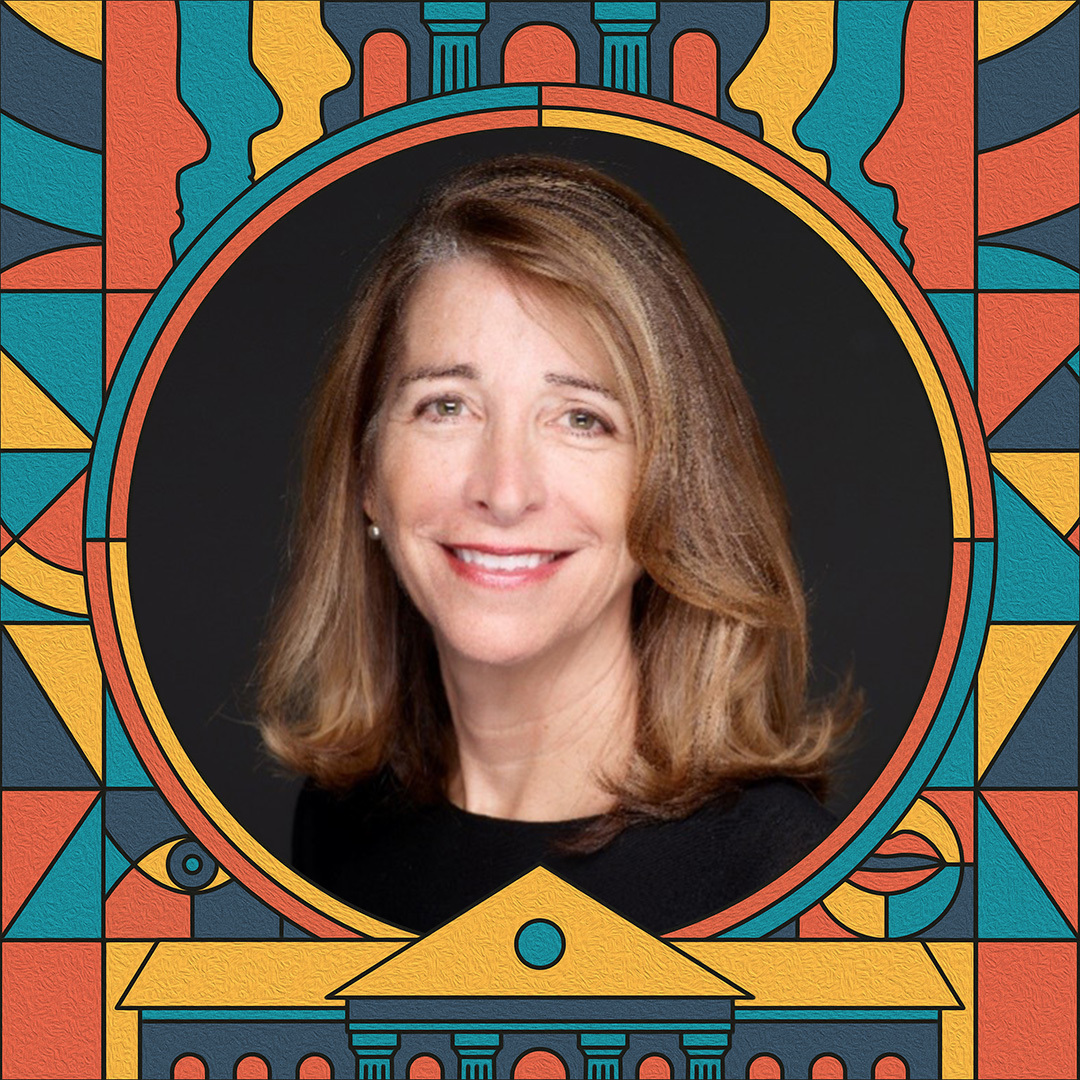
Abby: Welcome to Matters of Experience, a podcast produced by Lorem Ipsum, an experience design company headquartered in New York City. Our podcast explores the creativity, innovation, and psychology driving designed experiences and encounters. If you’re new to the show, welcome and to our regular listeners, thank you for tuning in and supporting our conversation. My name is Abigail Honor.
Brenda: And I’m Brenda Cowan.
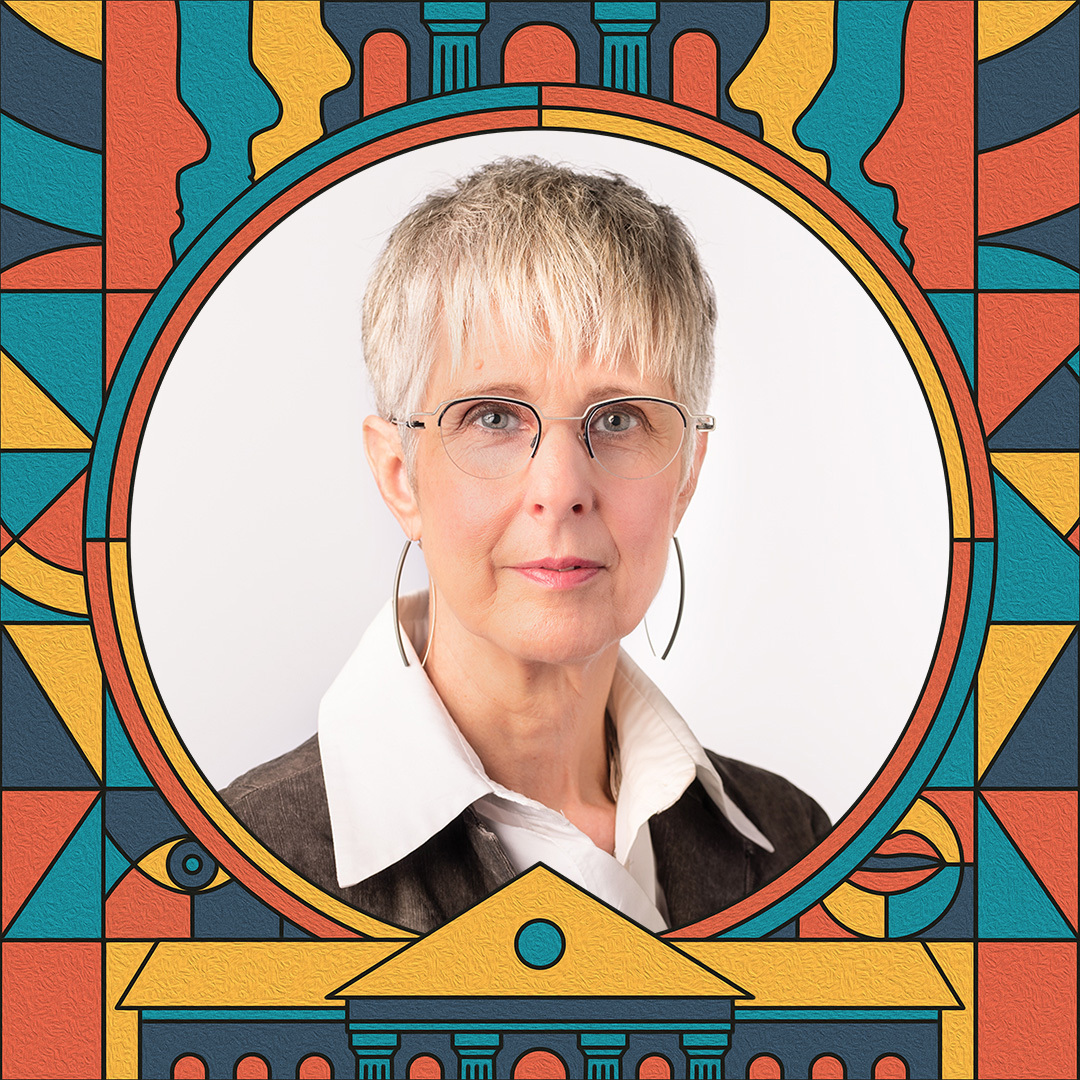
Abby: So today, Brenda, we’re focusing on the future of our profession, a pretty big topic, but who better to talk about this ambitious topic than Gretchen Coss. Gretchen is the Senior Vice President of Strategic Partnerships at G&A, formerly known as Gallagher and Associates. She’s a designer with extensive experience in global brand management, experience design, and placemaking. A passionate educator and an active industry leader serving on the board of the Society for Experiential Graphic Design, and as their past president. And previously, Gretchen was the adjunct professor for the Master of Exhibition Design at the Corcoran College of Art and Design, where she won a faculty award for exemplifying innovative teaching techniques. Gretchen, a big welcome to the show.
Gretchen: Thank you. What a nice intro. Thank you very much.
Brenda: Gretchen, your work centers on cultivating and supporting new and emerging professionals. So as a part of your 30 plus years in museums and experience design work, you’ve always been a mentor and a leader to the next generation and most recently with your work at G&A, you’ve been developing a whole arm of the firm for education. So, can you tell us why? Why is it that educating the next generation has become a focus for you?
Gretchen: What we do is so hard to understand as it is, right. It is so incredibly energizing to sit in a room of smart young designers who are just exploring and figuring out who they are, what they love, why they’re passionate about this and see if you can spark that flame and learn from them. Every single time I walk out of one of these workshops or one of the classes, I feel like I learn something from them, and they really push me.
Abby: Well, I remember when I was at university, there just were no courses that could have trained me in our profession at all and not even any workshops I could go to. So, seeing the plethora that have really sprung up over the last decade and the change that’s happened has been incredible because this is the next generation. And so, tell us about some of the initiatives you started up and why they seem to be working.
Gretchen: I’m really lucky because I have the backing of our firm sort of following me down this path and realizing that really as part of our corporate responsibility, that building of the next generation, trying to diversify the field, looking at how we can expose some of these students earlier is something that they feel really strongly about.
So, I actually started some of what I’m doing from professional education and doing workshops that were about how we work, why we do things a certain way, what are our responsibilities as the experiential and interpretive designers as opposed to an architect or a specialty lighting designer, and how do we actually cross over into those sort of different lenses that we work from. And the more we educate each other and our clients, hopefully the easier it gets to do our job.
That then sort of crosses over with the in-class work that Brenda and Christina and I have done over the past decade or more, and some project based learning where we bring the students to our client, we introduce them to the clients, and then we let them do a project that not only has check points with Brenda, Christina, myself and our staff, but also with the client. So, it’s a real-world learning experience where they get feedback and they feel what it’s like to work in this industry because I think that’s really, really difficult to replicate unless they do it.
Lastly, you know, I started a series of workshops that really spawned from the idea that I have a feeling that we talk about multi-disciplinary and interdisciplinary design as if we are actually teaching it. And I do not believe we are doing a good job of that holistically. So, I decided to do a workshop that brought together professors, students, colleagues, clients to just peel back the layers of that conversation and talk about it. And interestingly, the conversation went so well, we actually had to just kind of shoo people out of the room at the end of the day, because we were out of time and we realized that it’s such an explosive subject that everybody wants to talk about, that it bears more discussion.
Abby: Tell us some of the things, like you say, it’s explosive, tell us some of the things that are often brought up in the workshops. What are the hot topics? What are the bones of contention?
Gretchen: I think that the biggest problem that we see or challenge, let’s just call it, is that, the siloed approach to especially undergrad and graduate programs. You have your graphic design programs, you have your interior design, your architecture and so forth, your industrial designers and media. And they typically do not learn to do a project together. They aren’t in the same room together. They don’t realize that while they are on separate tracks, what they are doing creates a holistic experience by coming together as opposed to working separately. And so I think that one of the things that we talk so much about is that all these colleges and these departments have their own numbers, their own budgets, their own quotas, their own criteria, that makes it very, very difficult for these programs to break down those walls and to work together more cohesively.
Brenda: You know, I think that what you’re talking about is so important and so valid. And, you know, in my grad program, we work very hard to break down the silos. It is, I think, the requirement of an individual to know the languages of our industries and maybe not be an expert as a lighting designer, but you need to know the language and to also know that if you’re going to work in museums, you’re going to really do a great job if you understand how marketing environments work and how branded environments work, and vice versa. And this is I think this is our responsibility, and I really appreciate hearing how much you dedicate your time to bringing together bodies of people to really dig in to that and to understand that because frankly, I think it’s the only way that we’re going to really cultivate really useful, productive and powerful talent in our professions.
Gretchen: I mean, my pipe dream is that in addition to sort of exposing them, that, for instance, the kids who are taking UI and UX design and the ones who are doing content development and the ones who are doing architecture actually sit in the room together so that they learn to work in a way where their specialties come forward and they inform each other.
I mean, listen, it’s hard enough in the real world to do that and sort of leave the ego at the door and have everybody do what they do well and listen, learn to listen to each other. But I do think that we suffer from not having enough of these programs coalesce with each other.
Abby: Yeah, I want to add that Lorem Ipsum was fortunate enough to work with DTech over at FIT on a project for Ogilvy, and it literally brought in different disciplines, so completely different areas of study, from fashion to the marketing team to the experience design, the exhibition design folks, to the IT team.
So, they brought in groups of students to collaborate together on this project, which resulted in an exhibition. They started separately, you know, brainstorming on their own, and then immediately realized that they needed to come together and share their ideas and create this together and utilize their individual experiences. And, you know, there were there was a lot of overlapping of experiences as well so that they could all talk and share in telling this story.
They all learned a lot. I know from working closely with the exhibit design students and mentoring them that they needed to understand that their voice was important to the marketing team, to the design, and what the piece of clothing was going to look like for whatever the AV, whatever the AR, whatever the interactive is going to be, and that their voice needed to be in the conversation. Just understanding that was sort of like a watershed moment, you know, and vice versa.
Brenda: Well, we’re speaking in ideals and not everybody is on board with this idea of multifaceted learning experiences or might have a very different definition of what a very talented or multifaceted, you know, working professional is. And as a part of this ideal, I’ve got to say I really love that the three of us are having this conversation from the different perspectives that we are. And part of me keep thinking, well, it’s my job to educate and I’m fortunate to have the resources to be able to work as an educator. But I’m looking at Abby across the table from me and thinking, my gosh, you know, on top of everything else, Abby does work as an educator and really has to allocate a lot of her time and her energy and a lot of her, her mental capacity to thinking about how to educate a client, how to educate her own internal team. And Gretchen, how on earth did you get yourself into a position where you have a firm really supporting these initiatives and providing you the opportunity to really shine in this way?
Gretchen: Education is a subject that everyone wants to talk about. I don’t care who it is, they care about it and they want to talk about it, but you have to give them a reason to get involved and a way to get involved. So, I think that because the firm has seen that I am very serious about what it means to us to be a leader in showing by doing as opposed to talking about it.
You know, we’ve seen how this, especially this last year has gone, and I have to tell you, this last set of workshops where my goal was to invite students into the process of community engagement and the idea of talking about difficult subject matters and the fact that they have a voice and that when you do this kind of work we do, we are so lucky that we have the ability to have a voice, to create a place of dialog and incite action and caring and relevance to subjects, you know, when you see these kids walk out of the room, you were, you were there. I was so stunned by some of the reactions that these students had. And I’m still getting emails from the students saying how much they appreciated sitting in the room together. And so you realize you’re actually at least getting them to realize that we’re out here, we do this, and it’s something you could get excited about.
Abby: So, thinking about technology and how that all fits into this, how are you teaching approaches to new technology and sort of what are any of your thoughts on AI and, you know, emerging design talent and the tools they’re going to be using in the future?
Gretchen: I’ll tell you, I think that there is this real, I don’t know, there’s this confusion, I’m going to call it right now with where to go from what we had to be thrown into at COVID, and God knows Brenda knows that better than anyone, being thrown into the virtual world and then coming back out of it and having a choice. So, the idea of how do we use the advantages that the virtual world brings us in teaching, in working with our clients, in doing focus groups and reaching out? And then where do we use the value of the energy in the room that cannot be replaced by a virtual platform in any way, shape or form? I do not believe we have that solved yet. I don’t believe we have it solved in people coming back to the office or not.
Abby: Are you guys back to the office, Gretchen? Are G&A back in?
Gretchen: We are partially. We do not have any stipulations on number of days to come into the office, but we do have an office space now in both New York and in DC, and the DC space is a shared space and we’re testing right now to see how things go. So, you know, it’s, it’s baby steps back to the office at this point.
Abby: And what about AI?
Gretchen: That’s another one where I think that we are very much in the midst of figuring out where it is a tool that is being used to its highest and best advantage. And I don’t think that we have a stance yet, but we are doing a lot of prototyping, especially in our lab in New York, and looking at where some of this AI technology is something that brings a totally new dimension to a project. So, I think, I think we have a lot more work to do, and I’m not sure how you feel about it, but I think we have a lot more sort of testing and trying out some of the different avenues to figure out where it’s best to use.
Brenda: What a debate it currently is in the college setting, because you’ve got everything from, you know, the necessity to teach AI, to teach new tools and especially in these creative industries and to enable students to really master a lot of these tools and be able to really continue to grow and hopefully take leadership with a lot of the new AI tools. And at the exact same time, we’re having to really limit and restrict and create policies towards the utilization of AI on campus.
Gretchen: Interestingly, I read an article yesterday that was talking about a building that was designed partially with AI, and all I could think, and it was a museum. All I could think to myself was, oh my God, that’s the exact opposite of what I want students to learn when we talk about the fact that form follows function, that when we’re looking at what we want people to do, feel, how we want them to circulate, what we want to unfold, AI cannot do that for us. It has to be something more intentional and not sort of some AI algorithm pulling together what it can pull from all these different places. It just, that to me is a misuse of a tool in my estimation.
Abby: So, Gretchen, it’s interesting your response to that, because I actually have the opposite response because I don’t feel that it’s AI doing it for someone. So, we’re using AI to design and when we say using AI to design, AI is being guided by a collaborator, by a creative. So, we’re using it to go along the journey with us to offer up ideas in answer to our questions. It iterates along with us, so it’s always guided design and guided production.
Gretchen: So important. It’s like asking the right questions, right, it’s just not letting it do your work for you.
Abby: Hundred percent, yeah.
Brenda: Well, part of this too, is bringing me back to when you were talking about the importance of community in the projects that you do and you know, and in particular, I know your personal interest in and investment in social justice. I’m really curious to know how is it that you bring areas of fostering community into your development process as a part of your educational work?
Gretchen: There’s been no time in my professional career that I have seen more of a focus on designing with people as opposed to for people, right? So the idea that, you know, years and years ago we would go into these initial meetings and we would show a design presentation and we would have this focus group of people and we would lay things out for them and say, well, you know, what do you think and how do you feel, and, you know, they would be reacting to something that we had designed primarily by virtue of conversations with the client team and research and so forth.
As we look at things, especially now, the idea is that we go into a client and or a team and say, let’s sit down with no preconceived notions until we actually ask the right questions. We get reactions from the community, from the audience, from different staff members, from the idea of, as Abby, you were saying earlier, asking the right questions so that we get actionable reactions back and then we go back and we design from there. And I’ll tell you, even our own staff has had to remind each other that we must stop designing before we have the right information from the client team.
And it all depends on what kind of client we have, because we may have a client who doesn’t have the time, the money to go out and do months or years’ worth of community engagement. So, there are projects where we can do more and there are projects where we’re limited in the amount of that community input that we can actually take the time to mine from the audience on that.
Abby: It doesn’t often go the exact way you want. You mentioned the time and the money, either one of them is not there or both aren’t there, and so, you’re full sometimes is to make assumptions and based on your experience or education, and what you’ve learned before, in a similar case, you bring that, and you can unpack that to help solve and help create a museum. That’s what I find is doing sometimes when there isn’t the time or the money, is you make a bunch of assumptions for want of a better word, based on what you’ve known.
Gretchen: And sometimes you’re right, you know, you’re lucky you’re right. And sometimes we have to make adjustments if and when we are not correct. And I will tell you, living in the nation’s capital and working on some projects that are highly charged from the political standpoint, we may or may not have the opportunity to voice a highly charged opinion in the work that we’re doing because we’re not permitted.
Abby: So, can we talk a little bit about that for a second? Because that’s clients and educating clients and this is sort of a particular pain point, and one of the reasons why we started Matters of Experience, so please share this, these episodes with potential clients, with clients you have, is to try and educate them about what we do. I think there’s a huge misunderstanding and as you said, like oftentimes keeping us quiet at the table when we’re the team that they should be asking directly to help with the solutions to the problems they have. So, you know, as well as educating students or people who’ve just started out or people like me who’ve been doing this a while, what do you think about educating the clients and how would you go about possibly doing that?
Gretchen: So, when we were talking earlier about sort of some of the professional development and education I’ve been doing from that standpoint, I’ve done a number of workshops and last year I actually changed one of the modules for a workshop we’ve done in several different cities and countries and added an entire module on community engagement and focus groups. And it was really, really rewarding to see how much the people in the room were paying attention to what we were showing.
Sometimes we come into a project and I’m sure you do too, and a client says, you know what, we’ve already done that. You know, we’ve gone out to the community, we’ve gone to the staff, we got that, so we’ll give you what we learned. And a lot of times what we’ll say is thank you, you know, so wonderful. Except part of getting actionable feedback is to ask exactly the right question for what it is that we’re trying to learn.
And so, I think the techniques and Brenda, you saw this in the workshop where what we do a lot of times is we start in an anonymous way so that people don’t have to reveal who they are and what their answer was. They don’t have to stand up in front of a group until they start to feel more comfortable. They don’t have to get in a group of people they don’t know until they get a little bit farther down the line. So, as we start in a more anonymous fashion and we go and get more sort of, fidelity of the information gets greater, and the trust starts to build, and the people start to feel more open, and they feel like you’re not just there to get something from them. You’re actually there to hear what they have to say.
Brenda: So, Gretchen, back to emerging talent and all of the work that you do to educate not just your clients, but also folks who are coming in new into the industry from various places. I’m really curious to know how have you or in what ways have you been reaping the benefits of all of this education work that you do?
Gretchen: Well, I’ll tell you, we have gotten some of the best talent that we could possibly have gotten in the firm. When I have the opportunity to sit with these students and or email back and forth or Zoom with them afterwards and stay connected, and even in a lot of cases, especially with students, Brenda, from your program, just being open enough to say, I’m not going to just tell them they need to come work for us. I’m going to answer their questions about anywhere they could work and hope that if there is a synergy with us that we end up having them come to work with us. So that’s like the lowest hanging fruit in terms of benefit.
But I would say the other part is what I am starting to see that I really am excited about is that we are starting to access younger and younger students, students from the high school programs and some of the undergrad students. And, you know, obviously the graduate level are closer to hiring. But when I actually see students send an email that says, we sat in that workshop you did, and I changed my major because I’m so excited about this profession. I mean, to me, that goes back to the return on impact as opposed to maybe we don’t get to hire them, but they actually go into this profession and we are growing the profession and getting people to understand that the profession exists, that it’s really exciting and they actually have the skill sets, but they didn’t know they had them.
So, I am really seeing some excitement and it’s a very long road. I think that we have to hope on that, but we have to stay with it, and we have to be mentors and we have to bring along the students that we feel we can bring into this industry.
Brenda: Well, growing the profession, that’s really, I think, the most important thing for all of us to be thinking about and that means growing from the inside, growing by bringing folks from the outside in all of these different ways. So, I, for one, very deeply appreciate all of the work that you’ve been doing with young people of many, many different ages and from many, many different backgrounds, Gretchen.
Abby: Yeah, thank you, Gretchen, for inspiring us all today on how we can give back and really support future designers, engineers, writers, programmers, managers, you name it, who may want to work in our industry. So, thank you so much for joining us.
Gretchen: It was, as always, an absolute delight with the two of you and like I said earlier, my, my happy place, so it’s good to be on a Friday talking about the happy place.
Abby: And thanks to everyone who tuned in today. If you like what you heard, subscribe for more episodes of Matters of Experience wherever you listen to podcasts. Make sure to leave a rating and a nice review and share with a friend. We’ll see you next time.
Brenda: Take care, everyone.
[Music]
Producer: Matters of Experience is produced by Lorem Ipsum Corp and recorded at Hangar Studios. Tune in next time for more fun discussions about experience design.