[Music]
Abby: Welcome to Matters of Experience, a podcast produced by Lorem Ipsum, an experience design company headquartered in New York City. Our show explores the creativity, innovation and psychology driving designed experiences and encounters. If you’re new, welcome, and to our regular listeners, thank you for tuning in and supporting us. My name is Abigail Honor.
Brenda: Hello everyone. This is Brenda Cowan.
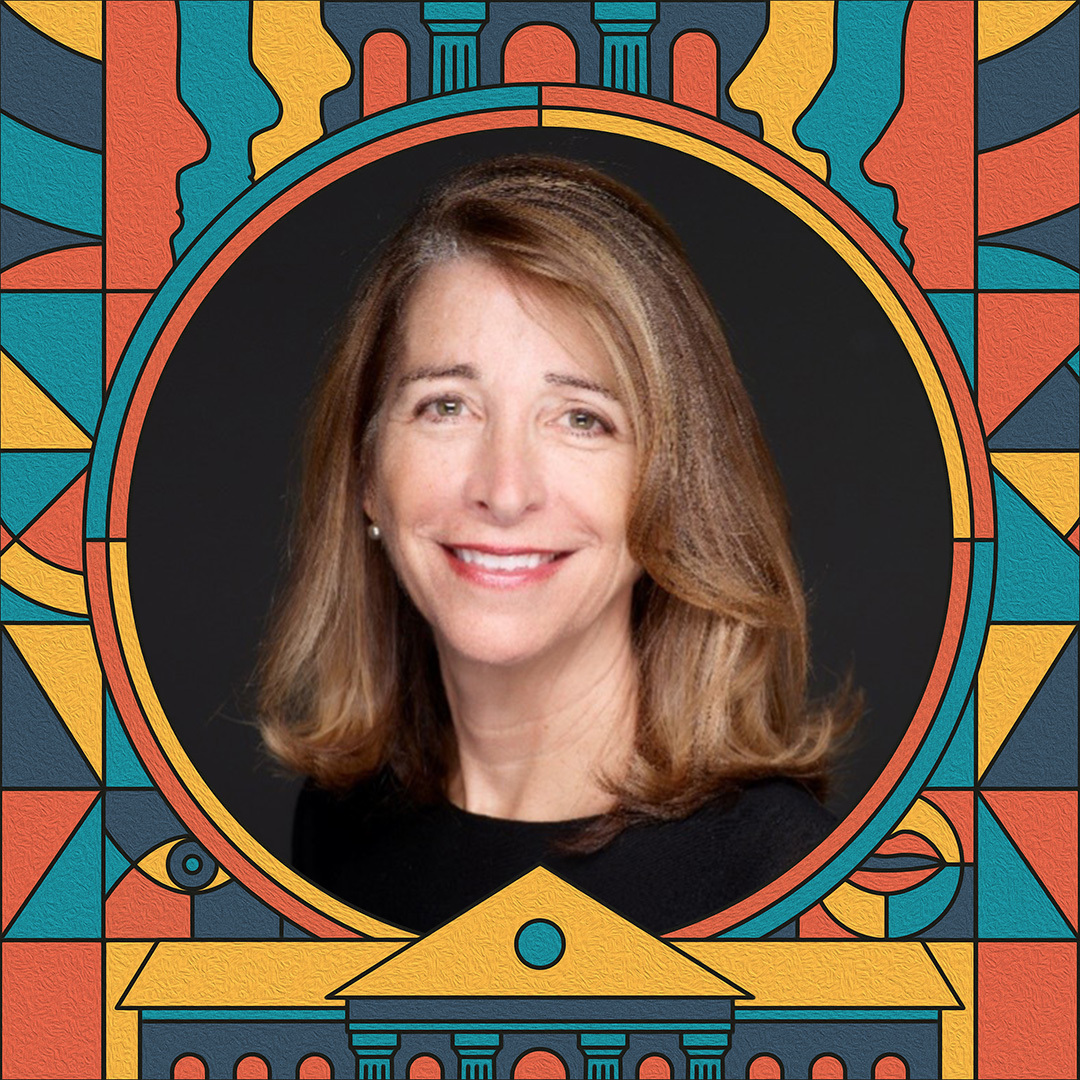
Abby: So today we’re going to talk about one of my favorite subjects and focuses, the future of storytelling in our industry. Well, there’s nobody better to talk about this with than Kathryn Keane, who has over 25 years of experience in the museum field, overseeing the development and creation of dozens of exhibitions, multimedia experiences and public programs. She’s a VP of Exhibitions and Collections at the International Spy Museum in DC and is also responsible for the museum’s large onsite artifact collection. Before coming to the Spy Museum, she was the director of the National Geographic Museum and started her career in the art museum world. Kathryn, a big welcome to our show.
Kathryn: It’s great to be here, Abby.
Brenda: We are so happy to have you, Kathryn, and I’m going to kick start the conversation by just letting you know that Abby and I are both huge fans of the Spy Museum. Its interactivity, its use of objects, its immersive quality, and absolutely its content. So, tell us, Kathryn, why is the Spy Museum important today?
Kathryn: The Spy Museum really captured the imagination of this city and all of the 21 million visitors to this city in a way that I think a lot of skeptics thought that it might not. And I think its success is really driven by a couple of factors. One, the stories they tell are very relevant today. It is also a really fun museum, right? It’s a serious museum, it has an incredible artifact collection that tells the story of history through the lens of espionage, but there’s a level of interactivity and interaction and media here that really makes it fun and brings history to life in a way that I think very few museums do.
Abby: Who is the museum for and what are the challenges you’re facing as a history museum as we get more and more recent history? Because I guess that newness or that recent history happens and needs to be incorporated in some way. So, you know, how do you keep up with history as well?
Kathryn: Yeah, I think it’s the biggest challenge for history museum is to keep up with history, which is happening all around us. And, you know, museums are very deliberate about getting it right. We are the most trusted institutions in society today, I found out recently. It’s really quite, not surprising, but it really is quite a lot of pressure on museums to get it right. We talk about the Ukraine war downstairs. In a film that we just re-edited, we talk about the recent Hamas attack on Israel and we feel it’s important for visitors to know that we are keeping up with the issues and intelligence on a weekly, daily, hourly basis here at the Spy Museum. Our challenge is always to be able to put history in context and in perspective.
Brenda: So, is it ever too soon? I’m really curious how you balance the kind of sensitivity with the responsibility that you are taking on at your institution. What kind of conversations do you have?
Abby: And I just want to build on that as well, because also what the visitor is bringing in and the sensitivity to an issue that’s very recent history or currently going on can often get in the way of, obscure, accentuate perspectives of an exhibition as well.
Kathryn: Oh, definitely, and in a city like Washington, which gets so many international visitors, we are trying to program for people from around the world here, which makes that even more challenging. I would say the majority of contemporary issues that we cover, those really in many ways show up in our public programing more than they do in our exhibits, right?
I mean, you all know how long it takes to develop an exhibit, how many layers there are to that. You know, we have a podcast, we have virtual programing, we have live programing here at the museum in our theater. And we have the luxury of having 18 intelligence agencies just here in DC alone so we can assemble experts with differing perspectives on our stage and try to present these issues from different perspectives.
But before we put them into an exhibit, it really requires a little bit more distance, I think, to get it right and to make sure that the story is ready to be told. To your point, Brenda, you know that a lot of these stories just go on and on and on. Sometimes that’s the story, right? That the story doesn’t end, that the conflict continues, that the challenges continue.
It’s challenging. It’s fascinating. Much of it is got to be framed in the eyes of the visitor because, you know, up here, we’re all too close to it, up in the in the offices and in the collections. We’re just too close to it. So, we always try to have that visitor perspective in mind.
Abby: So, you mentioned your collection of artifacts. I know the International Spy Museum has the largest collection of espionage artifacts on public display in the world, which I think is kind of incredible. And you’re located on L’Enfant Plaza near the National Museum, which is just a really easy place, great location, easy to access, and you welcome over 650,000 visitors a year.
So, when you visit, it’s quite a commitment – you, you know, I think is an estimated about two hour experience, plus, if you want to go really deep which I would definitely encourage people to do. But how do you plan for visitors’ experiences to sort of ease the flow, the ability to digest the content without making it overwhelming for people, you know, what are some of the techniques you could share with our listeners that you employ to engage visitors in different ways throughout their stay and keep them engaged?
Kathryn: I think we are still working on it. I think when the museum opened, the very impressive thing about the staff was that they, you know, after an exhausting effort to open this museum, they could have sort of sat back and said, you know, let’s just rest and congratulate ourselves and celebrate this new museum, and that didn’t even happen, not even for a second. They were immediately focused on flow issues, making sure there weren’t lines at our interactive kiosks, making sure that people were getting through the space in a reasonable pace, making sure that the gameplay for our big interactive game, which is called Undercover Mission, which each visitor assumes an identity at the beginning of their visit here and there are eight interactive stations throughout the museum where you are basically executing on an on a top secret mission. So, we want to make sure that everybody enjoys that experience as well, because over 98% of our visitors like to play that game while they’re here.
So, it’s been a constant challenge. A lot of it is just identifying problems and investing in fixing them, and that’s what this museum has been doing for the last couple of years.
Brenda: You know, I’ve got to say, when I was visiting last, I was really noticing actually how many people were in the institution and finding myself so easily being able to navigate around and to pause and enjoy specific objects in particular that I was really drawn to without feeling like I was crowded out or anything like that, and people were really, genuinely, deeply engaged.
I also have to say on a side note that I played the game. I took on a persona of a spy, and in playing the game, I was responsible for another agent who was out in the field, and I think somehow, I led to their demise, and I am a terrible spy. I am even worse at taking care of my teammates. So, it was very helpful for me to know that I probably have the best day job for myself and to know my place.
You know, you recently joined the Spy Museum. as we discussed, and we know that one of the things that you’re currently working on is an initiative to bring in a temporary exhibition within the institution for the first time, and you’re going to be looking to traveling it across the U.S. We would love to know how are you seeking to attract visitors to it, and especially because it’ll involve an extra fee. How do you attract those audiences and even repeat audiences?
Kathryn: Yes, that is our plan. We have – 86% of our visitors are here for the first time, and we translate that into the fact that we think over 85% of our visitors are tourists. But this is a very large metropolitan area here in the Washington DC region. It’s important to us as a nonprofit to have a membership, have donor support from this community and to have impact in this community through schools and through educational initiatives.
So, we have a pretty good feeling that, you know, a lot of people that live in Washington and in Virginia and Maryland have been here, but we want to give them a reason to come back. And traveling exhibits is one way to do that, bringing in temporary exhibits or creating special exhibitions that allow us to do a deep dive on any given subject.
And so, yes, you’re right, they built a 6500 square foot gallery on the third floor of the museum. And the idea is we will host this exhibition, it’s called Bond in Motion. It’s an exhibition that all the vehicles from the famous James Bond movie franchise.
Abby: Ok, I’m sold, I’m there, I’m excited.
Kathryn: Wonderful show to start with, and I think it will do very well here. The show will be open for a year. We will charge an upcharge, so it’s a little bit of a test to see if there are any price sensitivities. And then if we’re successful, then yes, we will have more confidence in creating our own exhibits, and one of the financing – one of the financial strategies for that would be to create an exhibit, maybe with a group of museum partners and travel that exhibit throughout the US as a way to sort of extend the life of the project, but also to generate enough revenue and sponsorship to support the cost.
Abby: Yeah, I think it sounds fantastic, and you know, I’ve really enjoyed your work for National Geographic, you know, when you traveled so many of the exhibitions and were starting to do more and more of that. I just want to discuss IP and traveling exhibitions. You know, they kind of maybe even need to wow and utilize projector screens, expensive technology, you know, keeping the cost reasonable and traveling an exhibition around the world or just across the USA and selling tickets and merchandise. It’s all sort of like a new business model.
I feel like it’s in its infancy, Kathryn, and some companies are focusing on building out what I call theaters or spaces. Others are focusing on sort of square footage and what’s the minimum you need to make the maximum profit but not having too much overhead. So how much equipment and tech do you really need to get that wow. Other companies like Illuminarium – we had Brian Allen on here in Vegas and you know, they have their own space, and they commission content.
So, what do you think? You’ve had a lot of experience doing this. I saw your King Tut, it was – I was very impressed. But what do you think is the future of this business? You know, what did you learn worked and what do you think isn’t there yet?
Kathryn: I do think it’s the future. What I’d like to see is more of this projection technology and multimedia installations coming into more traditional museum settings, right, which is what we’re trying to do here at the Spy Museum is create these immersive environments as a way to bring history to life around our artifacts. But I don’t think it’s going to go away, but I don’t think anyone is making a lot of money off of it either, because I just think it’s the business model is too challenging at this point.
Brenda: I’m so delighted that you mentioned your artifacts and your idea of layering experience and, you know, not looking at just sort of like one approach or the other, but instead really seeking ways to design on many different levels all at the same time to create very dynamic, very multidimensional environments, which you already, in my opinion, do extremely well.
And part of that for me, anyway, is definitely because of the uniqueness of a number of your objects – and I have to confess as well, I really got super nerdy when I saw your Enigma machine. I think I’ve got like ten photos of it on my phone. So, things like that can be just as absorbing and engage folks in deep focus as much as other kinds of technologies in media.
And on that subject, you have 10,000 objects in your collection. You have them all stored at the museum itself. What is the vision or the plan that you have for further activating this large collection with your audience?
Kathryn: Yes, we do. We have the luxury of having our collection on site, and it was initially done out of necessity. When the pandemic happened in 2020, we brought the collection on site. While it was here, we realized how much fun it was for people to go into our collection space and to be shown behind the scenes artifacts that are not on view or new things that have come into the collection. It was like going into a vault, right? Going into a secret space and seeing really special things.
So, that is our plan. We are not – we’re going to keep the collection on site. We’re going to redesign the space to be somewhat of an open storage facility where scholars will be able to go and do research on our collection, but we can also take VIP tours and host small events just to provide people with that behind the scenes experience, and I think that’s really what people are looking for in a museum, particularly people who really love museums. They love to go behind the curtain.
Abby: So, when you think about all these wonderful things that are happening inside your museum and the way that you market that outwards, how you tell your story to tourists, to the locals through marketing and social media, can you sort of talk a little bit about – I’d be interested to hear how you go about that, what your strategy is, is it Tik Tok? Do you go with the latest and greatest? Are you more sort of reserved in your strategy? Like just talk about your marketing.
Kathryn: I think it’s multilayered because we have different audiences, right? So, we sort of tailor our marketing strategies to obviously the audiences that we’re trying to reach. But yes, we have a big social media presence and there are lots of stories to tell, just had the anniversary of the Berlin Wall coming down, so we have a lot of opportunity to kind of promote the museum through the lens of historical anniversaries. We talk a lot about individuals that we feature in our museum, and we try to tease out more interest in them through social media. And then we do obviously, the more traditional outreach to school groups, to tourists, to tour operators.
So, we have, I think, a very creative team. I wouldn’t say there’s one thing that we do that no one else is doing, but I just think the content and the subject matter is just so interesting to people. And, you know, it kind of sometimes feels to me when I’m down in the museum, like there are people in the museum that maybe wouldn’t go to the Smithsonian or an art museum, but they wanted to come to the spy museum because they were curious and it held a certain fascination for them. So, they’re here.
Brenda: Well, I think about it, too, spying and the idea of spy – it’s a universal and it’s something that kids can understand as well as people of any age, right? And it’s something that I think, you know, and even this idea of you know, the voyeuristic experience in a very general way is something that just translates across culture, across time. It doesn’t matter who you are or where you’re from. It’s a human behavior. And I think that part of that, you know, certainly must be a part of the attraction that leads people to your institution. It just, it’s tapping into, again, I think, really, you know, human archetypal experience.
Kathryn: Agreed.
Abby: I know that you came and a lot of it been finished. It opened in 2019. But, you know, how do you currently and moving forward with the new exhibition and exhibitions of the future, how do you bring inclusive design into your museum?
Kathryn: Well, we have a huge audience, right? So, we need to make sure that the stories that we are telling are accessible. And I think that’s been a priority of the Spy Museum from the beginning. And this museum, more than most, has invested in not only exhibit design efforts to make the exhibits more accessible, they have an actual audio tour for low vision visitors and blind visitors, for example. That is something that they’ve had for a little while, and they worked quite hard on. The Neurodiverse community is a very important community here, and they do public programing and even have a special evening and open the museum for people that are neurodiverse. They adjust the settings of the equipment appropriately and they have a special night for people to come in, every year. They do special memory driven programs for older adults, that is an award winning program that they do here.
So, a couple of things that are on the docket for the future are audio tours in multiple languages, obviously, because we have such an international city that we live in and there are so many international visitors to the city, but also trying to make sure and I mentioned this earlier, that our content reflects the audiences that are visiting us, so people are seeing themselves in the stories that we tell.
Brenda: Kathryn, Abby and I are looking at each other as we’re having this dialog with you, and we are just amazed at how much it sounds like you’ve just got it all going on right? Things just seem like they’re going so smoothly, and you make this seem a little bit effortless. We would love to know what are the big challenges that you have right now?
Kathryn: Thank you for saying that. There are a lot of really passionate people that work for this museum. They’re also super creative, very entrepreneurial, and hard working. And I don’t think that this museum would be as successful as it is without a really committed staff. That being said, it is pretty lean and, you know, despite the fact that I mentioned that we’re a nonprofit and we’ve had some success in the philanthropic space, you know, the institution started as a for profit and it’s pretty dependent on earned revenue, right, and a successful business model. But it has had, since it became a nonprofit, it has also adopted and embraced a lot of impact goals, a lot of educational goals, a lot of ways that we want to impact the world, right? So, we call it the double bottom line here. But in truth, it’s trying to succeed on both fronts.
It’s trying to be a very powerful, impactful nonprofit and also generate enough revenue to keep things going. Right? So, and it’s a pretty small staff to be doing both of those things well. So, I think it’s a challenge for the whole institution, not just for me, but I think they have just the right combination of talent, skill, and passion on this team to be able to do it.
That, and just keeping it fresh. Right? You know, it’s just such an exciting place. It’s hard for me to believe that it’s 20 years old because, you know, it’s still feels so popular and maintaining that popularity is hard work. But I am having a ball and I really love the team here. You have to find your tribe in this business, and you know, it feels really comfortable and familiar and I’m just happy to be on the team.
Brenda: It sounds like you’re just such a really good fit in so many ways for an institution that is very effective inside and out. And, you know, Abby and I want to start to wrap up the conversation, but need to ask, in addition to the Bond car exhibition, what else are you really passionate about?
Kathryn: So many things. So many things. I feel that the collection here is really special, but I would say it’s very heavy on a few important areas in our field, right? It’s, we got a lot of Cold War and we have a lot of World War Two and some World War One. But I am super passionate about expanding the net on our stories to include international collections. We also don’t have a lot of Civil War or Revolutionary War artifacts in this collection, so I’m not just interested in the breadth of the collection, but I’m also interested in going back in time a little bit further.
And I also feel that this institution is a legacy institution for people who have devoted their lives to this work, right? The people that serve in the intelligence community and many of these people do very important work and their stories will never be told. So, it’s just the nature of the mission. And so, I feel a responsibility to that community, and I feel that this institution, because of its highly popular public nature, has a responsibility to those communities as well to make sure that we’re telling stories of these heroes.
Abby: It’s very interesting. You started it off at the very beginning of the show and you’re sort of talking about it now – the idea that people come to the International Spy Museum to understand real facts, it’s that credibility that we seem to be lacking in on news and wherever we’re seeking information where we can get it from our museums. And I think that is a heavy load to carry. But I think under your leadership, the International Spy Museum will continue to be a bastion, a place where we can go and learn about these people and the reasons things happened and why they happened and how things came about with feeling that we’re understanding a situation from a holistic perspective and not from a perspective that has an agenda or in some ways corrupting the information or is based on just no facts at all.
Kathryn: Correct.
Abby: So, I just wanted to thank you so much, Kathryn, for sharing basically your excitement for the future of the Spy Museum, our industry – I’m really excited to come see Bond, I’ll be there – and also to sort of encourage everybody to go to the International Spy Museum, take your friends and family. It’s phenomenal. And I can’t wait to see what happens under your leadership.
Brenda: Absolutely. Absolutely. Kathryn, thank you so much.
Kathryn: Thanks for having me.
Abby: And thanks to everyone who tuned in today. If you like what you heard, please subscribe for more episodes of Matters of Experience wherever you listen to podcasts and make sure to leave a rating and a review and please share with a friend. See you next time.
[Music]
Producer: Matters of Experience is produced by Lorem Ipsum Corp and recorded at Hangar Studios. Tune in next time for more fun discussions about experience design.