[Music]
Abby: Welcome to Matters of Experience. This podcast is produced by Lorem Ipsum, an experience design company headquartered in New York City. Our show explores the creativity, innovation and psychology driving designed experiences. If you’re new, a big welcome and to our regular listeners, thank you for tuning in and supporting our conversation. My name is Abigail Honor.
Brenda: Hello everyone. This is Brenda Cowan.
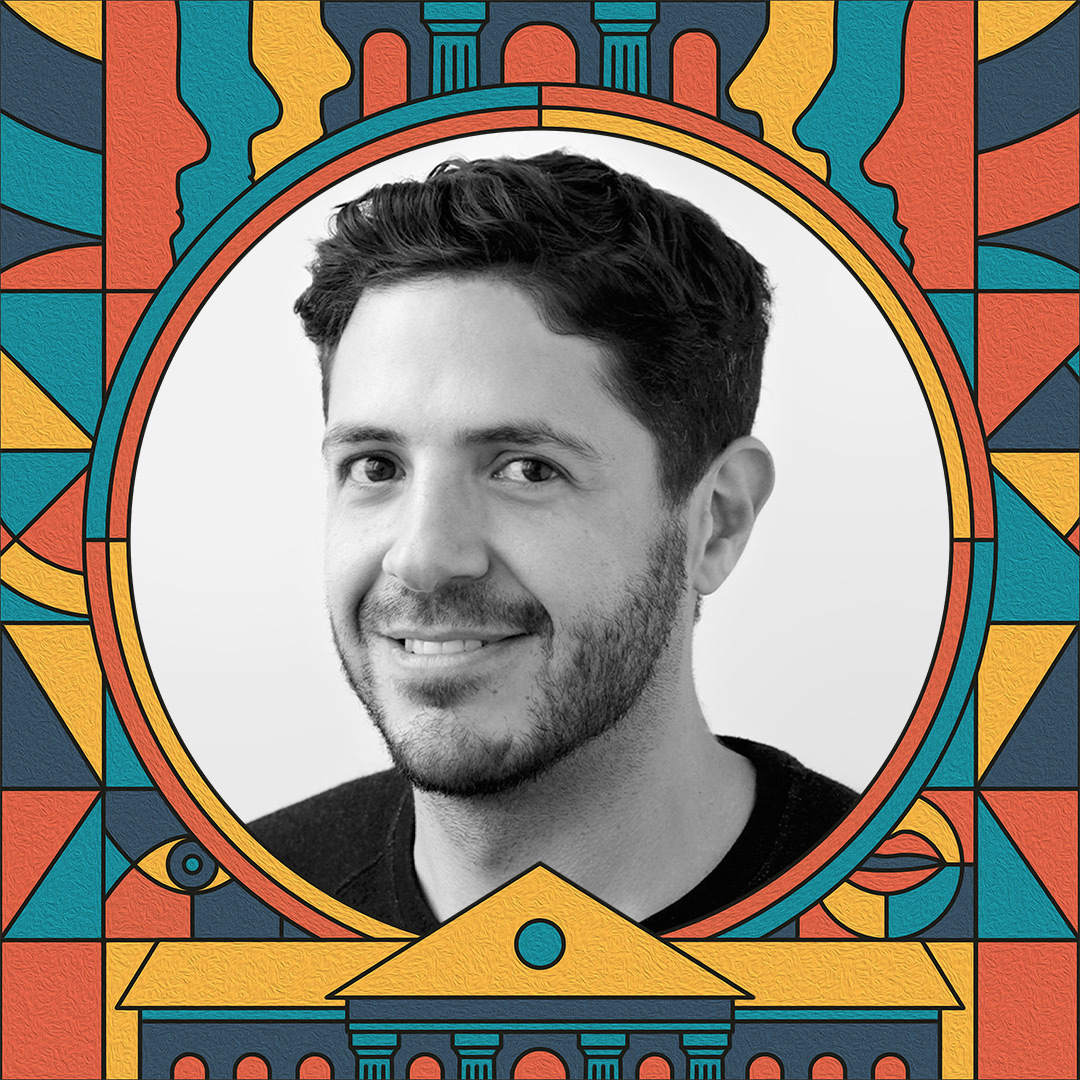
Abby: So, today’s show, we’re going to look at designing and branding for art museums and specifically San Francisco Museum of Modern Art. We are very fortunate that our guest today is Bosco Hernández, the design director at SFMOMA, where he leads a team of designers and architects stewarding the brand, the collection, and the visitor experience, which sounds like no, no mean feat and I’m looking forward to hear more about it.
Bosco: So excited to be here.
Abby: We’re so happy to have you on the show. Now your work has garnered recognitions from many different design awards, including AIGA, our favorite – SEGD, Graphis, and the American Alliance of Museums, and you currently serve on the board of SEGD, where you chair the Racial Justice Committee.
Brenda: So, let’s get the ball rolling, Bosco. If you could describe for our listeners a little bit about the museum itself, how it’s laid out and if there are any challenges with the space that you’re working with at the moment.
Bosco: Yeah, if you’ve never been here, the museum went through an expansion in 2016, so it’s comprised of two buildings and one was designed by Mario Botta and then one that was, the expansion was designed by Snøhetta. There are seven floors of art, and there’s also two sets of elevators, which makes it super interesting and keeps us on our toes. Our permanent collection is sort of set out in a second floor of the building. There’s a street actually, that not a lot of people notice, but that goes underneath the building. And we have, the Fisher Collection is also presented here in the museum, which comprises of like three other sort of floors on the Snøhetta side. So, it’s quite interesting and very unique set up.
Abby: So, one of the – San Francisco, my sister used to live there, and I know the downtown has really seen a lot of industry leave. You know, the dynamics have completely changed and I’m sure people were coming in their droves. So, I guess has the visitor flow changed and sort of have your expectations changed from an institutional perspective?
Bosco: Yeah, it has changed. And I get this question so many times, what’s going on in San Francisco? What’s happening? I see the parks in certain areas of the city thriving, all the streets are filled with people. But downtown, where the museum is located has seen some major changes and vacancies, so that has definitely impacted the museum, and also our approach, you know.
We’re very close to the Moscone Center, which is our biggest convention center, and it used to be, you know, scheduled with many conferences happening all the time, very hard to walk on the sidewalks. And now it’s different. There’s not that many of those conferences happening, so definitely it has put more pressure on us in a way that we haven’t experienced. Just really have to be very thoughtful about the type of programing that we’re doing and how – just our approach to the audiences.
Brenda: Could you tell us just a little bit about what it is that’s different and how you’re approaching these changes?
Bosco: There are tourists that are coming, but not to the levels that we had seen before. Like I said, we have to think about the exhibitions that we’re programing, and we are doing a lot of tests in terms of like our galleries. can we have some of our galleries free to the public? Is that helping attract more audiences.
The permanent collection on our second floor, we extended and made that free, and I think we did see some visitors that were coming to see those shows, but not to the extent that we needed. And so, I think we’re still sort of experimenting and thinking about ways to attract new audiences.
Our focus has been thinking about the Bay Area. What are ways that we can sort of really highlight and serve as a platform to local artists? There’s so many exciting artists that are doing incredible work here. And are there ways that we can, you know, provide a platform for those artists?
Brenda: You know, we were talking a while ago and you talked about how it is that you’re moving towards a more approachable language for your design work. Can you share with us what it is that you mean?
Bosco: So, this, some of those questions, we were actively trying to solve. And one of the ways since the pandemic, what we’ve been doing, and it’s one of my favorite parts of my work is we host these JEDI meetings which are, stand for justice, equity, diversity, and inclusion. They’re held every week and they’re facilitated by different people in our team.
And these meetings are used to tap into this kind of more abstract and meaningful parts of our work that are not just, not specifically tied to kind of logistics and the product that we’re doing, but more about are we serving or our design meeting, is meeting the needs of the people that we want to see in the museum.
And also, I think some of the bigger questions that I think have been great is sort of how are we doing the work itself is just as important as the work we’re doing and so there’s been lots of sessions about, you know, psychological safety. What does it mean to kind of speak up and say, you know, I don’t think this this direction that we’re doing is exciting enough, or how do we do it in a way that, that doesn’t sort of turn off and end the conversation, but actually becomes a way of opening a door into other possibilities.
And I think that has been something that is obviously hard at a design studio is sort of, it’s a very vulnerable process to kind of share your work. But also, if we want to do something new and different, we have to kind of be able to dive deep and be very, very honest with our feedback and be very critical.
Brenda: This is such an important model and it’s really refreshing to hear an art institution taking this on. And can you give us an example of a specific challenge or specific experience that you all tackled during one of your JEDI meetings?
Bosco: The bigger challenges are like – sustainability has been another big component. And so, one of the JEDIs that we did was kind of analyzing sort of the, some of the waste that was created and through like the vinyl, the scape, the paint, and we did some material research and some investigation about what can we do to reduce some of that waste and some of the workload.
And it was like a small little thing, but we started noticing little threads that were repeating. And whenever we use screws and nails, there’s no damage and things can still look really great and they’re super easy for the crew and our installation team to, to remove and install. So that sort of that’s one tiny example, but a level of kind of an awareness.
We are on a grind doing so many projects, but just having one hour a week has allowed us to kind of tap into to slow down a little bit and notice what is it that we’re doing, and can we do it better? How might we is something that we say that a lot in those meetings, how might we do it differently? Which I find it so exciting and sort of non-confrontational.
Abby: Moving now to talk sort of about connecting people with art, we were asked to curate an exhibition of 17th, 18th, 19th and 20th century Russian art a number of years ago. It was full of a bunch of beautiful masterpieces, but things that people were very familiar with looking at, and it was, needed to all be addressed through a new lens to revisit these paintings and put them into a different context.
So, we chose color. This was before this was all in vogue, by the way. I claim I started this, so we took the majority of the color or the most influential color in a painting, and so we would juxtapose a 17th century landscape with a 20th century cubist portrait, things like that in a room. And the rooms would be yellow and red and blue, but color became this amazing conduit for all these different stories and perspectives on the paintings themselves and painting and art in general.
I feel like the art world, or the art museums are still hanging things up, still having some text panels and not doing a lot to help us engage with those, let’s say, masterpieces or familiar pieces. I’m not really talking about contemporary paintings, so, you know, how do you at your museum look at ways of telling stories for people who are coming into the space?
Because I know a lot of people sometimes are like art, this is art, I can do it myself or I don’t understand it. Or they haven’t got art history background, so how are you bridging, how are you having those conversations with visitors who may be there for the first time and nervous and don’t understand? And what are some of the stories you’re able to tell? Or some of the challenges you have.
Bosco: I mean, it is a challenge. I think some of the key is this idea of, you know, this dialog that happens with the visitor, I think to me is a key component of processing information, like you’re saying, you can sort of feel it in a more emotional level like you were describing with the colors of the walls and how they interact with the paintings. Not everybody sort of can read a label and kind of enter into that artwork that way.
So that’s one of the questions that we’re asking is, are written labels the best way to tap into different audiences that we’ve never sort of approached before, like with different cognitive disabilities and so on. So, I mean, in my mind, I want to experiment with, you know, could we do, let’s say, some kind of, you know, official sort of, a simple graphical way of talking about an artwork.
And of course, it’s always sort of this fine line of like what is more important, you know, we don’t want to take away from the art experience. And so, I think it’s something that we are constantly navigating. Are there spaces for this where we can kind of push those boundaries and experiment with how people either are touching or experiencing with their hands the artworks themselves, they have a place to build, create or do something as a ways to kind of understand that work.
Abby: I think you’re right. I think maybe for me, an issue as you’re talking is that it’s pristine, it’s finished, and the artwork is sitting there and if you’ve been to artists’ studios, they’re, for the most part, they’re messy. You can see they’re playing. There’s creativity and evidence everywhere.
Brenda: They’re not precious.
Abby: They’re not precious, it’s iterative. And so that’s all gone. And when you go to an art museums, it’s like dah-dah-dah-dah, we’re not showing the nine paintings that led up to this or the 20,000 failures or the inspiration that arrived at this. It’s just evaluate this. And so that, what I’m deducing from what you’re saying is that it’s more about inclusive design. It’s letting people play, enjoy, touch, feel and connect more with these paintings and the art.
Bosco: Yeah, I mean, I like to think we would succeed if people are coming here and they feel like this is an invitation, it shouldn’t be intimidating. And I think you’re totally right. You know, museums often are showcasing works that are finished. They’re done. They’re, somehow the assumption is that they’re perfect. They couldn’t be any more perfect. They pass through the selection process that confirmed their perfection.
And so, there’s this kind of paradox there that makes it feel like either I could have done that, but I’m not here. And why not? Why am I not here? Or I could never do this, and this is impossible for me to do. And so, it is interesting and I think it does, obviously, there’s a reason that live museums have been doing it for a long time because to some degree there’s that contrast that kind of helps sort of enhance the works often.
But, you know, it doesn’t have to be always that way. And I think we can have some rooms at least where we can kind of let our guard down and embrace that kind of messiness that artist studios have.
Brenda: So, you were talking about flexibility and adaptability and being able to negotiate and that leads us to a very critical conversation point, which is working with curators. So, these are very complex relationships when we’re talking about being a partner as a designer and working with curators throughout the design process. And you have a lot of experience working successfully with many different curators.
And let’s just start with asking what kind of advice would you give to designers who are struggling to make a really sort of profitable, beneficial connection with curators?
Bosco: Yeah, it’s work that you never finish doing and you’re always evolving and learning and sharing sort of the learnings that you have. And we’ve actually talked about it in one of our JEDIs, is sort of how, you know, how do we talk about our work and what has been the most successful because it’s such a key component of design is sort of that storytelling and bringing people along with you.
These are all human relationships. I know it’s very different. I had a background as a designer in a small design firm, and I remember the relationship that I have with a client was very different. You kind of come and present it and you show the work, they pick one and you kind of move on. But at a museum, like you said, it’s such a – we’re creating a much more complex sort of it’s almost like basically like building a building to some degree or some large project that involves multiple people. And I find that the story is kind of a key element when presenting the work.
I guess I find curators have been most successful when the story all makes sense, where the, the threads work to enhance sort of that story that the curator is going to have to tell, like when they do a curatorial walk through of their show.
Abby: But how often does a curator – let’s say you’re talking about they’ve got the story there and it’s all great. Not all of them are visual people, right? They’re telling you the story, but they’re not giving you any ideas visually, right?
Bosco: Yeah, I mean that, yeah, it certainly happens. Unfortunately, there’s been occasions where like, you know, we had agreed on everything on paper. The words were all matching and then the walls were painted, and we were like, oh my God, this is too bright, or then what happened? Oh, no, what are we going to do? We need to kind of rethink.
And so, I think that’s one of the things that we’ve done just recently is sort of embracing this more iterative approach where we have a conversation first and there’s words that are being kind of thrown at us, and then we do kind of a response we call, I think it’s like an alignment meeting and, and we interpret their words.
Doing physical mockups are the best things in my mind. I find that even when you have ideas that I know the curators might be very uncomfortable with, and I know that it could enhance the exhibition, I always try to, you know, at least present one direction that is pushing the envelope into the, the direction that we’re trying to move towards.
Brenda: Bosco, you make maquettes, right? You make like little models?
Bosco: Yeah.
Brenda: And are these devices that you use to be able to sort of persuade or seduce a curator over to some really interesting design possibilities?
Abby: You can say the dark side, if we’re talking about JEDI meetings.
Brenda: I’ll let you say the dark side.
Bosco: Yes, we have a miniature version of the entire museum, and it’s in our lower level in our basement. And its super fun and it takes sort of that edge off. And I find that, you know, my team usually especially for the architects or the exhibition designers, you know, they have to operate this software like AutoCAD or SketchUp or Rhino. And oftentimes the curators are not familiar with those programs, so you have one person kind of navigating the spaces and sharing sort of what the visualizations are going to be.
But I find that with the maquettes, there’s wonderful sort of surprises and things that can happen. And also, it’s a very democratic process. I’ve seen curators spend hours and hours over the weekend or whenever they want. They can just move back and forth the works and freely, and some really kind of fun and innovative idea has happened that way.
Abby: So, moving to your work on the brand side, you did taboos about 10 to 15 years ago with things like gift shops and restaurants and when I visit SFMOMA’s website, you have the Kusama Dining Experience, which is referring to Yayoi Kusama, the artist who does the polka dots, and she’s all the rage. She’s sponsored by Louis Vuitton right now. And you have your Kusama Dining Experience, which has a special menu inspired by her work. And there’s the cocktail hour with cocktails inspired by work.
Brenda: Drink the Kusama cocktail and you will see polka dots.
Abby: Sounds fantastic.
Bosco: Exactly.
Abby: And so, this sort of branding, this bringing an artist into your dining experience, having a themed dining experience, why does there need to be this diversity of offerings in an art museum and in a museum in general now?
Bosco: I mean, that’s something that our new director has really felt strongly and I think you might be familiar with Kusama’s work, and that might be the reason that you come here and you might be here on the first Thursday, so you’re coming in for free. And I think that what we’re trying to do is think about are there ways to kind of have kind of diversify, sort of that, not only the way that we’re earning revenue, but also sort of the options for visitors so that you have a more holistic experience?
And so, one of the things he’s been talking about is the notion of this radical hospitality. What does it mean to be pushing the limits? And I think this is something that, you know, a lot of restaurants and the hospitality industry have been thinking about, but what would that look like for a museum? And so, it’s something that we’re experimenting.
Brenda: You know, something that maybe more on a personal note, you have spoken before about working and thinking with an abundance mindset and not a scarcity mindset, and that this is how you approach thinking about how you can reach visitors in different ways. And I would love to hear where does this very positive philosophy come from?
Bosco: You know, it’s interesting because since we last talked, I thought, oh, this is kind of something that maybe we should do a JEDI on. And we did. And since then, my mind has been like a little bit more nuanced because I did receive some feedback from my team and especially obviously with some of the layoffs and so on.
There are some, some real pressures as to like what is this sort of possibility or abundance mindset. And to me, I think I mean, some of it has to do with the way even, even the way that I was saying before, like I love the question of like, “how might we?” When you frame a question that way, you know, you realize that there’s, really it could be limitless ways of answering that question.
So, I think it’s super valuable to kind of shift that perspective and to notice, like at least be aware of like what are the things or the elements that are forcing me to kind of not think beyond what is possible. One of the critiques also were like, is it, is abundance mindset something that can be sustained all the time.
Is it endless? I think some, especially because we’re in San Francisco and we’re in this tech world where, you know, you see those phrases coming up a lot of like, don’t worry, just break it and see how it works. It’s about trying and doing and so there was this pushback a little bit. And I think, you know, for me, the – and especially because you look at where the world is leading us in terms of like sustainability and so on, it’s like, can we, is, is this sustainable?
And I, I think it was interesting and very valid points, but I still, I think obviously things are not black and white. To me, what I find more interesting is its sort of noticing and stopping and really thinking what if or how might we and letting go of some of this or at least noticing where these constraints are coming from.
Abby: So, if we focus now on technology, I know one of the challenges for institutions and local government when they think about investing is how do we use technology in the most effective way in our museums and art museums and institutions, because it can be very expensive, you know, how interactive does it need to be, how flexible? And they have to serve a large population and think about that longevity, sustainability, robustness of the technology chosen. And I don’t think there’s a perfect answer. I agree with you. I think there’s the practical side, there’s the theoretical side, there’s the ideological side. Tell us about your experience with technology.
Bosco: Yeah, we’ve had some wonderful breakthrough, sort of really refreshing uses of technology at the museum with just a couple of them. I think one of them was the 2016 app, when we reopened the building that was partnered with Detour, this app that would kind of locate where you were and give you like turn-by-turn directions and guide you as if you were, you know, the reviews were like, it feels like I have a personal curator that was walking me through the museum.
So, it was very sort of delightful and unexpected and it was wonderful What we’ve discovered, and obviously nowadays, I think, you know, with the challenges that we’re facing, investing in technology is a real challenge. And also, I find that, you know, at least in San Francisco, we’re competing with a lot of these other spaces that are kind of like the center of the tech world and so how do we do things in a kind of unexpected way?
It’s also something that we’re thinking about. I do find that some of the most analog versions have been, of the reasons, again, that I love them is because they can be iterative, adaptable, it’s much easier to adapt and change. It’s so hard to do that when you’re investing in some of this larger equipment, and the longevity, like you said, is a real threat. So that’s something that we’re constantly trying is, are there ways to do this in an analog way that can kind of be more surprising and even unexpected and achieve the same results?
Abby: Thank you, Bosco, for sharing a glimpse into SFMOMA and your design process with us today and being open about the challenges you face. Your work and your team’s work is absolutely beautiful and I encourage anybody in the area to go and visit SFMOMA, and I hope everyone listening takes away as designers that we really should try to continue to experiment with our work.
There’s no right way and always aim, as Bosco said, to take visitors’ breath away. I think that’s amazing. So yeah, thank you, Bosco, for inspiring us today and creating exhibitions that people haven’t seen before.
Brenda: Thank you, Bosco.
Bosco: Thank you so much. It’s been a pleasure.
Abby: Thank you for listening today. If you enjoyed the show, subscribe for more episodes of Matters of Experience, wherever you listen to podcasts. Make sure to leave a rating and a review and share with a friend. We’ll see you next time.
Brenda: Bye, everyone.
[Music]
Producer: Matters of Experience is produced by Lorem Ipsum Corp. and recorded at Hangar Studios. Tune in next time for more fun discussions about experience design.