[Music]
Abby: Welcome to Matters of Experience, a podcast that explores the creativity, innovation, and psychology driving designed experiences and encounters. If you’re new, a hearty welcome to you and to our regular listeners, thank you for tuning in and supporting our conversation. My name is Abigail Honor.
Brenda: And I’m Brenda Cowan.
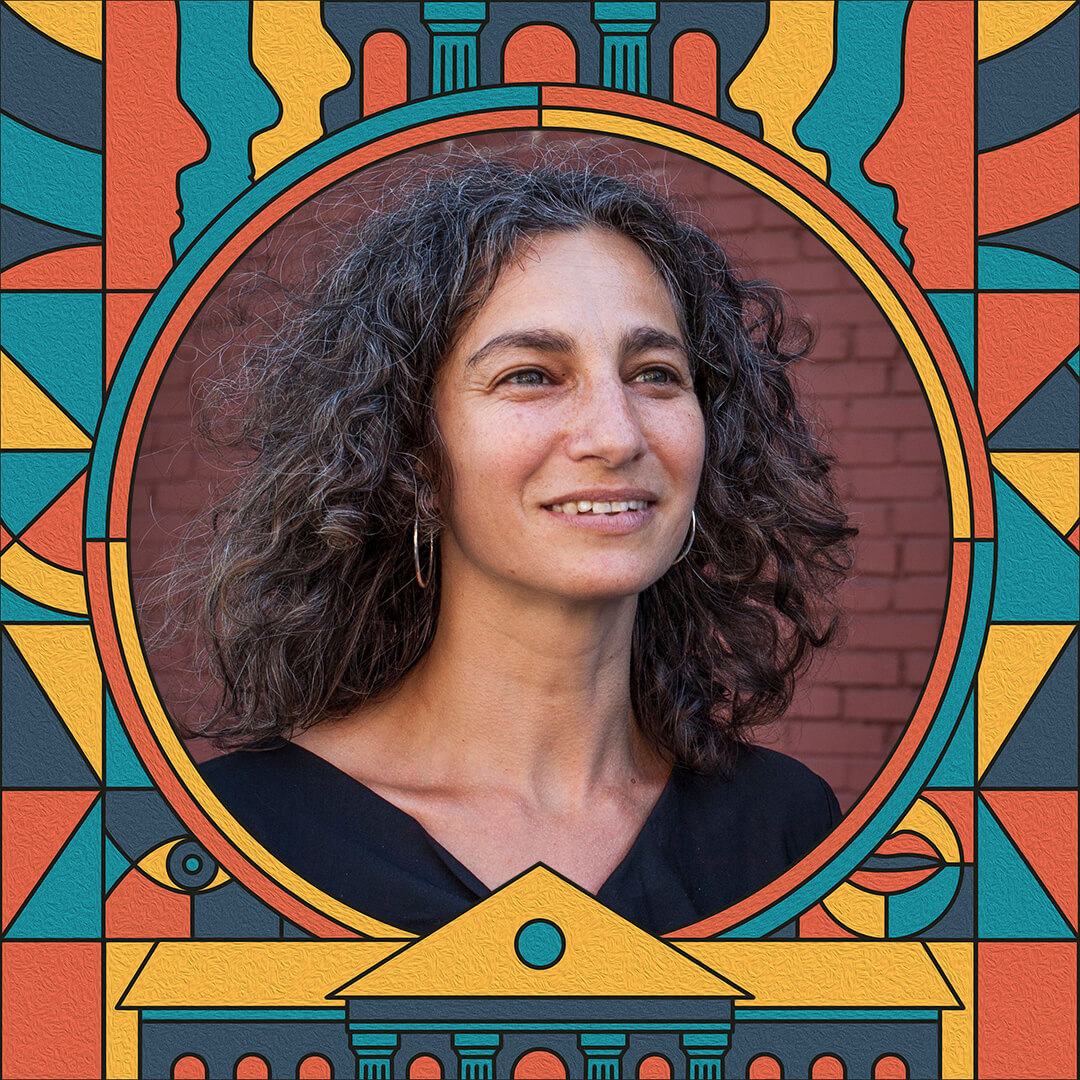
Abby: Today we’re talking with Dr. Annie Polland, who is a public historian, author, and president of the Lower East Side Tenement Museum. Previously, she served as the executive director of the American Jewish Historical Society. She is also an author, and we will have links to her books in our notes.
Annie, I was recently at the Tenement Museum and discovered that it defines itself not as a history museum but as a storytelling museum. For those who are new to the museum, it tells stories of working-class tenement residents who immigrated and migrated to New York City. The Tenement Museum refreshingly does not talk about famous people. In fact, it prides itself on talking about real people in real families. Annie, welcome to the show.
Annie: Thank you so much. It’s wonderful to be here.
Brenda: We are so excited to have you here and like so many people, I’ve been a fan of the Tenement Museum since, really since its beginnings in 1988. And if you do not know this, listeners, visitors can take immersive building tours of these recreated homes, of these apartments, their hallways, the stairwells, kitchens, bedrooms, it’s so intimate, of former residents between the 1860s and the 1980s.
And they can also take walking tours that the museum offers throughout the neighborhood on the Lower East Side. Annie, could you share with our listeners your own journey and how it is that you came to be the institution’s president?
Annie: Sure. So, I was a fan of the Tenement Museum. I remember I came to New York for graduate school in the 1990s, and then I worked for a company called Big Onion Walking Tours, which employed graduate students to tell history, you know, to give walking tours of New York neighborhoods and talk about the history, and I was assigned for my first tour, the Lower East Side.
And at the time, those tours met at the Tenement Museum. And so, I remember I was so nervous to go. I had like studied on the train and the books I was reading fell apart because I was grasping them so tightly. And I showed up, but as soon as I got there and saw the people who were like in line clamoring to learn about history, I was sold.
It was almost like a religious experience, like to be able to walk in, in this neighborhood with so many 19th century buildings still standing and to bring history alive for people and to see people’s reaction. That was really exciting for me. And so it was, again, like a conversion experience where I realized like, oh, I’d like to do this, I like this. This is why I came to New York.
Abby: Did I read in The New York Times this summer there was a moment when it was going to close, or there was speculation?
Annie: Absolutely, yeah, no, no, no, you got it. So in April of 2020, when the pandemic had just begun, The New York Times wrote a story, and I think it was headlined “A Museum That Tells the Story of Survivors Faces Its Own Fight to Live,” and talking about how the Tenement Museum, perhaps more than other museums, was affected adversely by the pandemic, because for so many years, the Tenement Museum relied on earned income. So as soon as the doors closed and everyone started to know by April that this was not going to go away any time soon, the museum was in jeopardy, and a lot of people throughout the country and even in other places in the world saw that article and realized like their responsibility to help the museum. And so donations came in that were helpful in rebuilding.
Abby: Was that the first time that donations had been elicited or, or come in? It was mostly, as you mentioned, just on, on ticket sales and merch sales and things like that?
Annie: Yeah, well there had always been a development department and philanthropy of course was always part of it and fundraising always so important. And yet almost because the earned revenue was something that you could plan and you could kind of schedule and you could, you know, it was viewed as a wonderful thing that we were paying our way, so to speak.
But I think the pandemic taught everyone that there was a need to kind of really develop that development even more and that philanthropy even more to keep the cultural institution going and to help it thrive. So, I guess that would be another silver lining in a way, is the kind of the understanding of how as we rebuild, how do we want to balance that philanthropy and the development versus our earned revenue.
Abby: Right. I found the Tenement Museum very progressive for a museum. You seem to have come at this whole industry from a really unique perspective, as you mentioned, the walking tours. Do you see yourself as a progressive institution?
Annie: Well, first, I have to pay homage to the founders of the museum. They were the truly progressive ones who could look at a tenement and say that should be a museum. And so a lot of the innovation and the progressive ideas came from the museum right from the beginning, and when you think of that as 1988, that was not a time that immigration was really part of the national narrative.
So that was a big deal for them to kind of put that stake down and say this was this is what it’s about. And, of course, in addition to being an immigration museum and having that be innovative, it was really a museum about the working class, which doesn’t get told as often as it should. When a museum starts with that premise, you really you can only go forward with it.
It’s hard to go backwards. Like I think it pushes you to keep thinking about how to do things in new ways, how to share the story, how to expand the stories. I think that was also the really, you know, innovative spirit that we feel like, you know, it’s in our blood and it’s in the air of the Lower East Side, certainly to kind of keep that, keep that moving.
Abby: And then, in terms of when you’re at the American Jewish Historical Society, how is that different? Because I can imagine after being at the Tenement Museum with this very immersive, very innovative place, then moving there, what were some of the challenges?
Annie: When I first moved there, I was so captivated by the archives, but what I missed was the people. I missed being able to just get up from my desk and say, I’m going to give a tour right now, which is what I’m able to do at the Tenement Museum.
Brenda: You’re still giving tours yourself?
Annie: I gave one today. Yes.
Brenda: Fantastic.
Annie: Well, that’s how you know. I mean, that’s how you are able to see what people like, what they don’t like, what they respond to, what you can test out. It’s storytelling, but it’s, it’s messy storytelling. It’s storytelling that’s not set in stone, and so because it’s not set in stone and it’s not written down in a script, you get to play with that.
And so that, you know, for me to run a museum in which that’s what’s happening, I need to do it too. I would love to give one every day, but they don’t let me out of my office as much as…
Brenda: I love messy storytelling, I think that that’s a thread that we need to definitely keep going.
Abby: Yeah, and I love that theatrical aspect of it as well, that the way that no performance, quote unquote, is the same. Like when you’re there, you could go back on the same tour a week later, and it will be different, and it’ll evolve. I think it makes a very dynamic and alive and living museum.
Brenda: It’s really apparent and really palpable at the Tenement Museum, you know, I’ve gone on a number of tours, the exact same tour a number of times, I should say, and it is always genuinely different, and it is different because the shape of the, you know, visiting group has been different, and, and also the fact that clearly your interpreters are able to really bring themselves and their own passions and their own areas of expertise, I think, into each of the tours as well. It’s one of the best repeat museums that I know of.
Annie: Oh, well, that’s good, and tell people that because I think that…
Brenda: I just did. You hear that, everyone? Write that down.
Annie: Come back again. No, and, you know, a tour that I gave today was about Nathalie Gumpertz. It’s the 1870s. There’s been a panic of 1873. And when I first came to the museum in 2009, it was right in the wake of the recession. And a lot of the focus on that tour then was on the panic of 1873. And what was that, and how did that affect people? It’s who’s on the tour, it’s who’s giving the tour, and it’s also what’s going on in the world that kind of shapes the emphases of the interpretation.
Abby: Well, I think that’s what’s so successful about it because the same thing happened when I was on the tour. Everything was relatable to today, and that was what was so amazing is this ability to connect with the past and also to see the future, which is, I think, these stepping stones and that we’re always connected with our ancestors.
Brenda: I’d like to expand upon the conversation about relevancy to today and a question that’s really been percolating for me. I would love to hear, Annie, your thoughts on, you know, how one of the museum’s major aims is to build inclusive, expansive American identity. How does the work of the Tenement Museum fit within current national views of culture and immigration in the United States today?
Annie: One of the things I’ve thought about a lot is that you know, in some ways, the Bible of the Tenement Museum is the census. You know, we want to tell the stories of real people who lived in these buildings, and the census provides that map to be able to do that, and it’s also important for us to step outside of that and say who was not able to be here?
All the people, by virtue of them being in the building, were included in some way, but who at the time in American history was excluded? So, we spent a lot of time with the 1882 Chinese Exclusion Act. And so what that meant is there were certain people that could come and live in these buildings and, and others that couldn’t, and that how could we even as we’re telling the stories of those who were there, also talk about those who were not there.
The idea of inclusion and exclusion also makes us think about the black community that was on the Lower East Side and in Lower Manhattan, albeit in lower numbers than the immigrant groups that were rising at the same time that their numbers were diminishing. What we found was that black New Yorkers were living in the Eighth Ward, which is what is now Soho, and there are no tenements still standing there to tell that story.
And we realized that it would be important to tell that story in our building as well. So, we’re kind of bending the original rules with regard to methodology, although not with mission. So, we’ve been thinking, I think, quite concretely about inclusion and exclusion and how we, how we honor that even as we honor the place based and the importance of real stories too.
Abby: Has the Tenement Museum ever had to face the challenge of inviting the public in without what I’ll call the storytellers that, the docents like, they seem incredibly integral to your visit.
Annie: Absolutely. It’s like one of those things where the strength of the museum is that it is a storytelling museum and that it’s a person telling you the story. Like, I just don’t think it would work if you were walking around with headsets and listening to, you know, an audio guide like I, I think that works in some museums. It doesn’t work for ours because of the intimacy that you both…
Brenda: It’s very dialogic and visitor to visitor as well as visitor to docent.
Annie: It’s the educator that can stitch together a story that includes the people on the tour and all of their backgrounds. It speaks to the person whose story they’re telling, in other words, the resident of that apartment, weaves in the primary sources, makes them accessible to people, and weaves in the objects and kind of puts that together, and you just can’t do that in a with an audio guide. I mean, you could do a more static passive version of it. But again, it’s that dynamism of the messiness of trying to put all of that together that I think makes it work.
Abby: So you keep calling them educators. When I was there, that obviously educating you, they’re telling you information, but that’s why I really gravitate more towards the fact they’re storytellers, and there were so many questions getting answered. We were all stimulated. We’re all asking questions. Other people are answering, had a fantastic time there, touching when I wasn’t supposed to be touching, you’re not supposed to touch anything and I was secretly smelling too, because I like smell and I just wish that there’d been a little bit more because I just sort of wanted to play a bit more.
Annie: Yes. No, and we learn through touching things. And I think you’re, when you’re in a building like that, you see so many surfaces. And, of course, with 97 Orchard, we don’t have things behind ropes or glass or anything. So, one of the first tours that was created for consumptive use, meaning you could touch things and sit on things, was the apartment of Victoria Confino. And so that apartment was recreated with consumptive use. You could sit down, and especially for kids, they could pass around a manta, they could pass around the blanket that she would have slept on.
Brenda: Let’s talk about a remarkable recreated sewing factory at the Tenement Museum. It’s absolutely incredible.
Annie: I know, I love it, okay, so we recreated a portion of a garment shop. We had real sewing machines. And basically, there’s a point at the tour where visitors can just explore. You touch a sewing machine, and projected onto the cloth is a story, a video, and you can, you know, pick up the headset and listen as well. And different sewing machines have different stories. There’s a rice cooking machine that also allows you to access the story. And so basically using the things in a shop that people would touch to be places to embed the story. We joke that you know, you don’t have to sew a garment, but you get to piece together a story.
Abby: It sounds wonderful, but then you don’t need the storytellers as much, right?
Annie: Exactly. The storyteller, the educator, is still important and kind of scaffolding that up and setting up the story and then kind of stepping back, but then kind of bringing everyone back together, really building in time in that sequence for the dialog, for the conversation, for the visitors to react to the stories and ask questions.
Brenda: Every time I hear you talk about the scaffolding of the experience, part of what I keep thinking about is, of course, the environments that they’re in and then also the objects. And, Abby, I absolutely, this is so cool. So they’ve got, of course, the original wallpapers and original linoleum and some original objects, things that were found during the renovation, the restoration.
But then they also have some objects that were bought on eBay because they were just like the one that they saw in the photograph of the family that was living in that living room. And what are the discussions that are happening at the museum around that?
Annie: That’s a great question. And another pool are the ones that the descendants of the families have given to us. Now, you know, people get rid of the old furniture, and it doesn’t get passed down in the same way you would if, you know, you had a very wealthy great aunt who passed down a beautiful like painting to you.
So, but in certain cases, we’ve been able to add objects that the families have donated to us, like sewing shears. And those are then embedded into the exhibits or in some cases in like display cases where we also put things that were found under the floorboards. But you’re absolutely right. In the early years, it was going to fairs and finding things.
And now you’re right, it is more eBay, you know, putting together an assemblage of objects that would have been from the time period and and, you know, trying to kind of create that, I guess, mise-en-scène. So what is real or what is authentic? I guess, you know, what’s authentic are the floorboards of the Tenement Museum that we’re now so meticulously preserving as part of this construction project.
But the most authentic thing, I think, are the documents. That is what we have to kind of provide the base to let people explore and stitch the story together so the authenticity comes in. This is what we know of the family, and this is the story we’re going to tell based on it.
Abby: Well, I love that reference to reality, because what really is reality, and I completely agree, I think as long as the experience resonates with you as one that is perceived as reality or could have been reality or very authentic, which again, being authentic and being real, two different things, I think.
Annie: And I think what we try to do is be transparent about everything as much as possible. And I think the most important thing is visitors are empowered to go back and think about their own family histories. What do they know? What are the memories that were just passed down? Everyone has gaps in family history. No one, there’s no one walking around right now that knows the complete family history because there are some things that are passed down, and there are some things that are quite, quite purposefully not passed down.
Brenda: I would love to take another perspective on the question of authentic and likewise playing with the idea of objects. I’m thinking of Your Story, Our Story. So, this is your online collection, and it is populated by the public, and it is the sharing of images of personal objects, family objects, and very short little stories with each. And it is now a massive collection. And tell us about Your Story, Our Story, and what you see as being the most meaningful part of it.
Annie: That’s what people do with the object that’s been passed down to them. And in that effort to kind of write a few, a paragraph really about that, it requires them to kind of think about that object and, and understand it. And usually, I would say most of the time, the stories and the objects that are put up are not of real, you know, any kind of monetary value.
It’s the story value that they have that, that’s really important. And it started when my daughter went to a elementary school in Kensington, Brooklyn, which is a very diverse neighborhood. And so we started working with the teacher, the teachers at the school and had the fifth-grade classes who came to visit the museum experiment with this. So, before it was a website, it was just a school program.
And the most moving thing about that is that we invited the parents and grandparents and the students to share their objects at the museum. So, the students first came to the museum, went on a tour, saw the objects that were in the family apartments, did this assignment. The teachers did a lot of work, you know, guiding this, shepherding this, then brought them back so they could share this as a kind of assembly with the message being your stories and your objects are as important as the objects that are showcased at the museum.
And then to see the connections being formed across different cultures. And this is, again, a very diverse school ‚Jamaican, Bangladeshi, Pakistani, you know, Irish, Italian, Chinese, Jewish, Black, Puerto Rican, like this is all in one school. So any one class is going to have this multiplicity of stories, and yet the thread that binds them together are the way in which this is a way that people are making sense of their own culture. And so now teachers across the country can actually even create their own web page within the website so that they’re able to see their students year after year.
Abby: My next question was going to be how do you take this very personal and intimate on-location experience that a lot of people from around the world or even in New York City will never be able to have for one reason or another, and how do you make the mission reach all those people? And it sounds like just naturally because of who you are, which is why the Tenement Museum is so lucky to have you as president, you’ve started to do that through a relatively simple personal program with your local school, and then you’re always thinking about scalability. How do I see what works? How does it ladder up to our mission? How do I listen to our visitors, to people who are interacting with us? And then how do I grow bigger and bigger until now, it’s global?
Annie: Right, and I think always keeping in mind the relationship between bricks and mortar and digital, right, that that you want to have the digital mirror as much as possible, the kind of bricks and mortar interactions. And so, you know, we created the website so that even when they put the website up, they can then print it out and put up like an exhibit board in the classroom.
Also, really important to all of that are the relationships that can be formed with teachers so that we’re hearing what’s happening and we’re able to support that, and also the IMLS gave us that grant to scale it. So none of this can be scaled without funding. So again, a big shout out to funders like the IMLS or the NEH, for example, that has helped us in, in that work and kind of taking some of our ideas and scaling them to reach more people.
And it goes back to this idea about inclusion and exclusion. We only have so much space in these tenements, like there’s only so many stories we can do. How can we create other venues so that we’re able to keep adding stories and learning from the stories? And then, oh my God, my favorite, where we were dealing with a lot of college students in the New York area, CUNY students, and a number of them brought dictionaries.
And what these were were their parents, when they first came to this country, carried dictionaries with them. Chinese-English, Russian-English, Spanish-English. And so, the fact that then their children, now grown, were picking those as objects that was about their family history, I thought was so important. And then to bring it back to the Tenement Museum, once in a while, we’ll have people who will say something like, oh, immigrants back then learned English faster or, you know, immigrants today, they’re not learning English.
That kind of, of rhetoric. It’s amazing to kind of then use this example of the dictionary that people are carrying with them from place to place, from job to home to the subway, in order to learn this language and to grapple with it. It takes away the way that people can kind of simplify something in a statement. And the object makes us think about this, this process and this ordeal of coming to a new country and having to learn.
Brenda: The level of nuance between the storytellers and the objects themselves and the residents of the space is really quite remarkable. And again, the fact that the storytellers get to respond and even encourage, I think, questions and perspectives and points of view that they can then work with and weave together and braid together. And maybe that’s a nice, it’s a way that I like to think about the nature of the dynamic experience is that it is very much so, like a co-created weaving that each of the story ends up being by the very end.
Abby: So going back to one of my pet peeves still. It seems very everything’s very natural for you. You have the theatricality of it. You have the storytelling, you have the education, you’re listening to the visitor, you think visitor experience is important, like you’re here because we think you’re a shining example of how to do everything right. I see sometimes people may come away and go, well, we just don’t have the stories that Tenement Museum has. I think some people don’t listen to their visitors and don’t understand the stories that the visitors want to be told. They’re not listening. They’re doing the top-down decision-making. And for me, everything you’re saying seems very natural. And this is, of course, how it should be, but I don’t think it is that way everywhere.
Annie: But for us, we have to. Right. So I think that just the nature of how the tours were set up, the nature of the building, the kind of, I think the philosophy of the museum from the beginning, which was to make stories accessible and tell the stories of of ordinary people, of regular people. I think all of that just kind of lends itself to almost relying on hearing what it is that that people, the questions that people have and, and adapting to that.
Annie: Like we don’t have the luxury of creating a gallery, putting beautiful art on the wall, and just saying, you know, walk around.
Abby: Sure, sure.
Annie: Although, I mean, I think that’s a wonderful thing. I love to go to art museums and walk around, but.
Abby: But I think it’s not enough. I think the problem is that these places are going to age out or that people are going to go to more of the pop-up immersive experiences like King Tut, where you’ll start to learn about history in a different way, in maybe a more accessible way. So, I think this is an accessibility issue happening with some of our older institutions that needs to be tackled to get people in, to have fun, and be excited about history again instead of it being a group of I know objects are really important, but just objects that I don’t understand why I should care about them.
And so, I think what can be learned from your example is that you’re not special and that everybody should be doing what you’re doing within reason, obviously. The way that you’re approaching your mission and your visitors through storytelling, I think is something a lot of other institutions need to think about.
Annie: I’m trying to think in my mind if I had to decide what was more important, an immersive space versus a storyteller and educator, and I don’t know because I think they’re both so important. But I’m just wondering, you know, I find I love going to museums where there is an immersive space. So, I grew up in Milwaukee, and the Milwaukee Public Museum has this amazing exhibit. It’s called The Streets of Old Milwaukee. And they recreated a Milwaukee street from the turn of the 20th century, and I remember as a child, like every kid who grew up in Milwaukee, remembers walking through the cobblestone space. There’s like an old grandmother on a rocking chair that’s a little eerie. There’s like water that you could pump, and then you looked into stores and could see, like, again, these scenes.
And I think that fires up the imagination more than any card or text, wall text, or audio. It’s being able to kind of be thrust into the middle of a scene and have to make sense of it. So, you know, I think there are ways other museums can kind of like create interesting immersive spaces that get into the background of the artist or the writer or the inventor that they’re doing just to kind of set a scene for people and engage people in a slightly different way.
I saw this, the New York Public Library, I don’t know, maybe a decade ago, had a whole thing on writing, and you got to go into a room and try out different types of writing utensils to kind of get a sense of how things were put together. And it was so, you would have loved it, so multisensory and so hands-on.
And so, you know, I think there are really creative ways that people can kind of complement, even take a traditional exhibit, put the traditional exhibit up, but create something on the side that is speaking more towards the visitors’ need for a multisensory experience or the visitors need to get in the mind or the space of, of another creator.
Brenda: One of the things that Abby and I talk with folks about are digital technologies, and I’m thinking about our museums and the big digital immersive experiences that are all the rage these days. So, I’m just curious, how far do you push it? Because you could, you could really go a great distance with technology. What do you? What’s the conversation?
Annie: Where we are experimenting more with technology is actually in our virtual programs. So The Washington Post in December 2021 did this really great piece, and we’re so forever grateful to them where they use something called photogrammetry to recreate our saloon space and our Rogarshevsky apartment and our Levine apartment, and essentially it’s like they take these 3D photos, a million photos, and stitch them together in a digital model.
And so the experience is really immersive, and there’s real texture to the spaces. And so we then got a grant to have the whole building photogrammetry-ed, I don’t know, I’m sure there’s some a better word to use. And so then we’re able to, on our virtual field trips, be like, oh, here’s the Baldizzi apartment and actually use, use that or here’s the front hallway.
Brenda: That’s brilliant.
Annie: And I use it even teaching with my college students. And we were on their campus, which was very different from the Lower East Side, but to be able to kind of use the space, you really feel like you were there. Like the next day, I was like, oh, I was just at 97 Orchard, but I wasn’t, what was going on?
And I was like, Oh yeah, I was in that building. So I think there are great ways that technology can help us recreate the immersive experience and be able to kind of send our tours throughout the country again with the partnership of teachers who are willing to experiment with us.
Abby: She’s speaking my language. I love it. I couldn’t agree more. I was going to say that I think also what really gets me excited about the way you’re talking about these experiences is what, you know, at Lorem Ipsum, we talk about all the time, which is merging that physical interaction, the digital interaction, the visitors with the docents, with even digital docents, how you use lighting, how you use actors, how you use projection and use all of these tools in the toolbox.
And I think it’s at the very, very beginnings. I think we’re seeing more and more different places start experimenting, and I think there’s definitely no right and wrong. So it’s just really exciting to hear that the Tenement Museum is so innovative as well in the way that they’re presenting the information, the technology you’re open to using, and the storytelling you’re doing always, always thinking about the stories you’re telling and how they connect to the visitors.
Brenda: Where’s the Tenement Museum going to be in ten years?
Annie: It’s funny because my guess is that it will be some combination of looking back to our roots and always being inspired by the work that Ruth and Anita and so many of the founders of the museum did. Being inspired by our visitors and being inspired by our educators to kind of help us, help us move forward again, grounded in, grounded in some of the dynamics that were discovered and evolved early on in the, in the museum.
Abby: And so you’re not saying AI, then? I’m not hearing AI.
Brenda: Oh, stop it.
Annie: No. I don’t, no. I mean, the whole here’s what it is. I think, again, that so many people now we rely on, you know, our phones for community. We rely on computers for this and that. I mean, what makes the Tenement Museum innovative these days is how old-fashioned it is. It’s the fact that it is a bunch of people in a room trying to understand history, like how nerdy is that, but also how unique is that?
And that becomes, in some ways, the most radical thing is, is coming together in real-time with real people to tell the stories of real people.
Brenda: And it’s real people also trying to understand themselves.
Annie: I think that’s right, yeah.
Brenda: And each other, and that’s definitely something that plays out at the Tenement Museum.
Abby: Well, thank you so much for joining us today, Annie. This has been really a joy to hear all about your experiences and get to share them with everybody today. And I encourage everyone to head over to the Tenement Museum. Check it out for yourself, and you’ll have an amazing, amazing time. And if you like what you heard today, subscribe for more episodes of Matters of Experience wherever you listen to podcasts, and make sure to please leave a rating and a review and share with a friend. We’ll see you next time.
Brenda: Thank you, everybody.
Annie: Thank you so much.
[Music]
Producer: Matters of Experience is produced by Lorem Ipsum Corp and recorded at Hangar Studios. Tune in next time for more fun discussions about experience design.