[Music]
Abby: Welcome to Matters of Experience, a podcast produced by Lorem Ipsum, an experience design company headquartered in New York City. Our podcast explores the creativity, innovation and psychology driving designed experiences and encounters. If you’re new, a hearty welcome to you and to our regular listeners, thank you for tuning in and supporting our conversation. My name is Abigail Honor.
Brenda: Hello, everyone. I’m Brenda Cowan.
Abby: Before we begin, we just want to share a note from today’s show sponsor, POW!
Sponsor: This is Paul Orselli, Chief Instigator at POW! (Paul Orselli Workshop), and we’re delighted to sponsor this episode of the podcast. Please check out our website at www.Orselli.net for more information about our work as well as free resources and articles. Thanks.
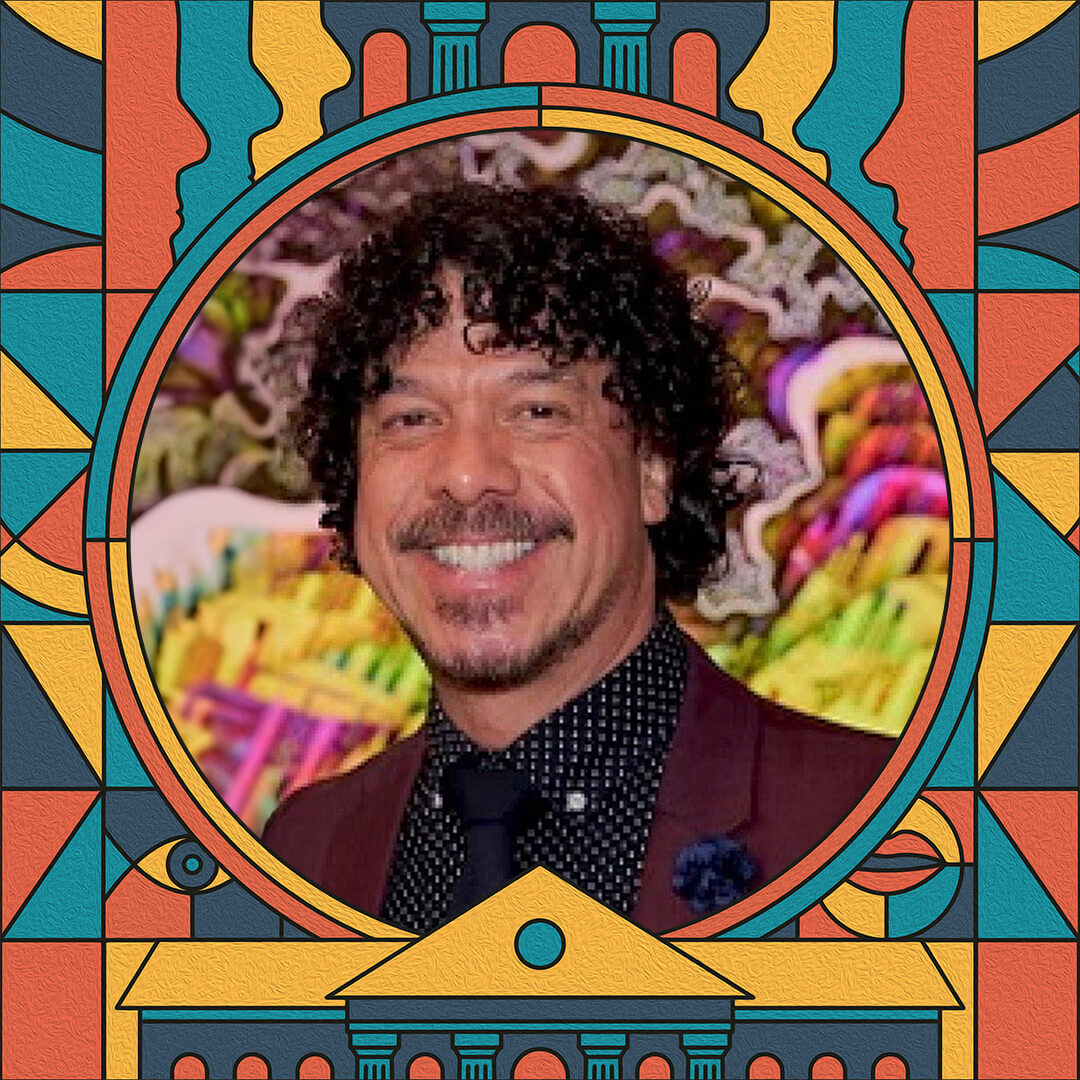
Abby: Today we’re talking with Victor Torregroza. Victor is an experiential events program manager for Global Events at Intel Corp. He is a passionate pioneer of experiential marketing, and his mantra, “we eat with our eyes,” is one of my personal favorites and carries more weight as we’re reentering the world with expectations for more meaningful engagements. Hello, Victor. Welcome to the show.
Victor: Estoy tan honrado y emocionado estar aquí. I’m so excited to be here. So, thank you so much for having me.
Abby: So, Intel, Victor is a very recognizable brand. When I think about it, I think…
Brenda: Bum-bum-bum-bum.
Abby: And if that doesn’t immediately transform you to Intel, the commercial, then you really need to go and check out some of the old Intel commercials. But the product itself is really hard to market, it’s sort of invisible, what or how it does what it does to a, to a lot of us is hard to understand. I mean, for me, it’s super-duper exciting and really sci fi, but it’s still hard to quantify. So, Victor, how do you position yourselves for the end consumer?
Victor: So, what’s fascinating about Intel is we’re in the machines, we’re in the cloud. We are truly, absolutely invisible. But the technology is fascinating, and we touch it every single day. So, we bring it to life in ways that are unexpected, that make people want to care and make people want to learn more. So, technology, while it’s a part of our lives, maybe too much now, the challenge that I love about working at Intel is how do you bring that forward and how do you make people, wow, I never thought of that. Tell me more. Because it is truly fascinating.
When you think about silicon, we start with a grain of sand. I may be oversimplifying it a bit, but it truly starts from that level of nature and then through American ingenuity and what humanity is doing with technology, it’s brought out into the world in various parts of it. The cloud, when you’re shopping, in your pocket, on your laptop, it’s everywhere. and it’s truly it’s truly fascinating. And I’m a creative whirling dervish by nature. I’m not a technical genius, but it’s the challenge that keeps me totally excited about working at Intel as an experience designer.
Brenda: Victor, you describe the lens through which you work as thinking in moments. Can you tell us what you mean by that?
Victor: What I’ve come to appreciate about moments and how we design those experiences, everything is these moments that we want to capture. So, whether that moment is an audio experience or something that you smell or something that you touch, that’s the lens. It’s moments of sensory excitement, information, and delight.
Because it is how we engage with the world now. We’re all distracted. We have so many things going on. The distraction is very, very bad in my society, being raised as a polite Catholic, Spanish, Italian, in a stubborn family. But those moments, short informational nuggets of knowledge, interaction, and delight.
Abby: So, when I make experiences, I often focus on what emotion we’re trying to convey as well as the story. When we chatted, you mentioned you seek to spark purposeful joy – and I love that you use that word – joy in the experiences that you create. Can you give an example of what that spark of joy looks like?
Victor: Yes. So, there was this one moment at an enormous industry show in Las Vegas. So here we are. We’re getting ready to put on our show. Our stage is full. Maybe about 100 people in the audience waiting for that moment. And all of a sudden, boom, the lights go out. We’re in complete darkness, in a convention center in Las Vegas, the other city of lights.
So, our violinist was getting to perform, and she said, what do I do? And we said, Anna, the stage is full, you’ve got to go out and perform. People instantly started to light her up with their illuminated screens and she started to perform, and it was just, here we are, strangers in the dark at a trade show in Las Vegas, and we put out a tweet, which still is one of my most favorite. “The human spirit never loses its power.”
And people remember that tweet. They remember that moment as something that could have been terrifying. But it all worked out well, truly joyful. And it’s hard in our world today. It’s hard to convey that, yeah, as part of this business show, we want to have joyous moments because people will look at me and say, you’re insane.
Brenda: I have to ask you, why wouldn’t you then replicate with intentionality this kind of experience? I mean, literally unplugging and sort of doing something surprising, like just because of how successful the human element was, as you said, that sort of came through. Have you ever thought of, jeeze, you know, I wonder if we could replicate this in some way.
Victor: We have. And, you know, and that’s actually quite fascinating. That’s another part of our experience out in the world, now that we’re venturing out after this period of being hobbits in our homes, it’s all about having moments of joy and unplugging. So, if you’ve ever walked out, out in New York, people are, they’re not there. They have their earbuds in or their headphones on. They’re plugged into their cells. We’re not plugged in to the rest of the world.
We are taking a couple of approaches at shows, and it’s all about simplifying that experience so we can truly have that acoustic, interactive, truly sensory experience looking into each other’s eyes, listening, and having conversations. Things that we took for granted before COVID, now, simple things like that – listening, shaking hands, interacting, networking, hearing music – all these things are now joyful moments that I think people that are coming to events, libraries, museums, and experiences appreciate much, much more than ever.
Abby: I always think of it as like not being present. You know, if you’re in your device and you’re in the world of wherever your device is taking you, you’re not here with, in this case, another person. But it’s incredibly difficult, I mean, it sounds like, Victor, it took a blackout, for want of a better word, a temporary blackout in Vegas to actually make everybody go, oh, my gosh, what are we doing and how can we have a communal event? Because we all came for something. I think there’s that communal mindset of we’re all here to see and listen. And I think that those feelings and emotions are what tie us together, they’re the human connection that I would imagine in these moments that you’re trying to create, replicate, make, that’s integral, is bringing people together. Because I would imagine when you’re creating your events, you don’t want people to be so immersed in the technology that they’re not having this connection with one another, and that, that’s an interesting challenge for someone. That must be, sounds like a really tough job.
Victor: You know, as experience designers all of us here, we’re all here for the same purpose. We’re in the business of connecting people to our stories, to our brands, our history, all our cultures, and how can we enable and enrich that human connection. And it is much more challenging now because of these hard glass illuminated devices that we all have.
So, what I’m finding now, as I’m working on several big events, which I’m so excited about, but I’m taking the preschool, kindergarten, everything we’re learned as kids approach, which is simplifying and peeling back that onion of complexity and distraction and going back to simpler, more pure forms of interaction. Simple is hard, but through simplicity, we can have, I believe, better engagement, higher quality engagement. And people will remember that.
Brenda: You’re making me think about, well, so many things and one of the main things is, is that I tell my students right at the very beginning of their degree program that if we do this right, they’re going to end up being able to think like a four year old and all of the incredible curiosity and inquisitiveness and wonder that comes at that age and at that time in our lives.
And it’s very possible to be able to really reignite and reconnect, and through good experience design. You’re also reminding me of a story that I probably bore the socks off of my students with about when my daughter was actually just about that age. And I think we spent a good 45 minutes on a sidewalk looking at a crushed soda can because she just couldn’t move on from being utterly fascinated by this object.
And I was mortified at first, and I just kept trying to move her along. And then I stopped, and I realized in this moment that my daughter was showing me one of the greatest things about being human, which is utter fascination at something that, you know, is ordinary and is every day, and yet is also quite compelling when you look at it in a certain lens. So, thank you for bringing that memory back to my mind.
Victor: I love that. And I just want to touch on that moment that you shared with your daughter and the soda can. So, for the viewers who are listening to this, I am looking at a beautiful hummingbird in the California sunshine at the feeder that’s just through the window. So, I just wanted to share that little moment of wonder.
Brenda: Oh. That’s lovely.
Victor: Yes. So, it’s time for all of us as experience designers, I challenge you, I urge you. Create those moments where we can participate with each other and get back to those states of wonder that we all enjoyed as four-year-olds, as children. That is the aspiration. So, I love that you’re teaching that to your students, Brenda. I think that’s something all of us as experience designers can start to do. I’m starting to do it, and it took me many decades, but we all learned it. We have the tools. It’s time to just take those steps back to wonder, simplicity, and awe. And we don’t have to clutter it with, with collateral and gobbledygook.
Abby: Yeah, I couldn’t agree more, Victor. So, telling a brand story in the form of a museum is very popular for the larger brands. I think about Nike has a really, really nice, fun, small museum over there, and there’s a recreation of a car full of old sneakers, I know Phil Knight used to sell out the back of. So, you have a museum on your physical site at Intel, right?
Victor: We do.
Abby: Yeah. Tell us about that experience. What’s it like?
Victor: So, Intel was founded in 1968. We like to say that we put the silicon in Silicon Valley, but there’s this enormous print with some of our founders and the employees, and they’ve got the, you know, the giant horn-rimmed glasses, the greased hair parted on the side. It’s just this moment in time in the sixties that, to me, is just so beautiful. It’s just a blown-up photo. But you see the joy of the founders at that time founding this company that I’m so proud to work for. That’s one part of it.
The other part that I really love, they have a classroom for kids to come in and they get hands on learning and experiences on technology, on STEM. So that’s like this little beehive in the museum for students to come in, it’s free and it’s staffed by our employees. It’s a lot of fun and they have other moments throughout the museum, but like any museum, always time for an upgrade. But there are these beautiful, memorable jewels in the museum. Yeah, you can see them online, but nothing beats seeing it in person.
Brenda: I love the impulse and the intention that goes into a brand wanting to tell its story, wanting to share itself. And it sounds, because you have such a diversity of experiences that are available, and especially for kids, it sounds like at your museum, it sounds like you’re doing a really remarkable job of tapping into some of the underpinnings of the meaningfulness of this community that you’re building.
Victor: It is. And you know what’s interesting, like I went into the office this morning, I went out into this plaza that we have. It’s a beautiful courtyard in the building, and we just installed this beautiful, we call it a spark, it’s this giant cube with the logo. But as I was going out this morning, hopefully I didn’t end up in somebody’s photo, but there were people just taking pictures right there in the courtyard. It’s a nice public space, but it was just a beautiful experience, people coming back out into the world and they were just taking their photo on our campus, which is just – that’s nice. And they were probably coming to the museum to learn about technology.
Abby: So that’s actually a fantastic segue to my next question, which is about the importance of physical design. So, is sensory, physical, sensory design important in your work? Can you just tell us a little bit about that?
Victor: So, using the senses as part of design, to me is really important. I think more than ever, with all the distractions that we have, another responsibility we have as experience designers is to not annoy, but to inspire people to engage with us. And we have all of those sensory channels to do so. And I think they’re under tapped. I always think that audio pieces are really, really important. Music is always a big part of that. But there are ways, I think, that the possibilities are endless to touch the senses and sensory, it means taking off those earbuds and truly participating in the part of the event that you’re creating.
Brenda: So, let’s expand on multisensory and let’s talk about emotion. How do you plan for emotional experience in immersive design? Can you tell us a little something about your process?
Victor: Yes. No matter how large or small it is, it starts with the who. Who are the folks that you want to engage with? The why. Why is this important to them and why should they care? And then there’s the how. So, for me, it’s making sure that I’m delivering on the business objectives for the program. And once that piece of the cake is done, then it’s time to have a little fun, because people love fun environments. No matter what your title – CEO, CFO, engineer, developer – who doesn’t want a little bit of joy and fun in their lives. Most of the time, for the programs that we’re working on, because we have neighbors in that exhibit hall, it will usually come down to the eyes and the ears and the hands – to see something beautiful, to hear something absolutely amazing, besides our bum-bum-bum-bum. And to touch a piece of technology that, wow, I had no idea.
We were at the World Economic Forum a few years ago and we had a showcase. I called it, myself, The Crown Jewels. But these are the wafers. These are the technology that Intel makes that goes into the cloud, into the laptop, into the enterprises. And these are the unseen ingredients across the technology ecosystem. When people see it and you put it in their hands, they are like the crown jewels because they’re sparkly, they’re beautiful. And we don’t think of it that often, right? Because that’s what we do and that’s what we make. But we have noticed that when we do share it, it’s like, wow, I had no idea. So, pure joy, wonder, absolute amazement, blown away.
Abby: So, when you are working with your team and you’re aspiring to create these amazingly fun, joyous, simple moments, it sounds really easy, but as you mentioned, it’s incredibly difficult. And while your team are aspiring to make something phenomenal, there must be a lot of mistakes along the way. So how do you guide them? Inspire them? It’s not like they, you know, hit it out the park every time right away. So, how do you deal with some of those tougher moments, maybe where a great idea is hard to find and the team is struggling?
Victor: So, one of the best tools that I have in my toolbox as an event experience designer is the creative brief. So, I learned this about 15, 12 years ago from I will just leave her as my own version of Miranda Priestly. But, in all the best ways. So, we have all these aspirational ideas. We have budgets we have to design and build toward, and we have suppliers. So, what I learned is to crystallize the strategic foundation, the creative vision, the key takeaway, and the measurement plan, all into a, ideally a two-page brief. So, you might have a 15,000 or a 20,000 square foot exhibit that is born from a two-page informed, brilliantly concise, creative brief, because it’s the Bible for the teams to go off and build whatever needs to be built and designed.
Brenda: I have never heard anybody wax so poetic about a creative brief. That was absolutely amazing.
Victor: But Brenda, most of my colleagues in the industry. They despise it. They say, oh, I’m not going to do the creative.
Brenda: Really?
Victor: Yes. I have many colleagues who just refuse, they think, oh, it’s like a thesis. It’s like college. It’s very difficult to crystallize the ideas down. But many of them, they laugh at me.
Abby: Creative briefs take time and focus, and you have to eliminate a lot of things. And that enables you to come up with a great end product because you know what it isn’t and you know exactly what it is. But it’s a lot of work, and I think people don’t want to put the work in, to be quite frank, Victor.
Victor: And that’s why I mentioned my colleague, Miranda Priestly. She was ruthless as an editor, but she wanted to design an amazing product and she did.
Abby: Yeah. So, when we’re thinking about sort of simplicity, going back to that statement you used earlier, and eliminating that noise of extra things at events like the pamphlets and all the excess stuff that maybe you don’t need. Can you talk to us about an example of where less was more?
Victor: Oh my God, so, there’s a couple. One of the first ones, it was the Lenovo Yoga, beautiful product, and I have a Lenovo system right in front of me now. But how do you bring to life flexibility, performance, convertibility, and the idea from the agency team, born from the creative brief – oh, that was pretty good. That was not on purpose.
Brenda: That was good.
Abby: That was perfect.
Victor: Born from the creative brief, let’s bring out these acrobatic yoga artists who go on around town, drop the mat, and the performance begins with each other doing these beautiful acrobatic somersaults and yoga performances all around town, with the device incorporated in a purposeful manner.
This was successful. It went on for about a year and a half. We showed up at San Francisco at Moscone Center, did the same event, the same activation with the acrobatic yoga performers, and I look around and I said, Nicole, who is that? And she said, Victor, that’s the co-founder of Google. That’s Sergey Brin. I said, you’re kidding me. He was with us for about an hour and a half during this whole activation. The man’s a billionaire, and here he is spending time in this experience because it was fun. It had purpose and it was pretty simple.
Brenda: Wow. Absolutely amazing. And I just, I so appreciate example after example that you’re giving us of these very core human elements and how metaphorical they are as well, the connection, the communication, the community, because it is really very metaphorical for Intel, and what it does and how it works.
Abby: Yeah, I feel the same way and thinking about sustainability and the planet. How important for you is it to have sustainable design, understanding that the whole events industry, I know, has a long way to go? We’ve had a number of guests on talking about that it really needs to catch up quickly and stop wasting so much, and I know you’re talking about simple design definitely helps with sustainable design, but can you talk a little bit about sustainability and how you approach it?
Victor: Yes. Oh my God, Abigail, it’s so important and I absolutely agree, we’re behind and, you know, a temporary event, we become temporary polluters. So, for me, using recycled elements, reusing elements that we’ve used already, surfacing elements, furnishings, materials within the city or the town where the event will be. No giveaways, no tchotchkes, no tote bags, who needs all of that, and really putting the focus on essential moments. So, the giveaway, it’s the memory, it’s that emotion or that Instagram pic. That’s my focus. Recycle, reuse, source locally, create emotional mementos.
Brenda: I am so excited to ask you this next question, Victor. What is it, and is it even possible for you to be able to pick just one thing that is really inspiring you right now?
Victor: Wow. So, as you said that, another hummingbird came in – it’s nature. It’s going back outside. It’s going back out into the world. For me, it’s a universal feeling because all of us were hobbits and in our homes for such a long period of time. So, it’s stepping out. And I explained this to a colleague that it’s kind of like when we were kids. And it’s that first day of school and I’ve got my shined black shoes, my salt and pepper corduroy pants, my royal blue sweater, my two starched, ironed white shirt. It’s that feeling of the first day of school and going back out to the world. So, there’s innocence, there’s simplicity, and there’s awe and wonder and I’m working on a couple of projects where we’re just going to bring that in easily – air, water, greenery, things to complement the experience.
Brenda: Victor, you are amazing, truly.
Victor: Oh, I’m just a crazy human over here.
Brenda: Oh, my gosh. Bring it on. We are really fortunate to have been able to talk with you today.
Abby: Victor, yeah, the joy and enthusiasm, I think, hopefully for everyone listening has really come through. And yeah, I just want to go to one of your events, so let me know if they’re ever in town.
Brenda: Oh, no question.
Abby: They sound phenomenal.
Brenda: And make sure the lights go out please.
Victor: Oh, and we’ll have a violinist and I just want to say muchisimas gracias ustedes. This has been so fun. And maybe for a future one, you mentioned something with, I think it was Mike McCarthy, and I think it’s something that we all face as event designers – feeding the insatiable appetite of the content beast, a future topic.
Abby: Oh, brilliant.
Brenda: Oh, absolutely.
Abby: And thanks to everyone who tuned in today, if you like what you heard, subscribe for more episodes of Matters of Experience wherever you listen to podcasts and make sure to leave a rating and a review and share with a friend. We’ll see you next time.
Victor: Thanks, everyone.
Brenda: Thank you, Victor.
Abby: Bye, Victor.
Brenda: Buh-bye.
[Music]
Producer: Matters of Experience is produced by Lorem Ipsum Corp and recorded at Hangar Studios. Tune in next time for more fun discussions about experience design.