Abby: Matters of Experience is a project of Lorem Ipsum, an experience design company headquartered in New York City.
[Music]
Abby: Welcome to Matters of Experience, a podcast that explores the creativity, innovation and psychology driving designed experiences and encounters. Welcome back, all our regular listeners. Thanks for being here with us today. And if you’re new and enjoy today’s show, please subscribe. My name is Abigail Honor.
Brenda: Hello, this is Brenda Cowan.
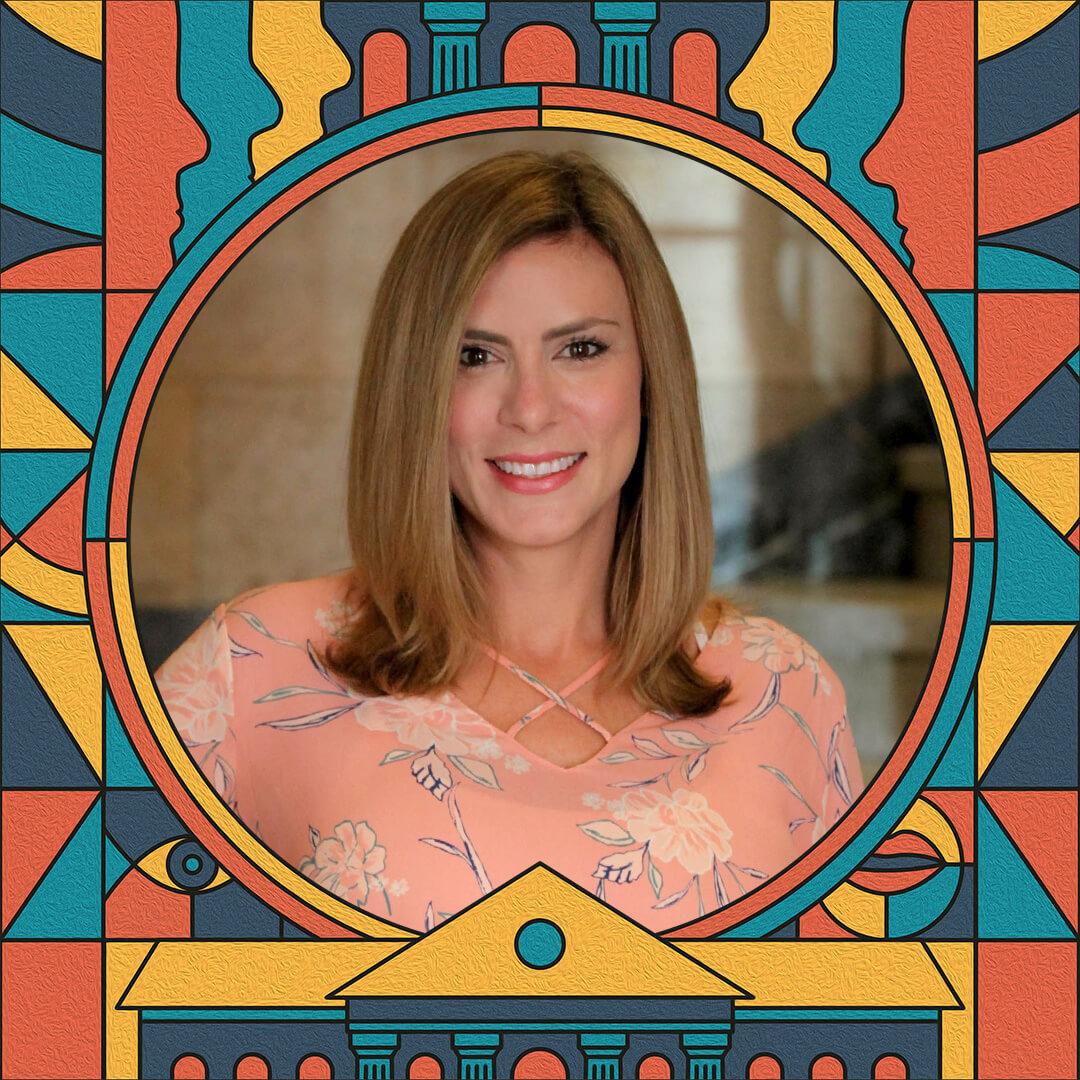
Abby: Today we’re talking with the lovely Liz Nacron. She is Partner and President of Creative & Production at Live Marketing, an agency that creates highly engaging B2B and B2E events, whether in-person, virtual or hybrid. Liz has nearly 30 years of experience developing and executing live events rooted in strategic storytelling, working her way up from the ground floor to president, which I can really appreciate. She’s an active board member of the EDPA, which, for those who don’t know, is the Experiential Designers and Producers Association, where she chairs the Future Leaders Committee, serving the next generation of event professionals. Liz, welcome to our show.
Liz: Thank you very much. I’m excited to be here today.
Brenda: Liz, you were introduced to me as one of the shining stars in the events and exhibits industry, especially in the world of trade shows and what makes them great. You are especially noted for your work with the Future Leaders Committee. Describe the trade show environment from your perspective. What’s good and tell us about some of the bad also.
Liz: Well, my answer today is different than maybe what it would have been pre-COVID. Obviously, our industry has been through quite a lot, but I think at the end of the day, the trade show is still good for what the trade show has always been good for. And that is, it’s a rare opportunity where people get to come face to face to test out, learn about and experience products and solutions that brands have to offer.
The brands get an opportunity to really craft and curate the message and the story around their brand specific to that audience. It’s not just their corporate website, it’s, it’s what is this product? What does it mean to this particular target audience? And they get a chance to share that.
So that’s the good thing. I think the bad is that everyone has been through so much with COVID that they’re still very much just coming back into the face-to-face trade show event space. And so it feels like where we were before COVID, where everyone was kind of competing to have the most experiential activity or storytelling experience in their booth has kind of gone on a long pause.
And at this point people are just trying to figure out if they can even attend a trade show in a certain vertical anymore. And if they can, how can they do it but still stay within their new budget confines? So, that’s, I would say, the bad at the moment is there’s a long road ahead of us trying to get back to where we were before, but on the positive side, everyone’s craving it, and so I think it will come back. It’s just a matter of time.
Abby: So when you think about that smaller footprint, let’s say brands who continue to go to trade shows and want to invest, but at a reduced budget size, they’re looking at a much smaller square footage and when you compare it to, let’s say, a museum, which is often a large square footage, a trade show, you just don’t have much space to tell their story quite quickly. It’s sometimes difficult for a team to do. How do you navigate that conversation with your clients, Liz?
Liz: For us, we really don’t try to get our clients to do that part of the work. We’ll get on a call with them and we’ll ask them a bunch of questions, you know, everything from what are your objectives? Who’s your target audience? What is the culture of your company? What’s the tone of the story that you want to tell in your booth? What are the key messages? Do you have any product releases coming? Questions like that. We really ask them way more than we need to know. We let them talk, talk, talk, talk, talk. And then we cull it down into a five-minute story or script or experience.
We then give them something back and they go, oh my gosh, yes, that’s exactly what we were trying to say, and we would have never gotten there on our own because they’re too close to it, and they feel like they have to say it all. And so, they really rely on an agency like ours to do that, that part of the hard work for them and sort of show them the shiny thing that can come from all that, you know, valuable information that they want to convey.
Brenda: Well, it’s definitely the, the art of the craft, isn’t it? And when you define story specifically in the exhibits and events industry, are there specific elements of design or specific touchpoints that are essential to telling the story that, you know, as you’re listening to the brain dump going on, the data dump, are there specific things that you’re listening for because you know that those are going to be one of the essential or several of the essential touchpoints?
Liz: Yes. We always try to craft the story from the perspective of what are the challenges of the body that has entered your booth and sat in this seat and wants to hear what you have to offer. What are the things in their day-to-day job, life, that your brand, your product, your solution will solve for them and that’s what we’re trying to convey.
And then, the second part of that is what can they do at the end of hearing or experiencing that story to take action to help keep the momentum going and take that, you know, maybe piqued interest that we’ve created through that short story and have it lead them into a warmer conversation with a sales rep who is now being introduced to someone who just learned a little bit about how that brand’s going to help them.
Brenda: Now, this is in the museum world, in the events world, and in all of our related experiential worlds, understanding target audience is absolutely critical, and it really is like you were describing the beginning piece. How is it that you are instructing your clients to come to you with audience information? Like, how are you asking them to be able to prime you and your team?
Liz: So, that’s really where our question set typically will start is about their audience. And then we ask questions about what is that audience care-abouts? What are the things in their, you know, personal life that they typically like to do. Like we really try to dig in and understand, you know, who are these people? A lot of our clients have done persona research, and that’s really valuable too, because they’ve kind of already done some of the legwork, creating different personas and profiles, if you will, that we can then use to help us inform the story that we need to tell to those persona types.
Abby: And so, what are some of those touchpoints? So, when you think about the design that seems to be throughout all of the experiences that you craft, is it that there has to be a docent there every time? Is it that there’s an interactive? Is there something physical to take away, physical to touch? Sort of, what are some of the design touchpoints that you always try to think about and integrate into these trade show exhibitions?
Liz: First of all, what is the thing that when this prospect walks by this booth, is going to make them feel compelled to take that one step from the aisle carpet into the booth carpet. We really try to help our clients design booth experiences that have levels.
So, if it’s someone who maybe has never heard of your brand before, we want to start out with some sort of introductory experience, like, let’s set the stage about this company and this brand. Let’s give them the five-minute story and at the end of that five-minute story, they now know something they didn’t know before. And then we offer them a next step. And that next step could be, you know, do you want to participate in a demo? Great. Let me walk you over. At that point, they introduce them to a booth rep who we’re now handing over a warm lead to.
Or their next step might be, you know what? Now that I know a little bit about your company, it’s actually not a good fit. And like, thank you so much for giving me a good experience, but I’m going to keep walking down the aisle to the next trade show booth, and that’s okay too.
So, it really is, just at the core of it, that’s kind of how we, we like to design the experiences is from a distance, what do they see? What’s that experience once they get closer and then what are the activities or experience areas or storytelling activities or product demos in the booth that we can use as tools to help get that person deeper on that journey?
Brenda: So, I have to ask you, you’ve done this for so long and with so much expertise, give us an example of an experience that has lured people to the booth in just, bam, captured them.
Liz: We have a client who we help at a vet tech trade show and the vet tech audience is, is very passionate about what they do and they work really hard. So, we designed a booth experience that started with a theater area on the corner of the booth, sort of the most front facing aisle, and we created an, a schedule of content that changed all throughout the day.
We intentionally wanted to create different presentations focused on different content subject areas that would be interesting to them and ultimately invite them to come back over and over and over again. But once they came for the first time and they sat down, we put an iPad in their hands and we said, you know, from this point forward in your booth experience, you’re going to be using this iPad.
So, we started out our presentation, which was sort of an animated storytelling journey that they were following along these two animals, these two pets, a cat, and a dog. And they were making choices along the way on the iPad that helped our live presenter determine where the story was going to go. Of course, all along the way it was peppered with how this company’s products and solutions helped improve the life of this patient, which in this case was a dog or cat.
We didn’t invite them at the end of the presentation to give their iPad back and head back into the aisle. We said, your journey is only just begun. So, now take your iPad and come around to the other side of this theater booth wall, and you’re going to get to follow along in the life of this cat and dog that you just helped save.
So, they take the iPads around, and we’ve strategically placed triggers in the booth, in all the different booth areas. And we invited them to, at that point really take their own non-linear journey through the booth. And at each stop point they used the tablet to scan one of the triggers and launch a deeper dive part of the story of this cat or dog where we now really showed how that company’s product or solution made an impact on that patient.
By the end of this experience, they turned in their iPad, they answered a few questions, qualifying questions, and in exchange they were given a stuffed animal plushie version of the cat or the dog who they had helped save. And through the qualifying questions that they answered, we now knew if they were a qualified lead or not a qualified lead.
So, if someone handed us the iPad and they weren’t qualified, we handed them the plushie, we thank them, and they went on their merry way. But if they were qualified, one of our professional booth engagers strategically would say it looked like you expressed interest through your journey in X, Y, or Z. I’d like to connect you to our sales rep in this area, and they walked them over and that conversation continued.
And so, what was most amazing about this booth experience was that the average dwell time of people in this booth was 20 minutes. And for people who attend trade shows, often they’d know that’s like a really long time, especially on average for people to spend in a booth. And so, we felt like it was a huge success. The brand felt like it was a huge success, and it just provided this audience with so much information. But in just a fun, you know, storytelling way.
Abby: I think this is such a good idea because you, you got people with play, and I feel like get people playing with your product, get them enjoying your product, get them into and part of it, and then you nicely segue to the soft sell.
Liz: Yeah.
Brenda: Many, many years ago I had a student actually applying for an internship, and the student was applying to one of the larger exhibit and trade show design firms and they gave him a challenge, and the test was to take a target audience that had to go to trade shows as a part of their job, and they hated it.
They found trade shows boring. The target audience were sales reps of a very large consumer appliances company, and the student, so proud, the student knew, make it entirely about the target audience, make it entirely about the people on the floor. And the student designed a pre-show, and at-the-show, on-the-floor, and a post-show experience, that basically took these sales reps and turned them into superheroes.
And the entire design of the booth was the hero’s lair, and the whole pre-show campaign was social media, and it was all about hyping up the booth, and when they were going to meet together with the other superheroes, etc., etc.. It sounds a little corny. It was a knockout, a total knockout.
And I just keep thinking about opportunities when we get to think about the end user, when we get to think about the person on the floor or the customer at the store or whatever the case might be, the person at the museum, any opportunity for them to really feel like this story is about them. It is for them, and that it makes them feel very proud of who they are, that makes them feel like they really belong, and like the space has been customized just for them.
Liz: I do love that. And I think that, like you said, making people feel good is at the heart of it. And sometimes people at trade shows, it’s like the one time of year that they go, that they get out of the office or, or out of the clinic or out of the hospital. And so to give them a good brand experience, educate them on whatever your offerings are and make them feel good, make them feel like the hero, give them some praise and thanks is so impactful to those people.
Brenda: Do you ever find yourself in a situation where you’re having to really kind of break that down for a client that this is about, you know, the end user, that this is about the prospect and that we need to craft this experience in a way that is very welcoming and makes them feel like they’re a part of the story, that they belong?
Abby: Right, not about the product and the features of the product.
Brenda: Mm-hmm.
Liz: Yeah, it’s, it’s a challenge because they start most of them with the products and the features. And that’s important. And we need to know that. But we really have to hone in on sort of that overarching message and the what’s in it for them. And so we really, you know, kind of like I said at the beginning, we let them give us all of that, but then we sort of strong-arm them into the story we know they need to tell.
And once they hear it, you know, the first draft, they go, oh, wow, you know, you got all the product and feature stuff in there. But it’s not about that. And they see at that point, like, you know, it’s like light bulb goes off. Wow. Okay. So we can do both. We can talk about our products and its features, but we can do it with this thematic overlay or this journey that we’re taking them on or this just, you know, kind of exciting story that we’re telling. And oh yeah, the features and benefits are mixed in there too, but we’re not like whacking them over the head with it.
Abby: I’m thinking about the layers, as you just mentioned Liz, of storytelling. There’s obviously layers of ways to tell the story, and I feel like a lot of the best experiences include a human component. When I think about the Rembrandt Museum in Amsterdam, when I was there, they had somebody showing us how to do the printing press, and there was a person, a docent, showing us how to mix all of the, the paint colors and where their origins were and what they were made from.
And it was a lot of hands-on experiential learning, which were actually really brought the experience of visiting that museum to life for me, me and my family. And it reminded me how important this human component is. And so there’s such an essential role in a museum. And I know from my experience with the trade shows, having designed a number of booths, they’re really important when they’re telling the story for people at a trade show. Can you talk a little bit about that human component?
Liz: Yes, and it’s funny what you were just talking about made me think of something else, too, and they kind of go hand in hand. So, speaking about technology, just for another moment, one of the big advances in technology on the trade show floor has been through LED, and LED screens have brought beautiful canvases and immersive environments, and theatrical backdrops into booths that were never possible before.
You know, there’s always been a struggle with projection and holograms and things like this on trade show floors because of the ambient light, and with LED screens, there’s so much saturation of color and detail that you can turn a canvas into anything. And so that’s been really exciting and has provided a lot of amazing storytelling opportunities because now we can put a live presenter in front of one of these screens and we can change the scene 25 times.
We can have them move from their home to the doctor’s office to the hospital, to a car, and back home again. And they didn’t move, you know, five feet. But the wall around them, the LED screen behind them, the graphics behind them came to life and helped us tell that story. Speaking about professional actors, talent, in trade show booths, It is a tough sell, but usually once a brand sees it, they get it.
Again, these are just people, and if we want to have them really sit down and understand something, we need to humanize it. And what better way to do that than to put another human in front of them who can look them in the eye and get their reactions and feedback in real time and just talk to them and tell them a story.
And then on the flip side of it, it’s like you’re at a trade show, you see booth theaters. There’s, there’s 25, 50 booth theaters on this trade show floor. So, you know that there’s people that will sit down and watch a thing. So rather than be like everybody else, why don’t we create something different and more experiential and so that’s how we can kind of tip someone who’s maybe like part way there, like they’re open to a theater, but they’ve never done anything like that in their theater before.
And so, there’s just a range and it’s all about, you know, who’s the audience and who’s the brand and what’s the right fit and what’s the right balance. But if you can strike that right balance, it can make a huge impact. And people, once they kind of see that twinkle in the audience’s eye who are watching something that they definitely did not expect to experience on a trade show floor, it’s, it’s just awesome and so gratifying.
Brenda: We’re really curious to know, we’re talking so much about all of the great stuff and when things go really well and I’m really curious to hear about some of the, some of the worst things that you’ve seen, like Liz, what can go wrong?
Liz: Well, with a huge reliance on technology, there also comes a huge risk, right? So, I was speaking about beautiful LED screens. But when your whole story is is reliant on that, there’s definitely a risk involved in in something happening with the LED screens as an example.
Abby: Not that that ever happened to you of course, Liz, not that you’re drawing on any experience.
Brenda: Never happened!
Liz: Right? No, no!
Brenda: This was somebody else.
Liz: Exactly, I would say another example, it’s a little bit different, but we had a client come to us and they had an idea which they were all excited about to do, kind of like a game showy presentation, and it wasn’t the right audience and it kind of fell flat. And so, we were able to help them execute it. But once it came to life on the trade show floor, it was really not the right fit. And that was disappointing.
Oh, gosh, I mean, like I said, there’s so many things that can go wrong. We did a thing many years ago. We had kind of a live TV studio that was going on on the trade show floor in the center of this massive booth. And we had two professional presenters who were, they never, we never took a break. They were either always on together or one relieved the other. But it was constant for 10 hours, for five days straight. Well, of course, on like day three, one of them got food poisoning, which could totally happen to anyone. And so you’re like, oh my gosh, what do we do?
So luckily, you know, we had backup presenters in place, and we were able to have someone kind of get ready quickly and step in. But that’s what I say about the events industry. It’s like, you know, something’s going to go wrong. It always does. And if it doesn’t, you feel exceptionally lucky. So, you just have to always kind of be thinking about what are the two, three, four or five layers of things that could happen here.
Let’s, let’s try to plan for those and then when we get surprised by something that wasn’t one of those five, we’ll just deal with it in the moment. And that’s the beauty of us as event professionals is: we know how to, you know, work through those moments in the best way possible and come up with creative solutions.
Abby: And it keeps you fun. You clearly love it, and so…
Liz: Oh, definitely.
Abby: Right, it’s, it’s, it’s who you are. So, you chair the Future Leaders Committee serving the next generation of event professionals. So, what’s some advice you give young people coming into this industry, and what are you seeing that excites you about this generation, this next generation?
Liz: Wow. I’ll start with the second part of that. What excites me is that they’re not afraid to tell you what they think and, what they want and what they need.
Abby: I think, wait a minute, I think Brenda knows a little bit about that, teaching profession.
Brenda: Yeah, I’ve never experienced that.
Abby: No, no, no, not afraid.
Brenda: They’re a mystery.
Liz: It could be a challenge, but I appreciate it. It’s like, let’s just get to the point. I may not agree, and I may not be able to do all those things, but now I know what you need and what you want and what you care about, and that’s progress. So, I love that about them, and I think it’s refreshing, frankly.
I was just on a planning meeting today with our Future Leaders committee, and we’re talking about an upcoming event. And I just said to them, all right, if we were sitting in a room with the more experienced people in our industry and you could get on stage and educate them or share an insight with them, what would it be?
What do you want to tell, you know, the rest of us that have been in this industry for a while and some of their answers were really interesting and not at all what I expected, and I loved that. So, I’m just excited about, about that. And also, their creativity. I mean, they’re just thinking outside the box. They’re bringing new ideas.
They’re not afraid to, to bring new ideas. And I think it is so timely to have so many fresh faces in our industry. And I’m also surprised that there are so many people that are interested in our industry. I mean, we need a lot more. The future of our industry will require it, but there’s definitely some, some wonderful, you know, younger generation out there coming up into the ranks.
Abby: So, Liz, thank you for a unique glimpse into your world of events and sharing your experience in such a candid and honest way with us today.
Liz: Thank you. It was my pleasure. It was wonderful to talk with you both.
Brenda: It was wonderful talking with you.
Abby: It was. And thanks to everyone who tuned in today, if you like what you heard, subscribe for more entertaining episodes of Matters of Experience. Make sure to leave a rating and a review and share with a friend. We’ll see you next time.
[Music]
Producer: Matters of Experience is produced by Lorem Ipsum Corp and recorded at Hangar Studios. Tune in next time for more fun discussions about experience design.