[Music]
Abby: Welcome to Matters of Experience, a podcast produced by Lorem Ipsum, an experience design company headquartered in New York City. Our podcast explores the creativity, innovation and psychology driving designed experiences and encounters. If you’re new, a hearty welcome to you and to our regular listeners, thank you for tuning in and supporting our conversation. My name is Abigail Honor.
Brenda: I’m Brenda Cowan. Hello, everyone.
Abby: Before we begin, we just want to share a note from today’s show sponsor, POW!
Sponsor: This is Paul Orselli, Chief Instigator at POW! (Paul Orselli Workshop), and we’re delighted to sponsor this episode of the podcast. Please check out our website at www.Orselli.net for more information about our work, as well as free resources and articles. Thanks.
Abby: And now it’s my pleasure to welcome Tom Bowman to the show.
Tom: It’s my pleasure to join you.
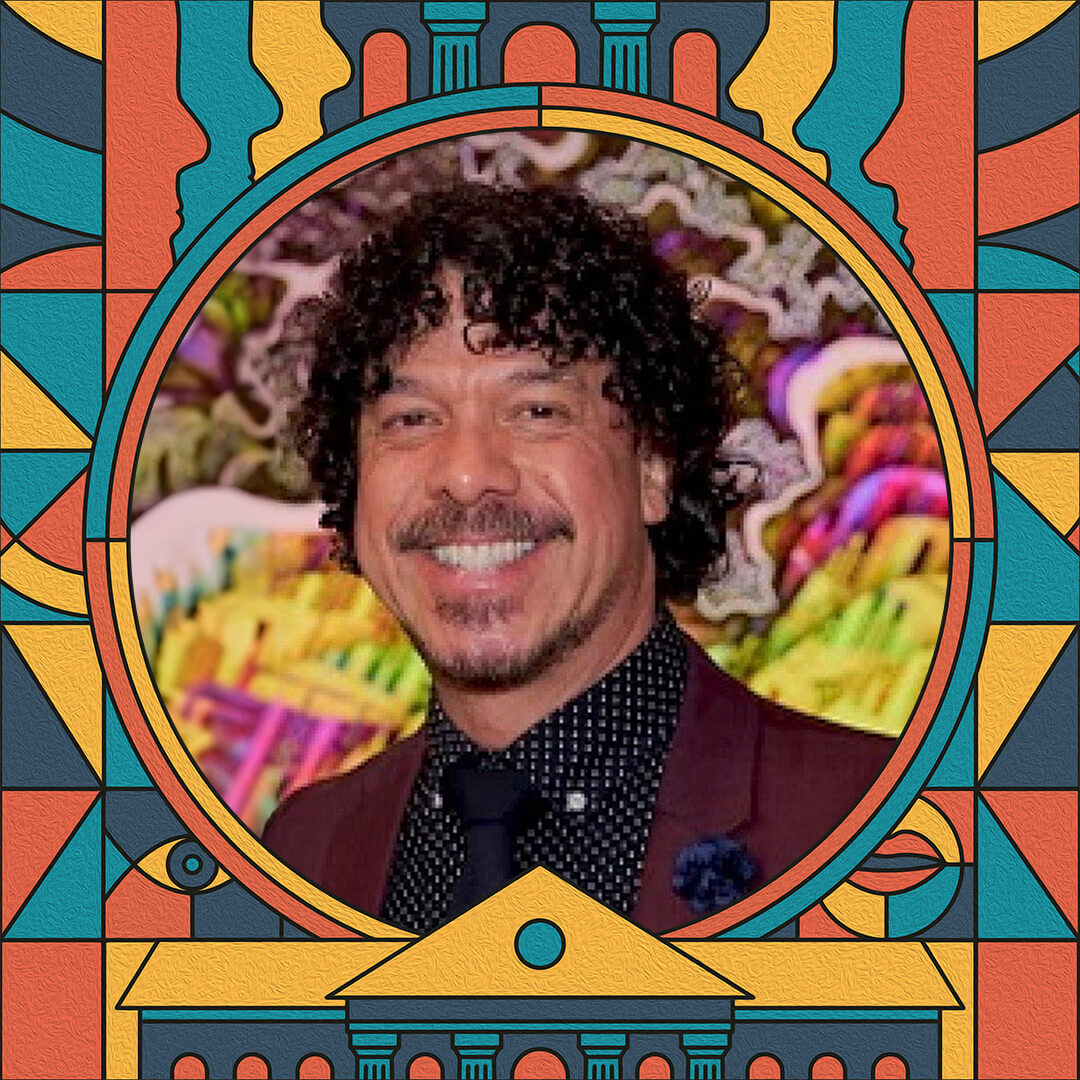
Abby: Tom, welcome. You’re the founder of Bowman Change, Inc., a consultancy dedicated to helping organizations reap the benefits of working with purpose, making social and environmental transformation central to their missions. Tom regularly provides counsel to federal agencies like the National Oceanic and Atmospheric Administration, National Science Foundation, NASA and the White House Council on Environmental Quality.
Going way back to the late 1980s, Tom founded Bowman Design Group, an award-winning exhibit design and management firm that works with leaders of Fortune 1000 corporations, startups, science museums and aquariums. He is the author of three books, which we have links to on our site, and I urge everyone to check them out. Tom’s appeared on Marketplace, CNN, in The New York Times, Yale Environment 360, and now finally here on Matters of Experience. Tom, a huge welcome to the show.
Tom: It’s finally good to step up to something really good.
Brenda: Oh, my goodness.
Tom: Thanks for having me.
Brenda: So, Tom, you and I first met, it was around about 2014 and this was through our engagement with Exhibit Designers and Producers Association and Exhibitor Media Group. And you were talking with the exhibits industry about things such as the alarming amount of waste and the damage being caused and exhibit practices and how we can make a sea change, how we can turn towards becoming leaders, how we can turn towards becoming advocates in addressing climate change. Are there changes that you have seen in the exhibits industry?
Tom: Let’s take one step back first and talk about changes that are happening in our society more broadly. The majority, now, of Americans are pretty concerned about the changing climate and changing environmental conditions that we’re living with. You know, the intensity of storms and drought and flood and all the expensive catastrophes and tragedies that are happening.
There is a shift also in corporate boardrooms. It’s no longer considered acceptable to be a climate denier in the C-suite. The challenge, though, is to see how that trickles down to an industry like the events, exhibits and experience industry, because we exist well below the level of the C-suite for the most part. It’s a very, very diffused industry. It’s made up primarily of small companies that are independently owned.
And if you own a small company on the production side, you know, design, fabrication, and show services and so forth, margins are small and doing things in ways that are reliable and routine and that are making clients happy is really a powerful driving force as it needs to be. And so, introducing new criteria like let’s reduce waste, let’s reuse properties longer, let’s shift to Energy Star rated electronic and electrical equipment as often as we can, these moves feel like extra burdens, and so I’ve spoken with a couple of the other sort of thought leaders in this space who are pioneers in greening their companies and they say that they’re struggling now that they have established this to keep their younger employees engaged with these issues. You know, the, the first wave was kind of the easy part.
And now making it a standard part of the culture is the challenge they’re facing. Most of the people on the client side in this industry, which would be exhibit managers, event managers, meeting managers, tend not to have the same level of authority as directors and vice presidents do in their companies. Now, obviously, there’s a wide range, you know, if you’re in a bigger company, you might be an exhibit manager.
If you’re a smaller company, you might be a vice president or even the owner. So, across that range, in large companies, by and large, the drive to make sustainability a priority in the events industry is not terribly strong. There is a sort of a generally much more welcoming attitude toward green proposals from exhibit houses and, designers and producers. I don’t yet see that it’s become the kind of trend that is driving the industry, though.
Abby: Well, I actually wanted to back up before we sort of jump into the industry and focus on, you know, when we all look back, there’s always been climate change. I mean, we’ve gone from one ice age to the other ice age, and the difference now is the speed of it, right? It’s happening so quickly.
If we take a bigger, even larger view, you know, mankind, I mean, our modern civilization has only been here for about 12,000 years, 11,700 years. Why do we think we’re going to be here for another 11,000? We’ve only been here for a blip. What if climate change caused by us is just part of Earth’s natural progression? It won’t accommodate how we like to live on it, but the Earth will be here in another 4 billion years.
Tom: That’s a really good question, Abigail because that 12,000 years or so that human civilization has existed corresponds to an unusually stable climate period. So, in the short term, the rapid change in climate that’s being caused by all the greenhouse gasses that we’ve been adding to the atmosphere for the last 250 years or so are changing the conditions in which all of human civilization has been established and created.
And it means that the places that we’re living and the places we’re growing food might not all be particularly hospitable to people in the very near term. You know, we’re seeing more floods, more hurricanes, more drought in the West, all of the wildfires in Canada. These are circumstances that are not good for us.
There’s another less well known and really profound change that’s happening. And that is, scientists say that we have entered into the sixth mass extinction event in Earth’s history. Well, in mass extinction events, you lose something like 90% of species. And so, biodiversity is dramatically reduced and these periods of reduced biodiversity can last a million years or so. And that’s happening now, and it’s being driven largely by environmental change caused by civilization.
We’re compartmentalizing ecosystems, so that species don’t have the freedom to move over large areas the way they’re used to. We’re literally killing off species. And so, in the long run, yes, Earth will be here. Life will be here. Whether it’s good for humans or not is an open question. And it’s a, you know, scientists call it a grand experiment. And it’s up to us collectively as a species to decide how much this is going to change.
Brenda: So let’s talk more about that, the element of human psychology within all of this. I was really taken in your book, What If Solving Climate Change Is Simple?, what a grand thought that is, you talk about how the population has the opportunity to shift the status quo, despite our tendency to not want to. And I’m wondering, are you seeing through the work and the engagement that you have, are you seeing this kind of necessary psychological shift that will enable us to actually address these realities? Or are we just stuck in the why bother?
Tom: No, I don’t think we are stuck in the why bother. I really think society has moved beyond that point. One of the things that I’ve talked about for a long time is that there is a very powerful narrative about all the innovations that are taking place across our economies that are making a tremendous difference, and we don’t hear about them as if they’re a coherent story.
We hear about little fragments from time to time. But, there are innovations taking place in battery technology. California, which has the fifth or fourth largest economy in the world all by itself, is decarbonizing its economy and is really sort of driving economically the push toward electrification of transportation and things like that and the decarbonization of our electricity supply through renewable energy.
There are all kinds of people working in all sorts of different processes. You know, there are people who, executives who left Tesla to form a company that recycles batteries, all of the material in batteries from everything from computers to phones to cars. And there are changes in agriculture that are happening that are about sort of rejuvenating the soils, using less water and all of that.
And so there is a groundswell of change occurring. A lot of these changes are going to come to us through businesses, through government, through governance, and we’re going to adapt to them. And it’s not necessary for everybody to get on board with a feeling that environmental action should be their top priority, because for many people, it will just become that without, without their having to really do too much about it.
Brenda: Again, in your book, you talk about Joseph Campbell’s hero’s journey, and you liken the hero’s journey narrative to how it is that we are experiencing and looking at climate change today on an individual level. Tom, tell us about your own hero’s journey. Let’s, let’s focus on you for a second. When did this path become clear to you? Where did this all begin?
Tom: So, I first really learned about what’s happening in climate back in 2003 and 2004, when my design firm, Bowman Design Group, created a museum for the National Academy of Sciences in Washington, D.C. And that meant that our climate exhibit was informed by a steering committee of some of the most eminent climate scientists in the world. That’s who my tutors were.
And I remember leaving that project feeling worried about what the future holds. And I asked one of the scientists, What do you think about this, this is 2003 and 2004, and he said, well, you know, humans aren’t stupid. Thank goodness we have time to work this out. Well, it turns out that just five years later, 2000, well, less than that, 2007, we were invited to do a second exhibit on climate change for Scripps Institution of Oceanography, which has a public aquarium.
And so, there was another steering committee of some of the world’s most eminent climate researchers. And the attitude among the researchers had utterly changed. I mean, instead of this feeling like that we have time to work this out, what they had seen is because of the economic expansion and industrialization of China, carbon emissions were climbing at a rate that exceeded what they had forecast as the worst possible case.
And I was sitting in a meeting and I mentioned just kind of casually that the folks at the National Academy had told me to pay attention to the ocean because the ocean can hold so much heat before ocean temperatures start to rise that once temperatures do begin to rise, we’ll be committed to a changing climate, a different climate for 500 to 1000 years.
And she just blithely said, oh, well, we’re part of this project that has robotic floats all over the world, and we’ve already measured warming in every ocean basin in the world to a depth of a thousand meters. Just, just imagine that, three-quarters of the world’s surface covered 3000 feet deep in water has warmed up already.
And I write about this in the book, you know, the, the term epiphany is usually used in a religious context, but the definition is, it’s a sudden intuitive insight into the reality of something. And it applied in that moment because in a heartbeat, everything I had ever known about the potential dangers and impacts of climate change just came home to roost all at once.
Brenda: Talk about a call to action.
Tom: Yeah, I drove home from that meeting thinking, can I put this toothpaste back in the tube and go back to life the way I knew it 2 hours ago. And, of course, the answer was no. And so, I began experimenting with my company to see if we could cut our emissions., and it turns out you can, and it’s easy.
I mean, it didn’t seem easy as I did it. But once I figured it out and had it measured, it’s remarkably simple. I became, as you mentioned, the EDPA’s sustainability chair. I started writing a column for Exhibitor Magazine, that I wrote for eight years. I ended up writing books, and I also began working with social scientists and scientists and economists and others to, because I looked around me and I didn’t know anyone else who worked in the communication business, who seemed to have as much sort of background in, in what the climate story was than I did.
And so, I went searching for people who did. And I sort of, I started Bowman Change because I needed a vehicle to do work that didn’t involve running a design agency.
Abby: So, Tom, what are some of the initial things you mentioned you went back to, and you did some really simple things to cut emissions. For people listening who are part of smaller companies or own companies or part of bigger companies, just so they can have something to like a next step, just real low hanging fruit. What can people do and think about?
Tom: I like to think about it as staging. What are the things I can do this week versus the things that are going to take me a quarter versus the things that are going to take me a year. And so, you look at the things you can control. Can you change your lighting? Every light in the world should be an LED now.
Plug everything in your company into power strips that you can shut off, or get the smart kind that shut off automatically if the thing’s not in use, because anything that has a chip in it is using electricity when the power is turned off. And in the average household, that can be 10% of your electricity bill, believe it or not. They call it vampire power.
The next big thing to do is look at what you’re driving. Often, the biggest percentage of a company’s emissions come from transportation. Either the company owns vehicles or, you know, you’re paying your employees for the mileage for using their personal vehicles, which of course, are beyond your control. But anything that you own, consider retiring it early if it’s not a high mileage, high MPG, really high MPG vehicle or an electric vehicle.
And I think we’re at the point now where electric vehicles are becoming commonplace enough. And we’ve learned that the cost of ownership is as low as a pretty low-cost gasoline-powered car, if you factor in that you don’t need maintenance, and electricity costs a lot less than gasoline. Those are kind of the, the easiest steps to think about.
And I would start there. And of course, now we live in a world where we can conduct an interview clear across the United States over an electronic platform, like we’re doing right now, right? And so that means all of that travel, all that air travel, all that driving, just got eliminated from my business’s carbon emissions. Those things are so simple to do. And, you know, we did those kinds of things, and we reduced our emissions by two-thirds, literally two-thirds, in a little over a year.
Abby: Just to add one thing, just because it’s top of mind on a project we’re working on; I do want to make it clear that advocating for just not being in person and the mental health things that happen when we all don’t get together, because I’m a big believer in also taking care of people and their mental health, and when you work together and you see each other. So, you know, living in a city, I get to walk around everywhere, take public transport. So, I just don’t, I just want to mention that, you know, when people are thinking about cutting emissions, not seeing each other sometimes has other ramifications.
Tom: Well said.
Abby: Now, talking a little bit more about the sustainability and the exhibits you’ve been working on over the years, it was interesting at the 50th anniversary SEGD conference this year in D.C. I’ll call them the next generation of designers, you know, have the stage and they’re talking about hardware that they’ve been using in their companies and looking at sustainability. And there was a lot of indignation from the older generation, let’s say, I’ll maybe pop you in that, the more established generation.
Tom: Yeah, I’m one of those.
Abby: Who were like, you know, no, we know this. Like, we get this. This is what we’ve been doing, as if it was something potentially new, because, you know, as the next generation come up, they find they discover things for the first time. So, it’s just part of maturing as a designer or it has been until now, when I know Brenda at university, sustainability is the hot topic that everybody now brings into their practice, and it’s very difficult. I don’t also want to make this sound like it’s an easy thing to do because it’s not, especially when, you know, we’re dealing with hardware as well, and like, how does that look? Do you feel like sustainability is just one of the very important key points in for all design now and moving forward?
Tom: Oh, absolutely. I mean, I just don’t think that the next generation of consumers is going to tolerate ignorance of sustainability or a lack of attention to sustainability. And it’s also becoming better equated with cost savings in business. We had a client that went to a lot of trade shows a year, sometimes 40 trade shows a year, and they came to us one year and said we can’t afford to build any new exhibit properties, or at least not any brand-new exhibits, you know, because they were on the, the five-year cycle, the depreciation cycle like everybody else.
You build a new exhibit and once depreciation goes to zero, you throw it away and build a new one and by then you’re sick and tired of it anyway. And so, what we decided to do was reconfigure the properties they had and recolor them. And we built odds and ends, little panels to fill in and new reception counter here and a new theater screen there.
But we discovered that those properties, those wall panels, and basic exhibit furniture remained viable and looked good, not for five years, but for 15 years before they wore out. And it turns out that this fits perfectly with a strategy that I discovered in a book called Sustainable Materials: With Both Eyes Open, and it’s a very simple rule of thumb: if something you own doesn’t use energy, use that thing for as long as you possibly can.
That’s the most environmentally efficient thing you can do with it, right, so you don’t have to make a new one. If it does use energy, but energy efficiency isn’t improving at all, use it for as long as you can because it’s still better to use a thing rather than pour energy into making a new thing. But if it uses energy and energy efficiency is improving over time, replace it more quickly because the energy savings from a more efficient product is going to exceed the energy spent creating that product.
So, TVs, refrigerators, computers, all lighting, all these systems that we use to animate our exhibit experiences fall into that latter category, but the basic properties fall into the first category. So, this created for us, you know, we got to experience the fact that this new system of preserving properties longer and reconfiguring it worked for our client. They had a, one of the fellow exhibitors came up to then and said, how do you guys afford so many new exhibits?
And she said, we don’t come look at all the show stickers on the backs of these panels, you know, and there’d be 30 or 40 stickers on a panel. And it worked for the exhibit fabricator because, the exhibit house, because they were spending time redoing the labor part, they just weren’t replacing material part of the projects. And it worked for the creative firm, that was us, because we were reinventing things all the time, and the environmental footprint was greatly decreased.
Brenda: Tom, it sounds like you’re very optimistic about upcoming decision-makers and leaders. Am I, am I gauging this correctly? Because…
Tom: Yeah, I am.
Brenda: You know, I also get, between my students and also, you know, my daughter who’s 25 and her peers. You know, there’s also a lot of folks who are just feeling defeated and who are too young to be feeling defeated. So is your take that overall, in your experience, that the folks who will be our decision makers that they are going to be feeling the confidence and the ability to, even in some cases, rebound and continue to make the necessary change with the right sort of psychology driving them.
Tom: Yes, there are people who rise to leadership positions. Not everybody does. Not everybody wants to, but the people who do, I mean, I think it’s fair to say that just about everybody in the generations you’re talking about are keenly aware that the impacts on their generations and their kids’ generations are going to be far worse than on my generation and your generation.
So, you hear all the time in surveys and in the news that younger people are really motivated and frustrated with, you know, the pace of governmental change and societal change, which is leaving them in the lurch. So, the people who rise to leadership positions, who have that mentality, are going to be much more aggressively focused on this than the prior generations were.
When I did the Caution Museum in Washington, D.C., everybody thought that it would take 30 or 40 years for power plants to switch from coal to natural gas. Natural gas has a lower carbon footprint than coal by a pretty dramatic amount, at least it was believed at the time. And everybody thought that the investment in, you know, natural gas cost twice as much as coal and these were long-lived investments, so it would be 30 years before anybody changed so we were stuck with coal for 30 years.
And then fracking happened and the price of gas plummeted to below that of coal. And in a matter of a few years, everybody switched, you know, and the thing that we can never predict is state change like that. Big changes like that, because a technology or a market factor or a consumer factor just changes the game in, overnight, in ways that we didn’t expect.
And so, I’m hopeful that decision makers, the young decision makers, are going to have opportunities that our generation didn’t have. The question is, and it’s absolutely fair on this question is how much change will we cause while we’re also in the process of cleaning things up, how bad are we going to let it get? And nobody knows the answer to that question.
Abby: Yeah.
Brenda: Let’s talk about passion. Let’s talk about what it is that you currently in your work feel passionate about. When you start your workday, every day, what is something that is really either exciting you or just really telling you, yes, yes, this is all possible?
Tom: There are a couple of things. One is very direct and one’s very indirect. I’ll tell you the direct one first. I’m in the process of designing a sustainability education center for a water and power utility company, and their primary target audience is fourth-graders on field trips, and they have challenged us to do something I’ve always wanted to do but never had a client that would do it.
And that is, can we get every insight across without having to put a single word on a wall, so that the words we have to put on the wall are there because they really need to be? But the insights are intuitive and experiential.
Abby: Can we just pause for a minute, Tom?
Brenda: We’re jumping up and down.
Abby: This sounds like the perfect client. How did you find them, how they know the visitors so well? Wow. You don’t have to spend weeks and months getting on the same page with who’s coming and how they learn and understand and play? Wow.
Tom: No, we had to spend weeks coming to understand they really meant it.
Abby: Okay.
Brenda: Yeah, right, seriously.
Tom: Right? Because every other sustainability client I’ve had has been driven by engineers and scientists and, you know, bless their hearts, scientists want you to be excited about everything that excites them. And so, they want to tell you a lot of information that bogs you down, and you can’t even see the forest for the trees anymore. And so encouraging museums and aquariums and others, utility companies sometimes, to simplify in an accurate way that gives somebody an insight that then they can do something with rather than barraging them with facts and data is hard work, and it’s always felt like a compromise. I mean, we’ve been through the entire three rounds of conceptual design iteration that are, you know, exhibits that are really thought through and detailed and we haven’t put a single piece of text on any drawing.
Abby: Fantastic.
Brenda: Wow.
Abby: Fantastic. I want to, I want to go, I want to see this, it sounds incredible.
Tom: I do, too. I mean, it looks like this could be a fun experience because by interacting with something, you’re getting the message.
Abby: Yes.
Tom: And then there’ll be some words on a screen or something that give you some context for it or tell you a factoid about it or something. But you’re going to get it. You’re going to get that it takes a lot of effort to generate electricity. You’re going to get that water is a precious resource. You’re going to get all these things intuitively. That’s pretty cool, right?
Abby: It’s really, really cool. And also, I do just want to add, seeing as you mentioned, and we’re very focused at Lorem Ipsum on media, you don’t have to necessarily have text in the media to help tell these stories.
Brenda: I love hearing this from the both of you. It’s called developmental interaction, which is a primary way that humans learn, which is by doing. Love you both.
Tom: And by mimicking also.
Abby: Mimicking.
Brenda: You bet.
Tom: And we don’t change people’s minds by explaining climate change to them.
Abby: No, no.
Tom: There was an educator I got to interview once named David Sobel, who wrote a book called Beyond Ecophobia, and he said that all their research shows that teaching kids about environmentalism isn’t the thing that causes them to become environmentalists when they grow up. The thing that hooks them and creates environmentalists is the amount of time the kids got to spend in an unstructured way in natural settings.
In other words, they had experiences that meant something to them, and because they valued those intuitive and experiential events, they treasured them, they wanted to preserve them. And that became a driving force in their adult lives. And, you know, I think back to my childhood, and that’s exactly what happened to me. So anyway, yeah, I’m as, I’m glad you’re excited by this because that’s the thing that makes me feel like I’m finally doing a sustainability exhibit that targets the general public in a way that’s going to, that might actually do a lot of good.
Abby: Yea.
Brenda: I’ll bet it will.
Abby: Have an impact and make changes.
Brenda: Absolutely amazing.
Abby: Tom, this is so enlightening in so many ways that I didn’t anticipate. I just want to thank you so much for joining us today and this challenging, thoughtful conversation.
Tom: Well, thanks to both of you. It’s really an honor to be part of this with you folks.
Brenda: I also have to say our sponsor, Paul Orselli Workshop, Paul just bought his first all-electric vehicle, and I feel like that is a necessary plug into this conversation.
Abby: It very much is. Congratulations, Paul. Thanks to everyone who tuned in today. If you love what you heard, subscribe for more episodes of Matters of Experience wherever you listen to podcasts. Make sure to leave a rating and a review and share with a friend. We’ll see you next time.
[Music]
Producer: Matters of Experience is produced by Lorem Ipsum Corp and recorded at Hangar Studios. Tune in next time for more fun discussions about experience design.