[Music]
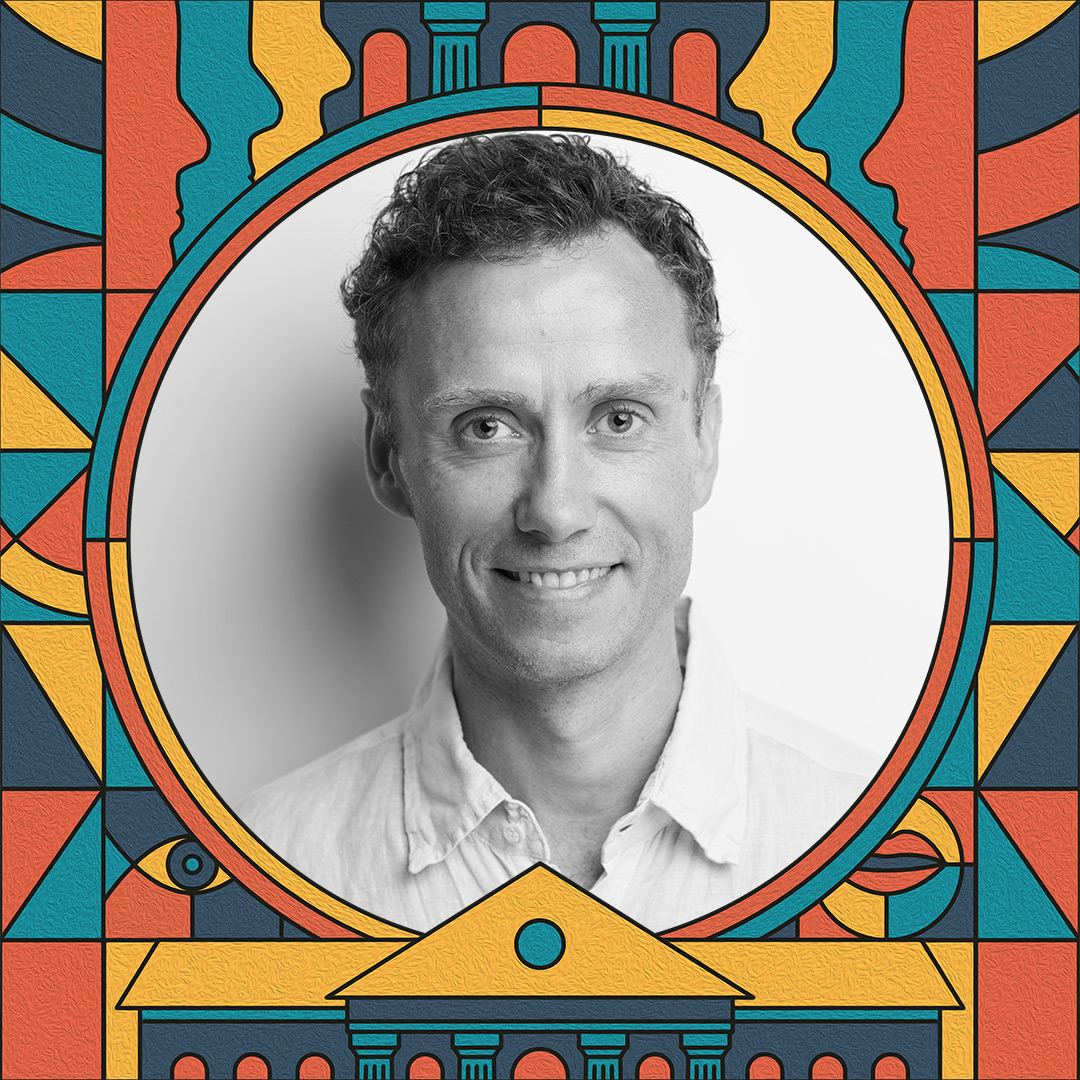
Abby: Welcome to Matters of Experience, a podcast that explores the creativity, innovation and psychology driving designed experiences and encounters. If you’re new, a hearty welcome, and to our regular listeners, thanks for tuning in and supporting our conversation. My name is Abigail Honor.
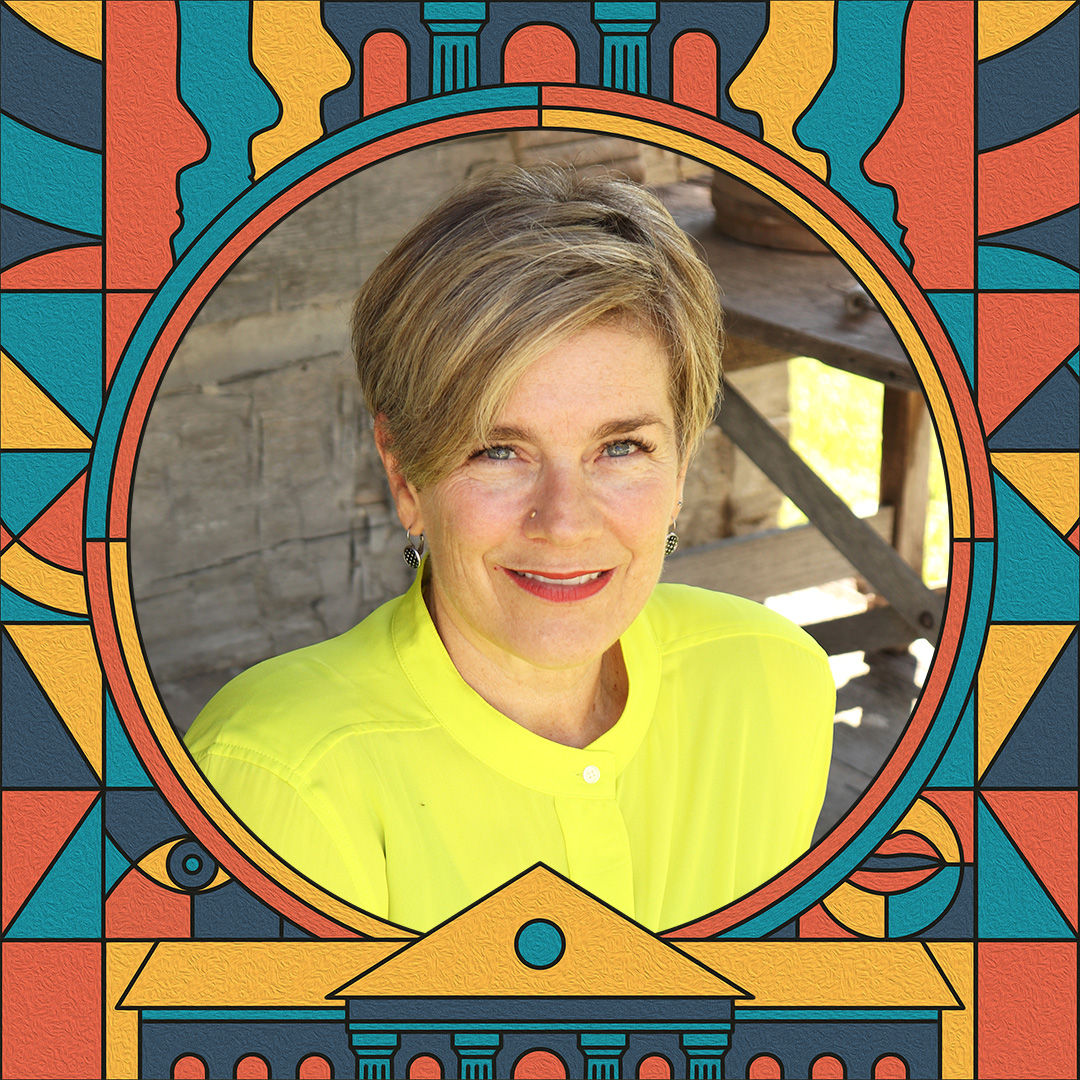
Brenda: Hello, this is Brenda Cowan.
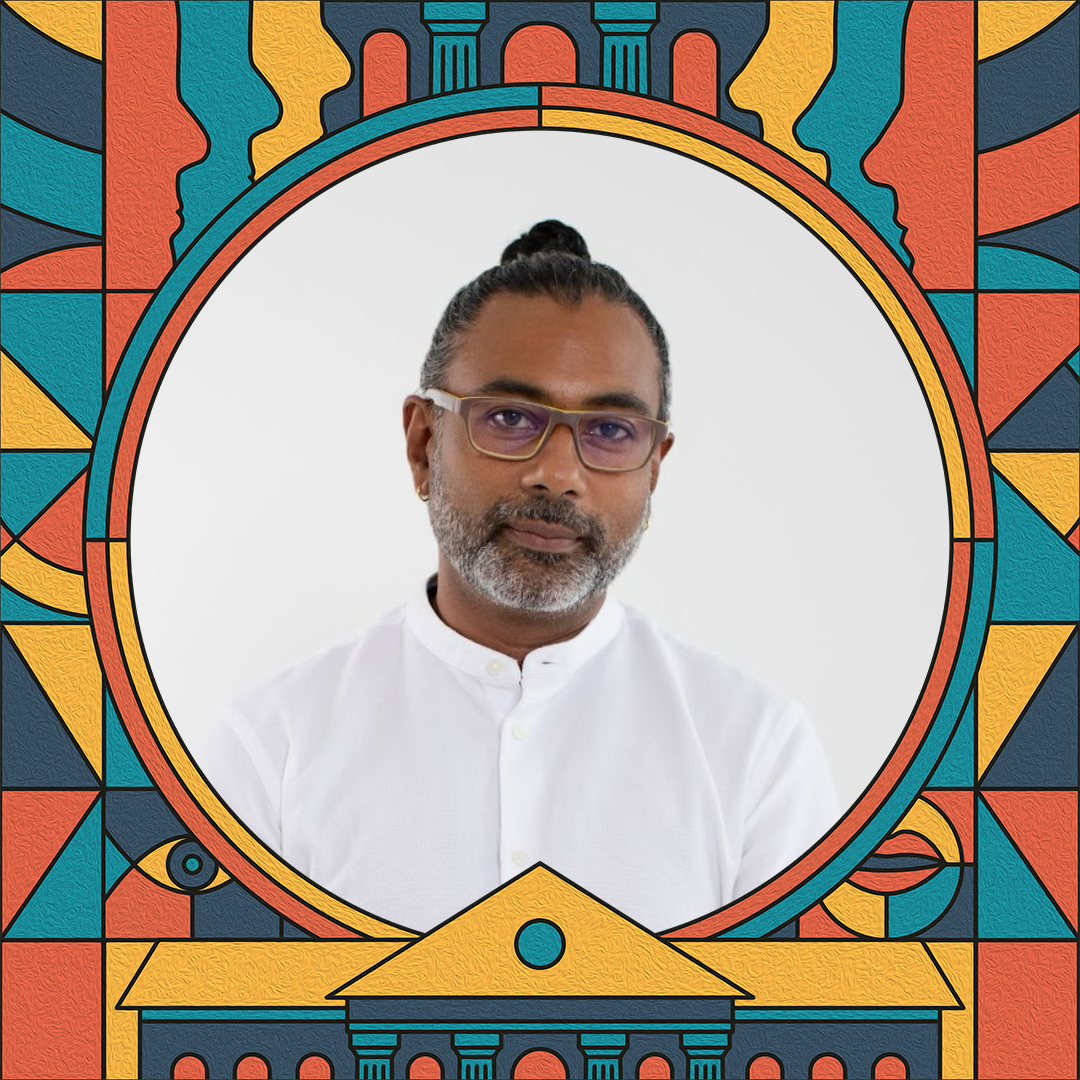
Abby: So today we’re talking with Sundar Raman, the director of technology at the Museum of the Future. And for those who maybe missed all the hullabaloo, it’s the landmark museum in Dubai that’s devoted to innovation and futuristic ideology. And for visual learners like me, it’s the gorgeous, squashed, donut shaped metal building with the beautiful calligraphy all over it, designed by Killa Design. This won like a gazillion awards and been on the covers of publications since it opened. Now, I know the museum claims it’s the most beautiful building in the world. I think that’s a bit of a lofty claim there, Sundar.
Sundar: Well, I think I agree that it is the most beautiful building in the world. But what I will say is that it’s the most inspiring building in the world, and it pushes people to kind of think from a very different level. It really pushes us beyond the confines of where we are.
Brenda: It certainly defies convention. And when I look at it, call me a romantic, I think of it as like an embrace. It looks like it’s embracing, which is something that I think is, subjectively speaking, quite beautiful.
Abby: So, one of the issues we sometimes face is we are doing the inside of the building. we’re doing all the experiential design and the architect’s doing the outside and it’s like, never the twain shall meet. The architect does their, wow, this is amazing, we paid millions and millions of dollars for this beautiful, beautiful landmark building, but it’s useless for the design team when we go in because it’s not been thought about in terms of the spaces that we need so that we can do our job. It looks like it would have been a really challenging space to be able to build out. Do you know anything about some of the challenges that the, the donut, the eye, the hug meant for the team that were creating inside?
Sundar: I think this is always the case. The purpose of the architect of a building is very much different from the exhibition designer in a space. And the reason I say that—and of course I’ve dealt with this conundrum or this challenge on multiple buildings in my career, we often have to take over, let’s say, a historic or a classical building that you can only touch in certain ways in order to be able to tell the story even of the place. You know, oftentimes museums or cultural experiences are in places that you’re trying to evoke the stories that were in the place. And then they come in and they say, oh, you’re not allowed to put Wi-Fi, you’re not allowed to put wiring, but we want like amazing projections, and we want like amazing screens everywhere. And you’re like, there’s no power, man. Like, what do I do?
Where we don’t have that specific problem here, but the shape of the building certainly introduces challenges. And I would say this is true for a lot of places. And in our work as experienced designers, the challenge is not in trying to go, okay, oh there’s this thing, and then how do I wedge my idea into the place. Oftentimes it is that the place has its own story, and you have to tell your story kind of in alignment with the place, you know, to, like, allow it to kind of breathe into the story and your story to breathe into it. And for us, like some of the challenges of building into a non rectilinear space were overcome by saying, hey, actually, people can move in completely different ways. The challenges of like, how do you move a certain number of people across the floors? How do you, how do you put people into places that feel like they’re going to all get wedged into a corner? You know?
A driving idea in my mind during the whole project was the kid that walks into the place or the adult that walks into the place must feel like this was the first time they stepped into the future. From there on, when they look back, they go, that is where the future started for me. I mean, this was just for me to go, okay, like how can we make this thing happen in the kind of time constraint, resource constraint that we had in order to pull off the exhibitions.
I mean, I’m sure that Shaun Killa and Buro Happold and the team around like making the thing happen, had significant other challenges, but they provided a place that basically attracted people, even if we failed miserably, you know, so they sort of set it up really well for us or like terribly because we had to like, step up to the plate of this thing that they had created. But it also gave us this way of thinking of like, okay, when somebody comes in, they’re primed and then the next step is to get them to this other thing, and their experience has to be this other thing. And when they exit, they have to leave with, with this feeling in them.
Brenda: One of the things that I loved that you said as well, initially, was putting yourself in a position to think about the nature of how people move throughout a space and maybe thinking a little bit differently about some of the ways in which audiences, visitors, move throughout a space and beginning there because how often does design not even begin with thinking about, well thinking about the visitor at all, God forbid, but thinking about how do human beings move by nature and how do we move individually? How do we move as groups? So anyway, I appreciated you making mention of that.
I do want to pivot to talking about you and your journey, your own journey, giving our listeners a sense of your very diverse background. You love technology, you love data. You’re also a creative, and you see building technology as being creative, and we’d love to hear a little bit about what your path was to where you are today, and we would love to hear where you envision yourself in the future.
Sundar: Well, I am in the future already, so you know.
Brenda: There we go. That was inevitable.
Sundar: So cliche. Yeah, I know. Actually, it’s a good question, and, you know, because on some level it is very surprising even to me where I am. And there’s a certain amount of, I guess, serendipity and accident that goes into everything that we do. So, I have always wanted to be at this intersection of art and technology, but circumstances in life push people in one direction or another. My father is an amazing artist, but he never got to like practice art as a firsthand thing. He became an engineer, but he did art on the side. But I would say for me personally, I was just always excited in so many different things.
So, I went to school at a very strange place in Iowa, and then I ended up going and working at a company that made solar panels out in New Mexico, and the job was to set up solar panels in farms, ostrich farms and iguana farms out in the New Mexico desert. The process for me was always just, hey, what is an interesting thing to do? And what would be exciting about the next step? And it’s not always like, oh, I did this thing and therefore I knew where I was going. It seemed very much like these accidents were there, and somehow I find myself incredibly fortunate to have all of these paths coincide because the job that I do now, I don’t think I could do it had I not done all of those other things because I needed the variety of skills from engineering to understanding space systems and understanding people to like, you know, understanding how spirituality works for people, you know.
But I do think that pretty much everyone I know who is a creative experience designer or like a creative technologist or, you know, a creative engineer, they went down the path of doing a lot of different stuff. Like one of the best engineers I know was a historian, you know, another incredible programmer that I know was a flamenco guitarist. So like, they came down the path of creating experiences from other domains that gave them a way to think differently.
Abby: Do you think that that’s a lot to do with your parents, and some parents would rather you got a vocation, and you were going to be set for life and a clear path, and maybe it’s a narrow path, but it’s a surer path. And other parents or influences on kids or teenagers or students is more about looking for life experiences and following the path that excites you the most because you’re going to enjoy that, put time into it, do well at it and the money will come, the jobs will come, the path, like you, will come, it’ll be meandering. Like, do you think that it’s maybe a generational thing or a parental thing as well, rather than a you-thing or a me-thing or—do you know what I mean?
Sundar: If I think back, I have so many regrets about how much anxiety I probably instilled in my parents my entire life. They were not, you know—they would have been much happier I think, had I followed a path that was much more defined. But they look now and they’re like, okay, you’re okay. Fine. Now we don’t have to worry that we have to support you.
But generally, I think like, it has worked out because I’m also like, excited about a lot of things. And I think curiosity in the world generally helps, you know? And the people that I know who are curious about the world around them are also able to kind of do different things, you know. So generally, the world will support you if you go out and have curiosity and are willing to engage.
Abby: I have a question for Brenda about your students. Is curiosity something you can teach?
Brenda: It is something that I teach. 100%. Absolutely.
Sundar Wow, how do you teach it?
Brenda: It’s day one. I teach curiosity as a skill. You know, It’s a part of our nature, right? Its inherent. It’s in all of us. Some of us sort of squash it down. We kind of have to grow up and become an adult and we learn how to sort of just like, look at things instead of deeply see things. And yet, if we can tap back into that inner four-year-old in all of us where life is largely lived in questions and wonder, then we are going to be ourselves more open to the world around us. We’re going to be more open to ourselves, more open to change, more able to command our own skills and our own disciplines when facing uncertainty and the unknown. And it all begins with understanding that ultimately, we’ve evolved, as, you know, an animal that lifts up the rock to see what’s underneath it and that that is one of the most powerful things about us.
Sundar: So, I have always gone down the path of going, I can teach you to code, but I can’t teach you to be passionate, you know? And when people come in, like, they’re like, oh, I don’t know how to do this language. I don’t know how to do this thing. I don’t know how. I’ve never done this thing before.
And I always think experience is incredibly important at a senior level, at a junior to mid-level, it’s the experience of having done stuff so you know how to change context. But what you were talking about is complicated because it’s like, how do you instill in somebody the capacity to go in a different path? You know, like I have a friend who only eats chicken teriyaki no matter where in the world he goes. And I’m like, dude, this is—
Brenda: It’s a big world out there.
Sundar: Whatever, whatever, whatever makes you happy. But you know, these flavors are amazing. But how do you get somebody to kind of change their context a little bit? Because they’re like, no, I don’t like it. I just don’t, I don’t want to go there. There’s a huge insecurity in that.
Brenda: There is a huge insecurity. I mean, first of all, I’ve got the benefit of being in a classroom environment. So, there is something and I state this very clearly, it is your responsibility to see yourself in an environment where you can fail and where ultimately we should all fail at something at some point and that, that this is the place to do it. It is probably one of the great luxuries of being in an educational environment in that you can, you know, within whatever is reasonable for yourself, be vulnerable.
Yeah, I mean, I will add to that for your students that the number of times that adults in the professional world fail on like a monumental basis that they lie about—
Brenda: Yes.
Sundar: —upsets me on a daily basis. And I wish students understood this, that normalizing that might actually be the best thing that they could possibly do. They have to come into the working world and then be told that they are allowed to fail, or they see other people fail and they’re like, oh, okay, the management is failing this way, let me also fail. You know, because it’s never a good thing. It’s a very different philosophy about it.
Brenda: Well, poetics plays a part, because there’s failure, but then there’s also things just not working.
Sundar: Oh yeah, yeah. No, I’m not counting that. In our world of engineering, that is, that’s given.
Brenda: That’s right.
Sundar: That’s like—no, there’s also the contrivances and basically sabotage of the universe, which—
Brenda: Mm hmm.
Sundar: There’s always, like, everything is set up to basically make everything break for you on the last day, the eleventh hour. You know.
Brenda: I think that the curiosity piece, though, is something—it can be taught about and nurtured by the individual, nurtured by me as a teacher. And it’s also something that I really do deeply believe that you can think of as a skill and you can do certain things every day to exercise that muscle to a point where you can capture again, and I really do mean quite specifically something about the four-year-old. You can learn how to think about the world around you, even when you’re taking your commute in the morning or whatever the case might be. You can think in questions, and it opens you up to seeing things deeply and to a point where you can find and experience a lot more joy and a lot more, oh my God. And it’s something that then, you know, frees you a little bit and makes you more expansive.
Abby: Sundar, I just want to jump in and talk about the technology because sort of in your job, failing happens a lot. Do you think that through, again you mention technology, and I also work with technology and it’s always a wing and a prayer and a lot of hard work and breaking new ground. And it’s, if you’re doing technology well, you should be failing a lot to finally make something that works in a brilliant way. Do you think that you enjoy living in that environment and what has it taught you as a leader or, you know, working with people and emotions like having all this failure around?
Brenda: We’re here for you, Sundar. Let it out, it’s okay.
Sundar: No, there aren’t enough therapists in the world for what we do. No, I actually think that what we do is completely irrational. This is, it’s like I’ve talked to multiple friends of mine that do this, and I’m like, you know, generally we don’t get paid as much as people who do other things to do a lot more work that is generally temporary, that just keeps us on a level of anxiety and everyone’s like, oh my God, you finished that project? That’s amazing. Are you going to rest now? And you go, no, opening day was the easy part. Like, don’t you understand? This thing has to run for a while, you know? And you go, the anxiety doesn’t stop until like two years later, you know? So, we’re approaching year number two, but sadly, we’ve decided to inject a bunch of other things into it. And you go, wait, why? Why would you not just stop when you’re ahead? You know?
But I think it’s also like the way that the world works. You know, you always have to keep fighting. And there’s an excitement to getting it to that next level. And you realize this. You have something more in you that can take it to that next experience, you know, and in a way, like actually not to sound too effusive about, you know, both the building and where I live, but Dubai is kind of in-your-face about that. You know, you have to have a stupid amount of talent and a stupid amount of luck and then a completely insane vision to do what they did here, what they continue to do.
I mean, the Museum of the Future, like this is, this is—like when I first saw it, I was like, this is a stupid project. This is not going to get made. And then like as I stood in front of it, honestly, like I was initially like this, I don’t think I want to come to this place that’s just about like throwing money at a project, but you stand in front of it and you go, this is audacious. You know, and then you look around and you go, this building obviously belongs here because everything is audacious. You know, I can’t just like go, oh, this building could, would work just as well in Paris. No, it doesn’t. It just cannot work anywhere else. And this really is what has to get us to other levels of what we can do.
And what I love about this kind of a building project and this kind of an experience project is there’s a certain amount of trust in the system that has to go, okay, a group of human beings can come together and make this thing. You need a certain amount of provenance, a certain amount of fortune to pull it all together, and all of the stars have to align. But really it is a ton of hard work that gets people there. And I think that, you know, it’s the most comforting thing because you also go, we as humans are capable of doing really remarkable things. Don’t ever minimize that.
One of the quotes on the building is attributed to Sheikh Mohammed, and it says the future belongs to those who can imagine, design, and create it. The future is not for us to await, but rather to create. You know, every idea exists for us to envision and then manifest. You just push the envelope on what you’re going to manifest, and then you can do amazing things.
Brenda: Sundar, you’ve said that you see the future as being a place where we will have figured out how to be kind to each other and that you seek to manifest kindness in the future through your work. And I so wholly appreciate your positive thinking, and I’m wondering if you could just speak a tiny bit on what you see as the role of museums and empathy. Like, is the Museum of the Future a place where we can experience how to be better humans?
Sundar: I think the answer to your question is yes. I think one of the intimidating things about museums around the world so, for example, I was—like my relatives, my cousins, my aunts and stuff like often are extremely reluctant to go to museums. I think for two reasons. One is that there may feel a little bit of intimidation about the place, but also feel like it’s just not that interesting for me.
It doesn’t trigger any excitement, you know, and I think people can have very different ways of interacting with the place. But if you go into a place and the first thing you’re told is, don’t touch it, stand aside and look at a very small piece of print that gives you some kind of oblique reference to this thing, and they don’t understand the context within which this sits, because curation is hard, it gets a little bit frustrating, you know. And I think the kindness there is if you walk into a place and you see a sculpture if you can’t hold a sculpture, it’s kind of like, what’s the point? The reality of the sculpture is not the point, right? The ability to kind of connect with it is incredibly important, which is not to say that you shouldn’t step back and take a look at how amazing David is because he’s 17 feet tall.
But then when you go outside, and you see like the thousand copies of David, and you touch them, you go, this is how marble feels, and somebody made this. You go, wow, this is incredible that somebody could make this, and I can feel this thing, and I almost feel the blood going through this thing, you know? And that’s the stuff that I feel like, the points of kindness in places like that.
Our job as curators and storytellers is to bring people in, not to make them feel separated, you know? And it’s a hard one because I also appreciate the very hard problem of keeping people from breaking stuff because people come and break stuff every day at the museum.
Abby: Yes.
Sundar: On a level that I’m just like, how is this possible?
Abby: Yup.
Sundar: You know, like our manufacturers are like, this is military grade metal, But, you know, I think this idea is this: when we create experiences that are stories, it’s always good to understand what the operational constraint of the thing is. Because this is the other thing, like staff in museums also are like they’re in the worst possible position because people want to take a photograph and the security guy has to go up and go, don’t take a photograph of that thing.
And you’re like, you invited me into this place. The one thing we do is take selfies. Can you please just like allow that, my LED light is not going to damage this photograph and then go, oh, no, there’s a rights issue. And you go, well, that’s your problem, not my problem, you know, and so this is the thing of like we keep creating obstacles for people to, like, ingest what they, what is only just connecting to places and the stories that are around them.
Brenda: And their curiosity.
Sundar: Exactly. And their curiosity. If you curb that curiosity, why do you think that it will continue in another place? Obviously, it won’t, you know. Then you go, okay, I have to fit within my box. I have to follow the rules. You go, well the world is going to become boring that way.
Abby: I’m really sad that we’re actually out of time.
Brenda: I know I’m bummed.
Abby: This has been unbelievable, like Sundar—
Brenda: It’s so great talking with you.
Abby: Phenomenal to talk to you and hear about your perspective and the journey and how you still sound so curious and passionate about what you do.
Sundar: Well, thank you so much. This was super fun. I loved this conversation.
Brenda: It was so mutual. Oh, my goodness. And, you know, we’ll have to continue it in the future.
Sundar: All righty.
Abby: Thanks to everyone who tuned in today. If you like what you heard, subscribe for more episodes of Matters of Experience wherever you listen to podcasts, make sure to leave a rating and a review and share with a friend. We’ll see you next time.
Brenda: Thanks, everyone. Thank you, Sundar.
Sundar: Thank you so much.
[Music]
Producer: Matters of Experience is produced by Lorem Ipsum Corp and recorded at Hangar Studios. Tune in next time for more fun discussions about experience design.