[Music]
Abby: Welcome to Matters of Experience, a podcast that explores the creativity, innovation and psychology driving designed experiences and encounters. If you’re new, a hearty welcome to you and to our regular listeners, thank you for tuning in and supporting our conversation. My name is Abigail Honor.
Brenda: And this is Brenda Cowan.
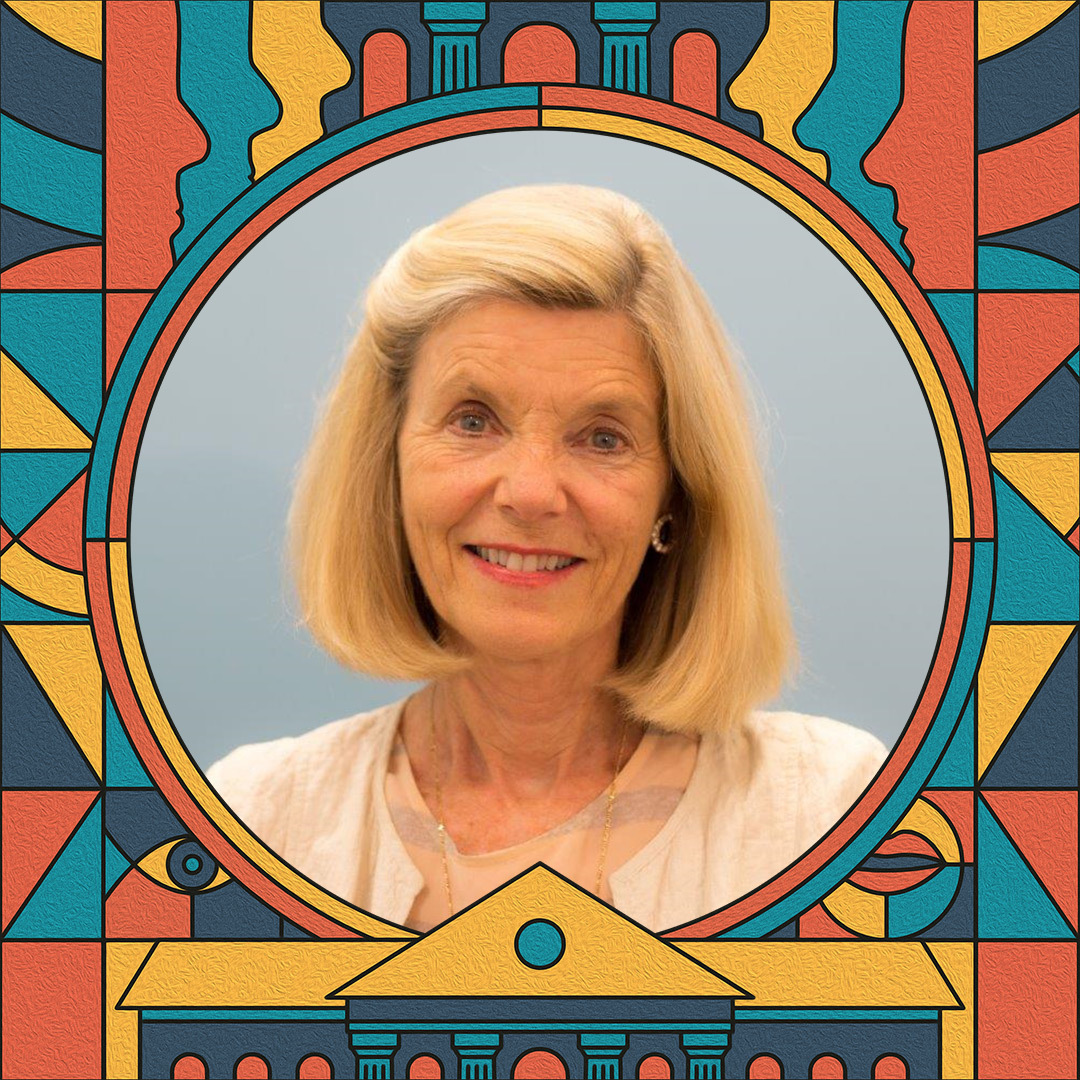
Abby: Well, I’m very excited because today we’re talking with Jan Seidler Ramirez, who is the founding chief curator and executive vice president of collections at the National September 11th Memorial and Museum in New York City, which is one of the most impressive and moving places in the world, at least I think, and at the end of 2018, had drawn over 43 million visitors.
Jan works directly with stakeholders from multiple communities and agencies directly affected by 9/11 and with artists, photographers and filmmakers who responded to these transformative events. Previously, she served as vice president and museum director at the New York Historical Society and held senior administrative positions at Boston Museum of Fine Arts, the Hudson River Museum, and the Museum of the City of New York.
She’s also taught and lectured, I don’t know where she’s found time to do this, but extensively on American history and the phenomenon of crisis collecting and authored numerous publications and essays relating to American arts and cultural history. Jan earned her Ph.D. in American Studies at Boston University, which is my alma mater, and where my mom also earned her Ph.D. That’s just a shout out to my mom, who listens to every podcast.
Brenda: Shout out, Mom.
Abby: Jan, welcome to the show.
Jan: Oh, thank you so much for having me.
Abby: So, the creation of the Memorial Museum was at times fraught, so trying to please all these constituencies and political issues and working across the disciplines involved in a new building and what is to some a very sacred site. So, it sounds like an impossible task. What was involved in making this all happen?
Jan: Oh, a lot of chardonnay.
Well, you know, certainly I was one of the cogs in the wheel, I was certainly not, you know, the main player, but by the time—as you probably know, the choice to do a museum about the event itself was a second choice, because the first choice was to do museum, you know, broadly speaking to international freedom, societies that have it, societies that don’t have it. A very smart, effective team of people had been at work on this project for about two years. And when it was, their plans were rolled out for the first time publicly to a group that can, you know, included first responders and family members of the victims, I think it was then that the recognition really registered with these stakeholders, sensitive stakeholders, that their loved ones would be somewhat reduced to a footnote in this inevitable march towards freedom that took place. And they protested that the site itself was being used for that purpose. It wasn’t the idea of the museum, which they felt was perfectly valid, but not on that sacred ground.
And, you know, I’m not a religious person, but I became a much more religiously aware person, given the fraught nature of this unplanned cemetery, you know, a battleground, whatever you want to call it. And by 2006, which is when the green light went on for the repurposed 9/11 Memorial Museum, just for starters, the medical examiner of New York City had made a promise to the families that at such time the memorial precinct was built out, he would take the temporary repository of unidentified unclaimed remains from First Avenue near Bellevue Hospital and move it to the site itself. That has always been a confusion for visitors and for family members. You know, it is not part of the official 9/11 Memorial Museum. We have nothing to do with. It’s still operated by the office of chief medical examiner, but it does repose behind a main wall of the museum.
And so, you know, with that, we also inherited the tragic statistics at the time, which haven’t gotten that much better, but then about, you know, 50%, 55% of all the New York victims had never been physically identified, not a scrap of a remnant of them had been identified, and therefore, for their family members, you know, the restlessness of this event was just chronic. This was far from a neutral ground. It’s still not a neutral ground. And I will say that those statistics have shrunk a bit, but it’s still 40, now, it’s 40% of the victims who have never been identified.
So that’s the beginning of, you know, welcome to the, to this project. And then it was always the second guessing, the third guessing, the media frenzy around what we were doing, what we weren’t going to do, you know, what we were going to do poorly. Surely, we were helping a lot of New York City papers, sell a lot of papers, you know, just because we were a topic of speculation. I think all of that could only ever stop or at least be tamped down when we opened, and people could come judge for themselves.
Abby: It seems like a very dramatic example of a museum built for the community, because Brenda and I are often talking about museums and are they really, truly serving the community? And in this case, it sounds like the community demanded the memorial museum.
Brenda: And the museum is the community, quite literally—
Abby: Yeah.
Brenda: —you know, in terms of the objects that are collected. And what I also appreciate is that community is certainly about New York City, but it’s also very much so the international story, because so many people who were lost at the towers that day were from all around the world. And they too are now a permanent part of our New York City community. And the institution sees to it that that is the case.
Jan: You’re absolutely right. I mean, it’s the DNA in the World Trade Center, because, you know, there were people from 90 nations who were reflected in the victim population. There are people that, you know, had never been to New York. They were flying over New York on business. They had no intention of being in New York, who tragically died in New York and are going to be forever here.
What I think is really interesting about your comment is we were extremely mindful that there were sort of circles of bereavement and circles of connection, stakeholder connections to this story, and if we didn’t listen to them carefully and we didn’t produce something that didn’t ring true to them, it would be a terrible failure. However, we were never actually doing it for the community. We were doing it for the future. And so, everything we were trying to do was for the cause of public edification, whoever the public may be down the line.
And so really, the most, one of the most complicated and fascinating, rewarding parts of the process were the three or so years we were bringing in a stakeholder community, sort of advisory group of about 90 people representing many different slices of the pie of people that were directly affected, of course, the victims families members having a very special place in that, but lower Manhattan residents and first responders and companies, businesses that were dislocated from downtown, investigators and so forth. We would lay out our thinking on, you know, as we were going forward to invite their response. So, they felt, you know, they were part of it.
First and foremost, they knew that on our project we were mostly professional museum makers, you know, curators or exhibit developers, educators, architects, designers. In a way that was a huge blessing, if I could say, because we were not government appointees. So, we didn’t have that agenda, sort of, you know, scarred on our backs. But what we didn’t realize was how cocooned many of these stakeholder communities were from one another. You know, they were so caught up in their own, the intense grief and the intense dislocation and pain you know, and trying to get some form of balance again, that they had no idea any other group might have felt pain of, perhaps not of exactly the same kind of pain they had felt. And so, it was like listening to them listen to each other and fight with each other, but also come to common ground that was so important. We had to sit back and watch them do it themselves.
We put it through this test and we still, to this day, there’s a group that’s very unhappy with the design of the 9/11 memorial. They’re very unhappy that the repository is underground. They’re very unhappy that the public at large, not family members, have to pay to go in, pay to pray is sort of the critique. On the other hand, I would say some of our friends from particular type of press, when they want to rile things up, they’ll go to those, you know, 12 people for comment. They never go to the thousands of other people who seem to be pleased and resolved, who have been participants in the process who are so proud of what has happened there, you know, who bring their young family members there, because that doesn’t generate headlines, you know. But that’s, that’s the world.
Abby: That’s for a different podcast, we could totally talk about that, yeah.
So, I’ll steal a bit of Brenda’s thread of a love for objects and their meanings. So how do you see the role of the vast types and amounts of objects you’re working with at the Memorial Museum? And I’ll sort of also add, I haven’t been back for a few years, so I’m not aware how often you actually move things. Some of the huge pieces I know probably never move, but if you could sort of talk, imagine someone’s not been there, talk about some of the artifacts that are there and then what does move and change?
Jan: Well, part of the project from the beginning, because there was a window of opportunity to bring back some of the big gigantic relics of the site itself and the damaged rescue apparatus—we had to select those materials before we even knew the stories associated with them, you know, to bring and drop down into the site because the memorial was years ahead of the museum in terms of its planning. And that was our roof. And if we didn’t move quickly and live with imperfection, but, you know, also let emotions kind of speak a little more loudly than they might otherwise speak in a deliberative process, we wouldn’t have had the opportunity, for example, to bring back the last column, which was the 39 foot tall relic from the South Tower that had been there from the very beginning of the towers being built and it was the last vestige sort of standing the day the site closed, actually the day before when it was cut down and it was brought out as a proxy for all the people that were not found and functioned on site as the first memorial where the different rescue recovery groups and disaster volunteers and occasional family members had been able to come in and put their mark on it in different forms.
So, we had the big eyewitness objects and then we had the exquisitely intimate, you know, human scaled items that we do not yet have a lead on. And we knew that we were going to have to have a strategy before we went out to collect them. You know, it’s one thing to say we’d like to collect recovered personal effects from people that lost their lives or whose lives were ever changed, but we owed those potential donors the explanation, how are you going to use them? And that became another kind of complicated part of the journey, because first and foremost, we had to write a collection policy. Can’t build a collection without a collection policy. It’s kind of a, you know, kind of dull and dry part of the process, but you do have to do it, and I sat down to do it, but we had to have the talk with our prospective donors, which is not everything will be on view all the time. What you’re doing is you’re in part doing a symbolic act by giving something physical associated with your loved one’s life, possibly with the end of his or her life, and possibly with the prime of their life or their beginning of their life, and you are putting it symbolically at a place where their life ended. So, their memory will always live on here.
And that’s a hard, that’s a hard conversation for people who are not necessarily museum savvy audiences. Also that because in our case, with victims alone, we were dealing with a population of about 3000 people, that the space we had couldn’t possibly tell the stories of 3000 people through, you know, 3000 people’s stuff, we would have the faces of the victims and have the short biographies about them, and we would find ways to cycle through examples of personal effects and personal materials and mementos that the families had chosen. And so, in a way, they were given a chance to co-curate that collection with us. They set the terms of why it was a valued thing. We didn’t.
Abby: The stories though must be pretty key, right? Because like this bottle of water I’ve got could be all scrunched down, the story that goes with it could be moving and incredible or it could be just absolutely not interesting because it’s the connection with the person and the story that this object represents. Because, yeah, there must have been a selection process, right? People brought in tons and tons of stuff and then you would have to listen to the stories but then curate what you thought would resonate with people, right?
Jan: Yes, to a degree. And you are absolutely right. This is a museum where provenance or context is all, in most cases. And speaking of, you know, water bottles, for example, there was a young man who had lost his brother. His brother had been killed in the North Tower, and he came in and indeed presented a bottle of, you know, Perrier water or an empty bottle that was not actually empty. There was a little bit of dust in the bottom of it, completely humdrum looking object. And then he explained that on the first anniversary of the attacks, the first time he’d ever been allowed to go down the ramp to Ground Zero, he had scooped up some of the dust because his brother was one of the unfortunate people who had never been found and to him the dust was sacred.
So, we try to be very attentive and anything that comes into our collection comes in through a process. We have an acquisitions and loans committee and, you know, we have to not only think about can we care for it, can we conserve it, where are we going to store it, how we’re going to house it, you know, will it have options for display, but it is how are we going to tell the story, what we know about this, for the record, when the person telling us isn’t necessarily a historian, we have no way of particularly vetting what they’re saying, but they’re sharing their story. And we had to live with a certain level of historical discomfort.
Our oral historian, for example, you know, who’s been with us from the beginning, often says, you know, somebody will get 10 minutes into their story, and she knows she knows more actually, about the day or the place or the what probably could have happened and probably didn’t happen. But, but it’s the story, it’s what, you know, trauma does to your memory. That’s really what we’re collecting. It’s not the accuracy per say.
Abby: A lot of the work we do is contextualizing these artifacts and trying to bring them back to life. But also, in terms of the spaces people are in, because seeing them in, on a nice, neat plinth in a beautiful white room or however it’s perfectly designed, doesn’t really evoke the time and the place, and so we end up oftentimes designing really immersive experiences and places, settings for these objects.
When you come into your museum, it’s already baked in, the emotions, when you enter the site from above are like, you can’t help but be flooded. And so then going down into the belly of the beast, so to speak, and being in that place, it has that loaded environment, at least for me it had that. I used to have a—I was right there when the Twin Towers got hit actually. I had just gone under on the E train. It had stopped, the lights had gone out and I was the last train to make it up into Tribeca where our offices were. And so, I was actually on the street when the, when it all sort of started to shatter. And so, when I went to the space, it was an incredibly moving experience.
And I think that having it in that specific space, rather than having the museum uptown, let’s say, for example, adds a lot of that emotional engagement and resonance that I feel is sometimes missing or could be missing if it had been built in a different environment, if that makes sense.
Jan: It makes complete sense. And, you know, the first artifact I curate or conserve, care for—and when I say I, it of course means that, all the team I represent—is the archeological cavity itself, combined with the memory of the day, people’s personal stories, the blue sky, it was an election day in New York, I mean, the many different ways people start their 9/11 story.
The site itself is so powerful that we have to respect its power. We know that many visitors to the 9/11 Memorial Museum today will have never seen the World Trade Center in its prime, and we need to give them time to adjust to the reality of what they’re looking at. It’s a confusing space. I mean, you know, it’s seven stories below ground and it’s only when you’re sort of halfway down the ramp that we begin to give you a different cue in your journey. And that’s the beginning of the projections of the missing person fliers that started to be seen in the streets of New York that afternoon, in that evening.
Brenda: There is something that I think is really important to make sure that we ask you, and it’s about following up with the idea of how soon is too soon. I know when I bring my students to meet with you every year, which you are so generous about, my students are coming from all over the world, and a number of them every year are coming from places that are dealing with tragic circumstances in lifetime and oftentimes will ask me afterwards or we’ll have a group discussion afterwards about, you know, was it too soon to start the institution just a few years after the tragedy, or is it still too soon to be having these conversations? And it becomes a very rich dialog. And I’d love to hear your perspective on the whole idea of when is too soon, too soon?
Jan: We’ve certainly heard the too soon, too sad, too sacred, too, you know, the, all the reasons, legitimate reasons why our active collecting, curating, producing a museum probably was a curious, if not a strange, if not a threatening idea to some people. I know as a, you know, person who has been in the world of historical material culture, I know that we have lost the context for so much of the physical materials that are in museum collections because we didn’t move soon enough. And I think there’s the difference I would make—it’s a very generalized difference—is I don’t think it’s ever too soon to collect. It may be too soon to exhibit. And so, collecting and getting the context right, the provenance right, getting the storyteller, the donor right, figuring out if the person, for starters, even had the legal right to donate it. I think that that is something you have to do fleet of foot, if you can.
One thing we’ve done at the 9/11 Museum is we have made a great investment in our conservation staff and they are incredibly ingenious people who are basically being challenged every day to think about two things. One is how do you preserve trauma and damage? But I think I’m of the school that sometimes you need to move much more quickly than you wish you could, and that if you are doing it with people you respect, they don’t have to be curators, they don’t have to be conservators, but they’re people that are knowledgeable about the community or the event or the where they can go to rest for a period of time, your gut instincts, your collective gut instincts are often going to prove themselves pretty good.
Abby: Turning to the media, because that’s my area of specialty. Overall, the museum doesn’t feel censored. Was there an awareness of that? Because I imagine it could be leveled as a criticism. It’s too much. People shouldn’t see this, yada, yada, yada. I think it’s fantastic and exactly where it needs to be. And I think that I see other institutions sometimes pulling back and not showing the truth of what happened.
Jan: One thing I had to learn was I was not working at a museum. I was working at a memorial museum. And that is a huge qualifier. We have, you know, part of the ethic of our institution is an abiding reverence for human life. Human life tragically ended in horrible ways on the day itself, and we had many, many, many, many different debates about, you know, for example, the images of the falling people. But we felt that if we omitted it, it was such an indelible part of the day’s chemistry that if we omitted it, we would be raising questions for all kinds of people about what else we had omitted. So, instead, we decided to put it in an alcove and give people some sort of advance warning if you wish to.
And then there was even a discussion, you know, tragically, so many pictures and video tapes and newsreel footage of that incredible, unbelievable, terrible act, but we felt that we couldn’t put them up as mounted photos. They needed to be projected and just come and go, come and go, because we did not want them to become some kind of strange icons. And the one thing, though, you will not find in the 9/11 Museum, and that does not mean we do not have it in our collection. You will not see publicly, images of body parts on the street because again, we felt that that violated the respect for human life.
Brenda: I know from the research work that I did with your museum, memorial museum and the wonderful people who I was so fortunate to be able to interview and for whom your institution is so important, hope and healing is a paramount part of their experience and also, I think, is a big part of the intention of the Memorial museum. And I’m really curious how you interpret the idea of the 9/11 Memorial Museum as a place of hope and healing. How do you interpret that personally?
Jan: Well, every day I watch people from many different parts of the country and parts of the world coming together. They come in as strangers. They may not go out as friends, but something is happening to them. There is an energy change where they’re seeing each other sort of stripped to the bone of what we love in the world, and we value in the world. And it transcends nationalities and religions and backgrounds. And it is a very moving thing to watch happen.
We just, we happened to meet with our docents yesterday, who are remarkable people, they’re the people that are on the front line every day, and they were talking about friends who would say to them, you’re volunteering to be a docent in the 9— how could you deal with it? And they talked about just the remarkable emotional and spiritual in some cases uplift they have from working with people and the hugs that get, you know, freely shared.
The other thing I would say is, apart from the fact I’ve always considered it a museum about humanity, it’s not about terrorism. It is about the decency of people to one another. What we can do when we are pushed to the wall and in a terrible predicament. As we worried, we really haven’t delivered the ending, the uplift, the never again if, you know, the naivete of, although the power of never again, we just haven’t delivered it. How can you give people an ending when every day in the press still, this event is still unspooling? I mean, to this very day, criminal evidence is still being held for people that have not yet come to trial. I mean, there’s you know, people are dying of the health effects. I mean, there’s just, there’s a lot going on still.
But all that said, the remarkable thing is how people, you know, who, they’ve made the descent down into the museum, they’ve experienced the museum, and they’re literally coming up. And when they walk out onto the Memorial plaza, they’re going to see it, through fresh eyes, probably, the miracle of a rebuilt downtown skyline, and, you know, the memorial plaza with the trees that have matured, so if you’re there in the summer or the fall, there’s the show of the trees and the sound of the water, and it kind of smells good because of the nature. So, in a funny way, the place and the city provided something uplifting. And that is, you know, just the incredible power and grit of human beings to get up, dust themselves off and take that next step forward, and it’s just renewal.
Brenda: Gosh, there’s just so much that’s so tempting to ask about and even, you know, not as a question, but something, you know, for folks to consider as well, is that the 9/11 Memorial Museum also has to deal with and consider current events as well. It’s so much beyond just the day. And so, for an institution, you are constantly growing and evolving and shaping yourselves. So, I just want to commend you for what is a tremendously complex, truly complex job that you do with a great deal of love.
Abby: And grace. I’d also just like to thank you, Jan, for joining us and sharing your experience in such an open, candid way. And I’m hoping that our audience, our listeners will go. Go to the September 11th Memorial Museum experience it. It is a spiritual place. It is a complete journey for the soul when you go there. But I think you’re right, at the end of the day, the feeling is a positive one about humanity and the way that we come together in a crisis. So I just wanted to thank you so much today, Jan, for sharing with us.
Jan: Thank you.
Abby: And thanks to everyone who joined today. If you like what you heard, subscribe for more episodes of Matters of Experience wherever you listen to podcasts, make sure to leave a rating and a review and share with a friend. We’ll see you next time.
Brenda: Thank you, everyone.
[Music]
Producer: Matters of Experience is produced by Lorem Ipsum Corp and recorded at Hangar Studios. Tune in next time for more fun discussions about experience design.