[Music]
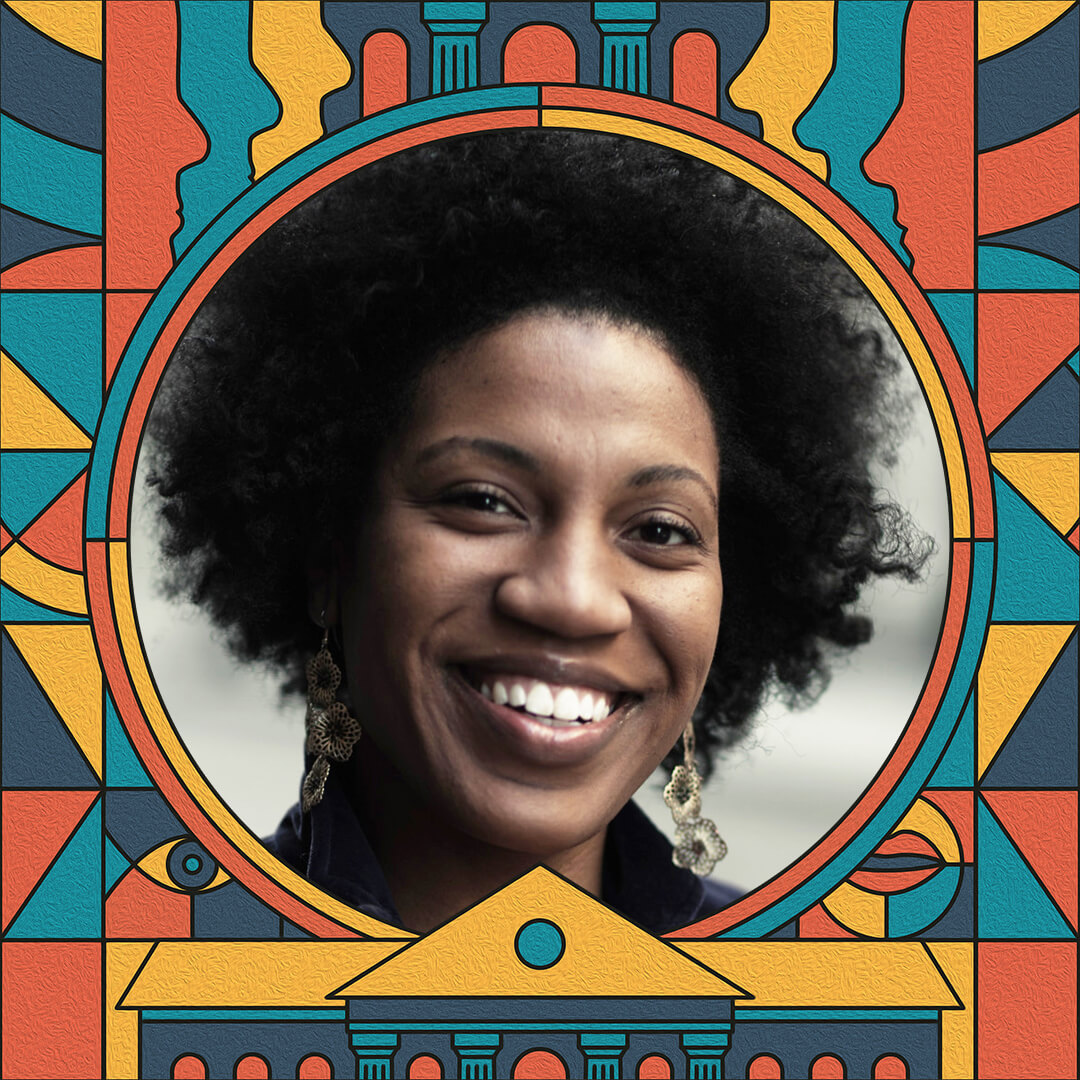
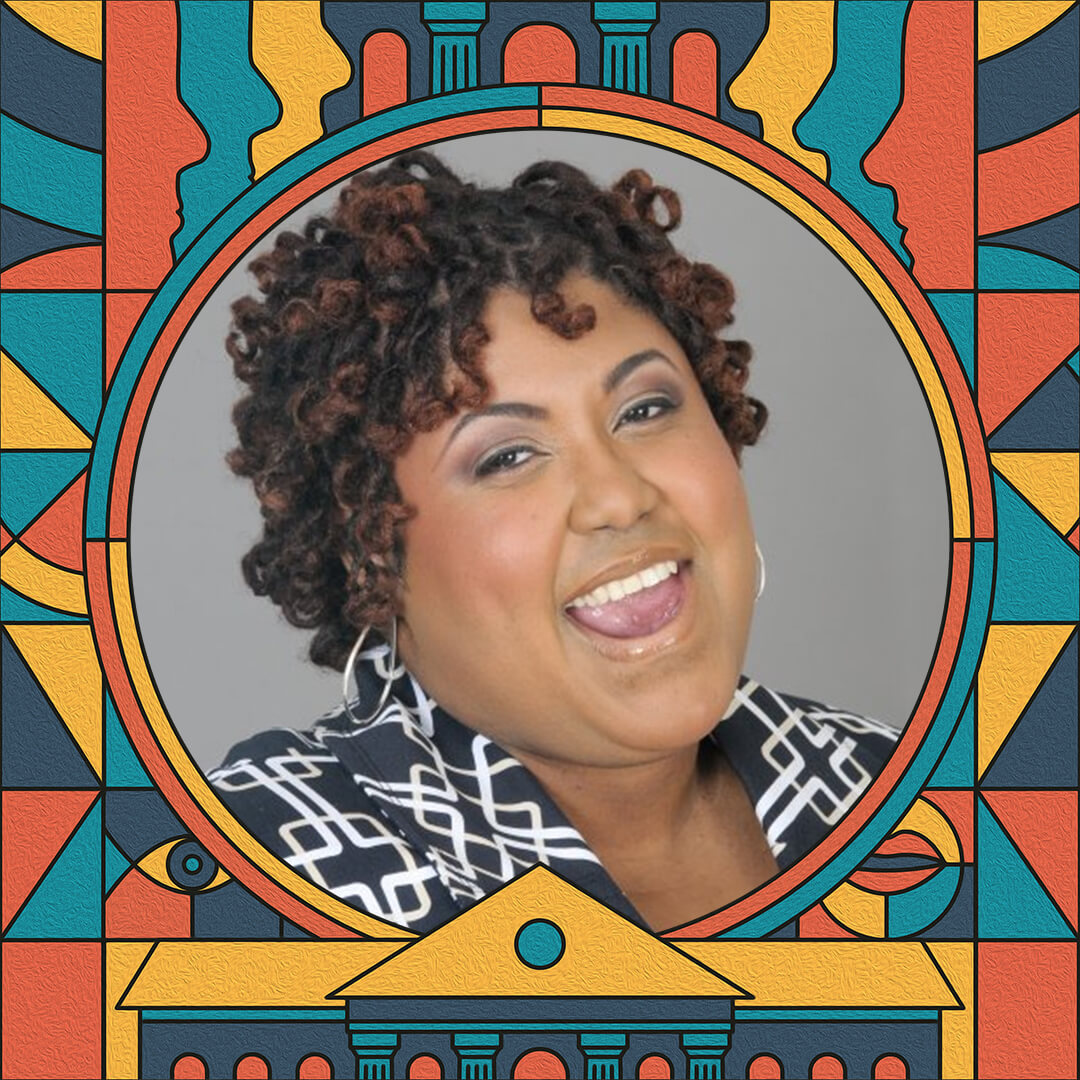
Abby: Hello and welcome to Matters of Experience. My name is Abigail Honor.
Brenda: And I’m Brenda Cowan.
Abby: Today’s show is called Follow the Crowd, and it is the second part of a show focusing on diversity, equity and inclusion. And we are thrilled to be chatting with the wonderful Joy Bailey-Bryant. Joy is the president of the U.S. Office of Lord Cultural Resources and a specialist in municipal engagement around culture. A certified interpretive planner and outreach facilitator, she works with city officials, institutional leaders, and developers around the world to creatively plan cities and bring people to public institutions. Hello, Joy, and welcome.
Joy: Thank you, Abigail.
Brenda: Joy, we are so delighted to have you. To get us kickstarted, can you tell us what led you to the position that you are in today?
Joy: I worked for years in public relations, and then I found my way to a wonderful program at American University in Arts Management. And that program actually led me to the Institute of Museum and Library Services, which is a granting agency for our country. And through that process and through that work, I started to do some work with particularly African-American institutions.
I then moved on to work at Lord Cultural Resources because they were working with what became the August Wilson Cultural Center in Pittsburgh. And so that was one of my first projects working with Lord, and realization of this entire world of opportunities with consulting with different organizations, arts organizations, artists, individual artists to help them to realize their goals in creating organizations and creating public spaces that would really help to tell their stories.
Abby: So one of the things, when I look back over my career, Joy, I reflect on one of my first visits to a museum that really sticks in my mind. And we were at the Tate in London, and I was there with a school group, and we were going through the rooms, and I suddenly became fascinated by the Seagram Murals by Mark Rothko.
And I remember sort of sitting down, being surrounded by these paintings and experiencing something that I’d never felt before. It was very transcendental, and I actually sat there for over an hour while the rest of my schoolmates moved throughout the museum, and I was running a little late, so they all came back to find me, and now I reflect back on that and what large impression it actually made on me. Do you remember one of your first visits to a museum or a gallery, and how do you think it impacted you?
Joy: Absolutely. One of the things – I’m a native of Atlanta, Georgia, anybody that knows me knows that, and we have a few really excellent art spaces. And one of them is called the APEX Museum – African Panoramic Experience. And at the APEX Museum, you learn both the history of African Americans in Atlanta, as well as kind of this broader story of people of African descent.
Combined with that there’s also a large arts campus called the Woodruff Arts Center. And the Woodruff Arts Center has the High Museum of Art. It has the Alliance Theater. As I was growing up, my mom was part of this group called The Black Involved Parents, and they would take us to various and sundry shows. And I remember that there was a Faith Ringgold – it wasn’t a show – and this is so interesting because there’s a Faith Ringgold show at the New Museum that just closed here in New York.
Brenda: It’s incredible.
Joy: But there was a storytelling experience, and it was around The People Could Fly, it was Virginia Hamilton’s The People Could Fly story, and Faith Ringgold had done the illustrations for it. And the paintings, the pictures that the book showed were just so vivid and so imaginative. It captured me, captured my imagination. I wanted to see where it went. I wanted to know where it came from. I wanted to read more of the stories. I was a voracious reader, but that was the first time I had been captivated not just by words, but by pictures as well. And I heard Faith Ringgold give this talk, and she was talking about the way she draws flat. And that also, I didn’t know that was what she called it, but that’s also what really, I said, oh, my gosh, I can, you know, this doesn’t just, it doesn’t have to be real, photorealism, three dimensional. You can have flat images and still depict a story and really still captivate people. That was one of my first experiences and it was just such a full-circle moment for me. We went to the show and I was able to take my five-year-old daughter, my seven-year-old son, and they so enjoyed, they enjoyed the images, the quilts, of course. But what they really enjoyed was sitting down with the books just like I did all those years ago. It was just such a wonderful experience for me.
Brenda: What a delight to hear you talk about the Faith Ringgold show, which I was fortunate to just go see before it closed with my daughter.
Joy: Yes!
Brenda: Yes. Oh, and Faith Ringgold was an early point of entry for me, too, in my career. And I grew up in a context where, you know, museums were not for people like my family. They were for people who were well-educated. They were for people who were wealthy. And it wasn’t until I was out on my own when I started actively going to museums, really, for the first time. My question for you, Joy, is in your work, what is it that we should be aiming for when we create truly inclusive and welcoming – I like the word welcoming because I think that’s really what this is about. What are we aiming for? To create welcoming experiences where everyone can feel like they belong?
Joy: You know, you’re right. So many people do not think that museums are for them. I, along the way decided, it was a decision that I wanted to get more people who looked like me to enjoy these spaces, a lot of them public spaces that are paid for by tax dollars or certainly get grants from tax dollars. And I would ask people, I would say, oh, let’s go to X, Y and Z and see this show or let’s go do this, they’re having, such and such is having, you know, having this kind of program. Oh, well, I mean, I don’t I don’t have anything to wear. It’s the first thing you probably hear because there is this thought that you have to have a special attire on and you have to be a part of this particular crowd. And that is an indication that people don’t feel like they belong, right?
So, when you talk about, we talk about these words of inclusion, we talk about the word you just used, welcoming, people feeling like this is their space. If people feel like it’s their space, they truly belong in this space. They truly own this space. If we I mean, you know, there’s always pushing, pushing, pushing, so we’ve moved from inclusion to welcoming to belonging to owning, right? I own this space. If I own my house, I can wear whatever the hell I please in my house. So I feel the ultimate sense of ownership. These stories are mine. I should be reflected, I should have connection. Everything that is here is mine. I share that with others, and it is mine.
So I think it’s really pushing ourselves to get to the space of ownership, everyone having ownership. And this is where you get into the stance of, you know, power concedes nothing, of course, is not my quote. Power concedes nothing without a demand. And so we all have to demand that the places that we own reflect us.
Abby: So, let’s talk about ownership and how a museum can start to reflect their communities. A lot of your work centers around cultural management consulting, and you talk about process helping you go from the big idea through to final execution. Can you tell us a little bit about your process, what it is and how it really helps with the end result?
Joy: Absolutely. One of the things I’m super proud of is being able to work with people who have amazing ideas. Sometimes they have great collections, sometimes they just have really compelling stories and helping them to really think through in a methodical way what that can mean for their communities.
And I define communities in two ways. The first is your kind of communities of practice. So those are your affinity groups, people who are naturally attracted to you. You know, if you were to take something like a collection of toothbrushes, for example, you might make a safe assumption that there might be a dental community that is interested in a collection of toothbrushes, you know, but there’s also, if you have a collection of toothbrushes and you’re located, for example, in Prince George’s County, Maryland, then you want to know the people in the communities of your geography, right?
So you’ve got your communities of practice, so people who are in the dental practice who I’m assuming would be interested in this collection of toothbrushes. And then you’ve got a second community, that other community of your geography, right, so people who are walking around right outside your doors, these are the people who are going to come to your afterschool programs. These are the people who are going to come to your weekly toddler times. These are the people who are going to be your most frequent visitors because you’re accessible to them. So the important part is you’ve got to make yourself accessible for them.
So the first part of what we do when we’re figuring out this process is really to understand who those communities are. So when we are identifying your communities of practice and your geographic communities, really taking a methodical approach to looking at that and examining that and really moving forward from there and allowing those communities to tell us what they want and most importantly, what they need.
And that’s important because a lot of times people feel like I know what my community needs, and so they want to make X community do what they want X community to do. But that community is saying, actually, no, that’s not what I need, because actually because I have other obligations and therefore this is not going to work for me. So they tell us these different types of things and we’re able to then build programing. We’re able to think about what that means for exhibitions. We’re able to think about what that means for collections. We’re able to think about what that means for the types of spaces you want to have. And what’s exciting is that we’ve been able to then take that information and put dollars signs to it. Talk about how much staff are you going to need? What are those staff going to need to be doing?
All of these different types of things to build up to a business plan. And we’ve done this with so many organizations and institutions, and I talk about the National Museum of African American History and Culture, and that’s been one of the highest honors of my life, to be able to have these conversations with communities, to understand what that means for what the Smithsonian calls general museum requirements.
Abby: Joy, it’s great that you just bring up the National Museum of African American History because I know you had almost a thousand stakeholders, which sounds pretty overwhelming. What were some of those challenges, juggling all those people and voices and what was some of the positive outcomes as well?
Joy: What was really great about the process was that we were able to, in multiple cities across the country, really talk about things that previously people had just kind of said, oh, you know, we need to be talking about what happened in Tulsa, Oklahoma. We need to be talking about what made the civil rights movement so powerful that the Voting Rights Act of 1965 was passed. What were the implications of enslavement, of 400 years of enslavement, on people of African descent today?
What was really powerful about that process was that we were able to have these conversations, grapple with these conversations, and really start to write down on paper what that would look like in a museum. We were not, and I say we, but I really mean Dr. Lonnie Bunch and Kinshasha Holman Conwell and many, many, many people who really led that process were not afraid to talk about, okay, where do we start?
We were present, and a part of the identification of the framework of what people said and what people said was - tell the truth. People said we need a space to celebrate. People said we need a place to commemorate. People said we need to know about agency, right? So in telling the truth, yes, you are sharing the hard stories, and in sharing the hard stories, we want to talk about the agency that people of African descent used in a lot of times, being super active in freeing ourselves. And so that was a really great opportunity.
I think when we think about what was hard, what was hard was exactly what I said. Where do you start? And making sure that you’re not daunted by the fear that you are not going to tell the right story and the understanding that the process is iterative, meaning that over the years the stories can change and that the museum can change with those stories.
Brenda: Something that’s a definite takeaway from all of this is the need for museums to be highly descriptive about their communities and the persons that they’re speaking with. I’m curious. You use the term, Joy, follow the crowd in your work. Tell me, what do you mean, what do you mean by that?
Joy: So it’s actually quite simple. Where are the people that you want to speak to? So when I talk about the communities of practice and your geographic communities, there are watering holes where, we have a client that’s using that term a lot, where are the natural places that these communities are gathering? And instead of trying to create your own watering hole, okay, you know, why don’t you save yourself some money and some heartache and go to the places that already have created themselves? They have proven themselves to be natural spaces where people gather.
We always are talking to people that are saying, I don’t know where young people of, you know, a certain age or, you know, where are young people who are college-aged or young people who are moving from this kind of, you know, I’ve just graduated from college, I’m trying to find my footing. Where are they going? Well, number one, if you want a college-aged students, go to colleges. Right. That’s the first part. Go to where the colleges are. If you want students who are particularly knowledgeable about a particular piece, you know, say you have an automotive museum. Why don’t you go to those places where those students are training?
We have this thing because we are always trying to make things fun. We would go to conferences, and we would sponsor, you know, a happy hour, right? You sponsor a happy hour, give everybody one drink ticket because you want them to be sober enough to tell you what you need to know. And, you know, 45 minutes to an hour of your time, you’re going to tell me what you want to experience in an Urban League museum, an Urban League experience.
So, by following the crowd, it really just means going to, genuinely going to where they are. And I’ll tell you something funny. A woman was speaking and she said, well, you know, it’s in truth, it’s what we’ve always done in the church tradition. You’re meeting people where they are, mentally and physically. So things like Alcoholics Anonymous, things like hosting a food pantry, things like having a closet, you know, a work closet, so that people who are going for jobs can come to your space and get clothing. And I never realized that that’s what I was doing. I did not realize until a few days ago the woman said, yeah, you know, this phrase, meet people where they are. That comes from religious practice. So I hope that I’m known as a person who brings both the bars and the religious spaces onto your podcast. I’ve been able to mention them both in one in one podcast.
Abby: So when we think about actual the design process for the exhibit itself, I’ve heard you use the term first voice before. Can you explain what this means in terms of the exhibit, the design landscape, and why it’s important?
Joy: Essentially, it’s ensuring that the people whose story is being shared are the actual voice of the story. If we’re telling an indigenous peoples story, if we’re working with indigenous peoples to tell their story that they are at the table from day one and being paid and a part of the team that is paid and that the experience of creating the exhibit is centered on them and that that table is really set by them.
You know, when I think about it, like I’m bringing process to the table, but at the end of the day, at the beginning of the day, middle and end of the day, the most important piece is actually the first voice. The first voice that we hear, the last voice that we hear and understand and listen to has to be the voice of the peoples whose story is being shared.
Abby: Within those voices, those stories, those narratives, would it be a group decision then, on which specific stories to tell because often I find when we’re designing museums, there are a ton of different directions you can go. But because of restrictions, either financial, logistics, space restrictions, you have to cut some of the stories out. So, you know, whose responsibility is that decision?
Joy: It’s always the first voice, right? Like we, you nor I as the interpretive planner or the designer, we can’t make that final decision. You know, Alice Greenwald from the 9/11 Memorial and Museum always tells the story of when she was at the national Holocaust Museum in Washington, D.C., the U.S. Holocaust Memorial Museum, that they had a massive exhibition that was of the hair; before people went into the concentration camps their hair was cut off, and the exhibition designers had gone through so much red tape and everything to get this out of the country. All the permissions had been signed, all of the different documentation that was needed had been put through. You can imagine the amount of money, effort, and time and one of the family advisory groups and committees, one of the women who was a survivor – this was many years ago, of course – said absolutely not.
And the question, of course, was what? Why? Because that might be my mother’s hair. And so the exhibition was scrapped immediately. And the story there, I mean, that’s an extreme story because it illustrates the importance of making sure that at the end of the day, if it is truly the first voice, then that is the last voice that has to be heard before it goes up.
Brenda: Wow. Joy, what kind of advice do you have for people who want to do work with diverse communities, which, by the way, everyone should be doing? But what’s your advice for folks who, for whatever reason, might just be starting out?
Joy: Great question. Okay. So first of all, listening, everybody wants to talk, but it is important to listen. There’s two things that we do when we start a program. First is to start with a land acknowledgment, because it does something for you to you to really stop and think about the heritage of the people who came before you.
And then we do what’s called meeting agreements. And one of the meeting agreements is to recognize your space of privilege, to say, okay, I’m an African-American woman who is blessed to have come from a family where my mom and dad were present. I have a college degree. I have a master’s degree. I’m able to sit in a space where people ask me questions and want to hear what I say.
It is imperative of me to be quiet and listen when people who don’t walk into the room with the privilege that I just expressed, listen when they speak, because maybe they won’t be in the spaces that I am in tomorrow, and maybe I’ll have the opportunity to say, Hey, I was just in this room with X person. Why don’t we invite them in to speak so that we can hear their stories, first voice?
Brenda: You know, I’m listening to you talk about first voice, and a translation for me is thinking about the work that I do, as a professor. And where I teach, my students are very, very diverse. And when I say diversity among my students, you know, it’s race, ethnicity, their identity, socioeconomic status. It runs the gamut. I’m endlessly in a position to have to be keenly aware that not everybody is like me. Everybody brings different perspectives, backgrounds, life experiences. And I’ll tell you something, if I ever lose sight of that, I’ve got about, you know, 40 young people who are very eager to correct me and make sure that I am back on the course.
Joy: I love that.
Brenda: Oh, boy, it’s a real privilege. And it’s also, it’s really good exercise for me, God’s honest, and I’ve got to tell you, you know, there’s never room for presumptions or assumptions. Joy, how do all of us continue to exercise this kind of inclusivity in our work, whatever that form might be?
Joy: I think, Brenda, it’s questioning ourselves and allowing ourselves to be questioned. I practice not being jealous, but I’m a little bit jealous of your experience in the classrooms because I do know that you are continuously being questioned and pressed because those students are saying, well hey, this is different from what I thought it would be. Or why is it not?
And they imagine this future or they know a future that we never could have imagined because we assume things should be a certain way. And so I think that what you are doing, you’re making yourself vulnerable, right? Like that’s that space of vulnerability and, oh my God, it’s so tiring, but really great, right? Because wow, when you look up and think about how you’ve grown, right? But it’s continuously allowing yourself to question and to be questioned.
Abby: Yeah, I completely agree with you, Joy. I think too many of us are happy within the safety of the environment we know and enjoy familiarity. I remember as a little kid, my mom came in. I was trying to go to sleep and had some big worry on my mind, and she said, Abby, life’s like a trapeze. When you’re holding on, going backwards and forwards, you’re not going anywhere. You’re truly alive the moment you let go and reach for the next bar. And that’s really stuck with me in life, that idea of really sort of questioning, pushing yourself out of that comfort zone. And I think museums really should do that for their visitors. They need to be places that make the visitor question, and as you said earlier, Joy, press them.
Our last question of today is, why do you think a visit to a museum is so memorable?
Joy: One of the things that we do need to keep in creating ownership is that kind of event opportunity. And by that, I mean excitement about being in a space that’s doing amazing things for whatever reason. And I think that the event opportunity is nothing without the connection. And the connection comes exactly through that ownership. We think about that Faith Ringgold story I told at the beginning. I was so excited about the connection of the flat drawings and then connecting to my daughter. Now, all these many years later, that is why I will remember that event. It is that connection that is most important.
Abby: Well, Joy, this really has been a joy. Your parents definitely named you accurately. Thank you so much for sharing your thoughts and insights with us today. It truly has been a real pleasure.
Joy: And thank you. Thank you both for doing the work that you do, and thank you for your questions. This has been such a thrill. Thank you for the conversation.
[Music]
Producer: Matters of Experience is produced by Lorem Ipsum Corp. Please tune in next week for another conversation. Thank you all for listening.