Charles Philipp believes museums can be small, surprising, and everywhere. As the founder of MICRO (www.micro.ooo), he creates immersive, research-driven exhibitions that fit into everyday settings, reaching audiences in hospitals, libraries, and other public spaces that traditional cultural institutions may overlook. In this conversation Charles traces the path from his early work in animation and fabrication to building a new kind of museum infrastructure. He discusses how MICRO designs for short attention spans without sacrificing depth, how optical illusions and tactile details can spark curiosity, and why exhibitions should speak with communities rather than at them. The episode explores the impact of MICRO's public-hospital installations during COVID, the value of rapid physical prototyping, and a new project that turns a retro refrigerator into a museum about food, biology, culture, and the microbiome.
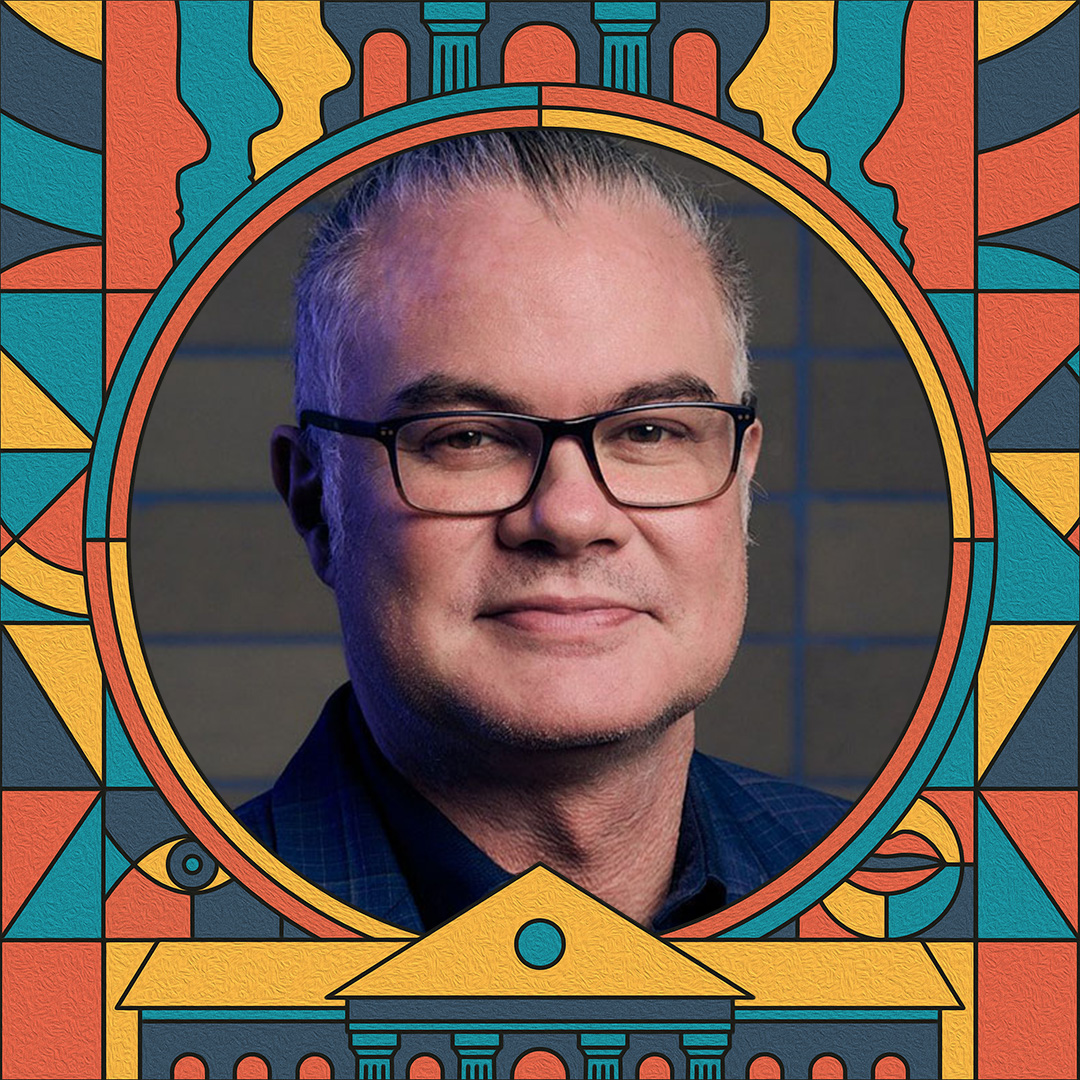
From Underground Raves to Museum Reinvention: Seb Chan’s Radical Journey
What can museums learn from underground raves, video games, and experimental music? In this episode of Matters of Experience, ACMI Director and CEO Seb Chan shares his remarkable journey from Sydney’s early electronic-music scene to leading one of the world’s most innovative museums of screen culture. Seb explores how immersive experiences can spark curiosity without excluding audiences, why visitors often know more than institutions about the media they love, and how museums can provide the context that makes those connections meaningful. Enjoy a lively conversation about creativity, participation, and designing experiences that welcome everyone into the unfamiliar.
About Seb Chan
Transcript
[00:00:00] Abigail Honor: Welcome to Matters of Experience, a podcast that explores the creativity, innovation, and psychology driving designed experiences. If you’re new, welcome to the show. And to our regular listeners, thanks for supporting our conversation. And my name is Abby Honor.
[00:00:20] Brenda Cowan: Hello, this is Brenda Cowan.
[00:00:22] Abigail Honor: Today, we welcome all the way from the other side of the world in Australia, Seb Chan.
[00:00:28] Seb is the director and CEO of ACMI, which stands for the Australian Centre for the Moving Image, which is a museum focused on screen culture and the intersection of media, technology, and storytelling. Seb was a key part of the team behind ACMI expansion into an award-winning multi-platform museum that I’m really excited to hear about today.
[00:00:50] And prior to ACMI, Seb led the digital transformation of the Cooper Hewitt Smithsonian Design Museum here in New York, from its infamous interactive pen to the acquisition of important software-based works for the Smithsonian’s collection. His work has won awards internationally in the museum media and design spheres.
[00:01:10] And before working in museums, Seb had a successful life in electronic and experimental music as a performer, publisher, and producer.
[00:01:18] Seb Chan: It’s been an interesting life, you know. It’s been a lot of fun, and I guess, um, I was just on a recording about my music career earlier in the day, and we were digging through all sorts of things that were done in the ’90s and early 2000s.
[00:01:32] It’s been an excellent life, and had worked with amazing people and, um, been part of amazing teams, you know?
[00:01:39] Brenda Cowan: If you could talk, you know, from your work with electronic music and working in museums and in your current leadership role at ACMI, um, what’s your origin story? How would you cover that for us?
[00:01:53] Seb Chan: Yeah, I’d say that, you know, what I learned from discovering electronic music in the very early ’90s, and particularly organizing raves and DJing and being part of that whole emergent scene in Sydney, um, you know, 1992, ‘93, ‘94, um, and beyond, what we were doing, we were going out to parties to hear music that you couldn’t hear anywhere else.
[00:02:19] And so there was no sense that you were going to find things that you would have heard before. And then when I started putting on parties, it was about creating spaces to create that environment where people for, you know, 10 hours could immerse themselves in a world that, that was very foreign to them and do that in a, I would say, relatively safe manner and create an environment that enhanced listening, dancing, of course, and discovery, you know.
[00:02:48] And I think for me, that’s really what museum’s about. Really, really good museum design brings people together with things they are not at all familiar with and expands their minds and expands their, uh, curiosity. And, you know, running the museum now, you know, we’re a moving image, uh, museum. We’re a museum of film, TV, video games, screen culture.
[00:03:10] And what ACMI does is, I think, kind of unique ’cause we get a lot of visitors. We get a million kind of visitors a year. We’re not a small museum. We’re state-owned, um, museum. And, you know, I, I often talk, uh, to my staff around this notion of what we’re there to do as a publicly owned institution is to bring the most experimental things and help them make sense to the broadest possible audience.
[00:03:39] And so those two axes, if you wanna look at it like that, it’s about threading the needle along those, and it’s about being representative of the broader community and being a place that grows a sense of curiosity, and it grows a sense of curiosity with other people. And I think that’s what’s changed in the, you know, 30 years or so I’ve been doing a bunch of things from music and events to museums.
[00:04:05] Abigail Honor: I’d love to talk more about pushing the boundaries and being experimental ’cause some people aren’t there yet. So how do you make sure that you’re not just catering to a few, um, people and that you’ve got the whole group, uh, and also that you’re not talking down, I know, which is incredibly important.
[00:04:21] Mm-hmm. But you know what I mean, that you’re not at a level that the majority haven’t been able to get to.
[00:04:25] Seb Chan: Yeah, look, that’s something we’ve done a lot of work on, you know, I think for us. Um, so we did a– So when, um, before I became the director and CEO, I was part of the team doing the expansion and redevelopment, so we reopened the museum in 2021.
[00:04:40] Um, so we were closed in 2019 before COVID and reopened in 2021. And that expansion, working with Second Story and, um, BKK, the architects in Melbourne, um, Second Story, the then US, uh, design firm, um, experience design firm. Yeah, we had a really big, uh, tripartite, I guess, co-design process there, and we thought a lot about that.
[00:05:03] You know, we were trying to make a museum of media, a museum of screen culture, um, make sense to people, knowing that, um- Screen culture is probably the most accessible and the most pervasive of media for, of, of art forms. Um, and often, you know, when we talk about this today in curatorial meetings and in design meetings, we often talk about the audience knows more about the materials we show than we do, but they know different things about it.
[00:05:35] Um, what the museum can bring is a context and a historical arc and a framing, and to bring things together in a different series of, uh, ways. We did a great exhibition called Game Worlds last year, um, uh, which was about the design of the worlds of video games and this, you know. In Game Worlds, of course, video game players know a lot about the games they really love.
[00:06:01] They really do. Um, and so some of the exhibition was also about the worlds that players make and the worlds that fans make, but then also looking at how, um, game designers design worlds to be interactive with players. We build exhibitions in Melbourne that then go out on tour for about five to seven, uh, years worldwide.
[00:06:24] That’s part of our model. Um, so our exhibitions go to every continent, which is really exciting. And of course, as they travel, they have to change. Oh. They have to localize. But when, you know, Game Worlds kicked off in Melbourne, um, it’ll be, um, going to New Zealand next and then off to Asia, which is really exciting.
[00:06:41] Brenda Cowan: I want to bring us back a little bit to 2015. I think that we would be remiss not to talk about the interactive pen that you worked on with Local Projects at Cooper Hewitt. You worked on creating a pen where people could grasp, flex, articulate with a technological device, but where they could engage their bodies and their minds with content and making in one of our most fundamental ways, giving people a tremendous amount of agency.
[00:07:15] The fact that technology was just inherent and inextricable from truly some of the most fundamental elements of human experience. I have to ask you, can you just share with our listeners a little bit about the interactive pen and, you know-
[00:07:33] Seb Chan: Sure …
[00:07:33] Brenda Cowan: as a creator?
[00:07:35] Seb Chan: Yeah, look, um, there’s a big story that was written, um, so Aaron Cope and myself wrote a long piece for Museums and the Web, which is on kind of line, which is the back, back story of the pen.
[00:07:48] It has all the re- drawings and other things. It was edited down and republished in Curator Journal around that period in 2015. The pen was, in some ways, of its time and ahead of its time-
[00:08:00] Brenda Cowan: Mm-hmm …
[00:08:00] Seb Chan: in, in a way, in that, um, it was of its time in that the early 2010s, it was the time when every Kickstarter project that I was backing and other people were backing were physical computing things.
[00:08:14] You know, everyone was excited about making atoms, not just bits, right? And of course, um, as we learned through that experience, you know, Aaron Cope and myself and another firm that we worked with on that project, um, making atoms is really, really hard. Making a physical dev- device- Mm-hmm … is the land of Kickstarter, um, pain.
[00:08:40] Um, it’s, it’s very challenging for museums. Like, making stuff- Mm-hmm … is very difficult. Uh, maintaining stuff is hard.
[00:08:48] Brenda Cowan: Yeah.
[00:08:48] Seb Chan: Um, and of course, software has to run the stuff, too. So, you know, I, I have a video of the circuit boards being made and tested by hand in, uh, Taipei, then a photo of the curators and all of the Cooper Hewitt staff at the end of, well, early 2015, maybe 2014, putting the batteries in the pens ’cause of course, they took AAA batteries and, you know, they don’t last forever.
[00:09:14] And, and there, there was this moment in, um, you know… For a long time we didn’t think it was gonna work and, you know, Local Projects was working on the, the interactive tables and Aaron and myself and the team were working with others on making the pen itself come to life and the physicality of it. And, um- You know, I think what was interesting about that was you realize like how every little interaction with a physical device has impact in the physical world.
[00:09:44] Um, so the batteries for the pen, um, we had to really work with the company manufacturing the, uh, physical shell of the pen and the electronics for it in Spain to shave off the battery usage, so making it use as little power as possible because we didn’t want the Cooper Hewitt staff having to change the batteries more than once a month.
[00:10:08] Brenda Cowan: Sure. Right.
[00:10:09] Seb Chan: So the threshold was can we have a battery life on consumer grade AA batteries or AAA batteries, not sure what they were now, it was one of the two, for 30 days? And that’s really, really hard, right? ‘Cause you don’t know how many times the user’s gonna tap them and do all that- Mm-hmm … stuff that turns the battery on and off.
[00:10:29] So silly things, what I call silly things, but of course engineers know are absolutely critical. Power, batteries, these sort of things are fundamental and, and a material challenge. So I think that, that experience for me was super interesting and informative, and it, it, it informs some of how we think about AI and computation in the museum now is that we’re trying to design systems that make as little- energy use as possible, and that means making really efficient computational processes.
[00:11:03] So I think what was interesting about the Cooper Hewitt was that we did something really novel-
[00:11:09] Brenda Cowan: Mm-hmm …
[00:11:09] Seb Chan: well-considered, and for the best, for the most part, well-designed. There’s, you know, very fair criticisms of that project. Um, but also the sense of we brought in that sort of sense of a user journey.
[00:11:23] And-
[00:11:24] Brenda Cowan: Mm-hmm …
[00:11:24] Seb Chan: figuring out how to make that pen work as part of the customer experience was completely new to museums at that time.
[00:11:32] Brenda Cowan: Yeah, it really was.
[00:11:34] Abigail Honor: Over, like, the past 20 years, you’ve really been leading change in museums through the use of emerging technology that help to connect people with content.
[00:11:43] So what’s different now about using technology in museums than when you began? Is it, like, the speed, the complexity, how people interact, engage with exhibits? Like, what’s been the big change from a technology perspective?
[00:11:56] Seb Chan: One of the things that’s interesting about mu- being a museum of screen culture is the history of screen culture has been around technology and technological change.
[00:12:06] It’s also been about labor unions and workers, so the Hollywood unions and all of this, and it’s also been this tension. So it’s been this tension between creators, technologies, rapid change, capitalism, distribution, and viewers, and viewers as creators as well.
[00:12:25] Brenda Cowan: Mm-hmm.
[00:12:26] Seb Chan: So, uh, you know, th- this, this is not something that the museum can, uh, separate from.
[00:12:31] Brenda Cowan: Right.
[00:12:32] Seb Chan: And it’s, uh, we are working through this, these notions of how do we do it in a way when we’re working with artists who are doing these amazing works, how do we make them make sense to people? And so we- we’re really focused on showing what people do. So what is the human agency in creating work? So talking about craft and process because that’s what demystifies them and draws the focus down to what did people do here?
[00:13:02] What were they trying to do?
[00:13:04] Abigail Honor: Yeah, trying to do.
[00:13:04] Seb Chan: What did technologies of production allow them-
[00:13:06] Brenda Cowan: Mm-hmm …
[00:13:06] Seb Chan: to do? What do visual effects allow storytellers-
[00:13:09] Abigail Honor: Yes, exactly …
[00:13:09] Seb Chan: to do when making films?
[00:13:11] Abigail Honor: Films, yep.
[00:13:12] Seb Chan: All of these sorts of things, but it’s really about what do people do?
[00:13:15] Abigail Honor: Yeah.
[00:13:15] Seb Chan: People make AI.
[00:13:16] Abigail Honor: Yeah.
[00:13:16] Seb Chan: People make choices about-
[00:13:17] Abigail Honor: Yeah
[00:13:18] Seb Chan: software design and programming and all of these sorts of things. So we use AI tools, uh, for our web search of our collection. You can go to the museum’s website. You can search its collection using a bunch of AI tools that allow you to find- Uh, parts of media in our collection you otherwise wouldn’t find.
[00:13:37] And we’ve been doing that for years with machine kind of learning, computer vision, and other things. You can even search for the sound of a dog barking in the background of a sequence of media, which no one is going to catalog.
[00:13:52] Abigail Honor: That’s so cool. I love that, yeah.
[00:13:55] Seb Chan: Right? Yeah. But if you wanted to create a supercut of all the barking dogs, you could do that with our collection search.
[00:14:01] So-
[00:14:02] Abigail Honor: That’s awesome …
[00:14:02] Seb Chan: obviously, we are doing a lot of work in this space.
[00:14:06] Abigail Honor: All your stories, Seb, you’re a person, you’re ev- an experimental musician. You are willing to experiment, and I don’t think in lots of leadership roles people are too scared for lots of different reasons to experiment. And it sounds like, obviously, when you were here in New York at the Smithsonian, at Cooper Hewitt, and now at, at ACMI, you are willing to push boundaries, but that’s risky.
[00:14:32] I mean, what you, when you talk about that pen, that coulda all blown up in your face. Uh, you are working to, and you had a hope and you had a dream, but you were willing to go out on a limb to make something which was quite wonderful. How do you talk to people who, if they’re always playing it safe because then they’re not gonna lose their job, let’s say, worst-case scenario, you know?
[00:14:52] So how do you talk to people who … ‘Cause it sounds like for museums to evolve in the way that yours is, which is bringing people who haven’t been there before in, and bringing them joy and memorable moments, you almost by necessity have to push yourself and go places as a museum that are m- potentially uncomfortable.
[00:15:12] And maybe you live in the uncomfortable world, so for you, you’re comfortable in it. But, like, how, what advice would you give to other directors and even designers on how to design at these boundaries?
[00:15:23] Seb Chan: I guess it’s about having a philosophy of leadership that is about constant change, and about keeping people comfortable within that constant change, and understanding that the world is an anxious place at the moment.
[00:15:39] And, um, it’s about belief. You know, it’s not about hope, it’s about belief. It’s about having a belief that these things can be done, and they should be done, you know? And it’s about doing that rather than hoping they might work out, right? Like, you’ve gotta have a belief there somewhere. And I think, you know, the Pen Project and the long essay by Aaron Cope and I really gets into…
[00:16:00] Like, we wrote that as we were basically dying from the project. Um, you know, bo- both of us were got, you know, got really, um, we… Both our hair, our hairs turned gray, and we lost hair, and you know, it, it was a very stressful period of our lives. And New York is known for doing that to people, right? Like, you know.
[00:16:21] But you can make amazing things. So if you don’t have belief in it, like, why would you do this stuff, right? You do this stuff because you’re really committed to making a difference in the world, and, um, doing it well, right? And being okay with making mistakes in that. I guess one of the things for music too is doing the sort of music that I was playing and, you know, involved with.
[00:16:42] A lot of improvisation going on. Lots of things can become train wrecks really, really fast. Um, and it’s about how you respond to that. It’s never about trying to prevent risk. It’s about how you manage it, and it’s about what appetite you have for it. We often talk, uh, you know, we have a, in our board meetings, we have a risk appetite statement-
[00:17:05] Brenda Cowan: Mm
[00:17:06] Seb Chan: that, you know, where will we tolerate more risk and where will we take very little risk? Health and safety, very little risk, if not zero risk, right? Curation and experimental artworks and presenting them, very high risk, right? That’s the sort of… But it’s not like you can’t get rid of risk. Um, also coming from IT as well, you know, cybersecurity is about taking measures and then having a very good response knowing that you will be hacked.
[00:17:33] It’s not, “I won’t be hacked,” it’s what do you do when you are hacked? And like, you know, and raising kids and stuff too, it’s like it’s not stuff is gonna go wrong.
[00:17:41] Brenda Cowan: Yeah, yeah.
[00:17:41] Seb Chan: Like, it’s what do you, how do you react to that? Not, can you not have it happen? It’s just it will happen. And so I think good leadership’s about doing that, and I fear that at times, um, boards and, um, boards and leaders don’t cultivate that way of being in the world that pushes people to feel safe taking risks, but also calls it when this is a risk we’re not willing to take or, you know, that idea is actually- You know, speak to your colleagues who have 30 years of experience around this.
[00:18:16] This has been done before. That’s a great idea, but unless you can tell us why the context has changed, we probably won’t do that idea because you’ve gotta come up with something either new or that addresses the reasons that it’s changed for why it didn’t work in the past.
[00:18:33] Brenda Cowan: So much of what you’re talking about and so much of what I’m hearing I think goes back to the tremendous amount of work that you do at ACMI with testing, with touching base with your visitors, finding out where are they, what do they know, what does that flattened perspective actually mean?
[00:18:56] What does it actually look like, and how can you bring people to some deeper, richer understandings? And I would love it if you would just talk a little bit about how it is that you do research work with your audiences, and how that really helps you keep that human connection.
[00:19:16] Seb Chan: Yeah, sure. We have a really great research practice.
[00:19:20] We have proper research team, and we collect a lot of data- Mm … and we interview our visitors every day of the year pretty much. We do intercept surveys. We do, um, surveys of non-visitors. All the things that I guess places do for, like, one-off special exhibitions-
[00:19:39] Brenda Cowan: Mm-hmm …
[00:19:40] Seb Chan: or once every five years. We’ve tried to build that into an every day-
[00:19:45] Brenda Cowan: That’s great
[00:19:46] Seb Chan: thing.
[00:19:46] Abigail Honor: Yeah. Fantastic.
[00:19:47] Seb Chan: And it’s really hard. It’s about choices-
[00:19:50] Brenda Cowan: Mm-hmm …
[00:19:50] Seb Chan: because the choice to employ people to do that is choices we’re making to not employ people to do something else that’s really important. - And also being someone who, you know, for a longer time taught web analytics and these sorts of things to museum people, data is not the whole story.
[00:20:08] You can get as much data about-
[00:20:09] Brenda Cowan: Mm-hmm …
[00:20:09] Seb Chan: people and what they do as you can- Uh-huh … but it’s always historical data, and people won’t do the same thing in the future. So you can ask people what they like, and then they will say this, and then when you put it in front of them, they say, “Oh, I actually want this other thing now,” or-
[00:20:25] they’ll go and do another thing. So you know that. So the data is also sometimes gives you a false sense of reality or security.
[00:20:32] Brenda Cowan: Mm-hmm.
[00:20:32] Seb Chan: It’s a historical reality perhaps. I question that even at times. Um, anyway, um, that aside, I, I can go down a rabbit hole there later, but, um, you know, I think what’s interesting is, um, we’ve spent probably the last two years trying to build the organization to work with- That outcome-focused research practice and how to carry insights from one project or one exhibition into another exhibition.
[00:21:06] Because we have this music and video art exhibition on now. The next exhibition we have is about, uh, puppets on screen, and that will have Muppets, it will have Chucky, the slasher- … horror doll, murderous doll. It’ll have a Facehugger from Aliens that might animate and leap up on your face. Like, cool stuff.
[00:21:27] Like, how are those connected? How is the research from the music- Yeah … one gonna inform how-
[00:21:32] Brenda Cowan: Mm-hmm …
[00:21:33] Seb Chan: people might behave in that one?
[00:21:33] Brenda Cowan: Mm-hmm.
[00:21:33] Seb Chan: And then following that, this puppets exhibition, we’re of course making the making of, uh, Bluey exhibition, which will be our big internationally touring, very successful-
[00:21:44] Abigail Honor: Oh
[00:21:44] Seb Chan: amazing, um, exhibition about how that much kind of loved Australian, um, children’s TV amazing animation show has transformed across the world.
[00:21:56] Brenda Cowan: Mm-hmm.
[00:21:56] Seb Chan: So anyway, three very different things. We look back at some of our exhibitions. We’ve got research on our Futures exhibition. We’ve got research on Marshmallow Laser Feast.
[00:22:04] We’ve got research on our, you know, whole bunch of other things, right? So, so carrying the insights-
[00:22:10] Brenda Cowan: Mm-hmm …
[00:22:10] Seb Chan: across different exhibition types for largely different core audience types is something that, um, the teams are still working through. The experience teams, the design teams, the curators, the exhibition teams, our front of house team.
[00:22:27] I think, uh, there is a real tension between data inf- data-driven and informed by data. I always say informed-
[00:22:35] Brenda Cowan: Mm-hmm …
[00:22:36] Seb Chan: by data. Yes. I don’t wanna say data-
[00:22:37] Brenda Cowan: Mm-hmm …
[00:22:37] Seb Chan: data-driven. There’s a lot of nuance around that, and, um, we have a, let’s say, developing practice around that. I don’t wanna say… We’re no means perfect, uh, you know?
[00:22:47] Um, but we- we’re pretty damn good, you know? I think we do amazing exhibitions.
[00:22:52] Brenda Cowan: Absolutely.
[00:22:52] Seb Chan: We, we are able to learn from each one and create some really quite remarkable experiences for visitors that were unexpected and very much loved.
[00:23:04] Abigail Honor: Yeah. This has been really a lot of food for thought. Especially happy about looking at data and doing it on a daily basis, ’cause as you mentioned, I feel a lot of institutions do it for a one-off, um, and a bit scared of it.
[00:23:19] But just using it however your institution needs to think about how to improve design, visitor experience, storytelling is key. So Seb, thank you-
[00:23:28] Brenda Cowan: Thank
[00:23:28] Abigail Honor: you so much … so much for joining us today.
[00:23:31] Seb Chan: Thanks so much. Um, yeah, it’s, it’s… I get to work with amazing people and, um, yeah, it’s awesome.
[00:23:36] Abigail Honor: Thank you, Seb, and thanks to everyone who tuned in today.
[00:23:38] If you like what you heard, subscribe for more episodes of Matters of Experience. Wherever you listen to podcasts, make sure to leave a rating and a review and share with a friend. We’ll see you next time. Thank you, everyone.
[00:23:52] Audio Engineer: Matters of Experience is produced by Lorem Ipsum Corp and recorded at Hangar Studios. Tune in next time for more fun discussions about experience design.
More episodes
See all
In this episode, we speak with Dr. Josh Perelman about the power of museums to shape memory, identity, and emotional connection. Through the story of The First Salute exhibition, the conversation explores how objects, narratives, and technology can bring overlooked histories to life. Dr. Perelman reflects on the responsibility of museums to create space for empathy, complexity, and multiple perspectives, while also discussing how AI and digital tools may change the way audiences experience the past. This episode offers an insightful look at how cultural institutions can move beyond simply presenting history and instead invite visitors into deeper conversations about who we are, where we come from, and how stories continue to shape our shared future.

What defines excellence in experiential design? In this episode of Matters of Experience, Abby Honor and Brenda Cowan welcome Travis Stanton, an award-winning editor, strategist, and global design competition leader. Travis reflects on his role judging the “World Expolympics” at Expo 2025 Osaka, offering a behind-the-scenes look at how international pavilions are evaluated. From emotionally resonant small-scale exhibits to spectacular multimedia environments, he explains why the strongest experiences are rooted in clear ideas rather than big budgets alone. The discussion also dives into trends shaping the industry and the evolving role of AI.

