[00:00:00] Abigail Honor: Welcome to Matters of Experience, a podcast produced by Laura mso, an experience design company headquartered in New York City. Our podcast explores a creativity, innovation, and psychology driving design experiences. If you new a hearty welcome and to our regular listeners. Thanks for tuning in and supporting our conversation.
My name is Abby Honor.
[00:00:26] Brenda Cowen: And my name is Brenda Cowen. Hello everyone.
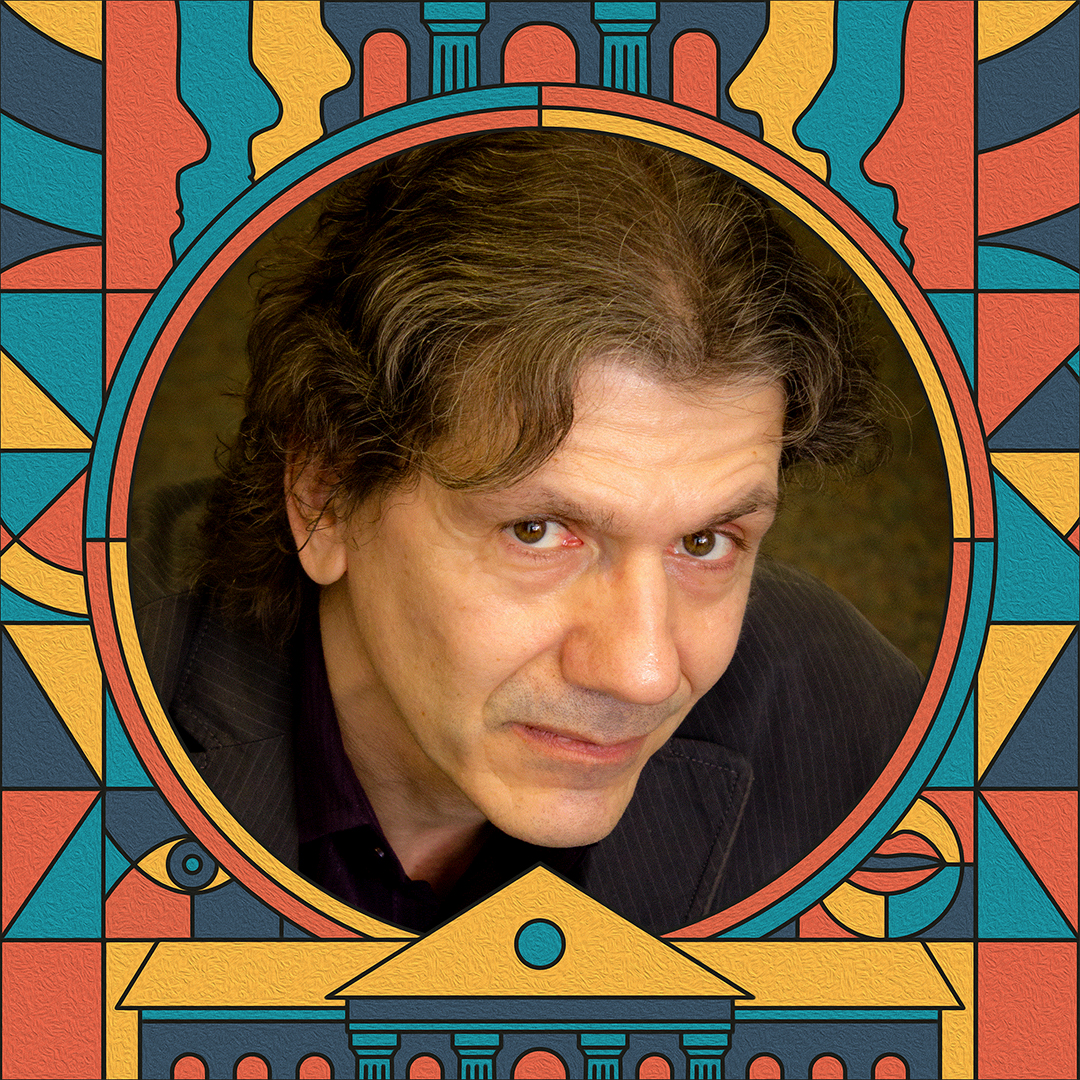
[00:00:29] Abigail Honor: Now, today we are joined in the studio by Carl Rhodes, creative director for exhibits at g and a, and someone who’s been shaping how we experience museums for over two decades.
[00:00:42] Carl Rhodes: Oh, dear…
[00:00:43] Abigail Honor: He’s a storyteller at heart, equally fluent in physical space and digital tools.
He strives to make each project authentic, tangible, and memorable. Carl’s work has earned him multiple SEG Global Design Awards, a design award, a Muse award. The list goes on. Carl’s work includes projects like the US Olympic and Paralympic Museum, the National World War II Museum, and Coca-Cola’s Vault of the Secret Formula, which is a fantastic.
Stick title, I think for, mm-hmm. An exhibition. But when he’s not redefining how he experienced exhibits, he’s in his painting studio or being critiqued on his karate form by his daughter, which I’m hoping won’t come into play in this conversation. If it goes a bit. Watch your step out again. I just moved away a bit.
So, Carl, welcome to the show.
[00:01:31] Carl Rhodes: Thank you, Abby. Thank you, Brenda. I’m really excited to be here. This is gonna be a lot of fun.
[00:01:35] Abigail Honor: Carl, you started in fine arts and I, I love the first time I got on a Zoom call with you. I saw those paintings behind you. And as a fellow painter, I know it’s a, an isolated way to create and somehow you found your way into exhibition design, uh, which is anything but isolated.
What was that moment when you realized sort of like this is where you’re meant to be, or was it more of a stumbling into it?
[00:01:59] Carl Rhodes: I was definitely a stumbling into it. After I got outta risd, I really wanted to be a fine artist and I thought I was gonna make a go at it, so I spent a lot of time jumping around doing, I worked on murals, I worked on oil paintings.
I had a gallery that I was working with at the time. I was freelancing as a graphic designer. I taught myself web design at the time. I just wanted to do everything, and then it was really. People said, you have to find one thing you’re good at and you have to do one thing well. And I said, I really don’t know what that is yet.
I don’t want to do that yet. And so I just kept searching and scratching around. And then when I found an opportunity to work at a firm that designed and built exhibits, I thought, this sounds really interesting. And I think I can do that.
[00:02:40] Abigail Honor: You were right.
[00:02:41] Carl Rhodes: It was
[00:02:41] Abigail Honor: a good hunch.
[00:02:42] Carl Rhodes: And you know, fortunately the door was open to me and I got a foot in the door.
[00:02:45] Abigail Honor: I think that’s super nice though, isn’t it? Really interesting. I like that Carl has, and he still has multiple talents. He balances the art, the technology.
[00:02:53] Brenda Cowen: Mm-hmm.
[00:02:53] Abigail Honor: Sort of the leadership that we’re getting into later, but the idea of not forcing yourself into a vocation too soon. Right. It sounds like you took your time getting into it.
[00:03:01] Brenda Cowen: This is the kind of thing when we’re bringing students into our degree program, actually we are listening for very much so what you just described, which is a person who is almost insatiable, say like somebody who wants the, the whole buffet. Right, and because you’re excited by many different things, you’re curious about many different things you enjoy doing and making many different kinds of things.
And it’s almost too bad that folks were saying, Hey, you know, find your niche or whatever. And you certainly did end up in the perfect business. We’re really curious to hear from you about being a director. And what it means to direct a process. What does it mean to you to be working with objects, working with story, working with media, and really directing that kind of a process?
[00:03:53] Carl Rhodes: I don’t think I start with directing. I start with, you know, being a sponge, taking it all in, listening, thinking about, you know, what is it about this project? What opportunities are here? What’s my point of interest? What’s my entry into this project? And I have to get myself excited about it.
[00:04:08] Brenda Cowen: Mm-hmm.
[00:04:09] Carl Rhodes: And then it’s a, a matter of, you know, exploring that myself, but also bringing the rest of the team into that discussion so they can collaborate and, and I want them to be as excited about the opportunities as I am.
Yeah. Um, we also kind of have to get. A little bit on the same page, right? We have to scratch around a bit and we have to find, is this something physical about this space that is a constraint or an opportunity? Is there something about the subject matter? Is there something about the way the story is told that we could do in a different way?
Is there a design element that we could key into? So it’s really a matter of finding a place to start and then going and letting everyone know, okay, go, go explore in this sandbox now. Mm-hmm. And then we’ll come back and regroup and take it from there. It’s a messy business. I’m not gonna lie. It’s never a straight line.
[00:04:49] Abigail Honor: I’ve just led Brenda to a perfect client question.
[00:04:52] Brenda Cowen: Okay. We are actually interested in talking about how it is that you navigate with clients and folks who come in with really fixed ideas. About what they want, um, and, you know, uh, who want a particular thing, have a particular vision, and are really kind of fixed in their thinking.
Um, or how do you navigate with clients who just have no idea at all? Which I’ve never experienced. Yeah. I have to say. Have you ever experienced
[00:05:19] Abigail Honor: No.
[00:05:20] Brenda Cowen: I’ve never experienced
[00:05:20] Abigail Honor: that. Have you experienced
[00:05:21] Carl Rhodes: I, I’ve, we’ve had clients that came and say, we, we don’t know what we want this to be. We just want you guys to knock our socks off.
Just go for it. So that’s definitely happened when we’ve also had clients that really knew exactly what they wanted. I found when that happens, you can. Ignore their request.
[00:05:40] Brenda Cowen: No, indeed. Yeah.
[00:05:41] Carl Rhodes: So it’s probably a good idea to start, you know, on with what they want to do and then maybe broaden out from there and try some other.
Either completely different approaches or variations and see if there’s something broad or something bigger that can be done, or, you know, maybe their idea is incredible from day one. So
[00:05:59] Brenda Cowen: Listeners, he’s got a big smile on his face, uh, Carl does as he’s saying that,
[00:06:06] Abigail Honor: But nobody has a great idea from day one.
Nobody.
[00:06:09] Carl Rhodes: No, it’s just a mushy piece of clay.
[00:06:11] Abigail Honor: Yep. It’s a sort of like half baked kind of, maybe this sort of I’ve got a good feeling.
[00:06:16] Carl Rhodes: Yeah. Like I had a dream and I came to me in the dream and now it’s just, you know, fading away slowly. So
[00:06:22] Abigail Honor: It’s exactly that.
[00:06:23] Brenda Cowen: Love the way you think about our, our creative process.
[00:06:26] Abigail Honor: So when you work on more large scale projects with multiple vendors or collaborators, I find sort of communication is specifically. Keeping everyone in the loop, can you tell what I’m working on right now? It’s all about keeping people in the loop, um, as sort of even when like a really small decision’s made, making sure everybody knows that we changed that is like really important and often really difficult because you don’t wanna overwhelm people with whether you are using slack or texts or emails or whatever it is, but you really need to make sure everybody’s all on the same page, especially when some of these projects are in a fast forward like tight turnaround. So what have you learned about building teams across disciplines?
[00:07:06] Carl Rhodes: I mean, I’ve been working with partners outside of our firm since I first started, and that’s been one of the things I really loved about working in this industry, working with lighting designers and AV hardware designers and media designers and curators and historians and people that had completely different fields of expertise then than I did.
Um, and so. When we’re collaborating, I think, um, it’s a constant part of our process, but also when do we bring people into different parts of the discussion? We have to have something in place to build upon and then we, we introduce them into the conversation. So where would you go from here? What would you do?
We can’t give someone a blank piece of paper and say, you. You know, okay, gimme, gimme a lighting design or something. So
[00:07:46] Abigail Honor: Yeah, if only, although I, I do wanna talk to you also about like when we are brought in, because I feel like exhibit designers are often, uh. Brought in too late. Mm-hmm. Like I want an architect to be hired and the first thing they say is, who’s the exhibit design company?
Right. Like before the building’s even been dreamt up. Um, so where do you think we should be brought in? ’cause I don’t know how to. Increase the volume of our profession to all of these group of people who are building these museums often for the first time and leave us too late, where we’re sort of pulling at the scraps and everything’s already decided.
[00:08:29] Carl Rhodes: Mm-hmm.
[00:08:29] Abigail Honor: But it really affects what we want to create. So I’m curious to see what you say in terms of when you think an ideal time is to have, have you at the table.
[00:08:38] Carl Rhodes: I mean, I’ve actually had that question kind of inverted and say, should we be actually starting
[00:08:43] Abigail Honor: mm-hmm.
[00:08:43] Carl Rhodes: Starting the discussion. Should it be about what, what is the visitor experience, goals for the project first, and let’s start there.
Yeah. Um,
[00:08:51] Brenda Cowen: ideal.
[00:08:52] Carl Rhodes: Yeah. I’ve had some of my favorite projects are the ones where we’ve been in partnership with the architects since the very beginning. Mm-hmm. And we could help shape, how do you know, here’s where we wanna start this experience and here’s how it’s gonna build. And we think, and I think about it.
Almost like a movie or,
[00:09:06] Brenda Cowen: yeah.
[00:09:06] Carl Rhodes: You know, this is act one, and this is Act two, and this builds on the previous space or the previous idea. Then think about how they all work together. So you know, by the time you have experienced them all as a series, they’ve all come together and made a cohesive experience for you.
That’s what we can do when we work closely with the architect.
[00:09:27] Abigail Honor: That was eloquently explained. We just need to figure out a infrastructure of how we could get a room full of people and explain that to them. Because I was just sitting in a room full of architects and it was about, again, the star architect.
The building. The building, the building. And that’s great for PR when it opens, but people are going for the inside and they’ll be going year after year after year. And if you’ve built a building for 250, 300, 400, $500 million. You’ve not thought about the inside enough. It’s, it’s a second thought, which to your point, I think should be the first thought, especially when you’re talking about leisure, time of families.
[00:10:02] Brenda Cowen: Mm-hmm.
[00:10:03] Abigail Honor: They need to have fun, they need to be educated, otherwise they just won’t come anymore. ’cause we can all travel, you know, antiquities in a museum that’s all full of a lot of controversy and issues right now, that is not enough to get people. Excited about history and bringing their family. I love history.
Absolutely love, love bringing it to life, really passionate about it. And I think we’ve just been doing it in a very dated, traditional way and that that needs to stop like yesterday.
[00:10:28] Brenda Cowen: We’re curious to hear if you think that designers today are really given the time that they need to be able to figure things out.
Um, or do you feel that processes have become maybe more. Or too contrived, or too controlled. Do you see a lot of freedom in ways that you think is really important?
[00:10:48] Carl Rhodes: Hmm. Just because somebody’s been given the freedom to explore and try things out doesn’t necessarily mean when you all regroup that you’ve, you’ve nailed it.
[00:10:57] Brenda Cowen: Right?
[00:10:57] Carl Rhodes: Right. I mean, that, that might just be, okay, we got that out of the way, now we can start.
[00:11:01] Brenda Cowen: Mm-hmm. Yeah. Mm-hmm.
[00:11:02] Carl Rhodes: Right. So I think you need to consider that in the process that, hey, your first stab, your first, you know, uh, right outta the gate may not be what we’re gonna do.
[00:11:10] Brenda Cowen: Mm-hmm.
[00:11:11] Carl Rhodes: Right. And so we have to be honest about that and look at it and say, okay, go.
That was a great first exploration. Let’s, let’s try again and regroup on and, and, and throw out some more ideas.
[00:11:20] Abigail Honor: Where do you feel the discomfort when you are truly trying to be creative in a team?
[00:11:25] Carl Rhodes: I’m a visual communicator. Mm-hmm. So the words are always a little harder than just seeing it, you know, just, okay, that sounds great.
Now show it to me.
[00:11:33] Abigail Honor: Right.
[00:11:33] Carl Rhodes: Okay. Now show it to me this other way. Or Now I need to go explore it for a bit. So I, you know, sometimes it’s just, you know it when you see it, and that’s just, it’s not gonna get any easier than that.
[00:11:43] Abigail Honor: Yeah. No, you’re right. But is that something that comes with experience or do you feel like 20 plus years ago you knew it?
When you see it, then how much of it is intrinsic in your skill and ability and talent, and how much has learned?
[00:11:58] Carl Rhodes: I’ve got a pretty big, um, toolkit at my disposal of and know I did, uh, 3D visualization and renderings for many years. I started, I, you know, early on I, I was interested in doing sculptures and I did a lot of pre-visualization.
It was really because I couldn’t explain the idea at all, and I just needed the visuals to do that work for me. And I’ve still kind of, in some ways I still work that way. I want the visuals to be so strong and communicate so clearly that my voiceovers. Hardly necessary in some cases, but to get to that requires a bit of work.
[00:12:31] Brenda Cowen: Mm-hmm.
[00:12:31] Carl Rhodes: Um, and you can do that with a quick sketch. I had a, um, a professor back at RISD and he said, you know, if you can work on something for a year or you can work on it for five minutes, and the, and whoever’s looking at it, is it gonna experience in the same amount of time? Oh.
[00:12:44] Abigail Honor: Mm-hmm. That’s a good point.
Yeah,
[00:12:45] Brenda Cowen: absolutely. Let’s talk about the US Olympic and Paralympic Museum logo story. Speaking of creative process, you wanna share that? Uh, um
[00:12:56] Carl Rhodes: Sure, sure.
[00:12:57] Brenda Cowen: That process with us?
[00:12:58] Carl Rhodes: Sure. I think it was in the point of the project where the name of the project was transitioning from the US Olympic Museum to the US Olympic and Paralympic Museum, and it didn’t have its own identity yet.
And excuse me if I mispronounce her name, but Chermayeff & Geismar & Haviv. We’re doing a presentation of the logo, and they kind of went through and they had a different process for presentation, which was, you know, they started with, here’s all the inputs, here’s everything that we’ve gathered from you, and here’s what’s informing our process.
And then they started off with, Hey, we tried this and it didn’t work, and then we tried this and it didn’t work. And then we tried this and this was a little better, but it still didn’t work. And then they finally led up to the final logo. And they animated the final logo and you just, by the time that came up, you just believed it.
You said, this is it. And there’s no questioning that. This is obviously the logo. It’s fantastic. And I just love the simplicity of their presentation and I bring it back to my own work and how can I simplify this message and also share some of that creative process with the client when I can. Yeah, when it makes sense, you know, especially if it’s a smaller group.
But so you know, you’re showing them that you’ve done that work and you’ve done that exploration and you’ve. Come to a direction that you feel strongly about and then hopefully they’ll, they’ll see it too. Even though you’re not done. Yeah. You’re just at the beginning. But they’ll see where you’re going.
[00:14:14] Brenda Cowen: We would love to hear about your experience with the same museum, with the US Olympic and Paralympic museum and setting incredible accessibility standards, both physically and cognitively. What lessons did you learn? About that project in those areas.
[00:14:32] Carl Rhodes: Oh, I went so deep down that rabbit hole. Um, I don’t even know where to begin.
Um, here’s what I can say. We started off with just trying to make it an amazing museum experience for everyone. But once we really kind of landed on the fact that this museum needed to push the boundaries of accessibility and the fact that they had the Paralympic training facility there in Colorado Springs that we needed to do to make every single experience accessible to the widest audience as possible.
Uh, a lot of people are coming in with physical impairments. Um, other mental impairments, uh, site impairments and everything had to work at every level. So we did integrate an RFID system that adapts to every single visitor and they can enter their preferences and each experience has some form of adaptation, whether it’s bigger text, whether it’s voiceover audio.
And I think where it got to be quite challenging was the, some of the more physical interactives. Yeah. Right. Each one. We had some that, uh, that were on the table that I thought were just very exciting, but they didn’t meet that accessibility standard that we had set. And we had
[00:15:34] Abigail Honor: Oh, so they were scrapped.
[00:15:36] Carl Rhodes: A number of them were scrapped . So we had some really high intense, we had a whole boxing interactive and we had a whole thing around gymnastics and we had some, uh. A vr, you know, experiences that were gonna put you into the, uh, eyes of athletes in training and other things that we did and had an AR experience underweight.
So quite a number of them had to be completely scrapped and thrown out. And just brought back is because we couldn’t have experiences where guests can do everything except for these experiences. Right. So what’s kind of funny is if you’re an able-bodied person and you’re coming in, you may not notice any of that at all.
So it’s working under the surface and that was the whole idea. Mm-hmm. As it comes to life as you need it. Um, if you don’t need it, then just enjoy, enjoy it, enjoy your time.
[00:16:17] Brenda Cowen: It simply works.
[00:16:17] Carl Rhodes: Yeah. Yeah.
[00:16:18] Abigail Honor: Isn’t that fantastic though? Yeah. What do people outside our profession, if you’re talking to anybody else, what do they not understand about how these projects actually come together?
[00:16:28] Carl Rhodes: Um, the most common I get when I tell people ask, what do you do? And I tell ’em, they say, oh, I didn’t know people did that. Classic. Oh, I guess they must, right? Because you know, those things exist. Somebody must have done that. So that’s the most common, I think I’ve gotten that quite a number of times. And then they’re really interested.
They’re saying, oh, well, they have no idea what, what that would even, because it’s so foreign to them, either because they just. Either don’t do creative work as part of their everyday profession, or they just aren’t in a habit of going to a lot of, um, destinations and museums like that, and so they’re not really sure what that would be like to be part of that ideation process.
[00:17:06] Abigail Honor: You’ve been doing it for a long period of time and technology is really escalated over the last 20 years in so many different ways. How much of your job is the same and how much is different?
[00:17:17] Carl Rhodes: My first priority would be, I don’t wanna repeat myself, I wanna make sure we’re doing something new here.
[00:17:23] Abigail Honor: Yeah.
[00:17:24] Carl Rhodes: And that’s what’s interesting to me. I don’t want to make something I’ve already made before. I don’t wanna, you know, I’ve been to many, many, many exhibits and I’ve, some are very inspirational to me, but I, I’m no way do I wanna repeat a project I’ve already done before. So.
[00:17:38] Brenda Cowen: I wanna hear more about some of your examples of work that you’ve been doing, and a recent piece is the missions project.
Sure. In San Antonio, and you designed for a feeling instead of a literal representation. Tell us a little bit about that and how you weren’t trying to recreate specific sites, but to evoke them.
[00:18:02] Carl Rhodes: I think the main goal, uh, for that project, uh, beyond just the designation as a World Heritage Center site was to get visitors to go to the missions themselves, which are, are in the vicinity.
One is literally across the street. So we had to make our project visually distinctive and not trying to be the mission, but to get you to go to the mission. So how do we bring. Some of the excitement and some of the feeling and the mood of the missions into that building, um, into the store. So we just thought about how we could do that and whether it’s through objects or through spaces or just taking you out into the community or hearing from the community.
And then it was also as the project kind of evolved, we found that. It, it wasn’t as much just about the missions as the buildings of the missions, but it was also about the, the way the communities kept them alive and kept them vibrant and relevant and how they were still used and we wanted that to. So those two things kind of drove us, and then we looked at ways that we could make sure that we.
Did a modern interpretation of those spaces, but that evoked the character. So what does that mean to evoke the character of something that can mean anything? Right. So do you, you know what I mean? Yeah,
[00:19:08] Brenda Cowen: yeah,
[00:19:09] Carl Rhodes: yeah. So we just looked at, well, how can we play with scale? Or how can we play with materials or pattern or how can we integrate?
And we did a lot of sort of, and then the community itself and colors and how can we make this as vibrant as possible and how can we think about sun? And as a Texan, having been to San Antonio many times. I felt like at no point was, did anybody say, you need to go to the missions. You know, you need to go see them.
And it was almost like, I need to get the message out here. I need to get the message out that these places exist and that they’re unique and they’re special, and they predate even the, uh, Anglo settlements in the area. They’re very old and at least in American history. So, you know, I, I was excited about the opportunity to bring awareness and to bring visibility to those sites.
[00:19:52] Abigail Honor: It’s beautifully vibrant and very rich and you feel the presence of people, but still the reverence, the respect for the history and for the buildings. I think it’s a phenomenal, check it out everybody. I think you should go if you’re ever in San Antonio. I think it’s a phenomenal, small but mighty project.
Carl is how I would call it. It’s like. One of the things, um, you know, technology’s going crazy. Everyone’s using ai, but a lot of your work, you seem drawn to more like physical touch and materiality. Why is that still important when we design?
[00:20:24] Carl Rhodes: Oh gosh.
[00:20:26] Abigail Honor: I know.
[00:20:27] Carl Rhodes: Um, I don’t have any comment on ai. No, I’m just kidding.
Um. There is something about heart, right? And there’s something about authenticity that, you know, if it’s there. Um, and so I think there’s so many opportunities that AI can, um, could be used to enhance or, or automate or maybe even Im, improve our process. But I’d also worry about that idea of, you know, the loss of craft craft is it takes time and it’s hard fought.
And editing is important and curating is important, and we need to have the tools and the ability to do that, even if we’re using AI as one of the, the toolkits. I think a, a fun story. My son was telling me that, you know, they had a book assignment, a book writing assignment, and then they were all asked to go and do illustrations for their book cover, and he was the only one that did his by hand, the other kids did theirs with using ai.
And that made me sad because I wanna see, you know, and so I loved his drawing because it was a drawing by him, and it was a drawing by a child and that’s why it was good. Yep. And that’s why, so there’s something about, you know, and also the development of skills takes time. I’m all for using AI and exploring it, as you know, enhancing our toolkit.
But we have to continue to hone our craft.
[00:21:43] Brenda Cowen: I find it somewhat reassuring that the new folks with whom I’m working anyway, I don’t wanna say a love hate, but there’s, they’re cautious about AI and they’re cautious about feeling like they’re using other people’s work instead of their own. Um, what’s exciting you right now about the museum world and is there anything that worries you?
[00:22:09] Carl Rhodes: There’s a few things that worry me that probably shouldn’t talk about.
[00:22:13] Brenda Cowen: That’s fine. No need.
[00:22:16] Carl Rhodes: Um. For me personally, right now, I’m interested in the connection of place and time, right. That we’re, we seem to be in a pattern of, I mean, we’re not repeating ourselves exactly, but there’s, history is starting to come up in a way that’s, or patterns are emerging that are, you know, we’ve seen before and then also places, you know, how can we have more of an appreciation for the past and take us back to certain things.
I went to the Acropolis Museum in Athens, um, a couple years ago, and I loved the idea and walking around the Acropolis and then, um, and it’s like, what happened here? What is the, this has a long history. And then knowing, then being able to go right to the museum, which is at the bottom of the hill and get that story and, you know, I’m seeing the place, and I’m seeing the history and I’m experiencing them simultaneously.
So a couple of my projects, I’ve started to have that opportunity and that’s really exciting where I can kind of speak to the past and do something new at the same time. And that’s exciting to me. And I’m also excited about, as you said, are, is there a narrative to everything? What is a narrative that’s a hard and a narrative could be a simple idea.
That’s
[00:23:20] Brenda Cowen: right.
[00:23:20] Abigail Honor: Yep. Mm-hmm.
[00:23:21] Carl Rhodes: Is that enough of an idea to build upon,
[00:23:23] Abigail Honor: I have to take this ’cause I have a whole thing I wanna talk about what I think a narrative is. I think a narrative or a story. Let’s say a story. ’cause. Right. Narrative can be a little more ambiguous. I think we’re always looking to tell stories so that people can connect visitors when they’re walking through the exhibition.
And the best way to tell a story is to have a protagonist, an antagonist, and there be conflict and resolution. That’s traditionally what a story is. A story is not a series of facts. Mm-hmm. And I think museums and copy editors and curators need to get away from just thinking that telling people facts is going to engage them because it doesn’t No.
So I think there is a difference with narrative or stories and that you can peel back the layers of the onion and really look at what is the essence, what are we saying who is against, it doesn’t have to be a person. It could be against the environment. It could be a building against a building in some way, shape or form, or it doesn’t have to be human.
Uh, but you do need, I think a story has those two characters, at least two characters, let’s say There could be three, there could be four, and they’re jostling and a resolution. That’s how I like to sort of think about it. What do you think
[00:24:32] Carl Rhodes: about that? It’s a journey. You know? It’s a journey. And I think for our field, it’s like, you’re, you, you know, this could be a film, this could be a, an app, it could be a video game.
It could, yeah. What are we gonna do with this as a space?
[00:24:43] Brenda Cowen: Right?
[00:24:44] Carl Rhodes: Right. Um, and so how is this gonna, it has a volume, it has a scale, it has, you know, real other people. It’s not unfolding in a linear order. Um, and so we have, it’s all these other things that are making it a different kind of experience that possibly a, a unique experience.
So I find that really to be pretty interesting. Also challenging.
[00:25:05] Abigail Honor: Challenging.
[00:25:05] Brenda Cowen: That was
[00:25:06] Abigail Honor: really, really difficult. Yeah.
[00:25:08] Brenda Cowen: I just think it’s special that, and as you just pointed out, you know, people are in a space and they’re in a space with other people, maybe people who are with them or folks that they don’t know.
And the thought that we create things that people become a part of that story. For me, that’s one of the most exciting things is the nature of participation and, and it might be subtle, it might be passive, whatever the case, or it might be, you know, a very active, interactive kind of experience. But the idea that the visitor becomes a part of that story, to me, is really special and is something that’s really unique to what we do.
Mm-hmm. Mm-hmm. What are you proud of, of what you do?
[00:25:51] Carl Rhodes: I had like to think that I and the rest of our team puts out things into the world that have some staying power and resonance. You know, we live in a very, you know, the news cycle is so short and we’re seeing things in such bites. We like to think that we’re doing something that ha, that might still be 10 years from now, 20 years from now, still has, uh, some power to it.
And also I think I love the opportunity of working with some really talented people. Consider yourself very fortunate if you get to work with other creative, talented people. And that’s a joy. So
[00:26:22] Abigail Honor: I agree with that.
[00:26:23] Brenda Cowen: Yeah, absolutely.
[00:26:24] Abigail Honor: Right. Completely agree. Ah, Carl, I love this. It’s always so fun talking to you because there’s a real mix of like, curiosity, honesty, and like real lived experiences.
And I think that’s what our audience honestly is looking for as a way to connect, learn, and grow. So like, uh, this was. Fantastic. Thank you for sharing.
[00:26:43] Carl Rhodes: Thank you.
[00:26:43] Abigail Honor: With us today. Yeah. And for coming. For being here in the studio.
[00:26:47] Carl Rhodes: Oh, thank you, Abby. Thank you, Brenda.
[00:26:48] Brenda Cowen: Thank you so much,
[00:26:50] Abigail Honor: and thanks to everyone who tuned in today.
If you like what you heard, subscribe for more episodes of matters of experience. Make sure to leave a rating and a review and share with a friend. We’ll see you next time. Goodbye everybody.
[00:27:05] Audio Engineer: Matters of experience is produced by Lauren Ipsum Corp and recorded at Hangar Studios. Tune in next time for more fun discussions about experience design.